
Quick Info
- Neighbourhood: Champlain Heights, South Vancouver
- Address: 8200 Kerr Street, Vancouver, BC
- Size: Roughly 38 hectares (94 acres), Vancouver’s fifth largest park
- Park type: Forested urban wilderness on a former municipal landfill
- Highlights: Mount Everett summit, Avalon Pond, Manfred’s Meadow, off-leash trail network
- Parking: Small lot at the Kerr Street entrance, with additional street parking nearby
- Good for: Hiking, dog walking, birdwatching, quiet picnics
- Official info: Check the City of Vancouver park page for current trail closures and off-leash hours
A Forest Grown Over a Landfill
Everett Crowley Park sits in the Champlain Heights area of South Vancouver, tucked between quiet residential streets and the edge of the Fraser River lowlands. What looks today like a mature stretch of coastal forest was, for more than two decades, the Kerr Road dump, the main destination for the city’s garbage from the mid-1940s until it closed in the late 1960s. In some spots the buried fill runs nearly fifty metres deep, and steam still occasionally rises from vents where the old waste continues its slow decomposition underground.
After the dump closed, the land sat fenced off and largely forgotten for close to twenty years. Locals lobbied for something better than an abandoned lot, and in 1987 the Vancouver Park Board officially opened it as parkland, naming it after Everett Crowley, a former Park Board commissioner. Since then, native trees, wildflowers, and wildlife have steadily reclaimed the site, turning a onetime eyesore into one of the city’s largest continuous patches of urban forest.
Hiking the Trails
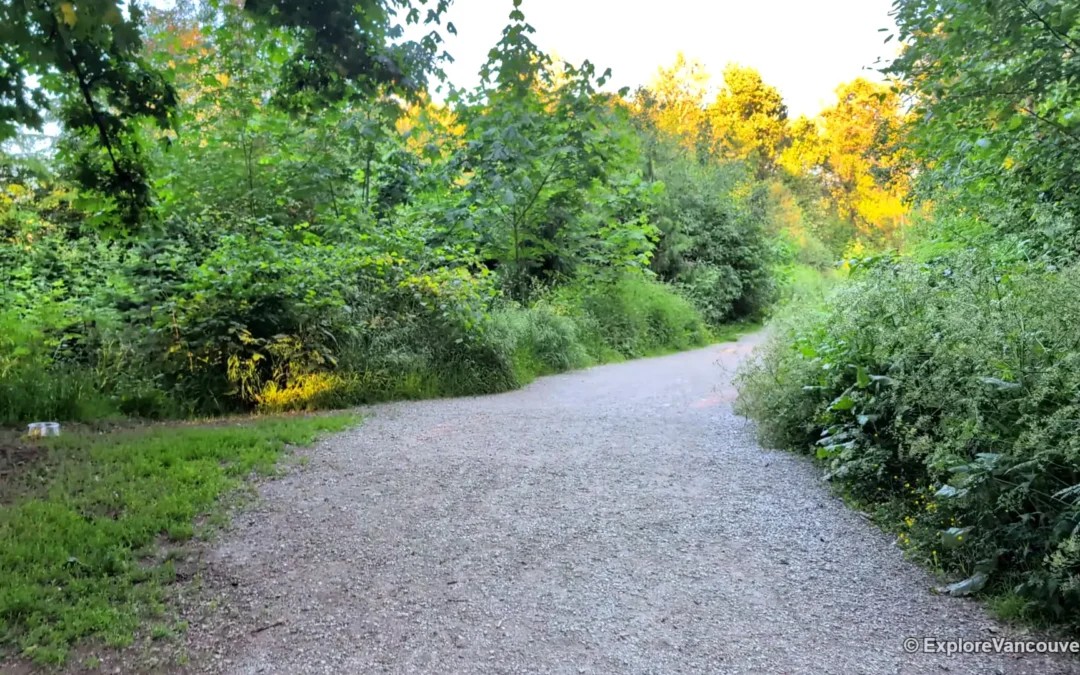
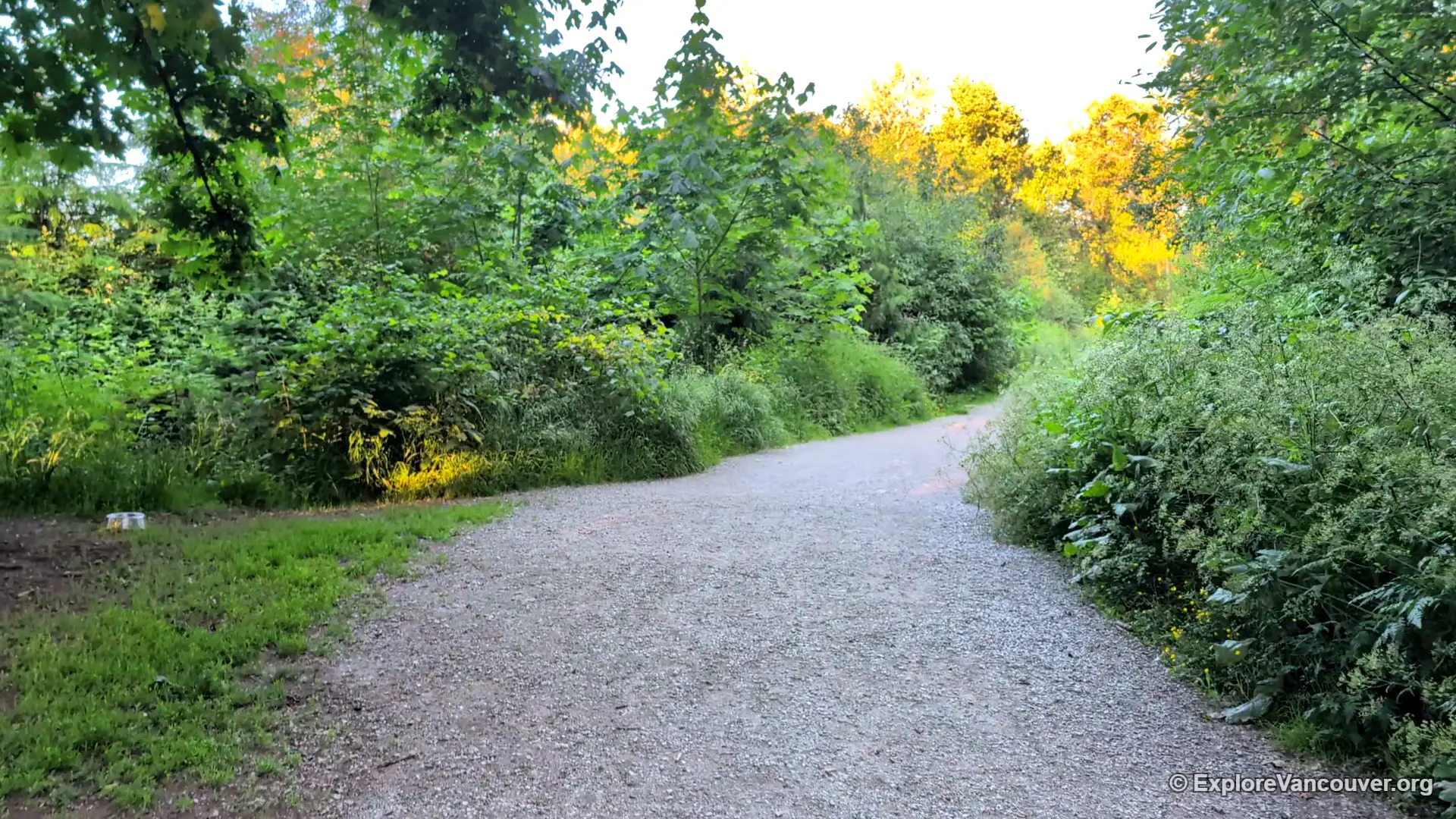
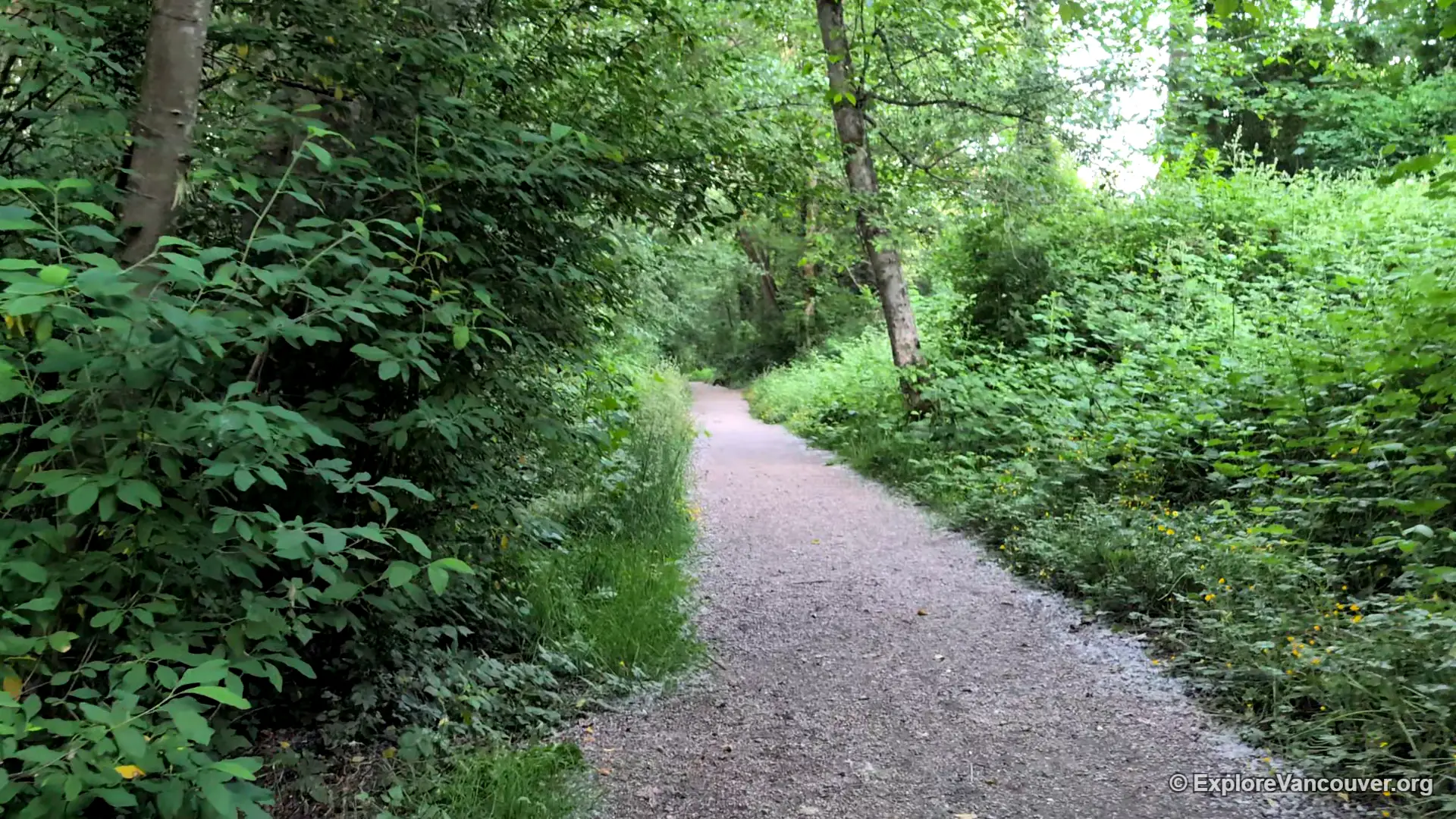
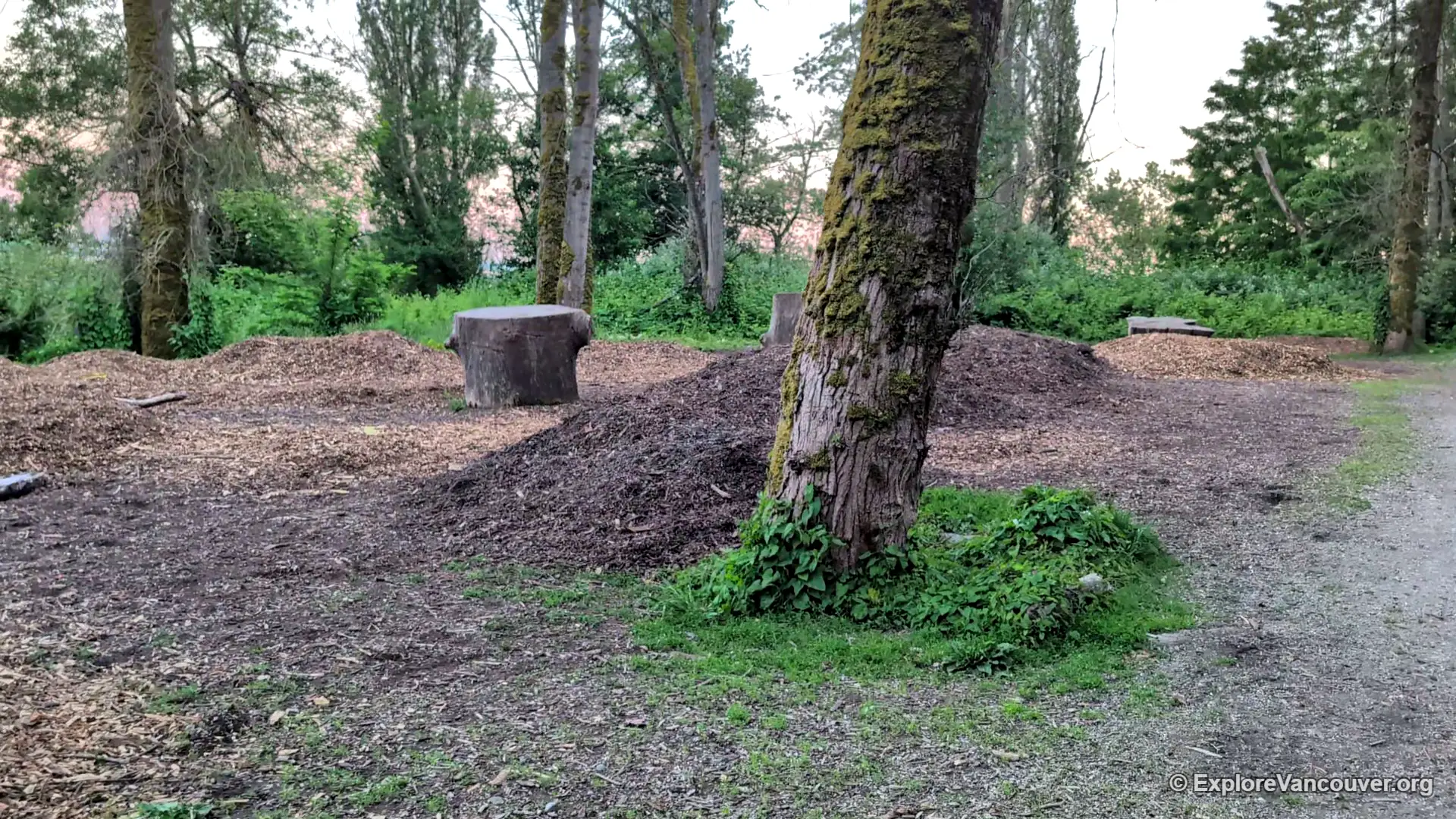
The trail network fans out from the Kerr Street parking lot and loops through young deciduous woodland, patches of blackberry, and a few short but genuine climbs. Mount Everett, the small rise near the centre of the park, is the highest point around and a natural spot to pause, even though the tree canopy limits any long views. Trails range from wide, gravel-surfaced paths that are easy for families and dogs, to narrower dirt tracks that feel more like backcountry than backyard.
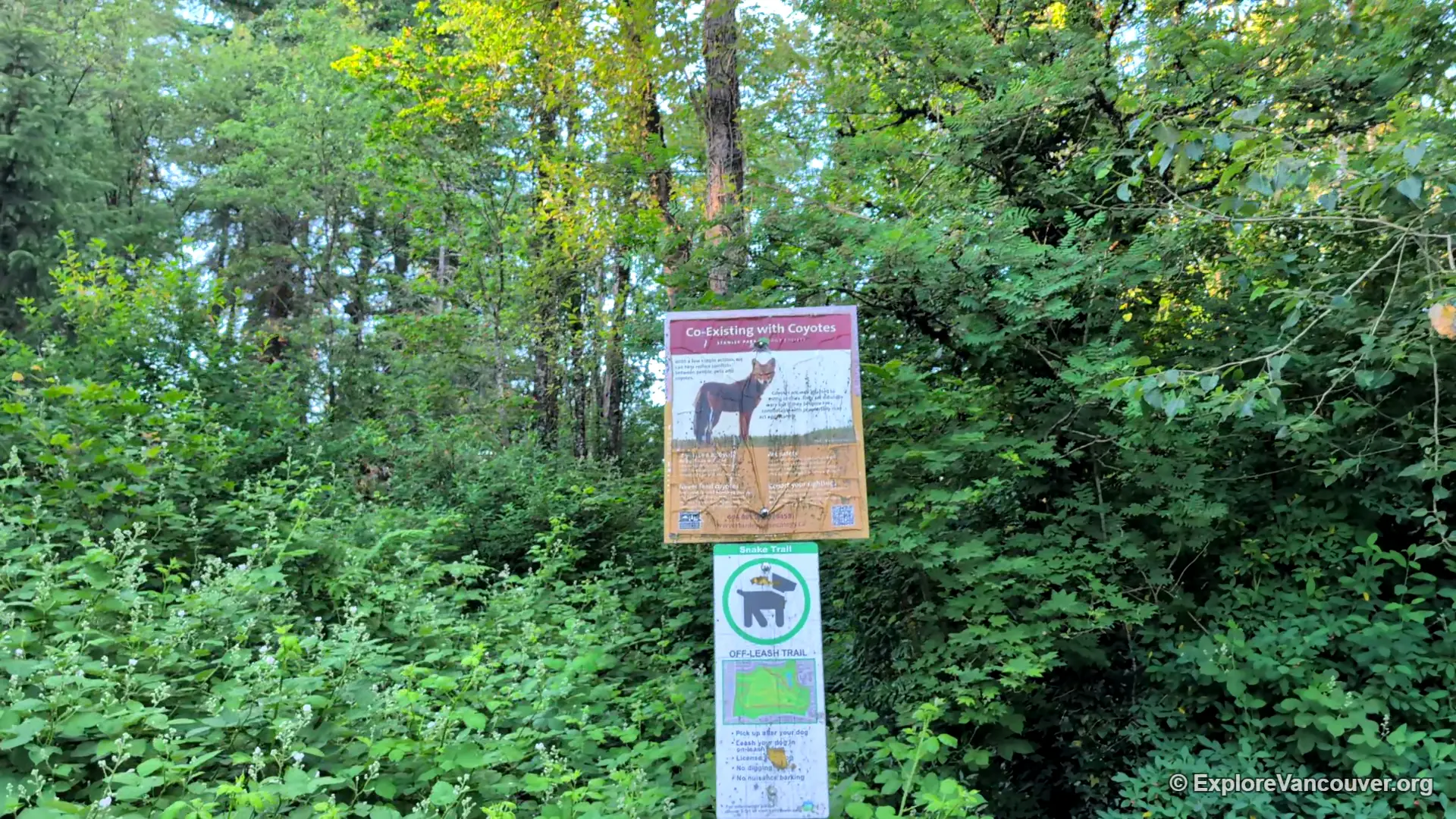
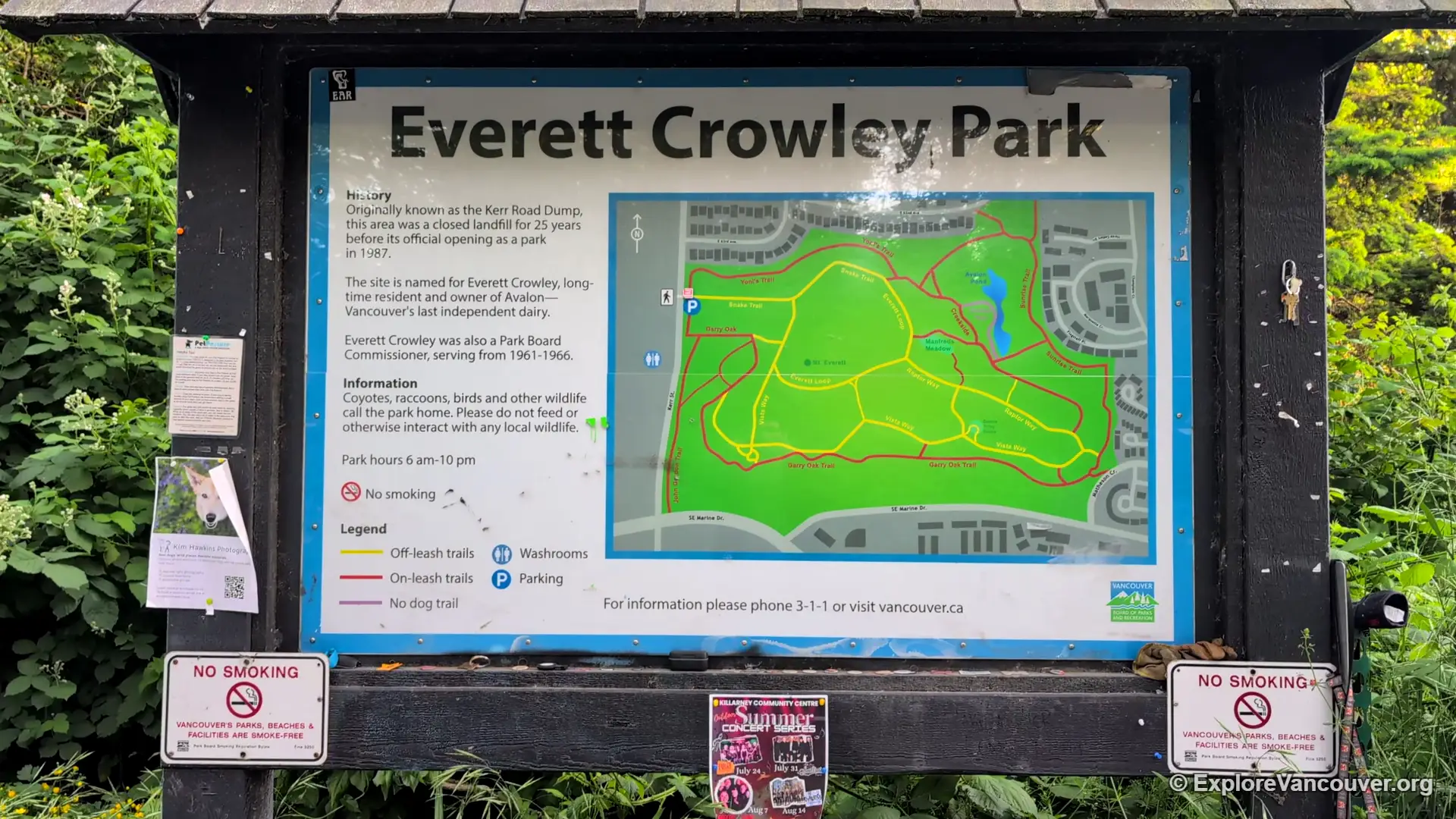
Signage throughout the park marks which sections are off-leash and which require dogs to stay on lead, so it is worth reading the posts at each junction rather than assuming the whole park works the same way. Because the paths crisscross and loop back on themselves, first-time visitors often find it easiest to follow the outer perimeter route on an initial visit before branching into the interior trails.
Manfred’s Meadow and Avalon Pond
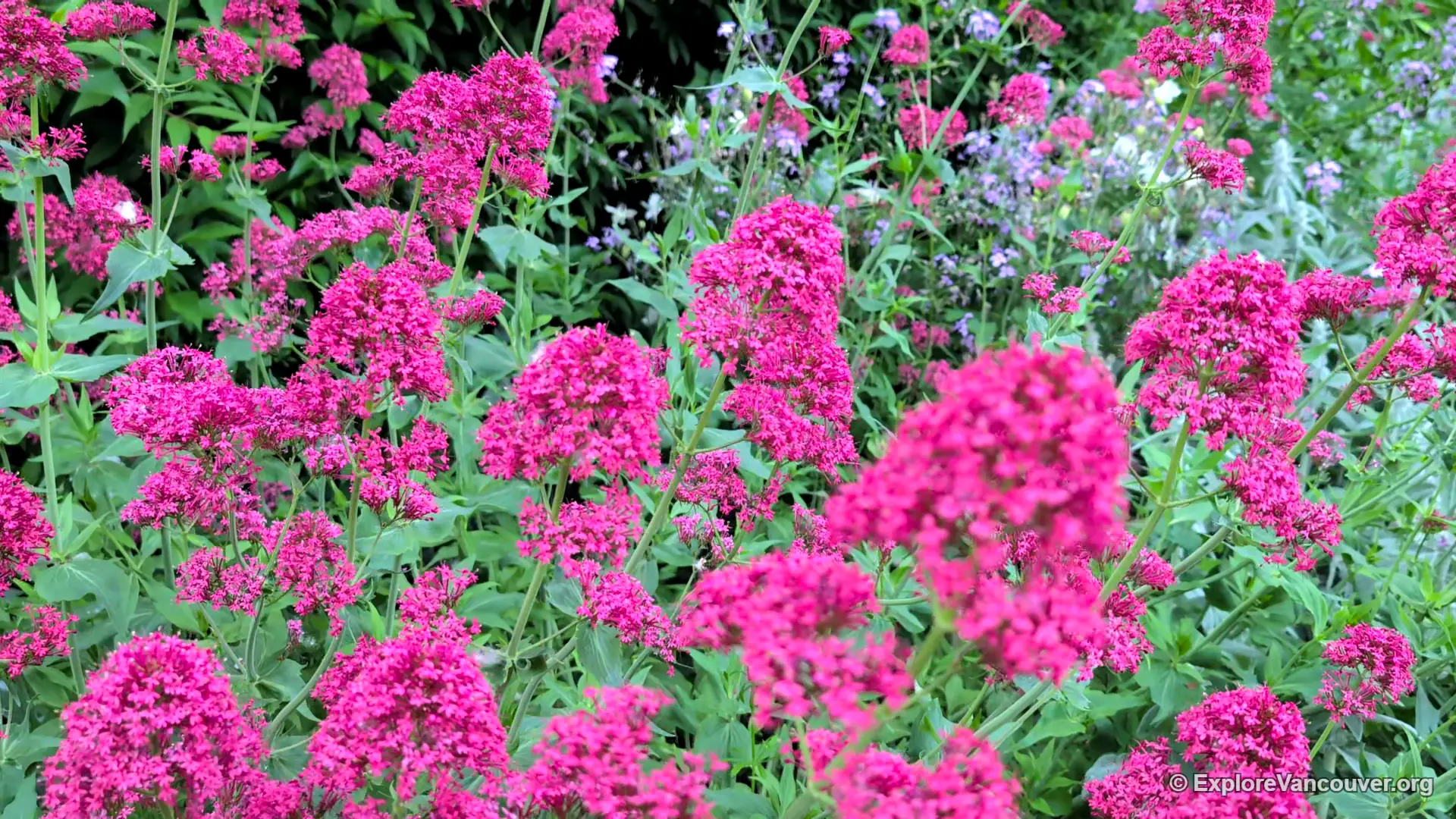
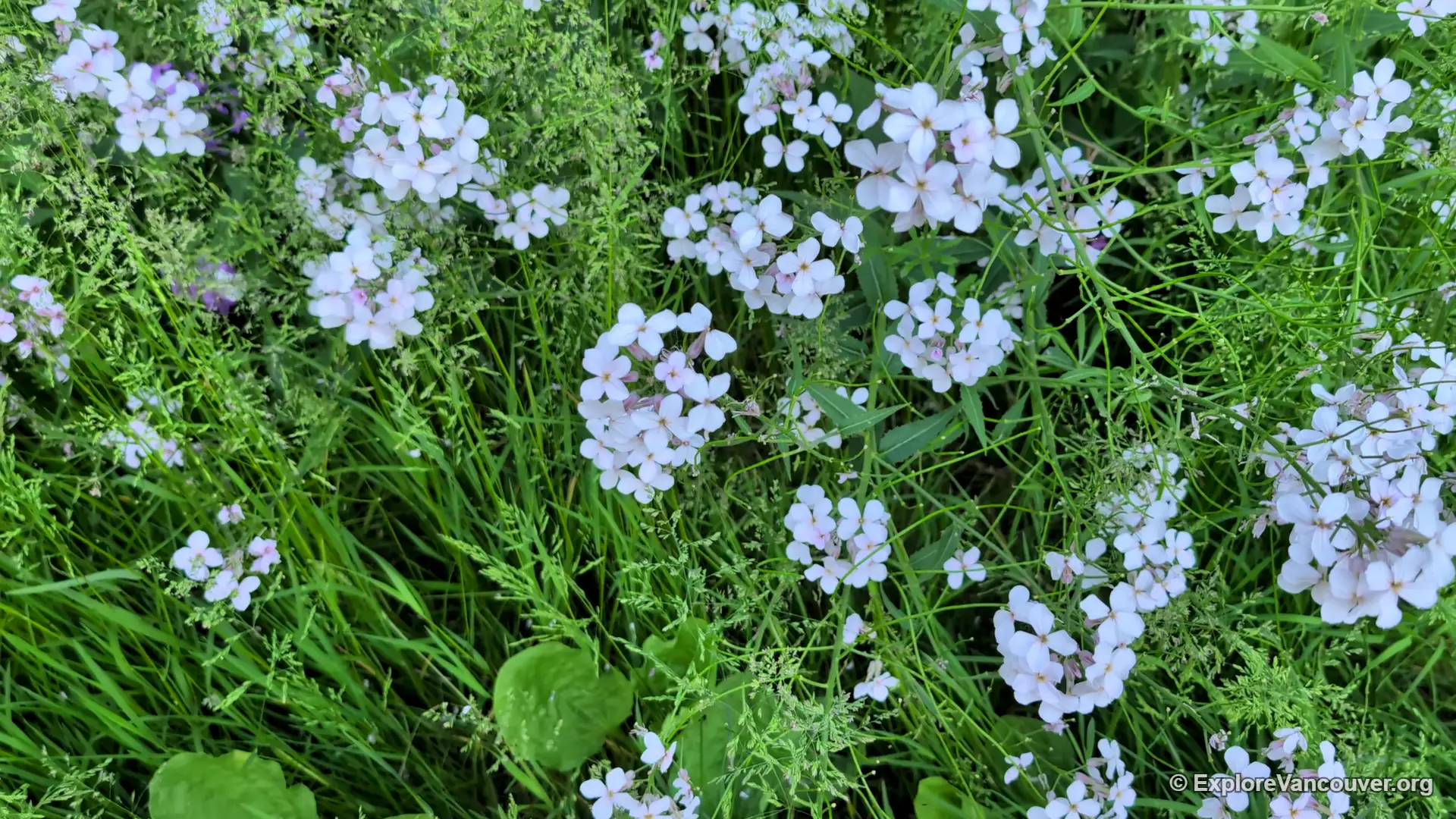
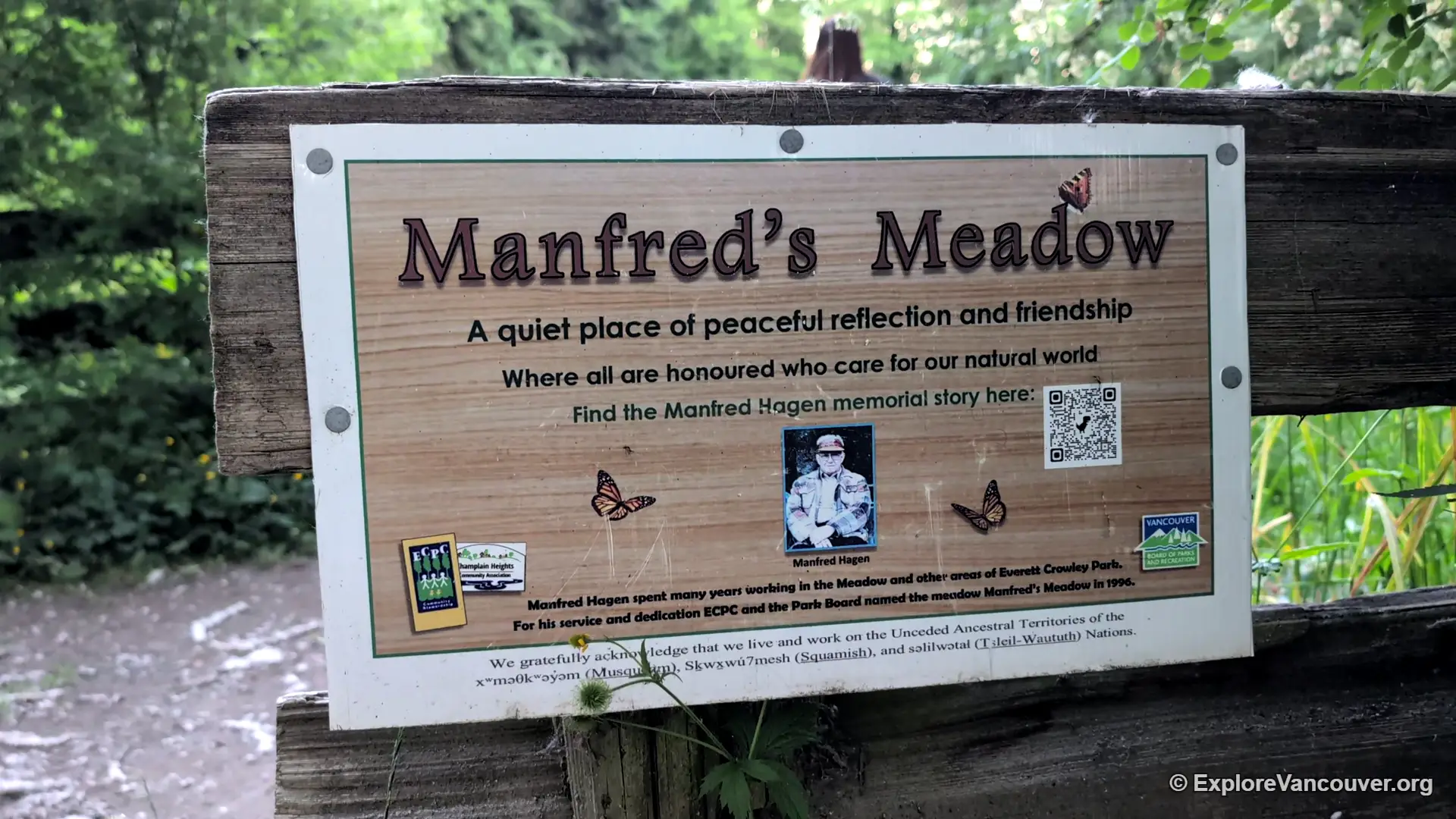
Near the heart of the park, Manfred’s Meadow opens up into a sunny clearing filled with wildflowers through the warmer months. A wooden bench and a small flower box mark the spot, and a bee condo installed by a volunteer conservation group gives native mason bees a place to nest. It is one of the few open, sky-facing spots in a park that otherwise stays under a thick canopy, which makes it a favourite rest stop for a picnic or simply a break from the trail.
A short walk from the meadow, Avalon Pond and the creek that feeds it form a quieter corner of the park where herons, ducks, and the occasional eagle can be spotted. The pond takes its name from Avalon Dairy, once run by Everett Crowley himself, and the surrounding wetland is part of an ongoing effort to restore the original salmon-bearing creek that ran through the area long before the landfill years.
Wildlife, Plants, and the Park’s Second Life
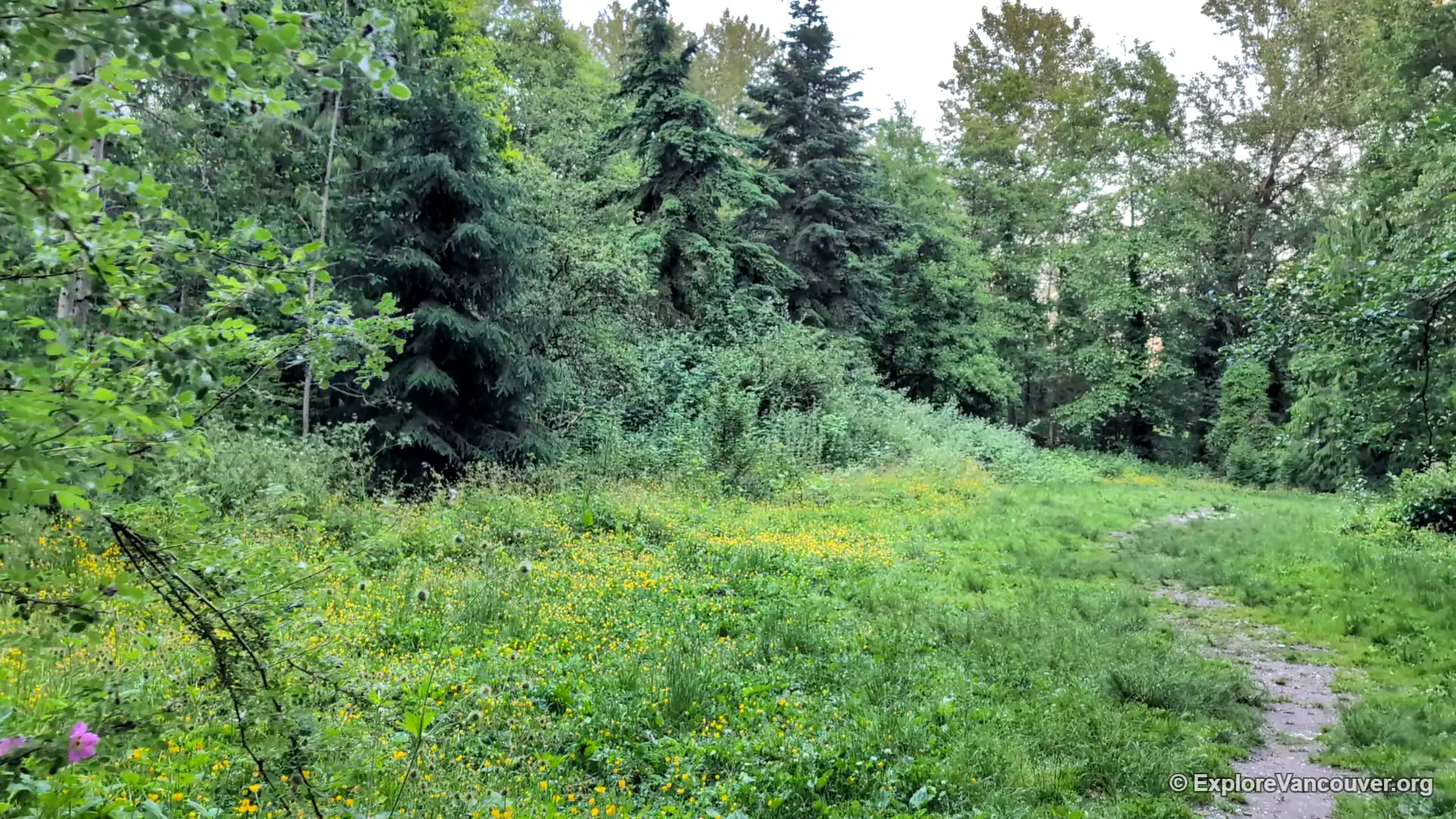
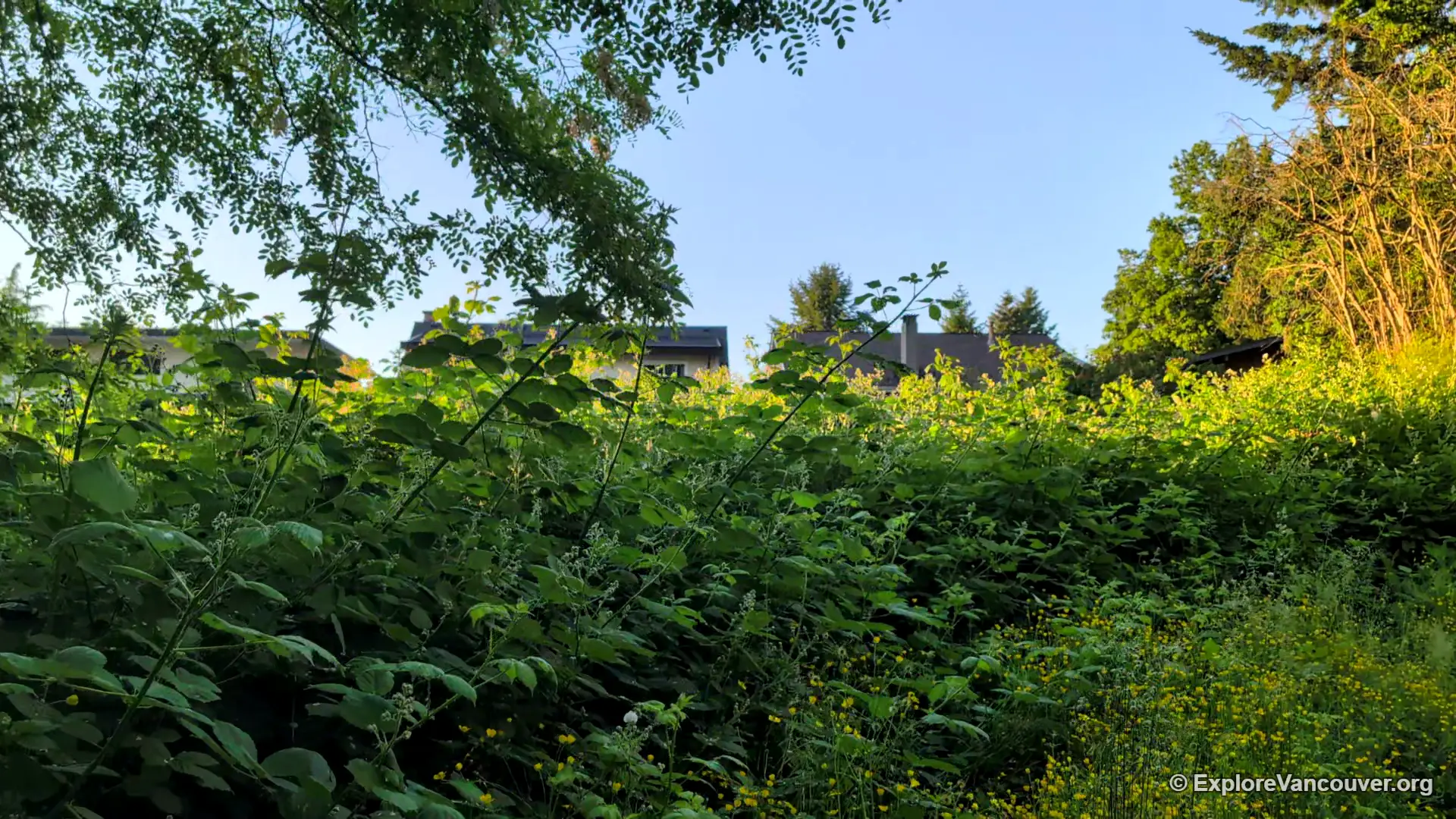
Since the 1970s, the park has slowly transitioned from bare, reclaimed fill to a genuine young forest of alder, cottonwood, and other hardy deciduous trees, interspersed with wildflower patches and stubborn blackberry thickets. Birdlife is abundant, and coyotes are known to move through the park, particularly around dawn and dusk, so posted signage reminds visitors to keep small pets close and avoid leaving food out.
Interpretive display boards placed along the trails explain the park’s landfill history and the restoration work that has gone into bringing the site back to life, making a walk here as much a lesson in urban ecology as it is a chance to stretch your legs.
Visiting Everett Crowley Park
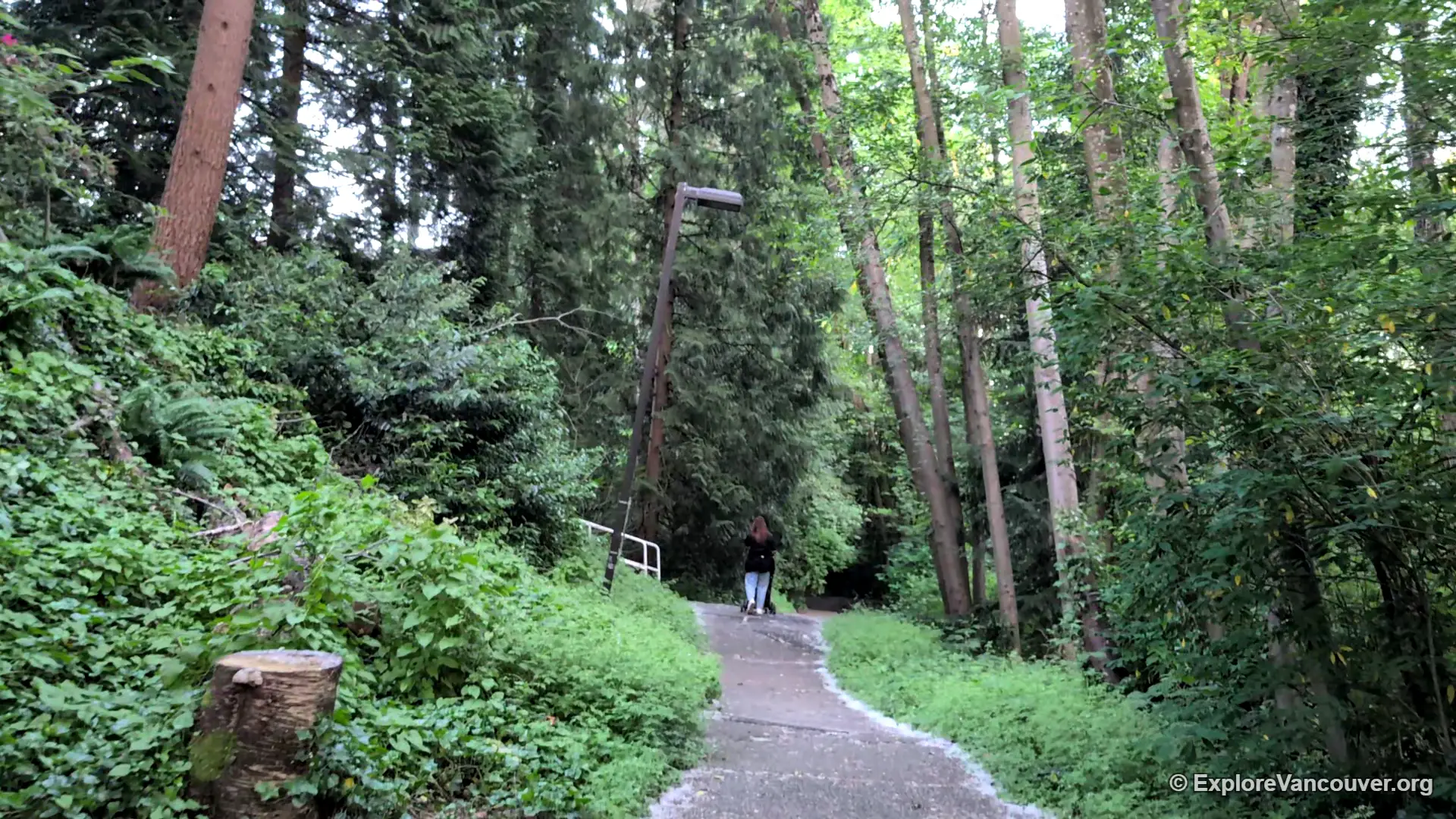
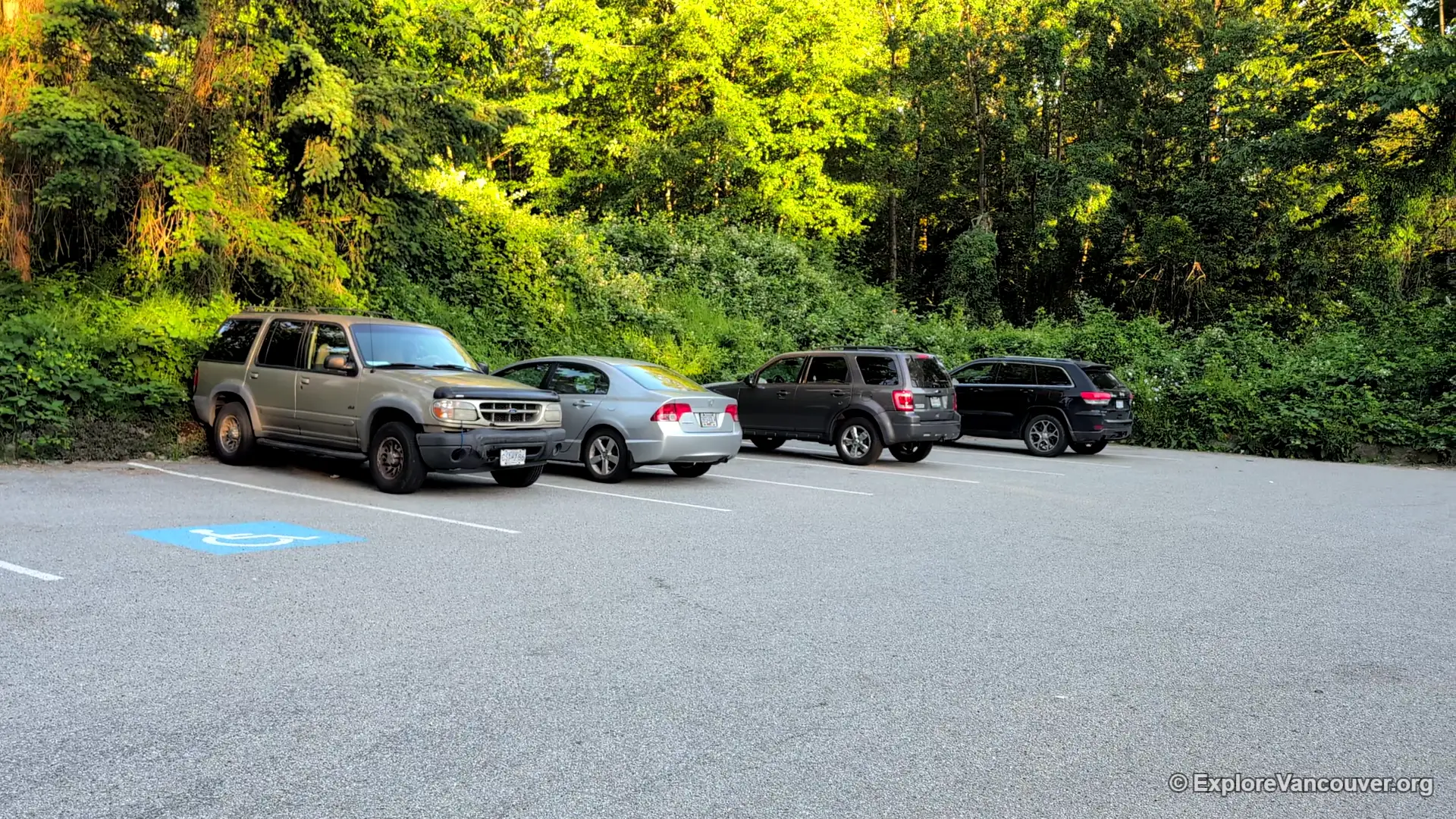
The main entrance and small parking lot sit off Kerr Street, though space fills up quickly on weekends, and additional parking can usually be found along the east side of Kerr Street and on Matheson Crescent. Several other informal entrances lead in from East 62nd Avenue, Marquette Crescent, and Champlain Crescent, which makes the park easy to reach on foot from the surrounding Champlain Heights neighbourhood. TransLink buses along Champlain Crescent and Marine Drive also stop within walking distance of the park boundary.
There are no washrooms or concessions inside the park itself, so it is worth planning ahead if you are staying for a while, and bringing water is a good idea year round since shade cover means the trails stay cool even in summer.
Gallery
Frequently Asked Questions
Is Everett Crowley Park dog friendly?
Yes, large sections of the trail network are off-leash, and it is a popular spot for local dog owners. On-leash sections are marked with signage, so check the posts at each trail junction.
Was Everett Crowley Park really a landfill?
Yes. The site operated as the Kerr Road dump, Vancouver’s main landfill, from the mid-1940s until it closed in the late 1960s. It sat unused for close to twenty years before opening as a park in 1987.
Is there parking at Everett Crowley Park?
A small parking lot is located at the Kerr Street entrance, with additional street parking available nearby on Kerr Street and Matheson Crescent. The lot can fill up on weekends.
How difficult are the trails?
Most trails are gentle, with only a modest climb to the summit of Mount Everett. Surfaces range from wide gravel paths to narrower dirt tracks with roots and occasional mud.
Are there washrooms in the park?
No, there are no washrooms or concessions inside the park, so plan accordingly before you arrive.
Explore More of Vancouver
Find more green spaces and neighbourhood spots across the city.
Vancouver Hub New Brighton Park