
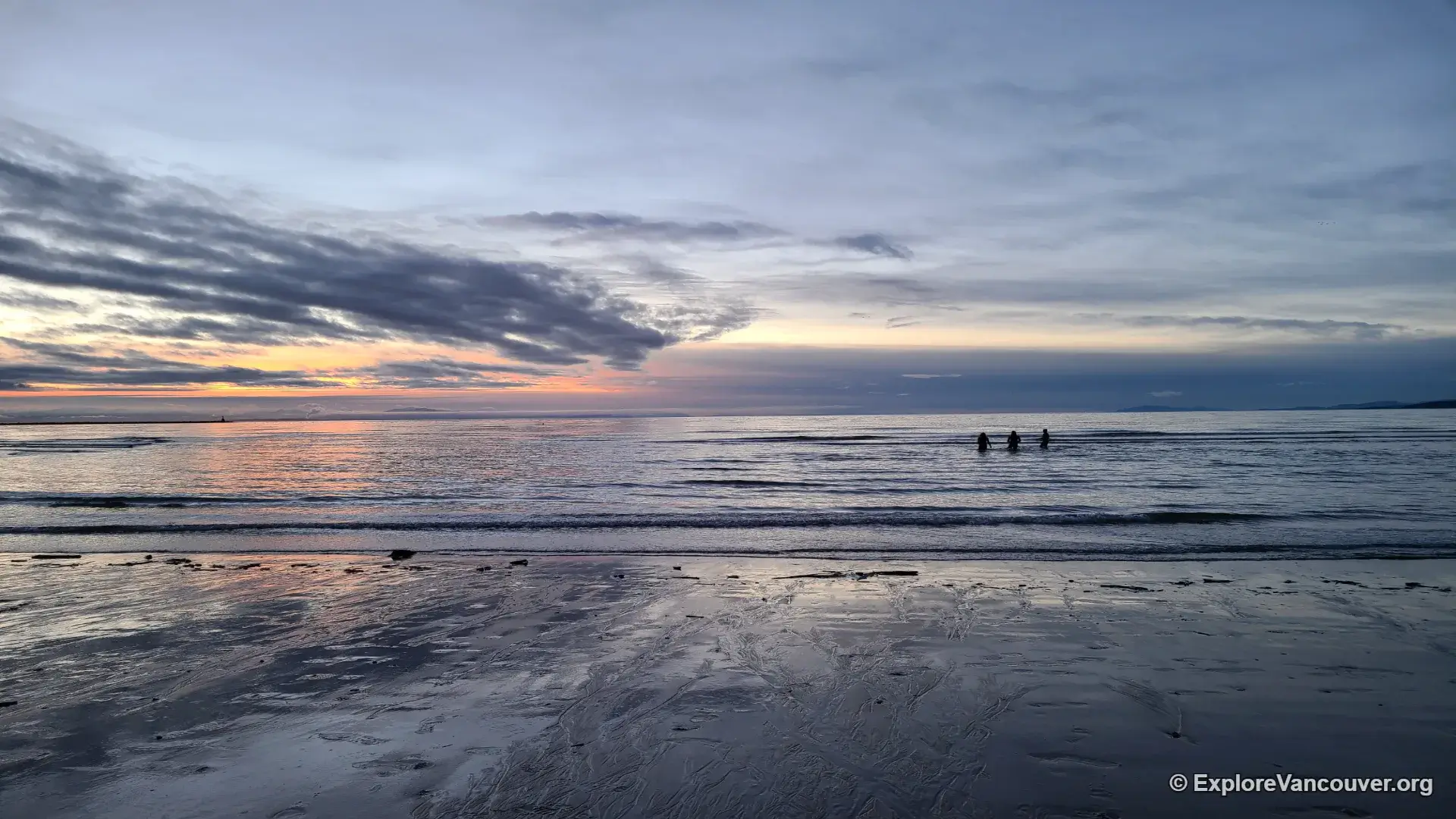
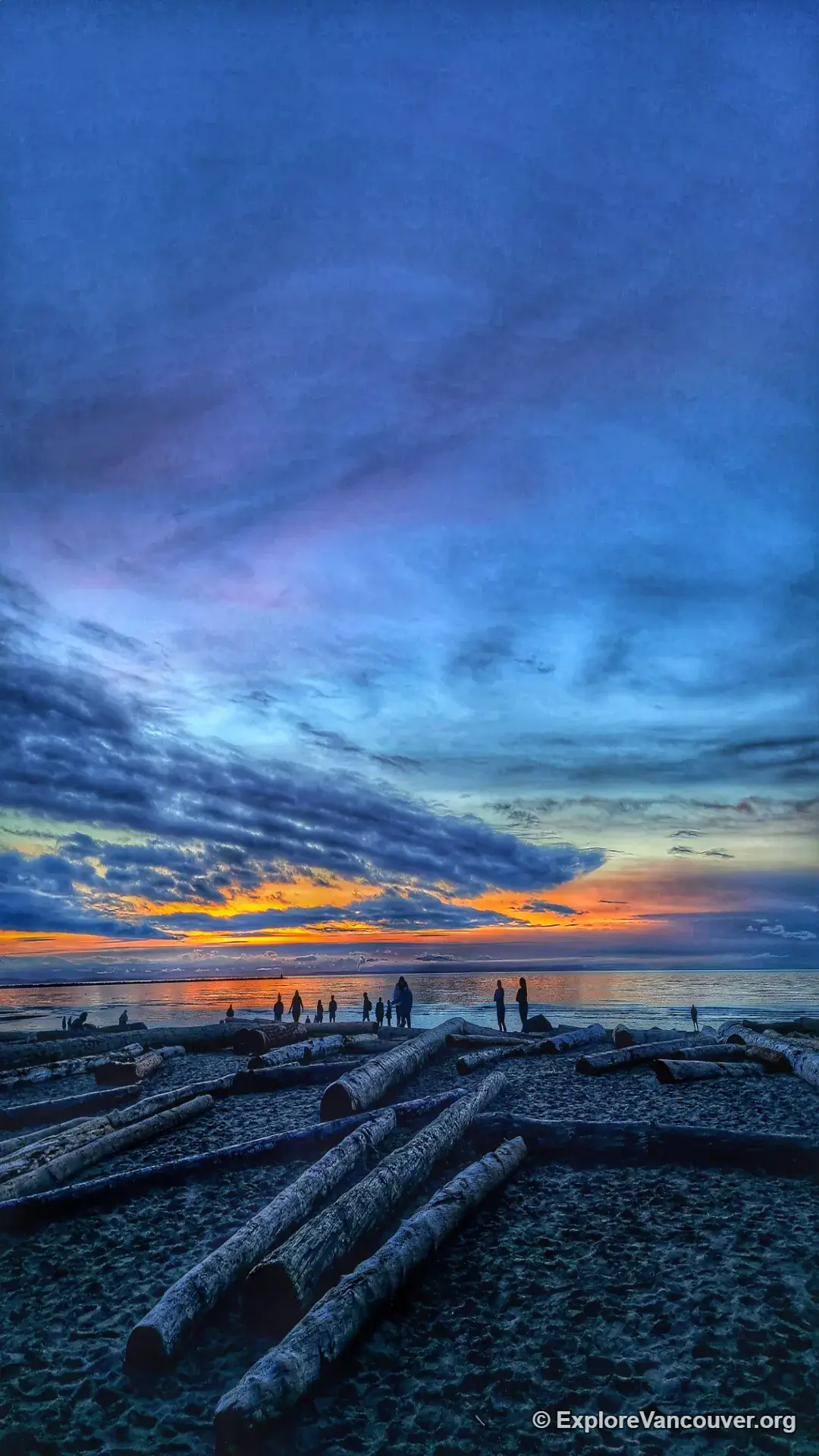
Golden hour on the sand at Wreck Beach, with the Strait of Georgia stretching out toward Vancouver Island.
Tucked beneath a wall of forested cliffs at the western edge of the University of British Columbia campus, Wreck Beach is unlike anywhere else in the city. It’s a wide, driftwood-strewn stretch of sand that runs for kilometres along the Point Grey shoreline, reachable only by descending a long wooden staircase through second-growth Douglas fir. It’s also Canada’s best-known clothing-optional beach, a status that’s been official since 1991, and one of the few places in the country where you can genuinely leave the rules of the rest of the city at the top of the stairs. Whether you come for the sunset, the swim, or simply the sense of having found somewhere the rest of Vancouver forgot about, Wreck Beach rewards the effort it takes to get there.
Quick Info: Wreck Beach
What Is Wreck Beach?
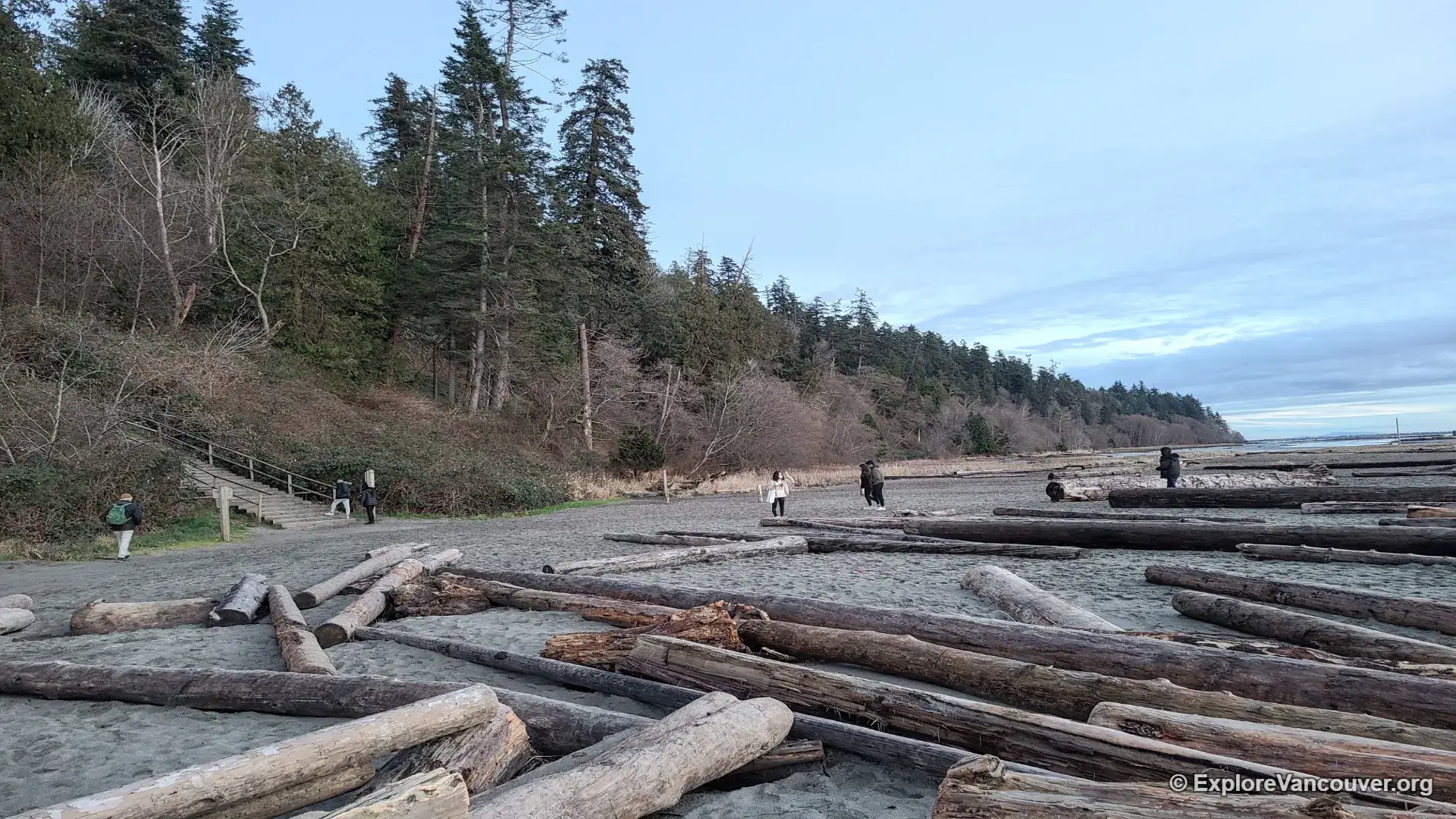
Wreck Beach sits inside Pacific Spirit Regional Park, on land that has been used by the Musqueam people for thousands of years. The clothing-optional stretch runs for roughly 6.7 kilometres, from Acadia Beach in the north down to Booming Grounds Creek near the mouth of the Fraser River, which gives it far more room to spread out than any other beach in the city. The Greater Vancouver Regional District formally designated it clothing-optional in 1991, but the beach’s laid-back, counterculture reputation goes back decades earlier, to a time when informal sunbathers first started gathering on the sand below the university.
Today the beach is best known for two things at once: it’s a genuinely beautiful piece of West Coast shoreline, backed by tall cliffs and framed by driftwood logs worn smooth by the tide, and it’s a place where nudity is legally permitted and culturally normal, without being mandatory. Most first-time visitors are surprised by how ordinary the atmosphere actually feels. People swim, nap, read, throw a ball around, and watch the sun go down, whether they’re dressed or not.
How to Get There
There’s no shortcut to Wreck Beach, and that’s part of its character. The most common route is Trail 6, a long wooden staircase directly across from the UBC student residences near the corner of University Boulevard and NW Marine Drive. It’s roughly 470 to 500 steps from the top of the bluff to the sand, cut into switchbacks that drop through a thick stand of second-growth Douglas fir and western red cedar. A second, steeper route starts just behind the Museum of Anthropology, which pairs well with a morning at the museum if you want to break up the descent.
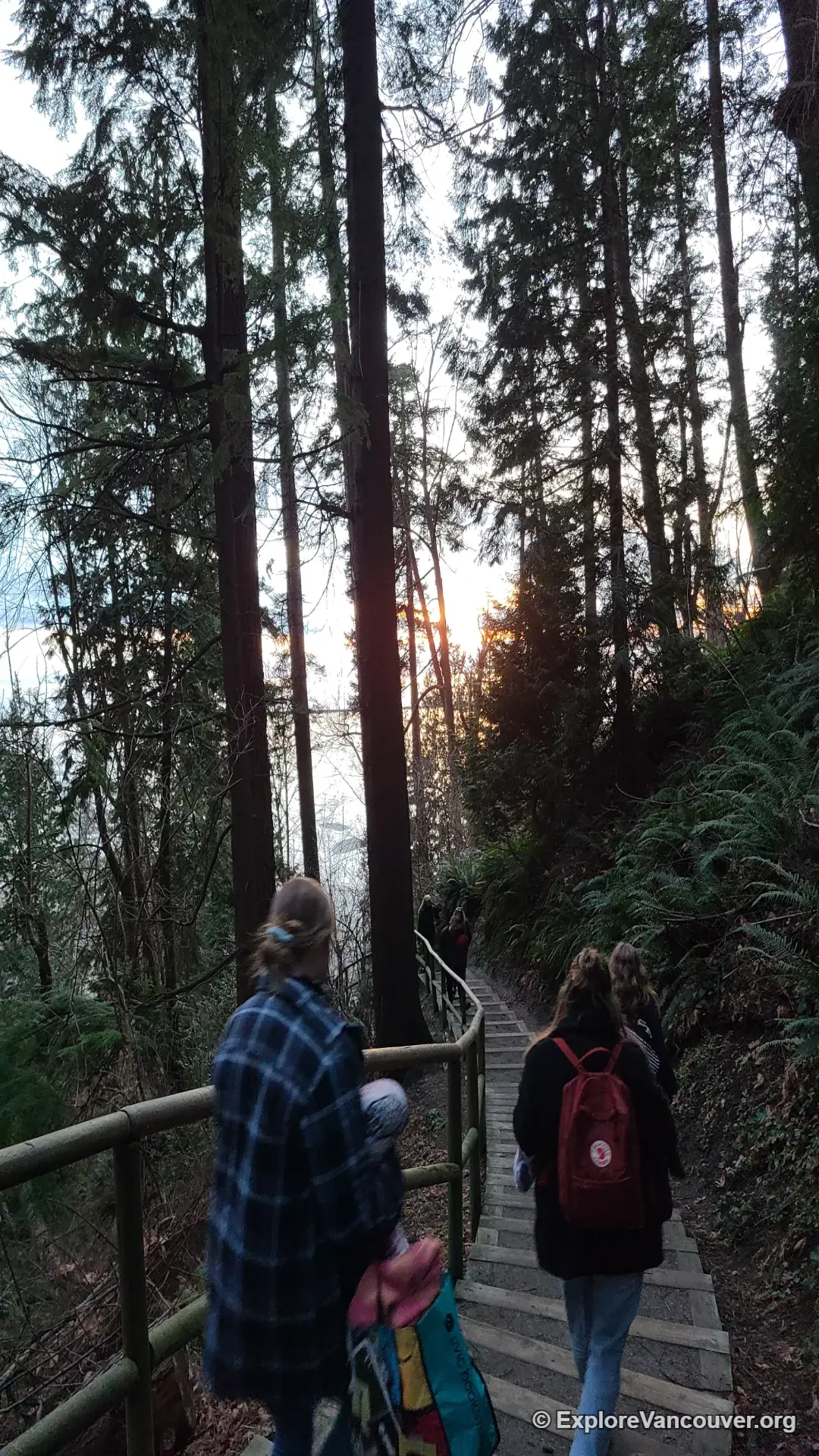
Neither route is wheelchair accessible, and there’s no vehicle or shuttle access to the beach itself. Both trails are stairs the entire way, with no elevator, ramp, or alternate path for anyone with mobility limitations. The way down is easy; the climb back up, especially on a hot afternoon, is the part that catches people off guard.
By transit, several TransLink bus routes serve the UBC Loop, a short walk from the Trail 6 trailhead. It’s worth checking current routes and schedules before you go, since UBC bus service is adjusted periodically around the academic calendar.
Bring water, sunscreen, and closed-toe shoes for the stair climb. Seasonal vendors sell drinks and snacks on the beach in summer, but they’re informal and cash-based, so it’s safer to bring your own supplies, especially outside peak season.
Parking and Transit
There’s no dedicated parking lot for Wreck Beach itself. Most visitors park on the streets around UBC’s West Mall and University Boulevard, or use one of the campus parkades, such as the West Parkade, and walk the rest of the way to the Trail 6 trailhead. Street parking near the university can fill up quickly on warm weekends and during the school year, so arriving early in the day gives you the best chance of finding a spot close to the trail. If you’re coming by bus, the UBC Loop puts you within easy walking distance of the stairs, which avoids the parking search entirely.
Opening Hours and the Best Time to Visit
Wreck Beach is a public beach and is technically accessible year-round, with practical hours running from around 7:00 am until dusk. The atmosphere changes enormously with the seasons. In June through August, the beach draws large summer crowds, seasonal vendors, and a lively social scene, especially on weekends. In the cooler months, the crowds thin out dramatically and the naturist activity drops off almost entirely, which makes fall and winter a good option for visitors who want the scenery and the solitude without the summer buzz.
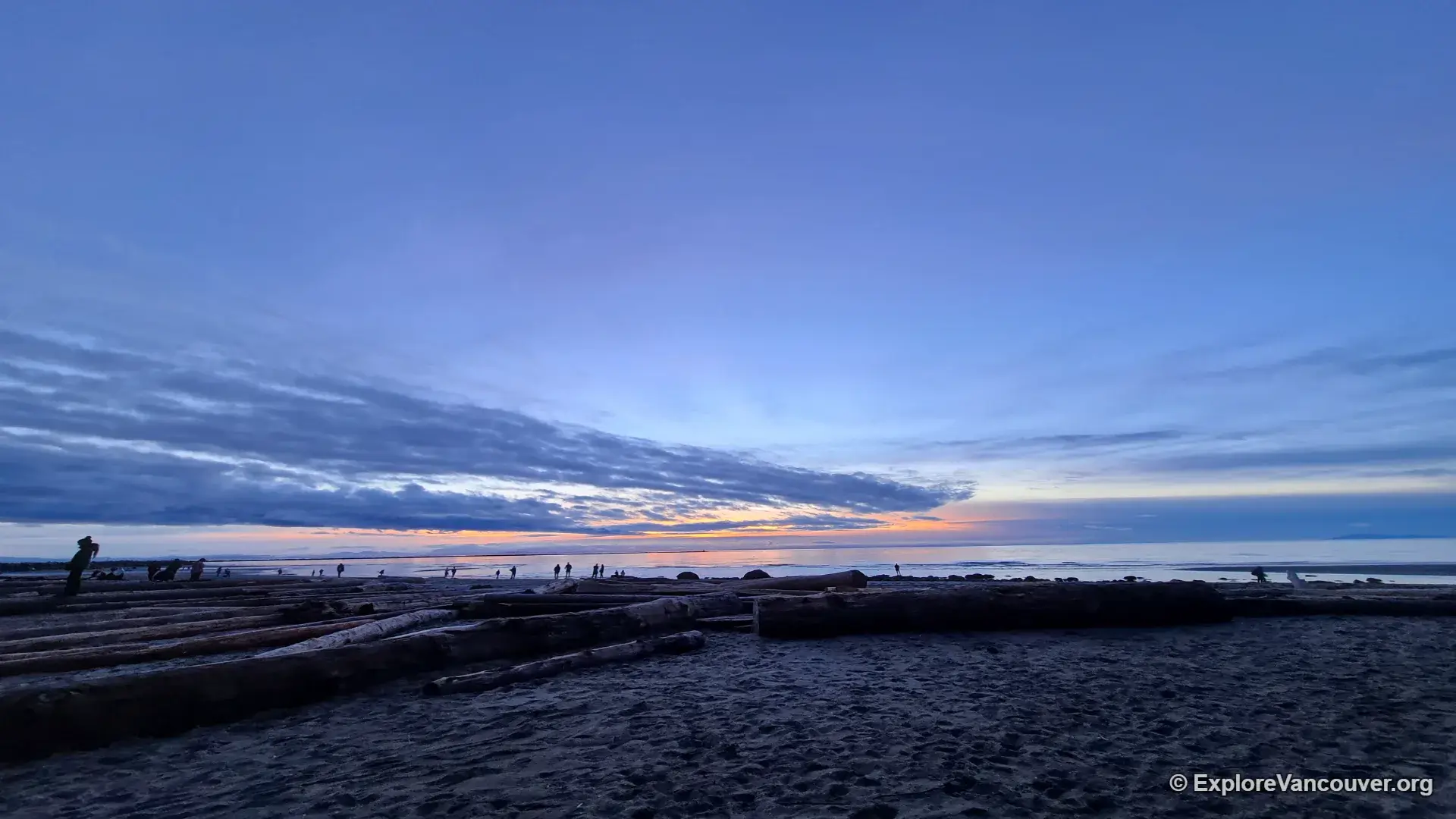
For most travellers, the single best reason to make the climb down is the sunset. Because the beach faces west across the Strait of Georgia toward Vancouver Island, it has an unobstructed view of the sun dropping into the water, and it’s regularly ranked among the best sunset spots in the city. Arriving a couple of hours before sunset gives you time to explore, take a swim, and settle in for the light show before the climb back up.
Wreck Beach is not a lifeguard-monitored beach. The Pacific water here stays cold year-round, currents can be stronger than they look, and there are submerged rocks in places, so avoid jumping in from height and keep an eye on conditions before swimming. Supervise children closely and don’t rely on beach staff for safety, because there aren’t any.
What to Expect
The scale of Wreck Beach is what surprises most first-time visitors. Rather than one crowded strip of sand, it unfolds along kilometres of shoreline, so even on a packed July afternoon you can walk a few minutes in either direction from the main stairs and find a much quieter stretch of driftwood and sand. Near the base of Trail 6, in the warmer months, informal vendors sell cold drinks, snacks, and handmade goods, which has been part of the beach’s identity for decades. The general mood is relaxed and unhurried, closer to a small beach town than a city beach, with people scattered between sunbathing, swimming, drum circles, volleyball games, and long conversations on driftwood logs.
Clothing-optional doesn’t mean clothing-mandatory. Plenty of visitors come to Wreck Beach fully dressed, and it’s entirely normal to do so. What defines the beach isn’t nudity itself but the fact that nobody is going to comment on your choice either way.
Rules and Etiquette
Wreck Beach runs on a fairly simple, mostly unwritten code, backed up by a few official rules worth knowing before you go:
- Respect privacy. Staring, filming, or photographing other beachgoers without consent is considered a serious breach of etiquette, and can get you asked to leave. Many regulars prefer visitors leave cameras at home entirely.
- No glass containers. Bring drinks in cans or reusable bottles rather than glass, both for safety and because it’s easier to pack out.
- No campfires or open flames. Fires aren’t permitted on the beach.
- No camping. Wreck Beach closes for overnight stays; plan to be back up the stairs by dusk.
- Pack out what you bring in. There are no regular garbage services on the sand itself, so carry your trash back up with you.
- Alcohol is technically restricted under BC’s open liquor laws, the same as any other public beach in the city, so keep this in mind if you’re bringing drinks.
- Wildlife stays wild. Don’t approach or handle marine life you find along the shore.
Don’t photograph people without asking first, don’t bring glass bottles or open flames, don’t try to camp overnight, and don’t jump into the water from the cliffs or rocks. These are the fastest ways to have a bad afternoon, either with other beachgoers or with the informal beach patrols that keep an eye on the shoreline in summer.
What You Can Do
- Swim in the Pacific, keeping in mind the cold water and the absence of lifeguards.
- Sunbathe on the sand or on one of the many driftwood logs, clothed or not.
- Watch the sunset over the Strait of Georgia, one of the best unobstructed sightlines in the city.
- Walk the shoreline south toward quieter, less populated sections of the beach.
- Picnic with your own food and drink, since there are no nearby restaurants at beach level.
- People-watch and take in a genuinely unusual, laid-back slice of Vancouver culture.
- Birdwatch along the forested bluffs, which support a range of coastal bird species.
Wreck Beach doesn’t try to be anything other than itself, and that unbothered, come-as-you-are attitude is exactly what makes the long climb down worth it.
Photo Gallery
Frequently Asked Questions
It’s clothing-optional, not mandatory nudity. Some visitors go nude, many wear swimsuits, and plenty stay fully dressed. All are normal at Wreck Beach.
The main Trail 6 staircase runs roughly 470 to 500 steps from University Boulevard down to the sand. There’s no shortcut and no accessible route.
There’s no dedicated parking lot at the beach itself. Visitors typically use street parking near UBC’s University Boulevard and West Mall, or a campus parkade, then walk to the Trail 6 trailhead.
The beach is open to the public roughly from 7:00 am until dusk, year-round, though visitor numbers and vendor activity are concentrated in the summer months.
Swimming is popular, but there are no lifeguards, the water is cold year-round, and there are submerged rocks in places. Swim cautiously and avoid jumping from the cliffs or rocks.
Photographing other beachgoers without their consent is strongly discouraged and can get you asked to leave. It’s best to leave cameras at home or use them only for the scenery.
It’s not typically considered a family beach given its clothing-optional status, steep stair access, and lack of lifeguards or amenities. Families are welcome, but should weigh these factors before visiting.
Open alcohol is restricted under BC’s public liquor laws, the same as any other public beach, and campfires or open flames are not permitted on the sand.
Explore More of Vancouver
Discover more of the city’s top parks, beaches, and attractions.
Browse Vancouver Attractions