
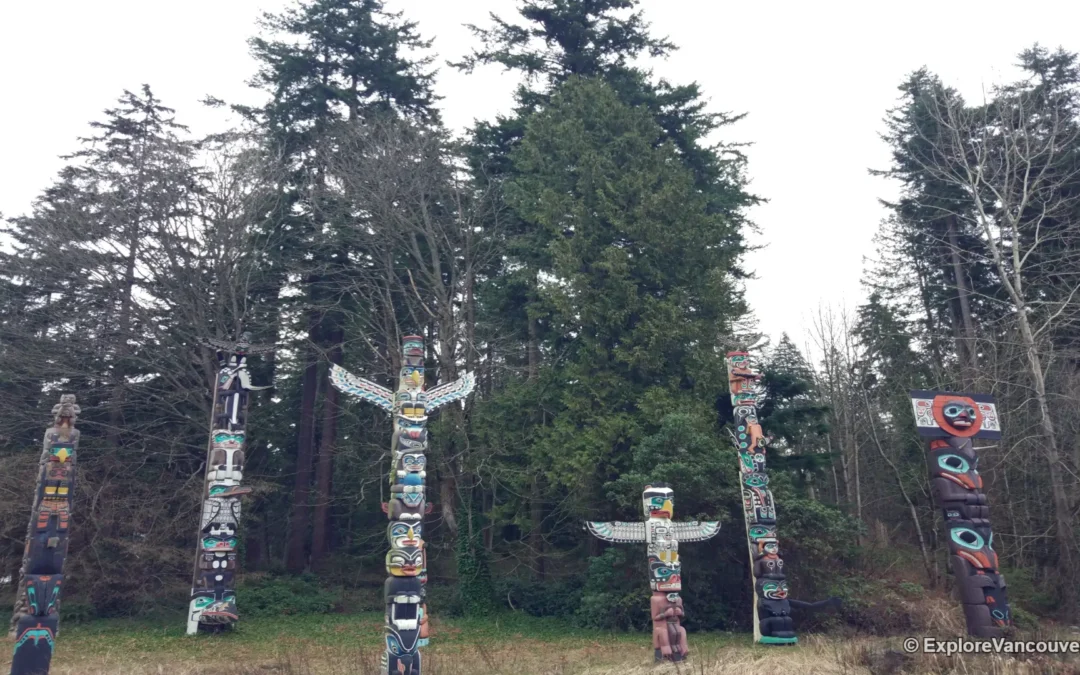
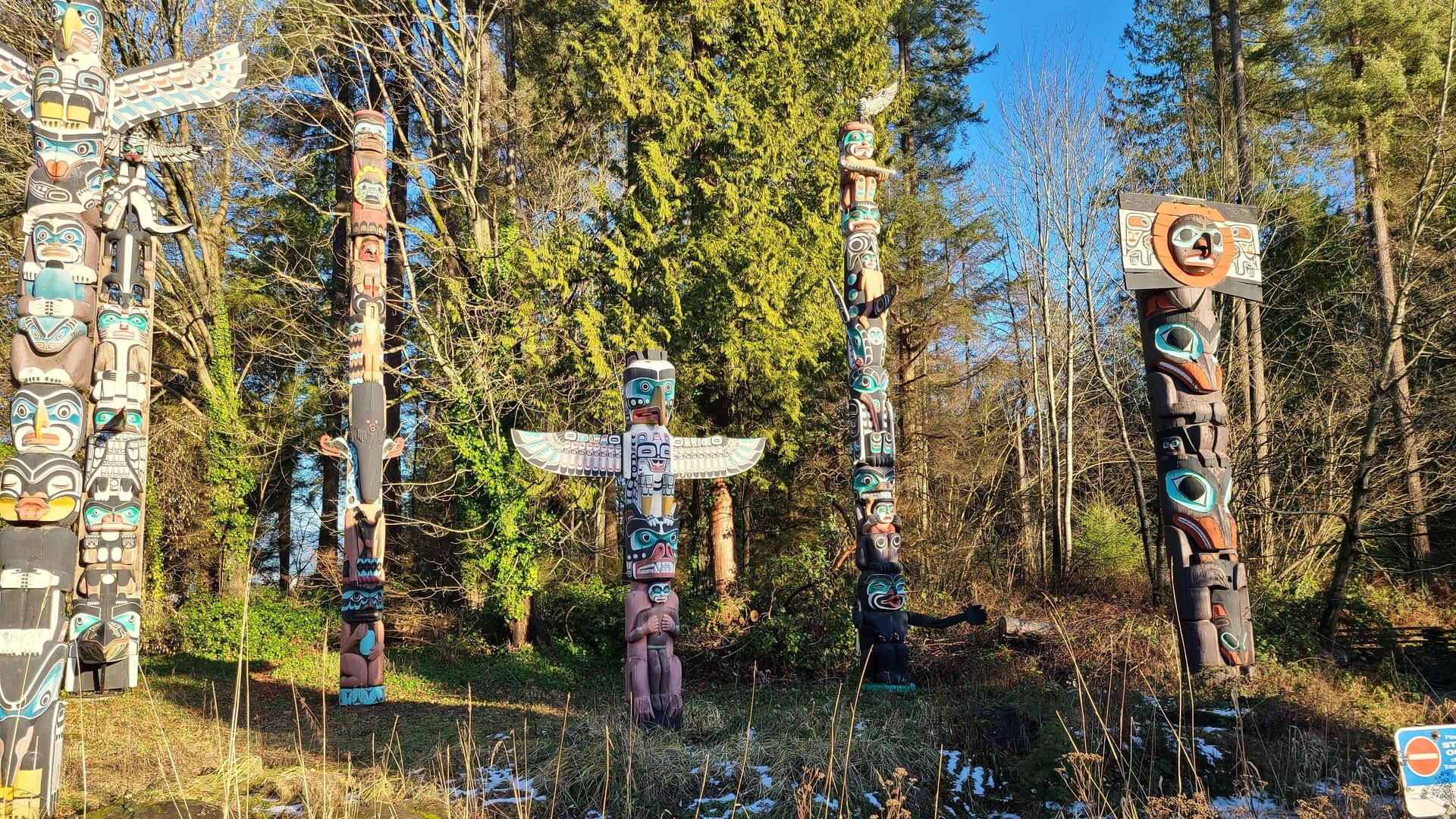
The totem pole display at Brockton Point, Stanley Park’s most visited attraction.
Ask anyone what to see first in Stanley Park and the answer is usually the same: the totem poles. Tucked into a grassy clearing at Brockton Point on the park’s eastern edge, this cluster of towering, hand carved poles has become one of the most photographed sights in British Columbia, and it doesn’t cost a thing to visit.
History of the Totem Poles at Brockton Point
The story of how these poles came to Stanley Park stretches back more than a century. Worth knowing before you go: the poles weren’t carved for this spot. They were brought here starting in the 1920s as part of a preservation effort, after the Vancouver Park Board began purchasing poles from communities across the province to protect them from being sold off or lost.
The first four poles arrived from Alert Bay in 1924 and were originally set up near Lumberman’s Arch. More poles followed from Haida Gwaii and Rivers Inlet through the 1930s, expanding the collection ahead of the city’s 1936 Golden Jubilee. The full group was moved to its current home at Brockton Point in the early 1960s, where it’s remained ever since.
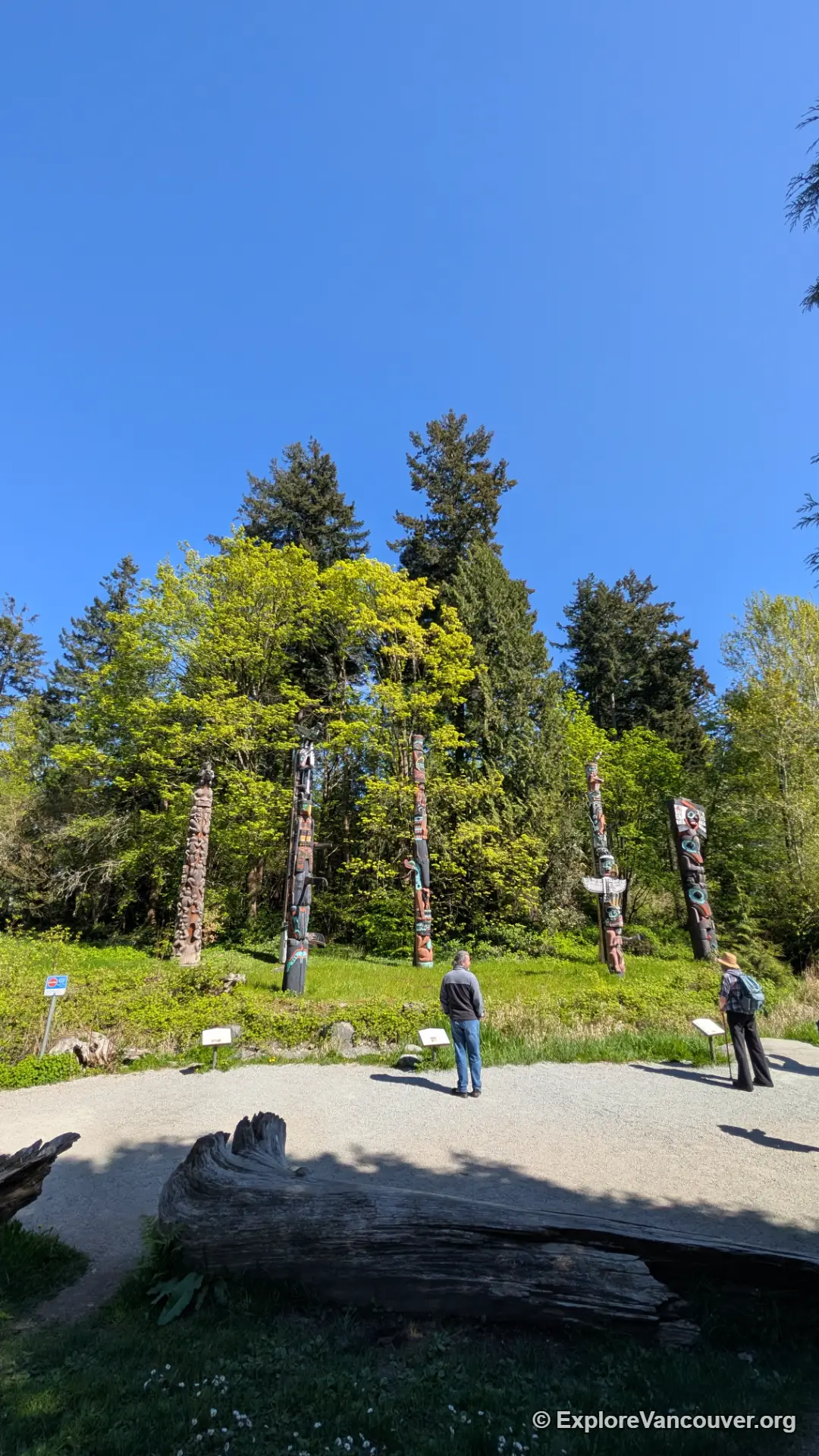
One detail that surprises a lot of visitors: none of these poles originated with the Coast Salish nations, Musqueam, Squamish, and Tsleil-Waututh, whose traditional territory includes Stanley Park itself. The carvings represent Haida, Kwakwaka’wakw, and Nisga’a traditions from further up the coast. It’s a layered history, and the on-site interpretive panels do a good job laying it out if you want the fuller picture while you’re there.
Most of the poles standing today are actually replicas. The originals were gradually moved to museums for preservation starting in the late 1980s, and skilled Indigenous carvers were commissioned to create the pieces on display now. The most recent addition arrived in 2009, and as of late 2024 the collection numbers eight poles after one, Kakaso’Las, was returned to the Museum of Anthropology at UBC for conservation.
What the Totem Poles Mean
A common misconception is that totem poles were worshipped as idols. They weren’t. Each pole is closer to a family record, a stack of crests and characters that tell the story of a specific clan’s ancestry, rights, and history. The figures aren’t random either: an eagle typically represents the sky, a whale the sea, a wolf the land, and a frog the passage between land and water.
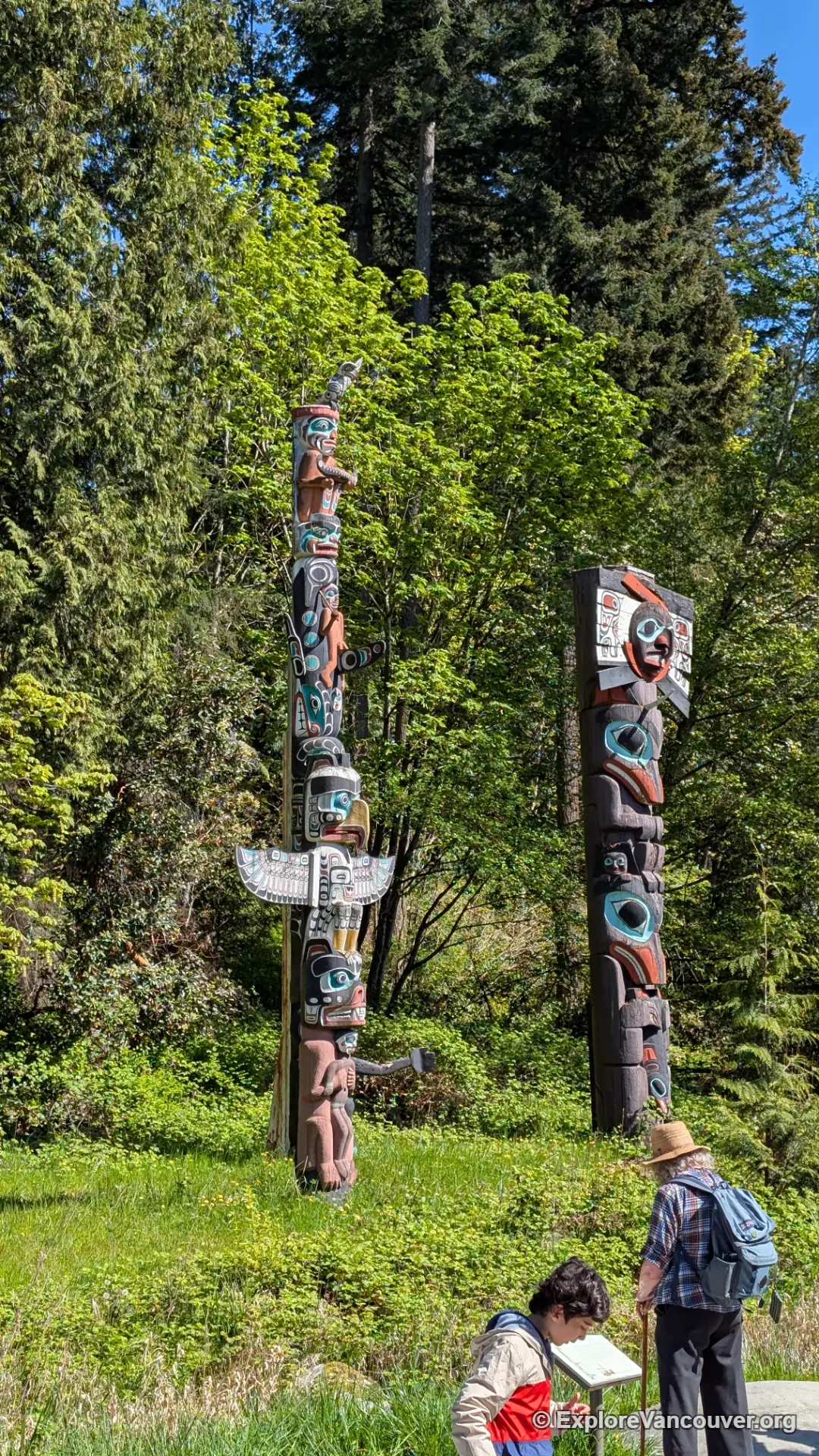
Reading a pole from top to bottom (or bottom to top, depending on the tradition) can reveal a whole narrative. Some carvings show origin stories, like a family adopting an animal as its crest after a legendary encounter. Others are mortuary poles that once held a chief’s remains in a cavity near the top. Taking a slow walk along the row and reading the plaque in front of each one is honestly the best way to get the full meaning; a quick glance doesn’t do them justice.
More to See Nearby
The totem poles aren’t the only artwork at Brockton Point. Look for the three Susan Point Welcome Gateways scattered around the clearing, red cedar gates carved in 2008 by Musqueam artist Susan Point. They’re the only Coast Salish artwork at the site, a nod to the nation whose territory this actually is.
Right next to the poles is the gift shop, currently operating as At the Totem Poles Gift Shop since it took over the space in 2021 from the longtime Legends of the Moon store. It’s a good spot for authentic Indigenous art and souvenirs, and the building also has public washrooms, useful to know since facilities are limited elsewhere along this stretch of the seawall.
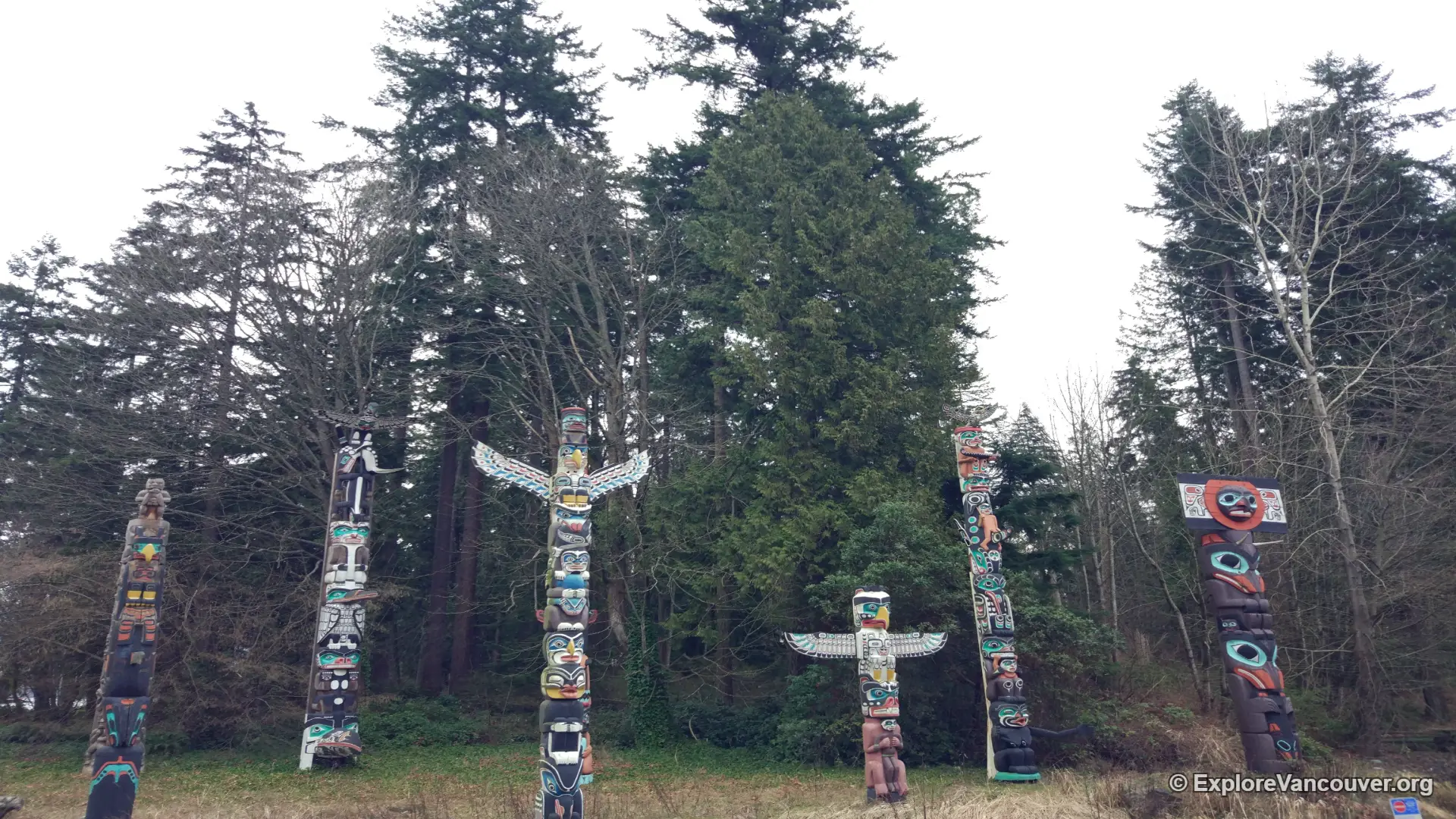
Stand at Brockton Point long enough and you start noticing how the poles face the water, almost as if they’re watching the same tide that’s watched Vancouver grow up around them.
Photos of the Totem Poles
If you’re planning your visit around getting good shots, the light here is best in the early morning or on an overcast day, when the colors on the carvings really pop against the forest backdrop. Here’s a look at the site through the seasons.
Getting There and Practical Details
The totem poles sit about a kilometre along the seawall from the Coal Harbour entrance to Stanley Park, near Brockton Oval. If you’re driving, there’s a pay parking lot right at the site, billed hourly with no day rate available. Transit riders can hop on Bus 19 to the Stanley Park Loop and walk in from there, and it’s also an easy, mostly flat stop if you’re cycling or walking the seawall.
Frequently Asked Questions
Want to plan the rest of your day in the park?
Explore the Stanley Park Guide