
Lynn Canyon Park is one of the most rewarding outdoor destinations on Vancouver’s North Shore: a free, old-growth rainforest threaded with suspension bridges, waterfalls, emerald swimming pools, and trails that range from easy boardwalk strolls to full-day backcountry hikes. Located in North Vancouver, about 30 minutes from downtown by transit or car, the park draws locals and visitors year-round for its dramatic canyon scenery, accessible trails, and the rare chance to walk above a rushing creek on a swaying bridge without paying an admission fee.
Unlike many of Vancouver’s headline attractions, Lynn Canyon costs nothing to enter. There is no ticket booth at the trailhead, no timed reservation system, and no crowd-control turnstile. You simply arrive, step onto the forest floor, and within minutes find yourself beneath a canopy of western red cedar and Douglas fir, listening to Lynn Creek tumble through a narrow granite gorge. For budget-conscious travellers, families, and anyone who prefers nature over queues, that alone makes Lynn Canyon worth prioritizing on a Vancouver itinerary.
A Brief History of Lynn Canyon
Lynn Canyon sits within the traditional territories of the Sḵwx̱wú7mesh (Squamish) and səlilwətaɬ (Tsleil-Waututh) Nations, who have stewarded these lands and waters for thousands of years. Lynn Creek itself was an important resource: salmon returned each fall to spawn in its cold, oxygen-rich waters, and the surrounding forest provided cedar for tools, shelter, and transport.
European settlement brought logging to the Lynn Valley area in the late 19th and early 20th centuries. The old-growth trees that remain in Lynn Canyon Park today survived because the terrain was too steep and the creek too powerful for easy extraction in some sections. In 1912, the Lynn Canyon Suspension Bridge was built, originally as a private access route for local residents and loggers crossing the gorge. What began as a practical footbridge has since become one of the most photographed structures on the North Shore.
The park was officially established in 1912 and has been managed by the District of North Vancouver ever since. The Lynn Canyon Ecology Centre, near the main parking area, helps visitors understand the forest ecosystem, local wildlife, and the geological forces that carved the canyon over millennia. Today, Lynn Canyon receives hundreds of thousands of visitors annually, yet the trails still feel genuinely wild in many sections, particularly once you move beyond the bridge and main loop.
The Lynn Canyon Suspension Bridge
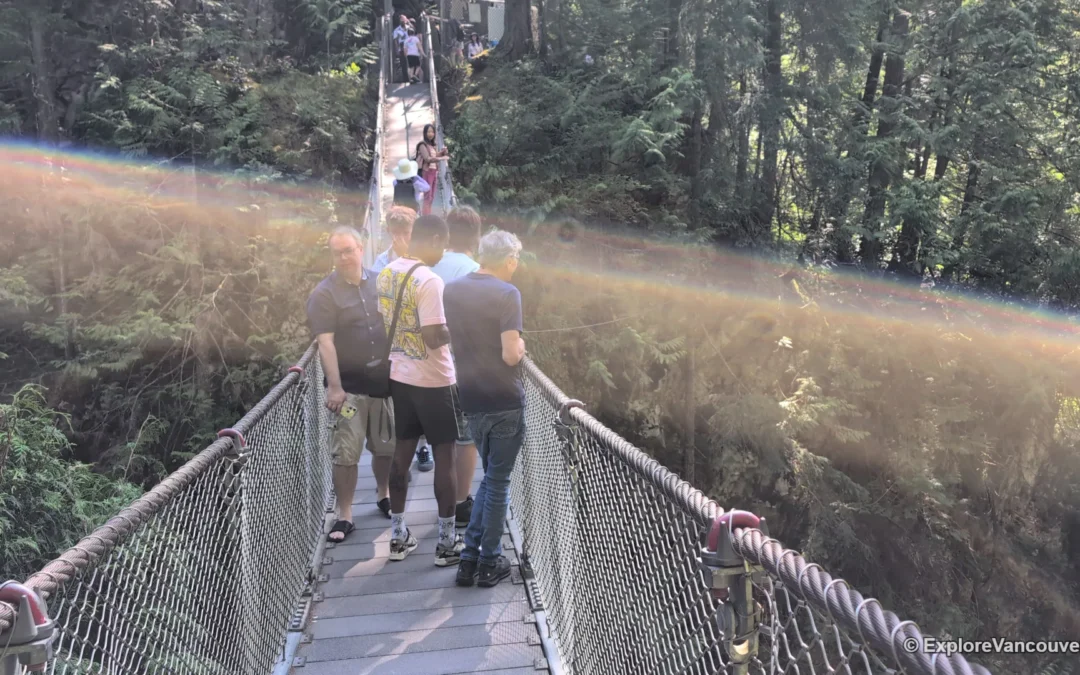
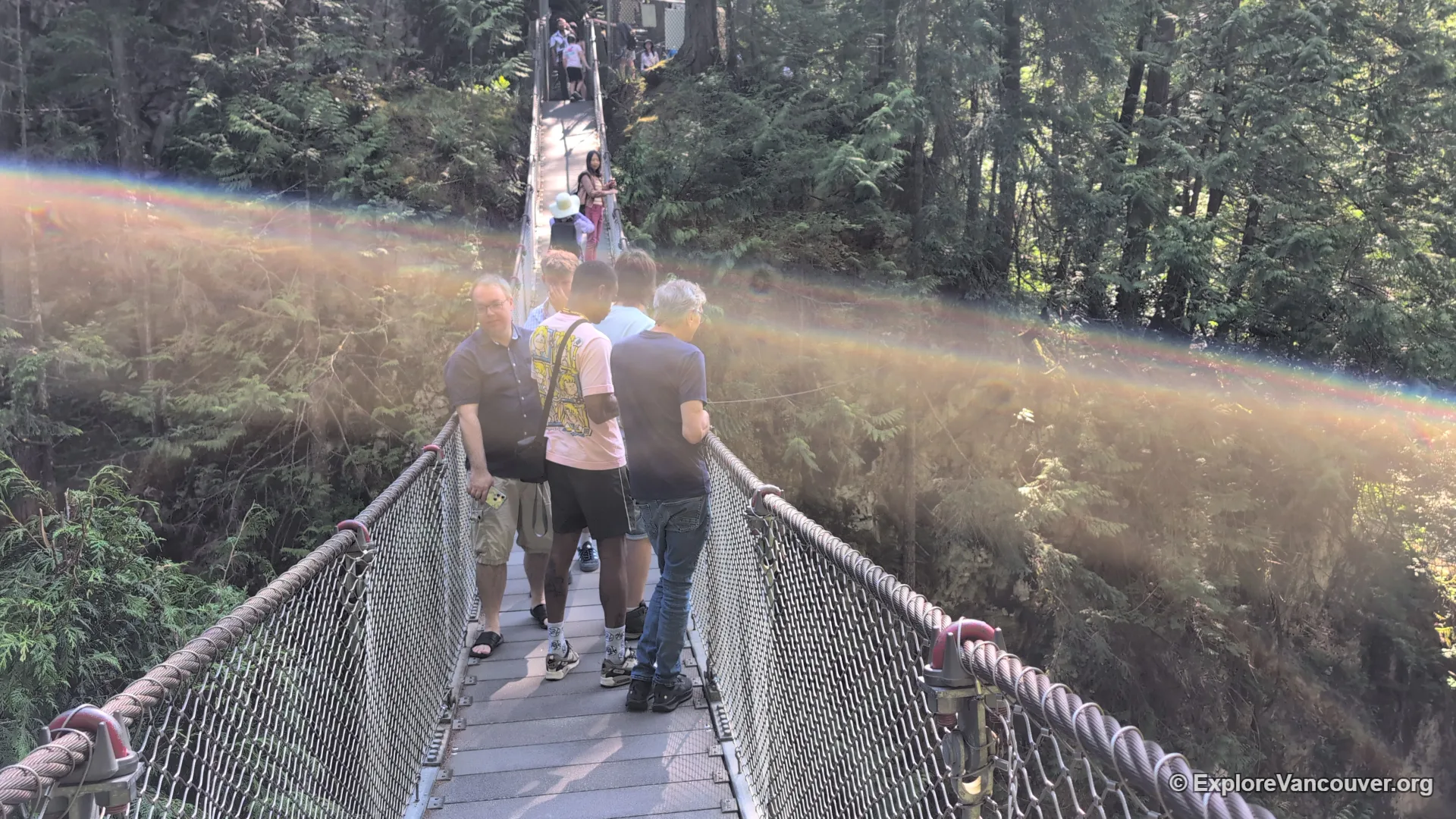
The suspension bridge is the park’s centrepiece and the reason many people make the trip. Spanning approximately 50 metres (164 feet) across Lynn Creek, the bridge hangs roughly 50 metres above the water, high enough that the gorge feels bottomless when you look down, close enough to the treetops that you can reach out and almost touch the moss-covered branches on either side.
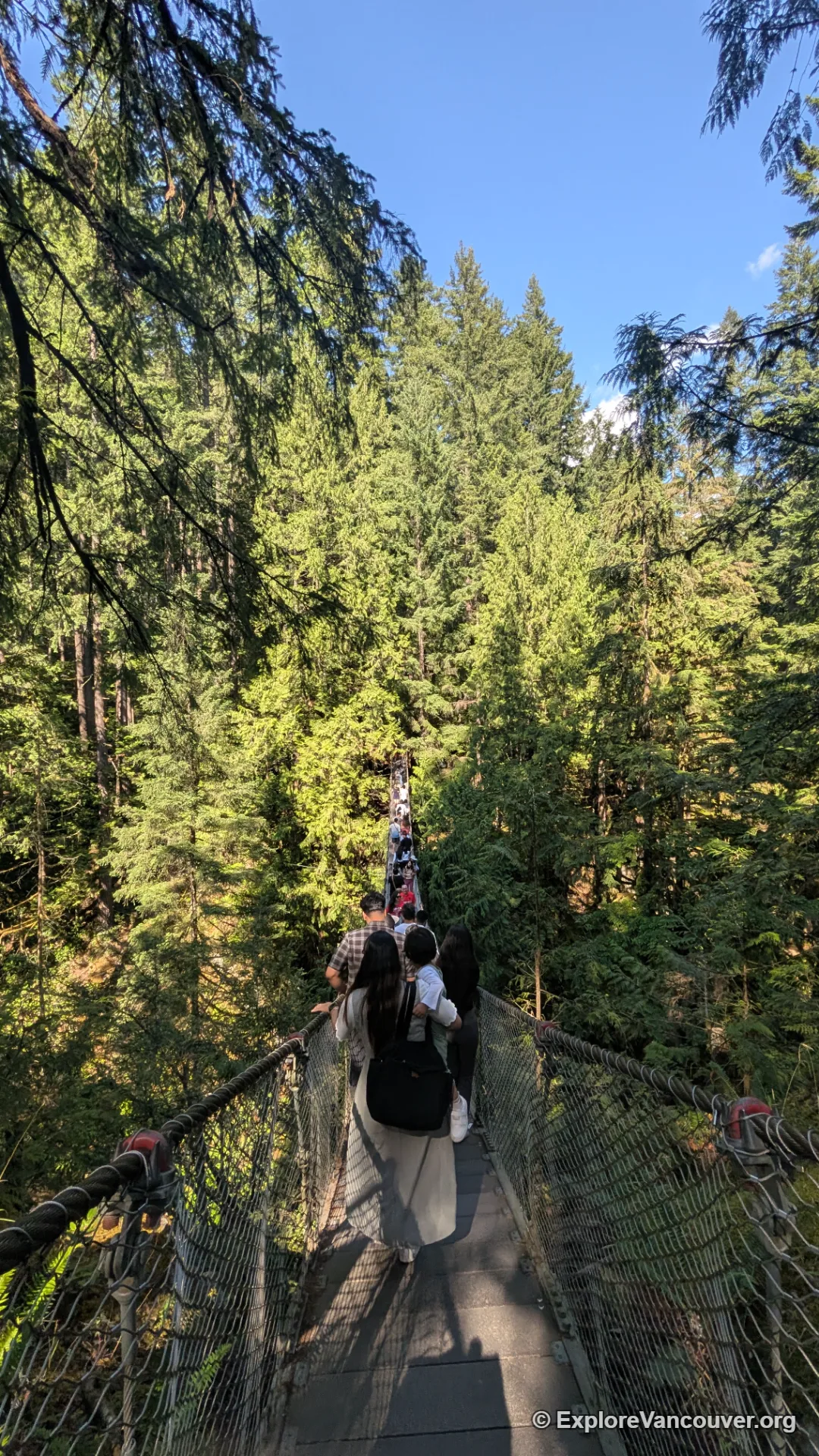
The bridge sways. That is not a defect, it is the nature of suspension design. As you walk across, the wooden planks flex slightly beneath your feet and the cables move with the weight of each step. For some visitors this is thrilling; for others it requires a deep breath and a firm grip on the handrail. The crossing takes only a minute or two, but the views up and down the canyon are extraordinary: white water crashing over boulders, ferns clinging to vertical rock faces, and light filtering through the canopy in green-gold shafts.
Unlike the nearby Capilano Suspension Bridge, which charges admission and operates as a commercial attraction with gift shops and timed entry, Lynn Canyon’s bridge is entirely free. There is no reservation required. On summer weekends the approach can be busy, but the experience itself remains uncommercialized: no photo package upsell, no mandatory guided tour, just the bridge and the forest.
Trails and Hiking Routes
Lynn Canyon is not a single trail, it is a network. The main visitor loop is short and suitable for most fitness levels, but the park also connects to longer regional routes that can keep experienced hikers occupied for an entire day. Trail surfaces range from wide, maintained gravel paths to narrow root-crossed singletrack through dense understory.
The Main Loop: Suspension Bridge to Twin Falls
Most first-time visitors follow the classic loop: park at the Ecology Centre lot, walk down to the suspension bridge, cross to the east side of the creek, and follow the trail downstream to Twin Falls before looping back. This route takes roughly 45 minutes to an hour at a relaxed pace and covers the park’s greatest hits: the bridge, canyon views, and two side-by-side waterfalls that pour over a rock ledge into a deep pool.
Twin Falls is particularly impressive in spring and early summer when snowmelt swells Lynn Creek. The viewing platform gives a clear sightline to both cascades, and the surrounding rock walls are draped in moss and maidenhair fern. Photographers often linger here; the diffused forest light and moving water make for excellent long-exposure shots if you bring a tripod.
Pipeline Trail and the Baden Powell Connection
For a slightly longer walk, the Pipeline Trail follows the route of an old water pipeline along the west side of the canyon. It is relatively flat, well-shaded, and offers periodic glimpses of the creek below through gaps in the trees. The Pipeline Trail connects to the Baden Powell Trail, one of the North Shore’s most famous long-distance routes, stretching from Deep Cove to Horseshoe Bay across the entire length of the mountains.
Hiking a section of the Baden Powell from Lynn Canyon gives you a taste of backcountry North Shore hiking without committing to a multi-hour expedition. You will encounter stone steps, wooden bridges, steep switchbacks, and sections where the trail narrows to a single file between salal bushes and sword ferns. Proper footwear is essential on these routes; the forest floor stays damp for much of the year and roots become slippery after rain.
Rice Lake and the Lynn Headwaters
More ambitious hikers can continue from Lynn Canyon into the Lynn Headwaters Regional Park, a larger protected area at the upper reaches of Lynn Creek. The trail to Lynn Headwaters is significantly longer, roughly 10 kilometres one way from the canyon, and gains elevation steadily through second-growth and old-growth forest. The reward is a quieter, less visited landscape with mountain views and the source of Lynn Creek itself.
Closer to the main park, Rice Lake offers an easy alternative for families. Located a short drive from Lynn Canyon in the same watershed, Rice Lake is a calm, forest-framed lake with a flat walking trail, fishing dock, and picnic areas. Pairing Lynn Canyon in the morning with Rice Lake in the afternoon makes for an excellent full-day North Vancouver outing: canyon drama followed by lakeside calm.
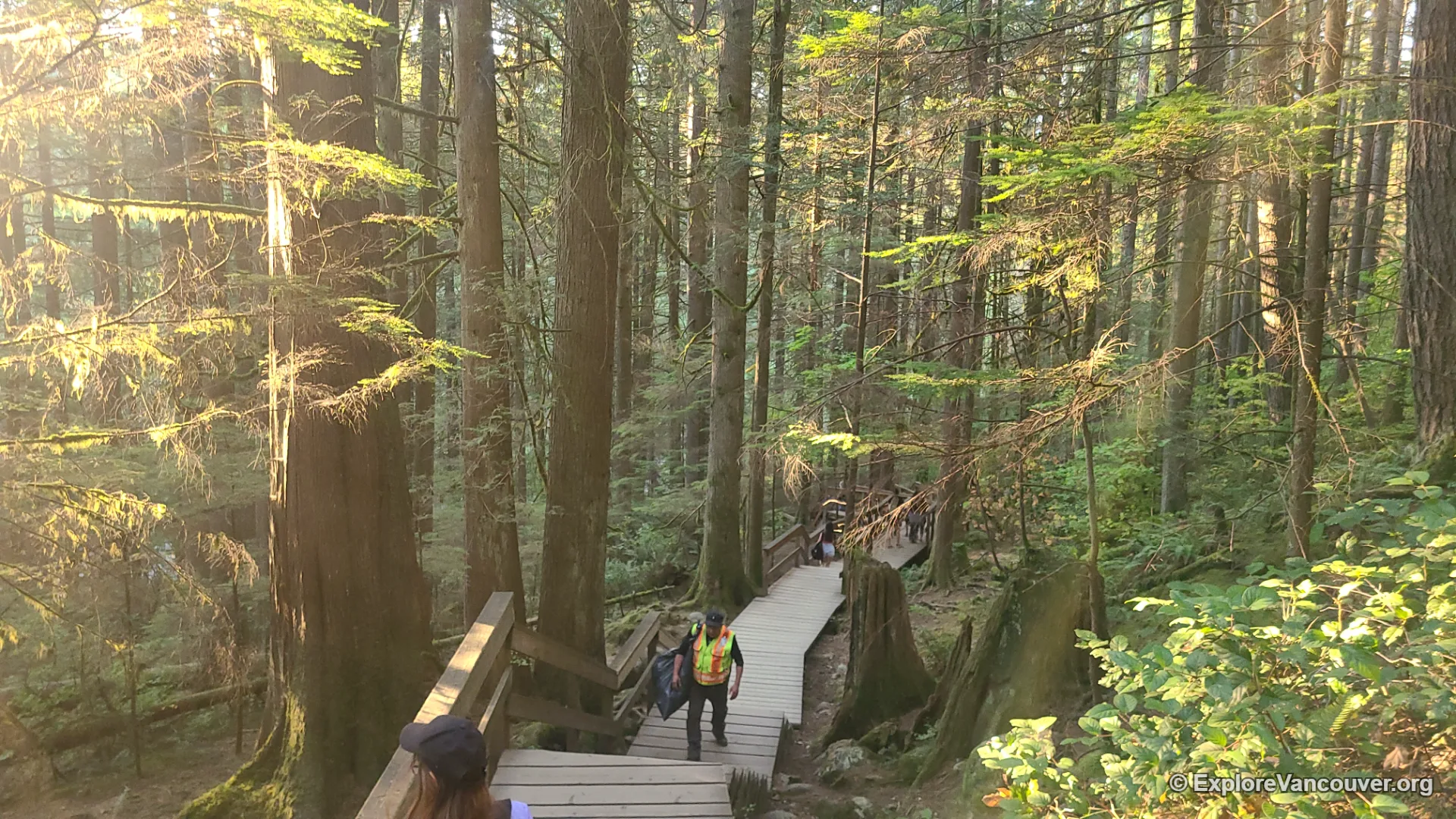
Swimming Holes: 30 Foot Pool and Beyond
On hot summer days, Lynn Canyon transforms from a hiking destination into one of Vancouver’s most popular wild swimming spots. The water in Lynn Creek is cold, fed by mountain snowmelt and groundwater, it rarely exceeds 10 to 15°C even in August, but that does not stop hundreds of people from jumping in when the temperature downtown pushes past 30°C.
The 30 Foot Pool
The 30 Foot Pool is the park’s most famous swimming hole. Named for its depth rather than its height, this deep emerald pool sits in a rock amphitheatre downstream from the main bridge area. Canyon walls rise on either side, old-growth trees lean over the water, and a rope swing on one bank has become an unofficial summer tradition, though park officials discourage diving and swinging due to injury risk.
Getting to the 30 Foot Pool requires a short but steep descent from the main trail. The path is well trodden but can be muddy and root-covered; flip-flops are a bad idea. Once you arrive, you will usually find a mixed crowd: families with picnics on the rocks, teenagers daring each other into the cold water, and quiet swimmers floating on their backs staring up at the canopy. The atmosphere is communal and relaxed, with a distinctly local Vancouver feel.
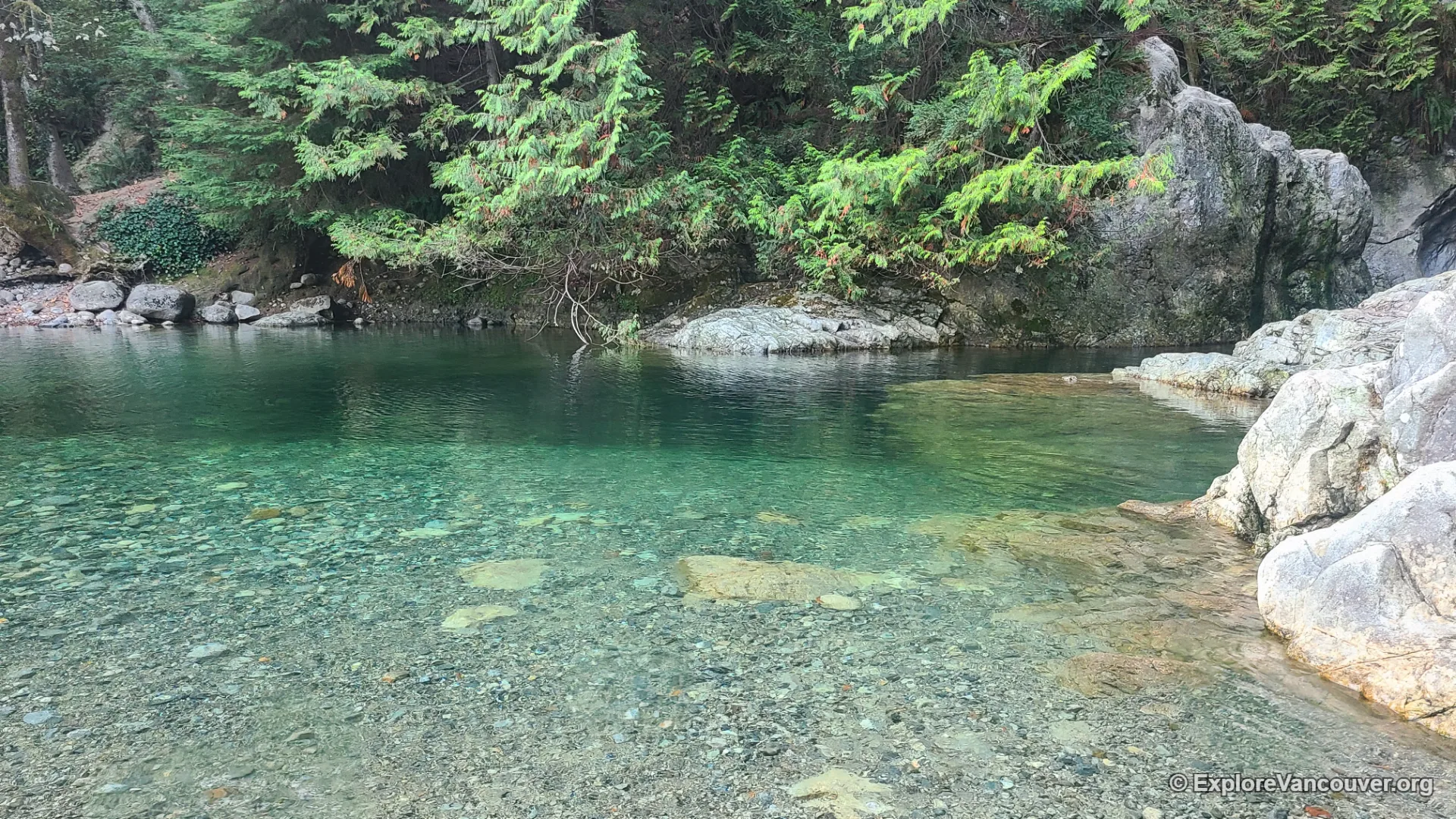
The 4 Foot Pool
Upstream and closer to the suspension bridge, the 4 Foot Pool offers a shallower, more sheltered alternative. As the name suggests, the water here is not as deep, making it somewhat more approachable for cautious swimmers and older children, though currents can still be strong after rainfall. The setting is quieter than the 30 Foot Pool, with fewer crowds and more intimate canyon views.
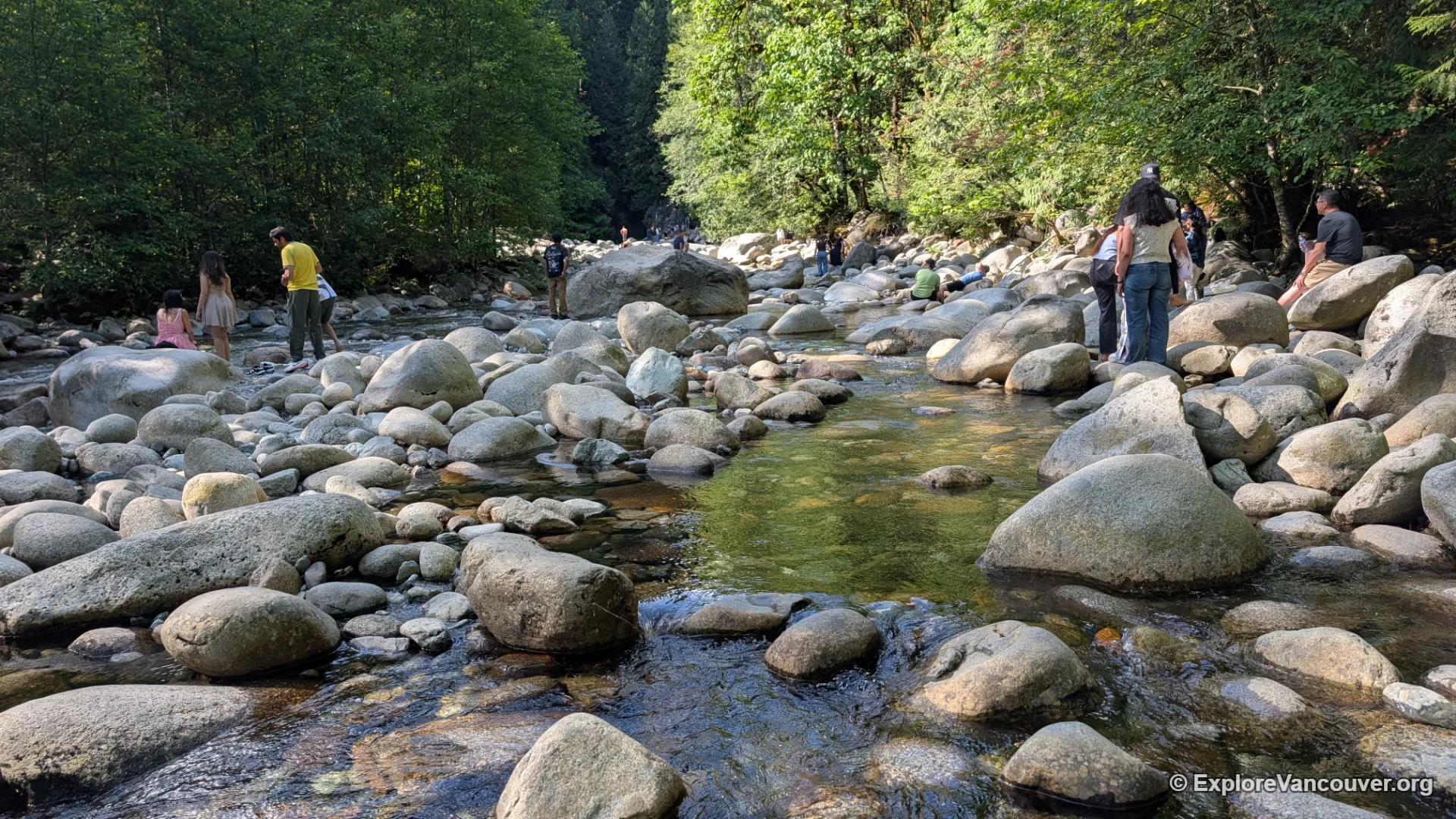
Lynn Creek is unsupervised. There are no lifeguards, no marked depth signs, and no gentle entry at most points; swimmers jump from rocks into cold, moving water. Currents increase dramatically after rain, and underwater rocks shift seasonally. Swim at your own risk, never alone, and avoid the water entirely during high-flow conditions in spring runoff or after storms.
Wildlife, Ecology, and Seasonal Highlights
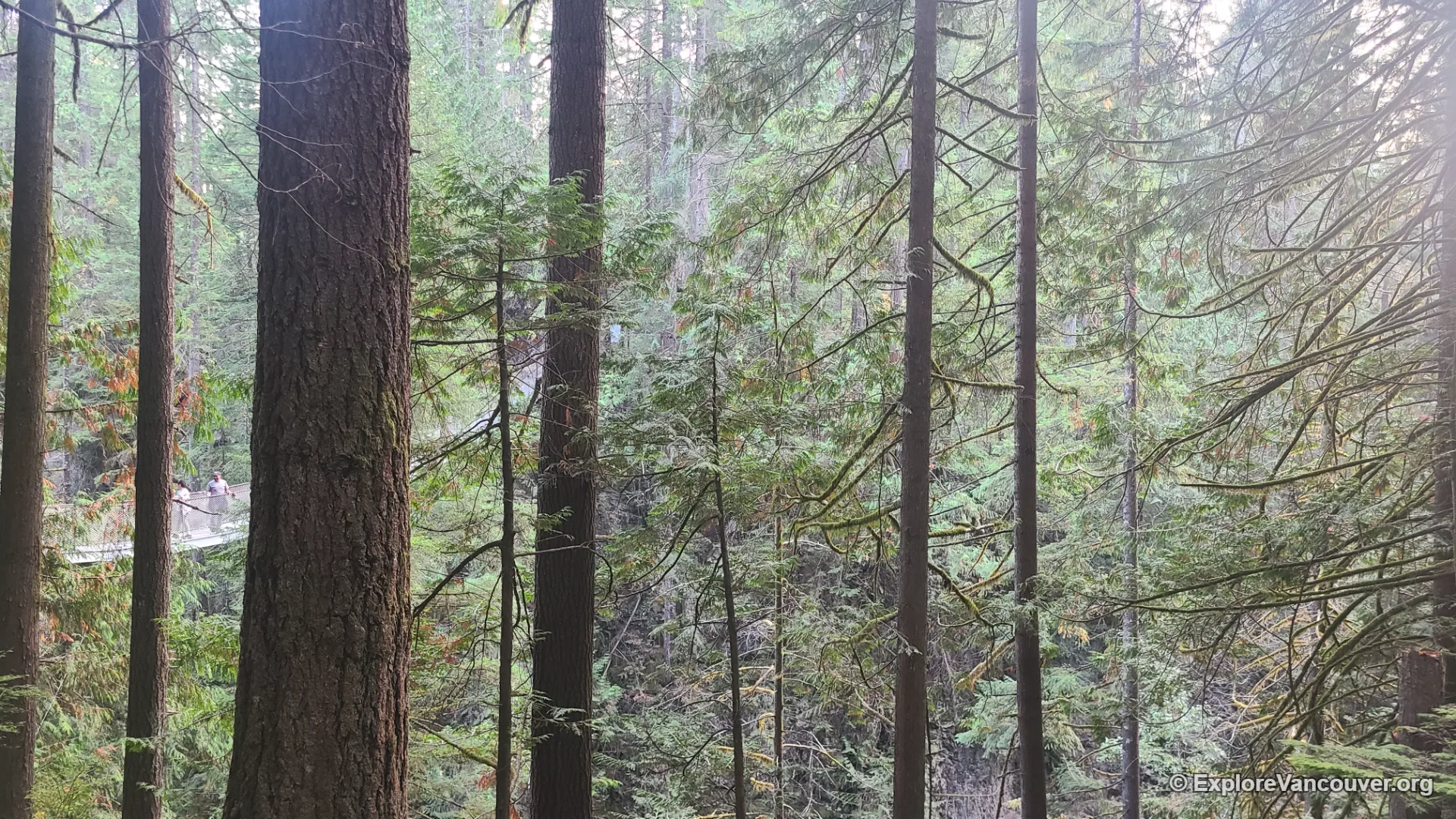
Lynn Canyon is a living ecosystem, not a landscaped garden. The forest supports black bears (rarely seen but present), black-tailed deer, raccoons, river otters, and a rich bird population including Pacific wren, varied thrush, and bald eagles overhead. On quiet weekday mornings you may hear the drumming of a pileated woodpecker or spot a Douglas squirrel caching cones on a mossy log.
Salmon Spawning in Fall
Each October and November, coho and chum salmon return to Lynn Creek to spawn. Standing on the suspension bridge or the viewing platforms downstream, you can watch fish navigate the rapids, rest in pools, and complete their lifecycle in the gravel beds. It is one of the most accessible salmon-viewing experiences in Metro Vancouver and requires no special equipment, just patience and a pair of eyes focused on the water.
The Ecology Centre often runs educational programs during spawning season, explaining the salmon lifecycle and the creek’s role in the broader coastal food web. If you visit in fall, check their schedule before you go.
Spring and Summer
Spring brings wildflowers to the forest floor: trillium, vanilla leaf, and skunk cabbage appear in damp areas near the creek. The canopy fills in by May, creating the deep green shade that Lynn Canyon is known for. Summer is peak swimming and hiking season; arrive before 10am on weekends if you want parking without a wait.
Winter
Winter transforms the canyon. Rain, not snow at this elevation, saturates the forest, swells the creek to a thunderous volume, and turns every surface a deeper shade of green. Mist hangs in the gorge. The bridge sways more noticeably in wind. Crowds thin dramatically, and the park takes on a moody, contemplative character that many locals prefer to the busy summer scene. Waterproof boots and a good rain jacket are non-negotiable from November through March.
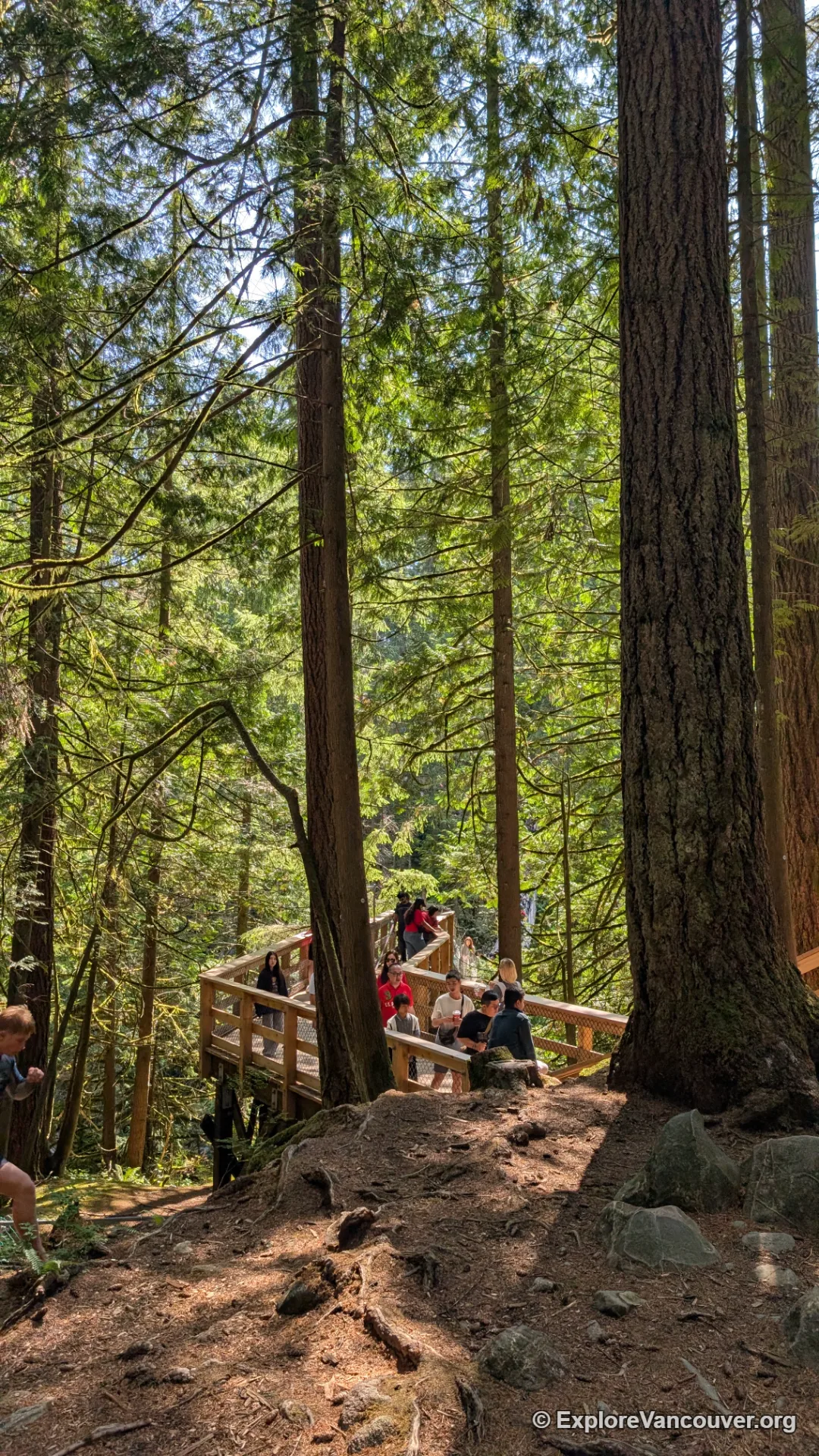
The Lynn Canyon Ecology Centre
Near the main parking lot, the Lynn Canyon Ecology Centre is a small but worthwhile stop, especially if you are visiting with children or want context before hitting the trails. Exhibits cover local geology, the plants and animals of the coastal temperate rainforest, and the history of conservation on the North Shore. Naturalists are often on hand to answer questions about what you might see on the trail.
Admission to the Ecology Centre is by donation. Hours vary seasonally, so check the District of North Vancouver website before planning a visit. Even if the centre is closed, the surrounding area has picnic tables, washrooms, and a trailhead kiosk with a basic map of the main routes.
How to Get to Lynn Canyon
By Public Transit
Lynn Canyon is one of the most transit-accessible rainforest parks in Metro Vancouver. From downtown Vancouver, take the SeaBus from Waterfront Station to Lonsdale Quay in North Vancouver (a 12-minute crossing). From Lonsdale Quay, transfer to TransLink Bus 228 (Lynn Valley) or Bus 229 (Lynn Valley / Horseshoe Bay). Both routes stop at Lynn Valley Centre, a short walk from the park entrance at Park and Peters Road.
The total journey from downtown takes roughly 45 to 55 minutes and costs a standard TransLink fare. No car required, which makes Lynn Canyon a standout option among North Shore destinations. For more parks reachable without a vehicle, see our guide to BC provincial parks near Vancouver you can visit without a car.
By Car
From downtown Vancouver, cross the Lions Gate Bridge or Second Narrows (Ironworkers Memorial) Bridge and follow Highway 1 east to the Lynn Valley Road exit. Follow Lynn Valley Road north, turn right on Park Road, and continue to the Ecology Centre parking lot at 3663 Park Road.
Parking is free but limited, roughly 100 spaces in the main lot, with overflow street parking on nearby residential roads when full. On summer weekends the lot often fills by late morning. Arriving early or visiting on a weekday dramatically improves the experience. There is no parking at the suspension bridge itself; all visitors walk in from the Ecology Centre or nearby street parking.
What to Bring
- Footwear: Trail runners or hiking boots with grip, not sandals on the main trails. Water shoes if you plan to swim.
- Rain gear: The North Shore receives roughly twice the rainfall of downtown Vancouver. A packable rain jacket is useful even on days that start sunny.
- Water and snacks: There are no concessions inside the park. Bring your own food and at least one litre of water per person for a half-day visit.
- Swimwear and towel: Essential in summer if you plan to visit the pools.
- Layers: Temperatures under the canopy can be 5 to 10°C cooler than in the city. A light fleece or long sleeve is wise even in July.
- Camera: The canyon, bridge, and pools are highly photogenic. A phone is sufficient; a wide-angle lens helps for the bridge and pool shots.
- Bear awareness: Carry bear spray if you plan to hike into Lynn Headwaters. Make noise on quiet trails. Never feed wildlife.
Practical Information
- Address: 3663 Park Road, North Vancouver, BC V7J 3G3
- Admission: Free
- Hours: Open daily from dawn to dusk
- Dogs: Permitted on leash on most trails; check current park bylaws for restricted areas
- Accessibility: The main trail from the Ecology Centre to the suspension bridge includes boardwalk sections suitable for wheelchairs and strollers, though some connecting trails are steep and unpaved
- Duration: Allow 1.5 to 3 hours for the main loop; a full day if combining with Lynn Headwaters or Rice Lake
- Best time to visit: May to October for warm hiking and swimming; November for salmon; December to February for solitude and dramatic winter flow
Lynn Canyon vs. Capilano Suspension Bridge
Visitors often ask whether they should visit Lynn Canyon or Capilano Suspension Bridge Park. The honest answer is both, if you have time, but they offer fundamentally different experiences.
Capilano is a polished, ticketed attraction with a longer main bridge, cliffwalk, treetop adventure, cultural programming, and extensive visitor infrastructure. It is ideal for travellers who want a curated, accessible experience with amenities, a gift shop, and on-site dining. Expect to spend $60 to $70 CAD per adult and 2 to 3 hours on site.
Lynn Canyon is free, wilder, and less structured. The bridge is shorter, the facilities are minimal, and the atmosphere is closer to a municipal park than a theme park. There is no cliffwalk or treetop course, but the swimming holes, trail network, and lack of admission fee make it the preferred choice for locals, budget travellers, and anyone who values an unfiltered forest experience.
If you can only visit one and budget is a factor, choose Lynn Canyon. If you want the most iconic photo opportunity and do not mind the price, Capilano delivers. Many North Shore day trips combine both, Capilano in the morning and Lynn Canyon in the afternoon, though that is ambitious.
Building a North Shore Day Trip Around Lynn Canyon
Lynn Canyon works well as the anchor of a full North Vancouver itinerary. A sample day might look like this:
- Morning: SeaBus to North Vancouver. Coffee on Lonsdale Quay. Bus to Lynn Canyon. Hike the suspension bridge loop and visit Twin Falls (2 to 3 hours).
- Midday: Drive or bus to Rice Lake for a flat lakeside walk and picnic (1 to 1.5 hours).
- Afternoon: Explore Lonsdale Quay Market or drive to Deep Cove for kayaking and Honey Doughnuts, if time allows.
- Evening: SeaBus back to downtown for dinner.
For a broader overview of the area, start with our North Vancouver guide. If you are visiting in peak summer, our roundup of things to do in Vancouver in July includes Lynn Canyon alongside beaches, festivals, and other seasonal highlights.
Frequently Asked Questions
Yes. There is no admission fee for the park or the suspension bridge. The Ecology Centre accepts donations but does not charge a mandatory entry fee. Parking is also free, though spaces are limited.
The standard loop, bridge, Twin Falls, and return, takes 45 minutes to an hour at a comfortable pace. Add 30 to 45 minutes if you detour to the 30 Foot Pool.
Swimming is not prohibited, but it is unsupervised and at your own risk. The 30 Foot Pool and 4 Foot Pool are the main swimming areas. Water is cold and currents can be strong. Avoid swimming during high-flow periods in spring or after heavy rain.
Yes, with supervision. The main trail to the bridge is manageable for most children aged five and up. The bridge itself may unsettle younger children due to the sway and height. The 30 Foot Pool area has steep rock access that requires careful footing.
The park is open year-round from dawn to dusk. Trails remain accessible in winter, though they will be wet and muddy. Snow is rare at this elevation but not impossible; check conditions before you go during cold snaps.
No. TransLink Bus 228 and 229 reach Lynn Valley Centre from Lonsdale Quay, which is connected to downtown Vancouver by SeaBus. The walk from the bus stop to the park entrance is approximately 10 to 15 minutes.
No. The District of North Vancouver prohibits drone use in Lynn Canyon Park to protect wildlife and visitor safety.