
Quick Info
- Location: Interior of Stanley Park, off Stanley Park Drive and Pipeline Road
- Loop trail: About 1.5 km, roughly 2,060 steps around the lake
- Surface: Compacted gravel, flat and wheelchair accessible
- Hours: Open during regular Stanley Park hours, dawn to dusk
- Cost: Free
- Getting there: Walk or cycle in from the Seawall, or ride the Stanley Park Shuttle in summer
- Best for: Birdwatching, wetland wildlife, an easy forest walk away from the crowds
A Hidden Wetland in the Middle of the Park
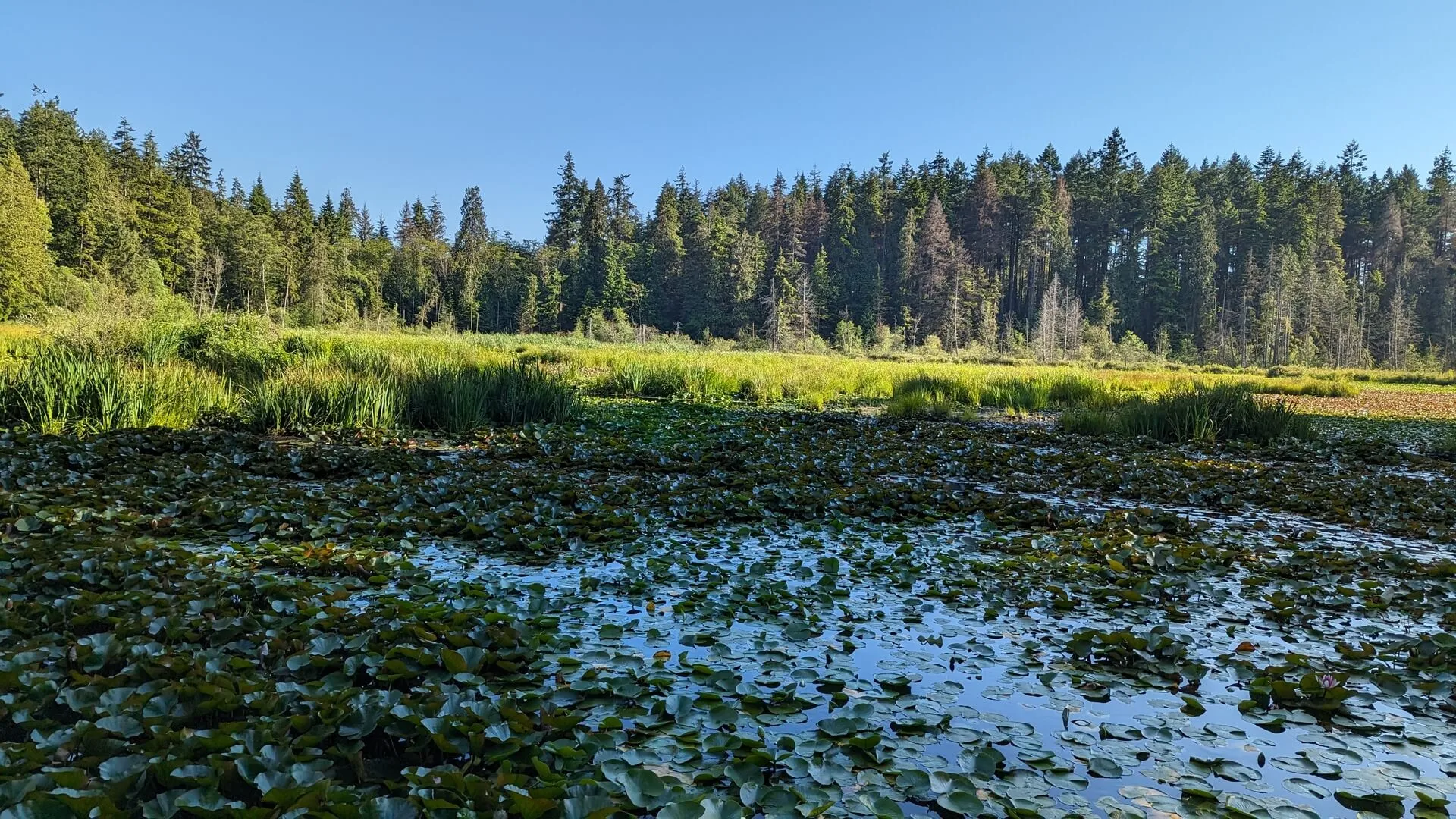
Most visitors to Stanley Park never wander far from the Seawall, which is exactly why Beaver Lake feels like a discovery. Set well inland from the water, this small lake is one of the only freshwater lakes left in Vancouver, and its shallow, marshy shoreline supports an entirely different world from the beaches and viewpoints along the park’s edge. A level gravel path circles the lake, weaving through cedar and hemlock forest and offering glimpses of the water through the trees rather than one big open view.
The lake is shallow and heavily vegetated, with lily pads and wetland plants covering much of its surface for parts of the year. That’s part of the appeal. Beaver Lake isn’t a postcard lake so much as a working wetland, and the slower, quieter pace of the walk here makes it a favourite for people who want a forest escape without leaving the park.
How Beaver Lake Got Its Name
The lake earned its name after beavers were spotted in the area in 1907, though the original animals didn’t stay long. When the Park Board beautified the site in 1911, it seemed only fitting to have real beavers on view, so a small pen was built to house them. The beavers promptly chewed through the wire and let themselves out. A more determined attempt in 1972 built a beaver pond with heavy wire mesh sunk into the ground, only for the beavers to tunnel underneath it and undermine a nearby road and the miniature railway tracks above.
For decades afterward, Beaver Lake had no beavers at all. The Park Board spent much of the early twentieth century managing the lake instead of the animals it was named for, clearing debris in 1911 and dredging the bottom in 1929 to slow the sediment building up from the surrounding forest. The city has piped in fresh water to the lake since 1916 to help keep it from drying out in summer.
Then, in 2008, a beaver reappeared at Beaver Lake for the first time in roughly sixty years. Nobody is certain how it arrived. A second beaver joined it in 2011, and the pair have since raised kits at the lake, giving the name real meaning again after a century-long gap.
Wildlife on the Water
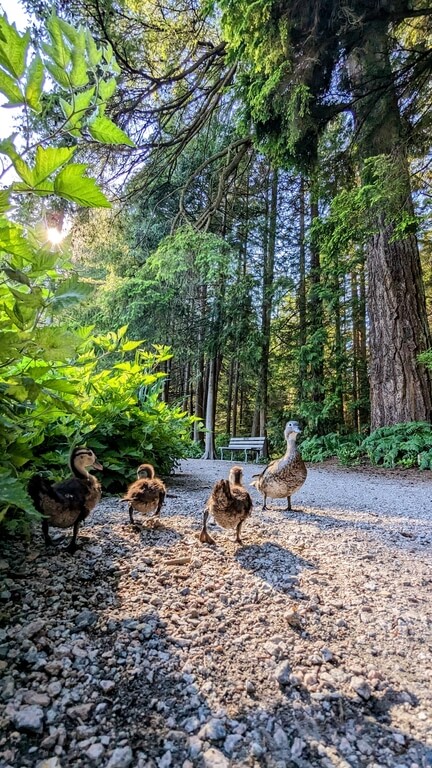
Beaver Lake’s wetland habitat draws far more than beavers. Great blue herons fish along the shallows, and the lake’s dense stands of water lilies and cattails shelter turtles, frogs, and a rotating cast of waterfowl throughout the year. The lake connects to Beaver Creek, which threads through this part of the park and supports its own small population of fish, making the wider area one of the more ecologically active corners of Stanley Park.
The lily pads that cover so much of the surface are actually an invasive ornamental species, and the Vancouver Park Board has been working in recent years to clear them back, since they crowd out native plants and reduce the oxygen available in the water. Conveniently, beavers eat water lilies, which is one of the reasons the Park Board has been happy to let this second generation of residents stick around.
Walking the Beaver Lake Loop
The trail around Beaver Lake is flat, gravel, and easy to follow, making it one of the more relaxed forest walks in Stanley Park. It’s part of a longer inland network, including Lovers Walk, the forest trail that connects Beaver Lake with Second Beach and passes the site of the park’s famous “Seven Sisters” trees. Because the loop sits away from the road noise of the causeway and the crowds along the Seawall, it’s a good option if you want tall trees and quiet water without hiking deep into the park’s back trails.
The Vancouver Park Board publishes a Beaver Lake Nature Walk brochure with points of interest along the route, and the Stanley Park Ecology Society runs its Nature House near Lost Lagoon if you want to learn more about the park’s wetlands before or after your walk.
“Come for the trees, stay for the quiet — Beaver Lake is the one place in Stanley Park where the forest, not the view, does all the talking.”
Gallery
Frequently Asked Questions
Yes. The full 1.5 km loop trail around Beaver Lake has a compacted gravel surface and is virtually level, making it wheelchair accessible. Some connecting trails leading away from the lake have a gradual slope.
Dogs on leash are permitted on Stanley Park’s forest trails, including the Beaver Lake loop. Because the lake supports nesting birds and a resident beaver family, it’s best to keep dogs leashed and away from the water’s edge.
It’s possible but not guaranteed. Beavers are shy and mostly active at dawn and dusk, so quiet, early-morning or evening visits give you the best odds. Look for the lodge on the lake’s western shore, which is easier to spot than the animals themselves.
Beaver Lake is a walk or short bike ride inland from the Seawall, reachable via Pipeline Road or Stanley Park Drive. In summer, the Stanley Park Shuttle also stops near the lake, making it an easy add-on to a day exploring the rest of the park.
No. Beaver Lake and its surrounding trails are free to visit, like the rest of Stanley Park.
Explore More of Stanley Park
Beaver Lake is just one corner of Stanley Park’s 400 hectares. See the full guide for beaches, gardens, and the Seawall before you plan your visit.
Visit the Stanley Park Guide