
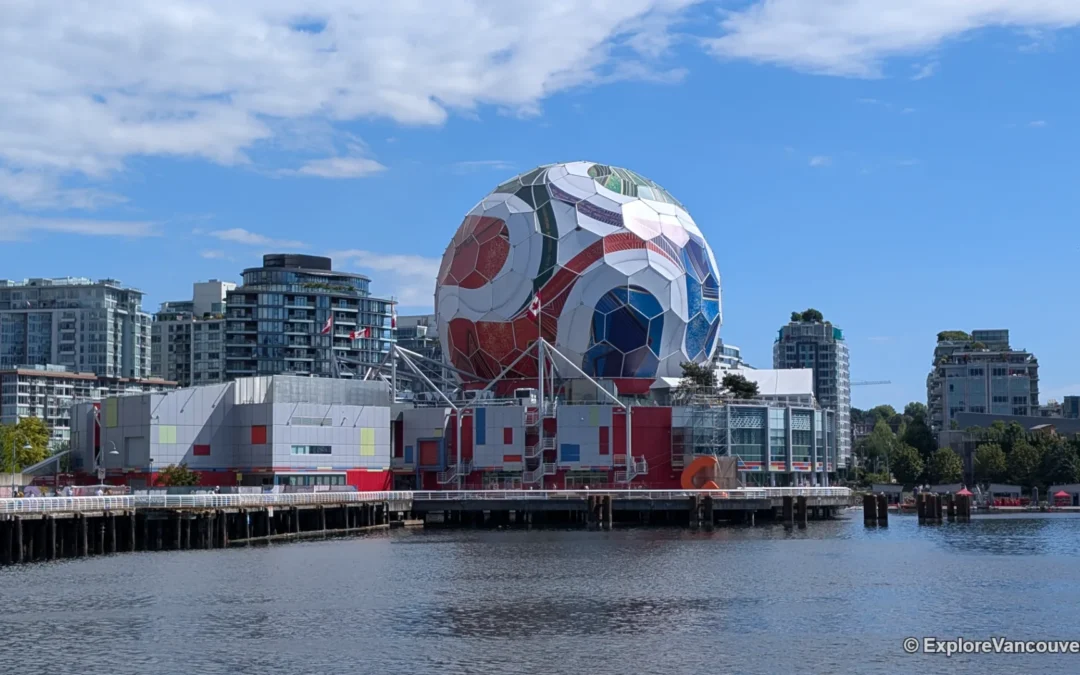
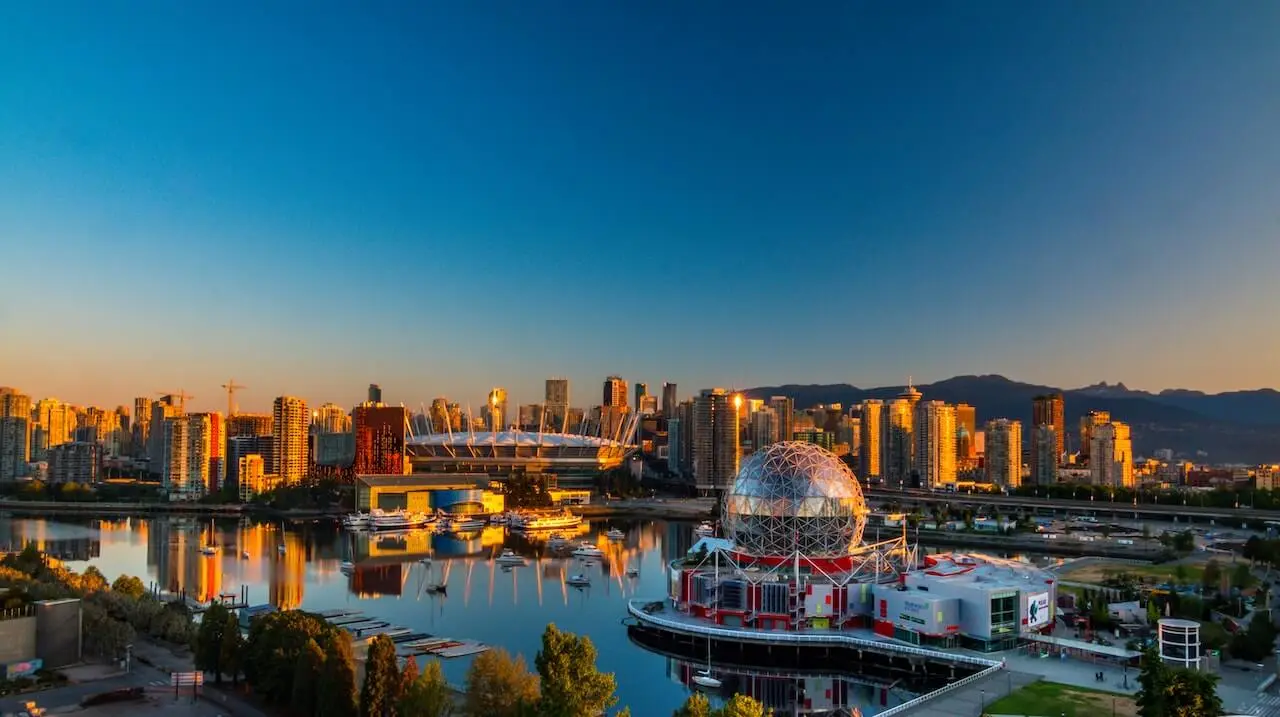
Science World’s landmark dome sits at the eastern tip of False Creek, a short walk from downtown Vancouver.
A Dome Built for a World’s Fair
Science World’s silver geodesic dome started life as the Expo Centre for Expo 86, Vancouver’s World’s Fair. When the fair closed, the building sat mostly empty for a few years before the science centre, then operating out of a smaller space on Granville Street, moved in and opened its doors on the site in 1989. More than three decades on, the dome is one of the most recognized shapes on the city’s skyline, visible from the seawall, from SkyTrain platforms crossing False Creek, and from the upper floors of downtown office towers.
The building itself is part of the draw. Its triangular panels and ball-like silhouette were designed to be a statement piece for the fair, and the structure has stayed remarkably true to that original form even as the science centre inside it has grown, added galleries, and rotated exhibitions through the decades.
Galleries Built for Hands-On Learning
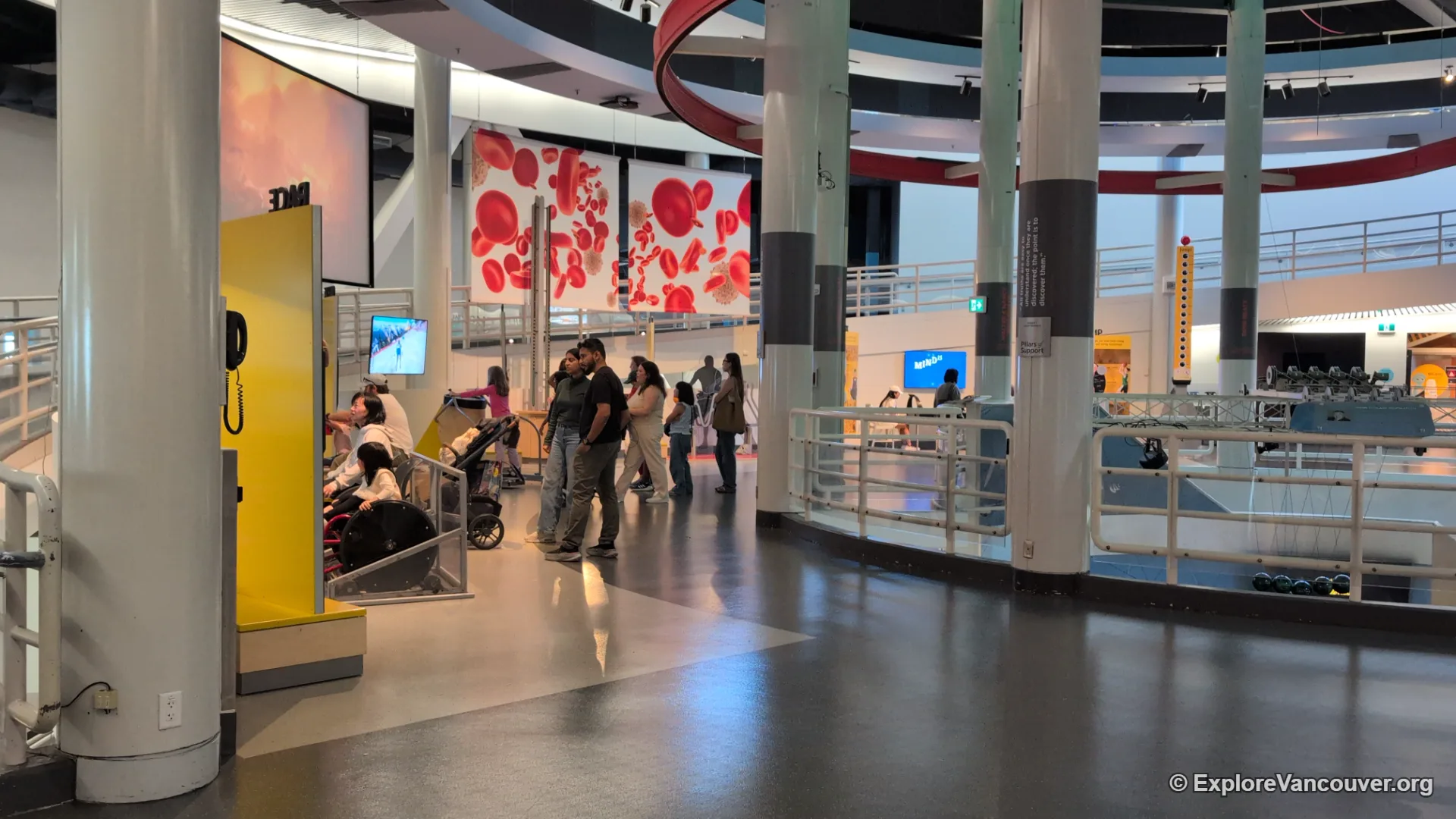
Most of what fills the dome is meant to be touched, pulled, cranked, or climbed rather than read off a placard. Eureka! is the gallery most visitors remember first, a room full of pulleys, air cannons, and marble runs built around everyday physics. BodyWorks turns attention inward with exhibits on how bones, muscles, and senses work together, while the Wonder Gallery is scaled down for the youngest visitors, with sensory play and climbing structures suited to children under six.
Rounding things out, the Tinkering Space invites visitors to build and test their own small inventions, the Creative Technology Gallery covers the basics of video game design, and a rotating run of puzzles and optical illusions gives adults something to linger over while younger kids run ahead to the next room.
Search: The Sara Stern Gallery
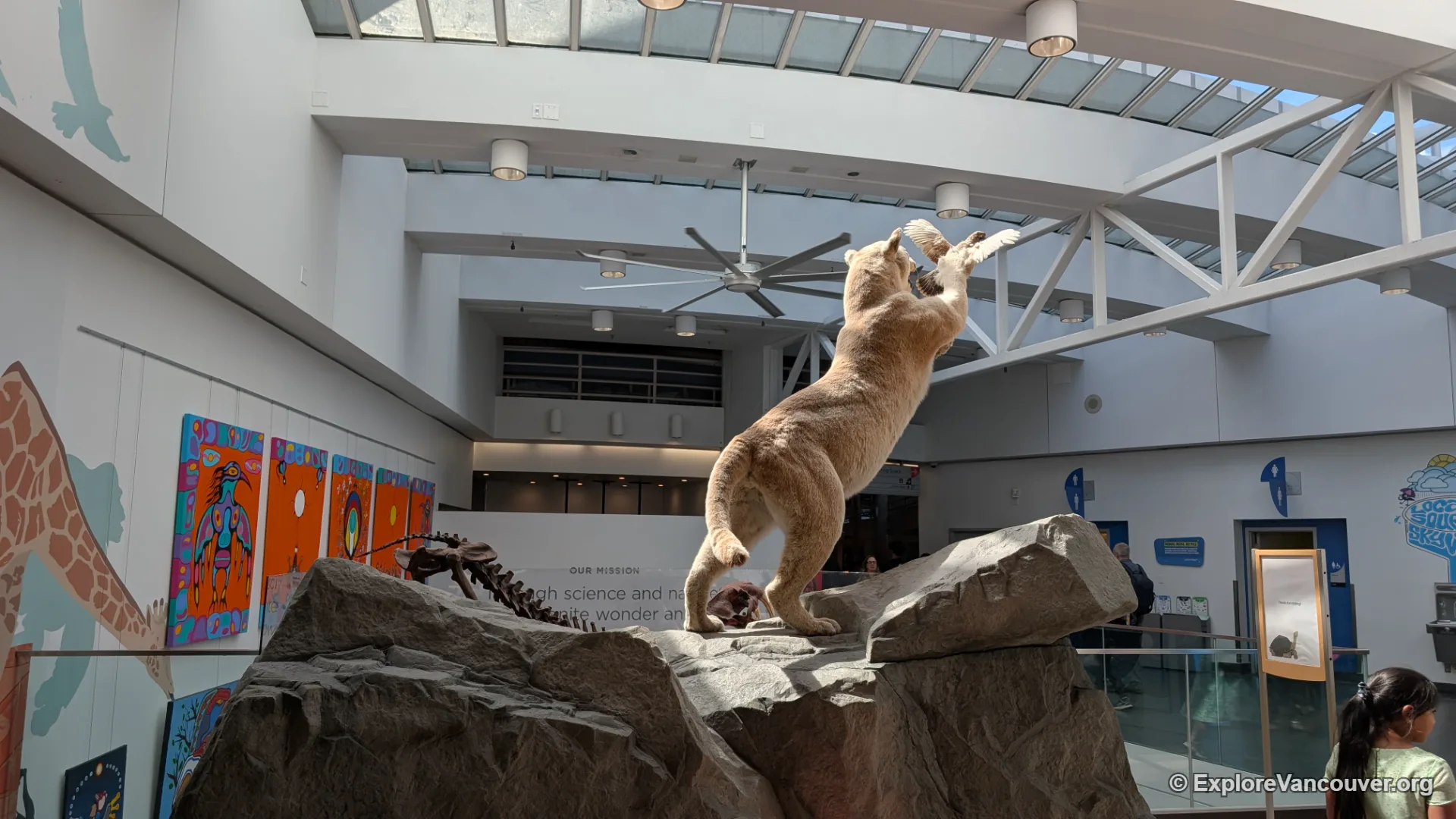
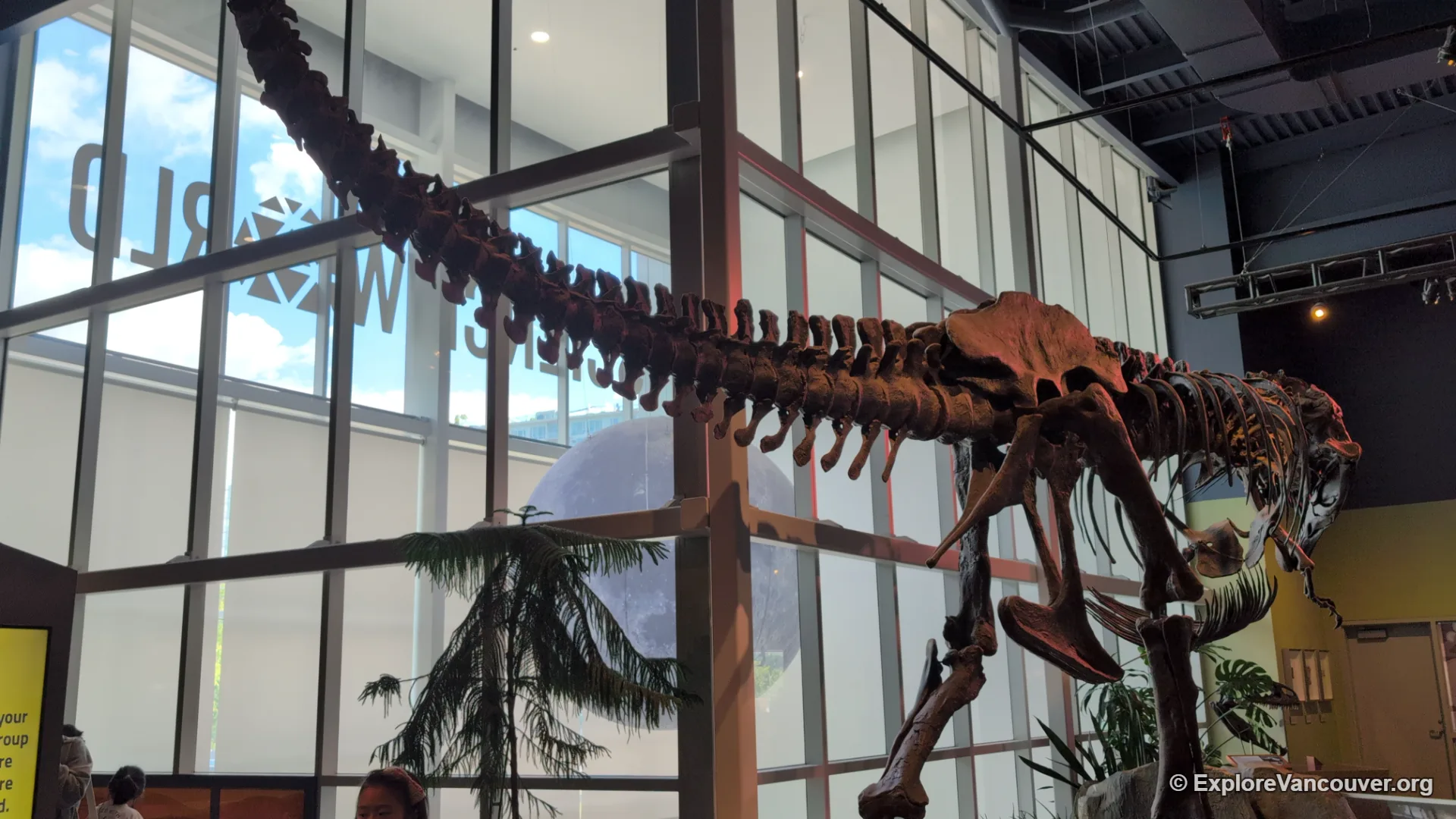
Tucked into the upper level, the Search gallery is Science World’s take on natural history. Visitors move past taxidermy displays of local wildlife, including cougars and other animals found in British Columbia’s forests, then on to fossil casts and a mounted dinosaur skeleton that tends to be the most photographed stop in the room. Further in, a crystal cavern and a wall of magnified specimens shift the scale from towering predators down to the microscopic.
It’s a quieter counterpart to the noisier, more physical galleries downstairs, and a good spot to slow down if the crowds elsewhere in the building start to feel like a lot.
The Dome Goes World Cup for Summer 2026
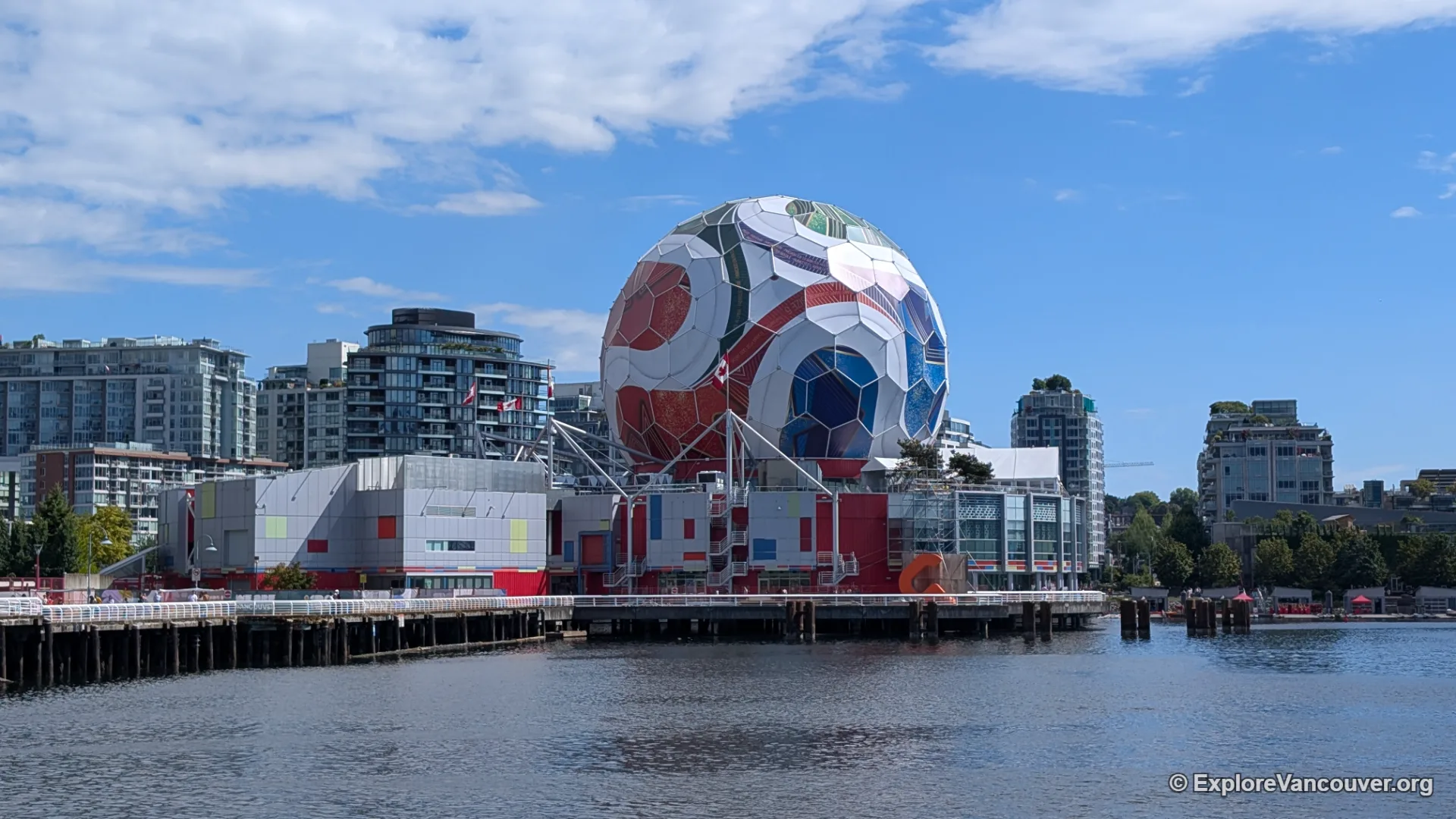
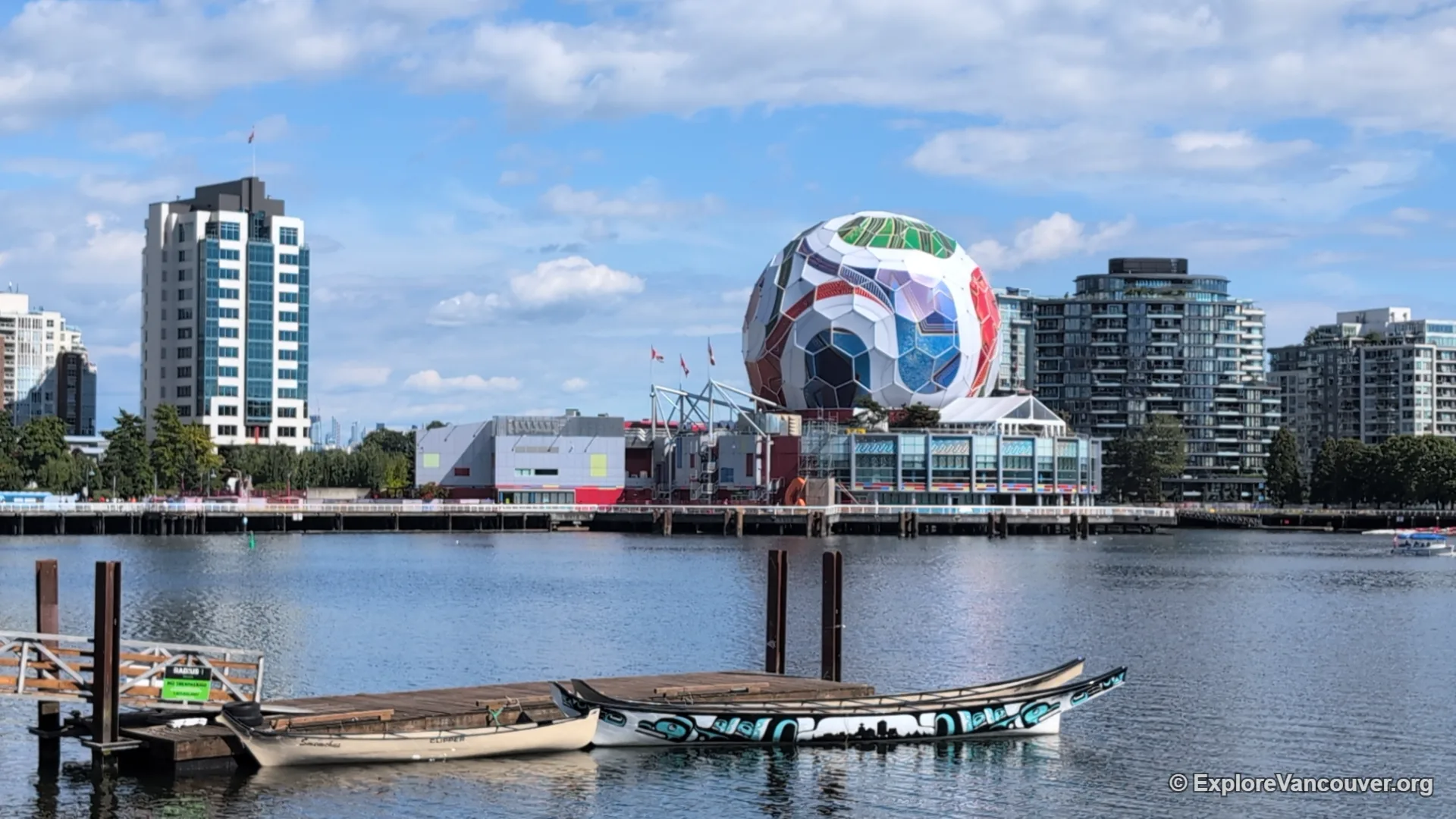
For the 2026 FIFA World Cup, Science World’s dome has been given its most visible makeover since Expo 86. Crews spent several weeks fitting the sphere with more than 130 custom panels that recreate the design of the tournament’s official match ball, turning the building itself into one of the more photographed backdrops in the city for the summer.
Inside, the science centre is hosting Soccer & Technology, an exhibition on loan from the FIFA Museum in Zurich making its North American debut. It walks through how technology has shaped the sport over the decades, from early broadcast cameras to modern goal-line sensors, and includes game-worn jerseys and match memorabilia from past tournaments. This is a limited-run exhibition rather than a permanent gallery, so it’s worth checking Science World’s own site for current dates before planning a visit around it.
The dome has changed its face more than once over the years, but stepping inside still feels the same way it did for visitors back in 1989: like walking into a building built for curiosity.
Ken Spencer Science Park
On the east side of the building, a half-acre outdoor park extends the science centre into the open air. It’s open seasonally, typically from spring through early fall, and includes water-flow exhibits where kids can build small dams, plus displays on renewable energy and sustainable gardening. Admission is included with a regular Science World ticket, and the space can be a useful break from the indoor crowds on a busy day.
Photo Gallery
Frequently Asked Questions
Science World is open daily from 10:00 am to 5:00 pm, with occasional reduced hours around statutory holidays. It’s worth checking the official site before a visit if you’re planning around a holiday.
Science World charges separate rates for adults, seniors/students/youth, and children, with children under 3 admitted free. The OMNIMAX theatre is a paid add-on. Prices change from time to time, so check the official Science World site for current admission rates before you go.
Most visitors spend 3 to 4 hours exploring the galleries. Families with elementary-age kids often stay longer, especially if they add the outdoor Ken Spencer Science Park or an OMNIMAX film to the visit.
Yes. The Wonder Gallery is built specifically for children under six, with sensory play and climbing structures scaled to their size. Most of the other galleries are better suited to kids four and up.
No. The panels covering the dome were installed for the 2026 FIFA World Cup and are a temporary installation, as is the accompanying Soccer & Technology exhibition inside. Both are tied to the tournament and won’t stay up indefinitely.
The Main Street–Science World SkyTrain Station on the Expo Line sits right outside the entrance, making it the most straightforward way to arrive. The building is also on the False Creek Seawall, within walking distance of Olympic Village and Chinatown.
Looking for more things to do nearby?
Explore More Vancouver Attractions