

Photo Gallery

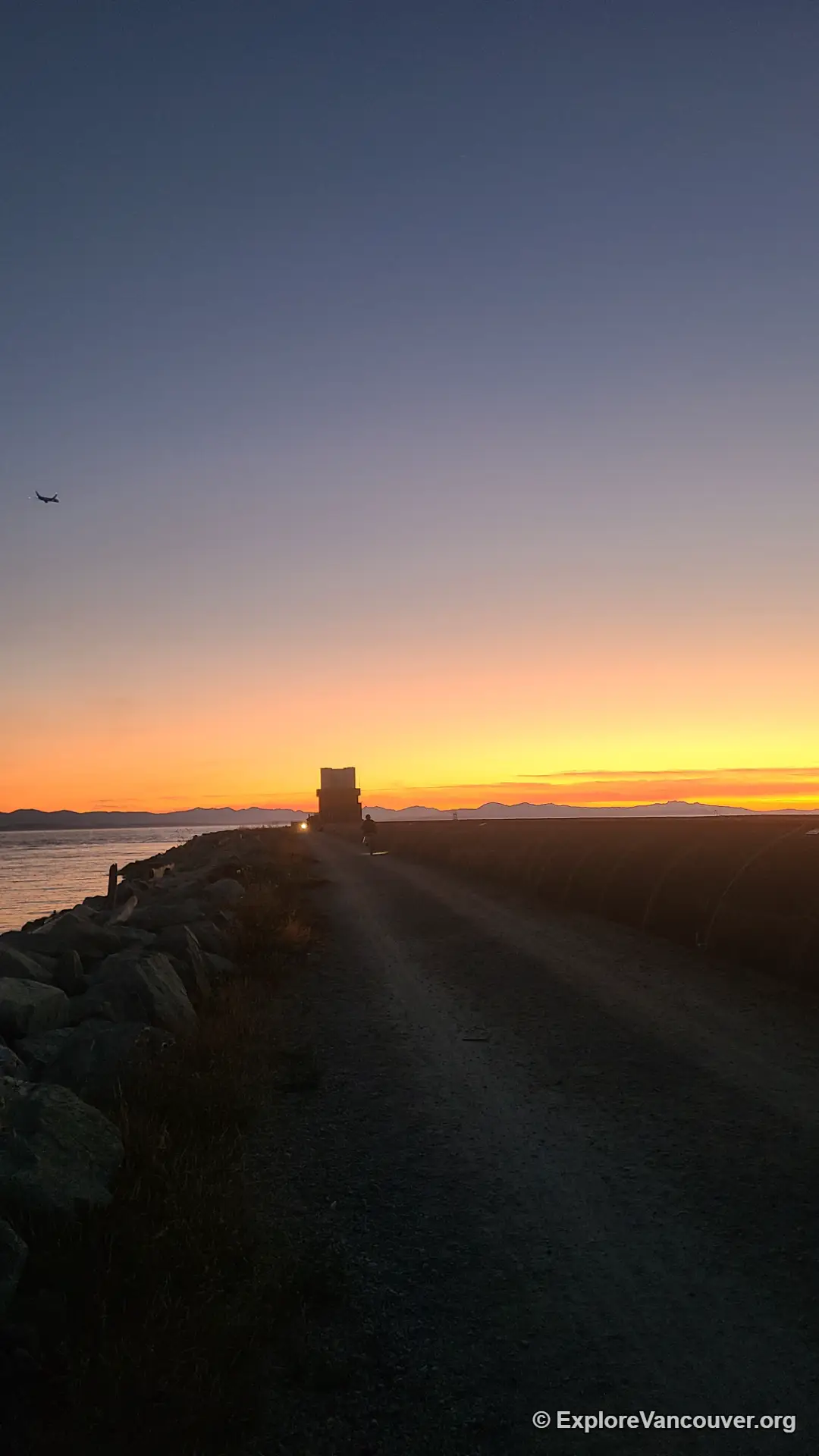
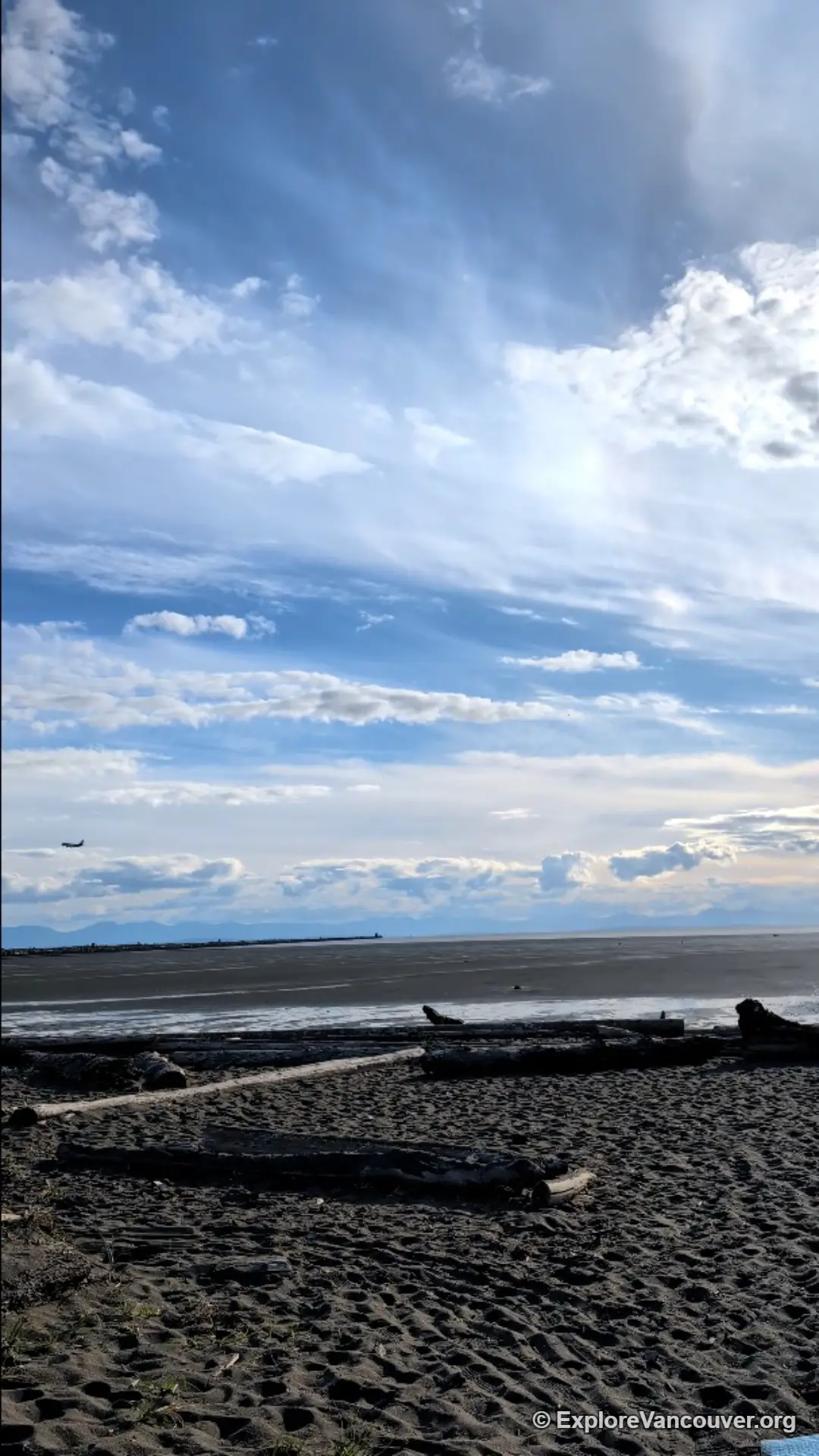
Most of Richmond’s shoreline faces the Fraser River, but Iona Beach faces open water. The park sits on a finger of reclaimed land north of Vancouver International Airport, at the exact point where the river’s north arm finally gives way to the Strait of Georgia. It’s one of the few places in Metro Vancouver where you can watch a jetliner climb out over your head and a heron stalk the shallows in the same five minutes, and where farmland, sewage infrastructure, and a globally recognized wetland all sit within a short walk of each other.
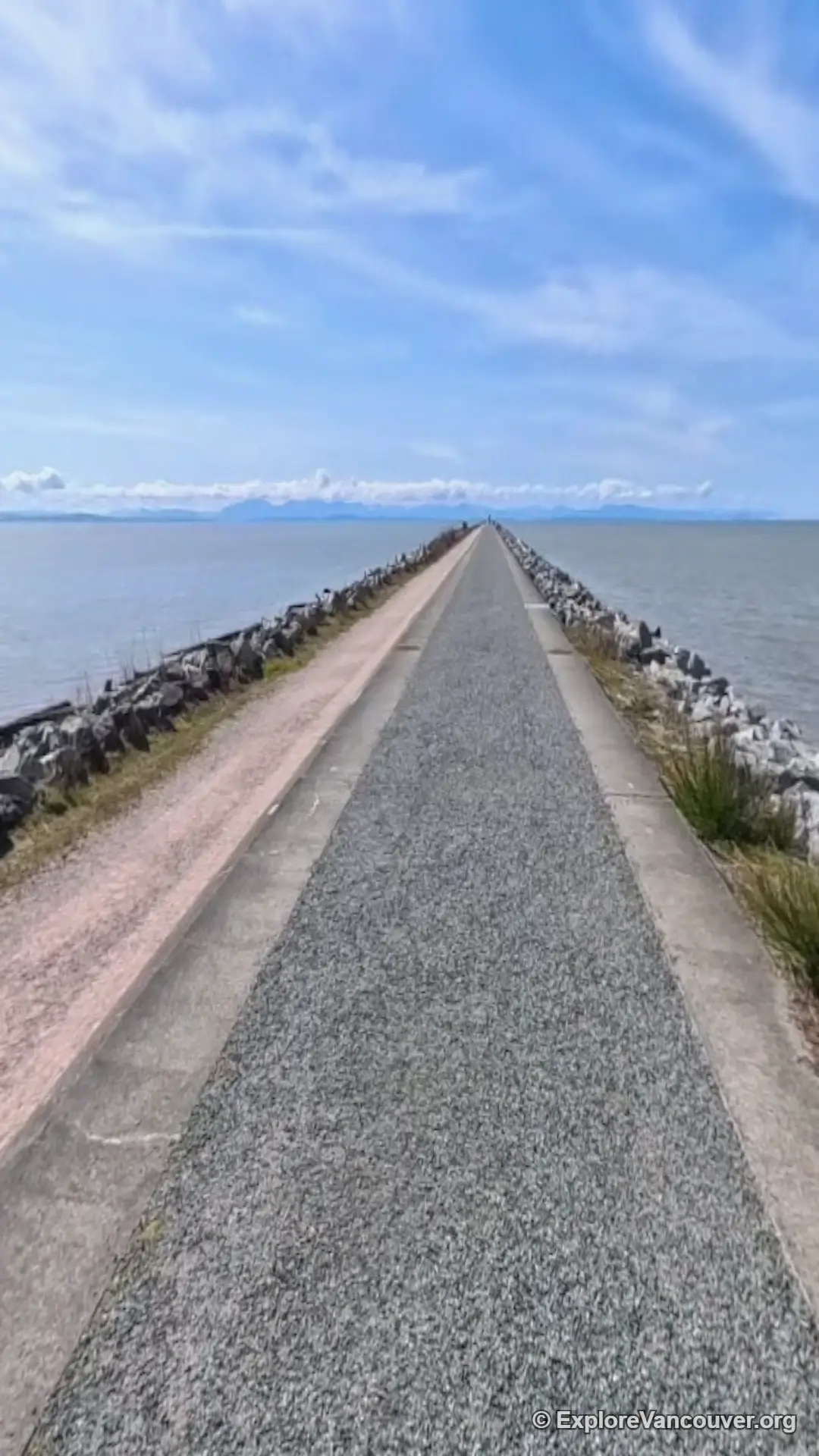
The park’s centrepiece is a long, straight jetty that runs into the water on a flat, exposed path, and it’s paired with a quieter network of marsh, dune, and grassland habitat that has earned Iona Island formal recognition as a wetland of international importance. Together, that combination of infrastructure and wilderness is what makes the park feel unlike anywhere else in the region.
From farmland to wastewater plant to park
Iona Island wasn’t always shaped the way it is today. It started out as a true island in the Fraser River estuary, separate from neighbouring Sea Island, which itself was home to a thriving farming community until most of it was expropriated in the mid-20th century to make way for the expansion of Vancouver International Airport. Only the small community of Burkeville survived that process.
The older of the park’s two jetties, the North Arm Jetty, dates back to the early 1900s, when it was built to help control the Fraser River’s flow and keep the shipping channel navigable for larger vessels. Decades later, Iona Island was chosen as the site for a regional wastewater treatment plant, completed in 1963, and a causeway was built to connect it to Sea Island. The plant’s outfall pipe runs beneath the newer, more heavily used Iona Jetty, the same structure that today doubles as the park’s signature walking route. What began as pieces of hard infrastructure has, over the decades, become one of the most productive wildlife habitats in the Lower Mainland.
Three trails, three different walks
The park is built around three official routes, and they suit fairly different visits. The Iona Jetty is the main event: a flat, fully exposed out-and-back path that runs roughly 8 kilometres round trip and takes most people about two and a half hours to walk from end to end and back. Walkers use the path on top of the outfall pipe, while cyclists take a separate service road running parallel to it at a lower level, so the two don’t share the same surface.
The North Arm Jetty is a shorter, sandier alternative, about 4.8 kilometres round trip and roughly two hours on foot. Unlike the main jetty, there’s no formal walking path along its top since the structure runs through an industrial area that’s closed to the public; instead, visitors walk along the open beach below the high tide line, which makes for a quieter, more solitary route than the main jetty on a busy day.
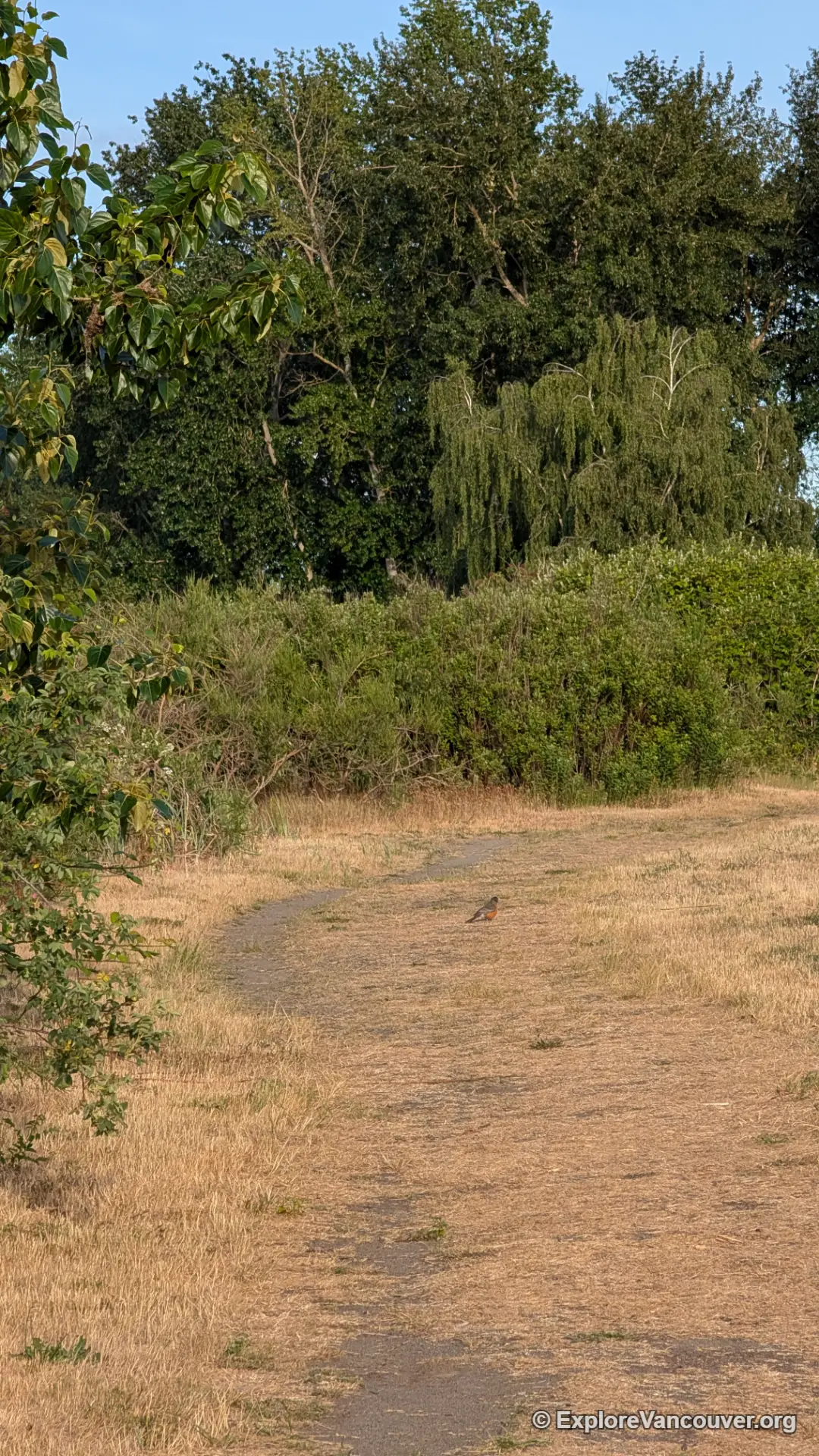
For a much shorter outing, the Bridle Path is a flat, rough-surfaced 1-kilometre loop near the park entrance that takes about 10 minutes to walk and is shared with horseback riders. It’s a good option if you want a taste of the park’s grassland habitat without committing to the full jetty walk, or if you’re visiting with young kids or limited mobility.
One of the region’s top birding sites
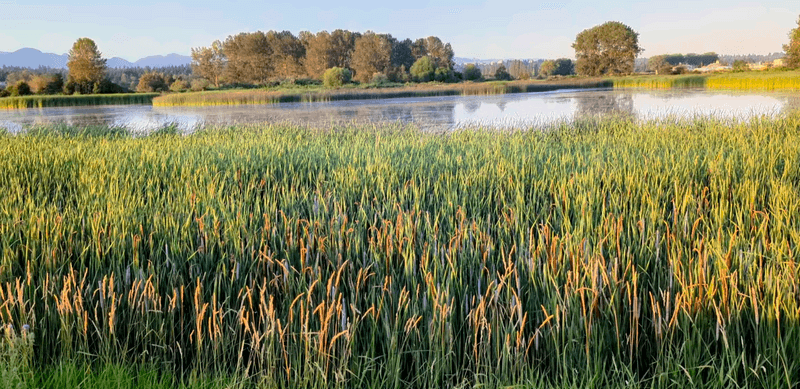
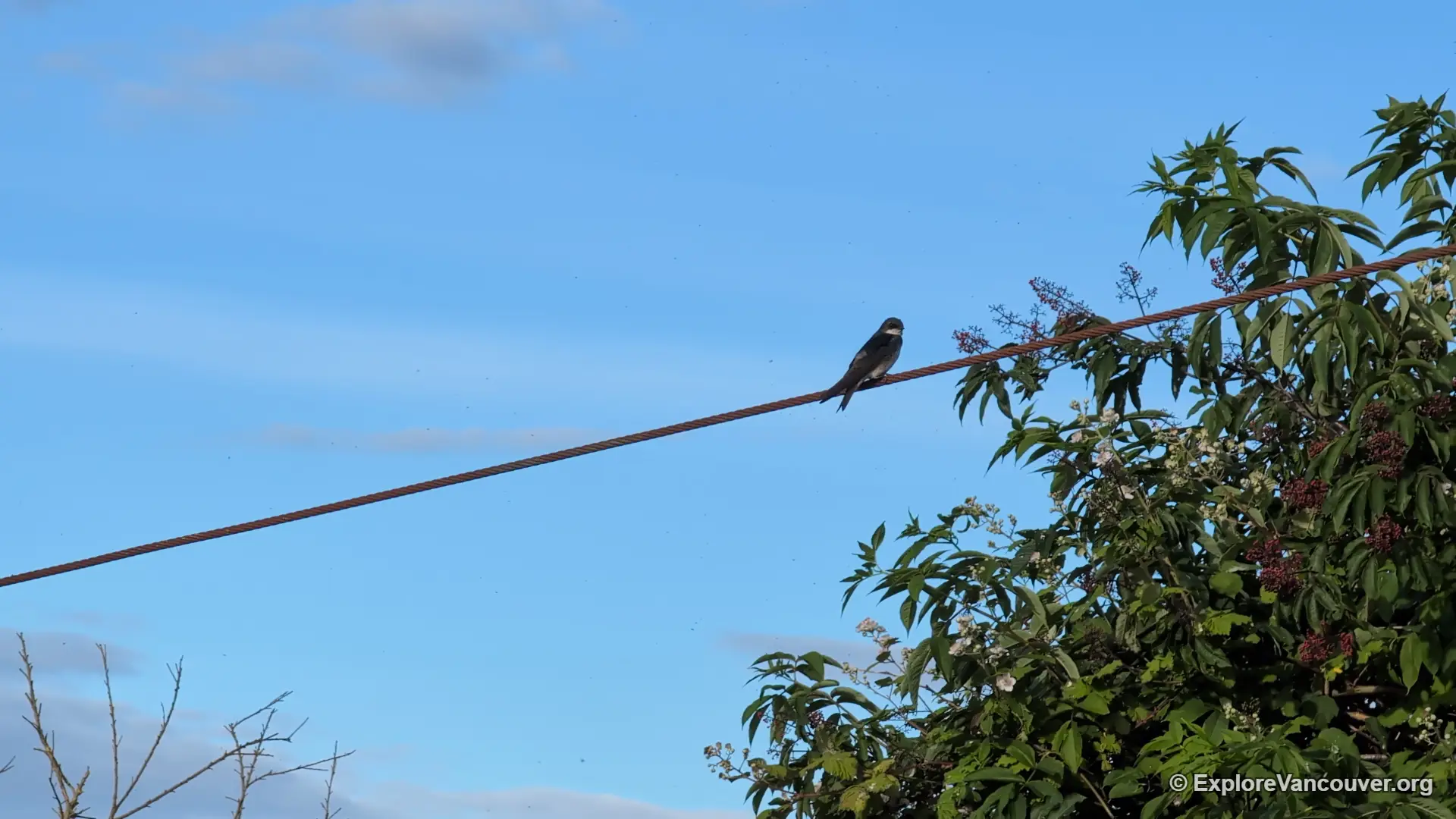
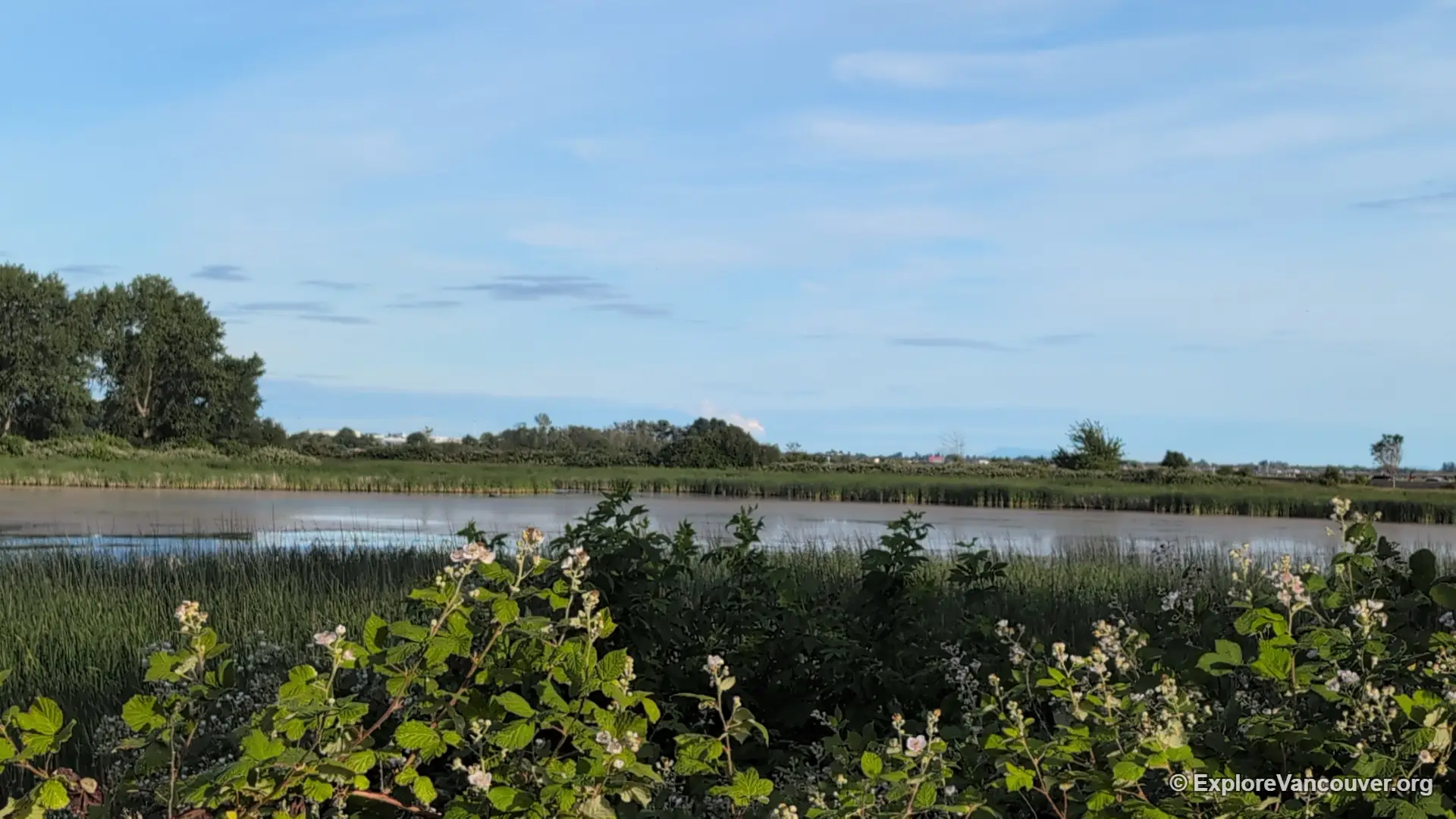
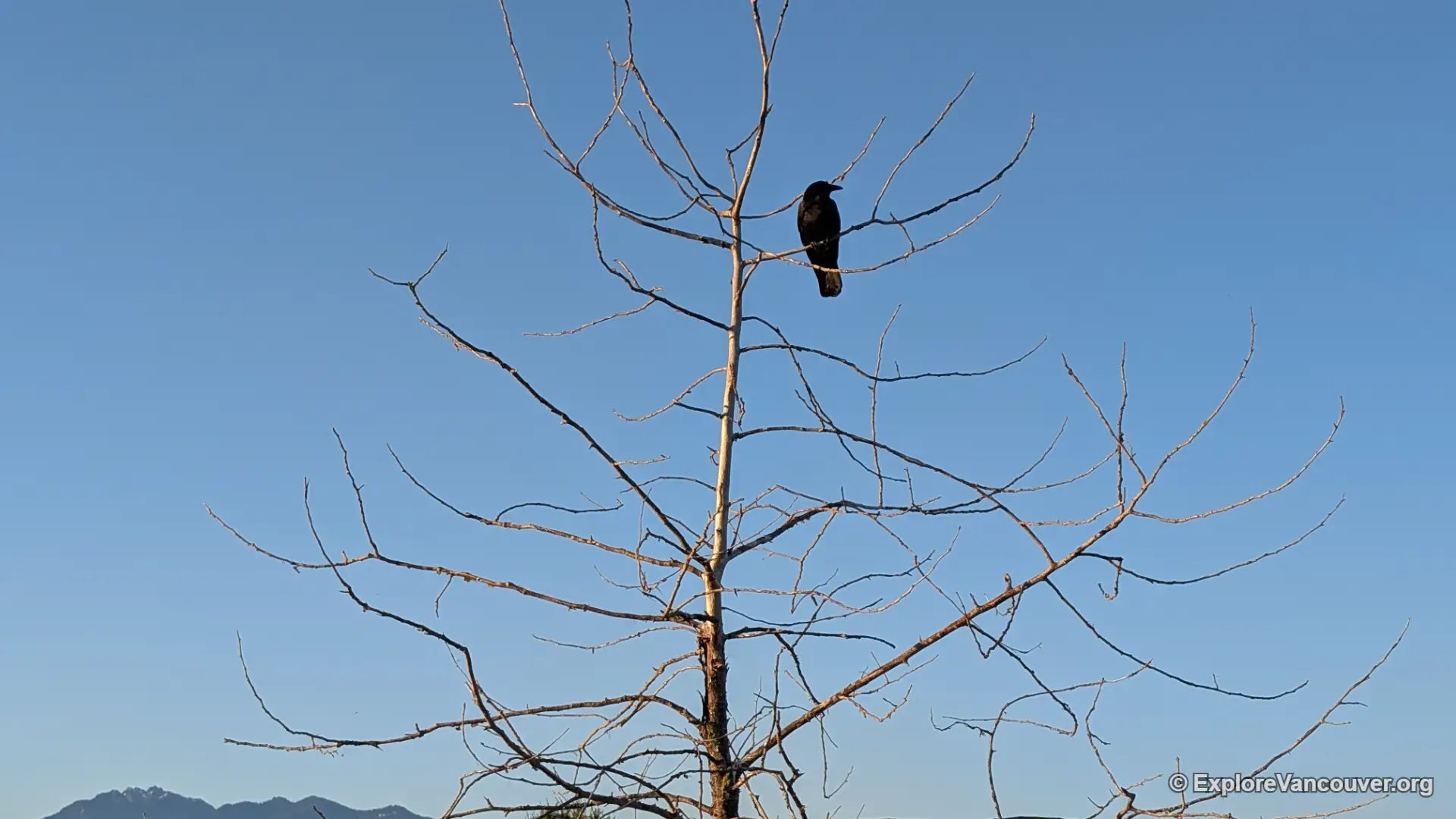
Iona Beach’s mix of sandy shoreline, salt marsh, sand dune habitat, and freshwater ponds has made it one of the most important bird sites on the Lower Mainland, and Iona Island as a whole has been recognized as a wetland of international significance under the Ramsar Convention. Several hundred species have been recorded here over the years, and the park hosts the only known breeding population of Yellow-headed Blackbirds in the region, alongside a rare community of native sand dune plants found in very few other places nearby.
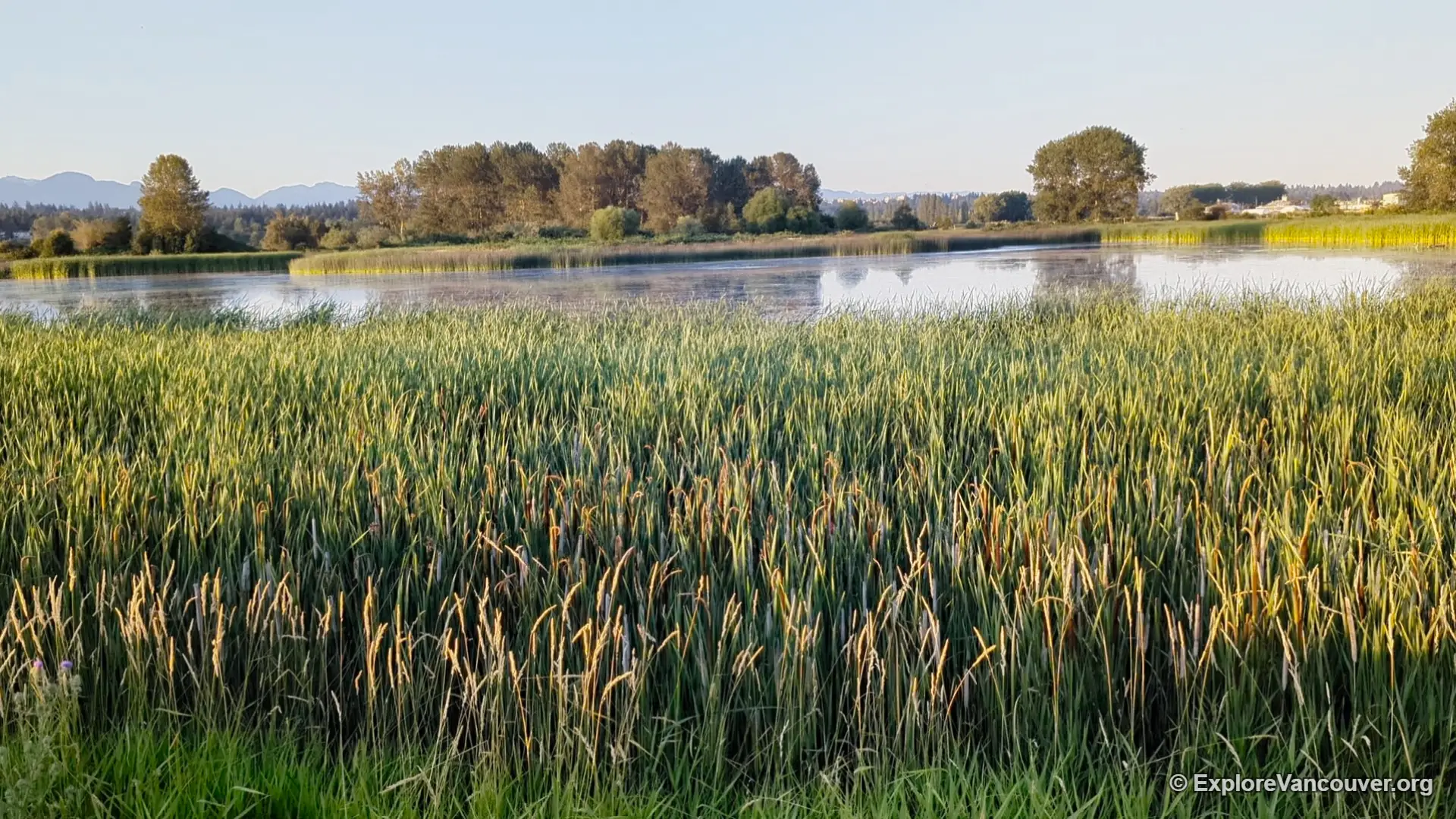
The freshwater ponds near the park entrance, fed in part by the adjacent wastewater treatment plant, are unexpectedly one of the richest wildlife areas in the park. Interior footpaths loop around these ponds and stay sheltered from the wind that dominates the jetty, which makes them a good choice on blustery days or for a shorter walk with steady birding the whole way. Spring and fall migration bring the biggest concentrations of shorebirds and waterfowl, when thousands of birds stop here to rest and refuel on their way along the Pacific coast.
Beach, tides, and swimming
The beach itself is broad and sandy above the high tide line, which makes it pleasant for a picnic or an evening stroll, but the water is shallow, muddy, and affected by strong currents where the river meets the sea. Iona isn’t set up as a swimming beach the way Kitsilano or English Bay are, and water conditions can change quickly with the tide, so it’s worth checking a tide table before wading in.
Low tide exposes a wide stretch of mudflat that’s worth exploring on foot for the birdlife alone, though it’s soft and genuinely sticky underfoot in places, enough to pull at your shoes with every step. Rubber boots or shoes you don’t mind getting muddy make the experience a lot more comfortable, and driftwood scattered along the high tide line makes for natural seating if you want to sit and watch the water for a while.
Planes, dogs, and a working landscape
Iona Beach sits directly under the flight path for YVR, so watching aircraft take off and land over the water is part of the experience whether you plan for it or not. The park also shares its peninsula with the Iona Island Wastewater Treatment Plant, one of the region’s largest, which occasionally offers public tours for anyone curious about how the facility works. It’s a reminder that this stretch of coastline is still very much a working part of Metro Vancouver’s infrastructure alongside being a protected wetland.
Dogs must be leashed throughout the park, with one exception: the lower service road on the Iona Jetty, where leash rules are relaxed. Leashes are still required in the marsh areas and along the rest of the park to protect nesting and feeding habitat, and owners are asked to clean up after their pets everywhere they go.
Out on the jetty, the city disappears behind you and all that’s left is water, wind, and the occasional jet passing low overhead.

Best time to visit
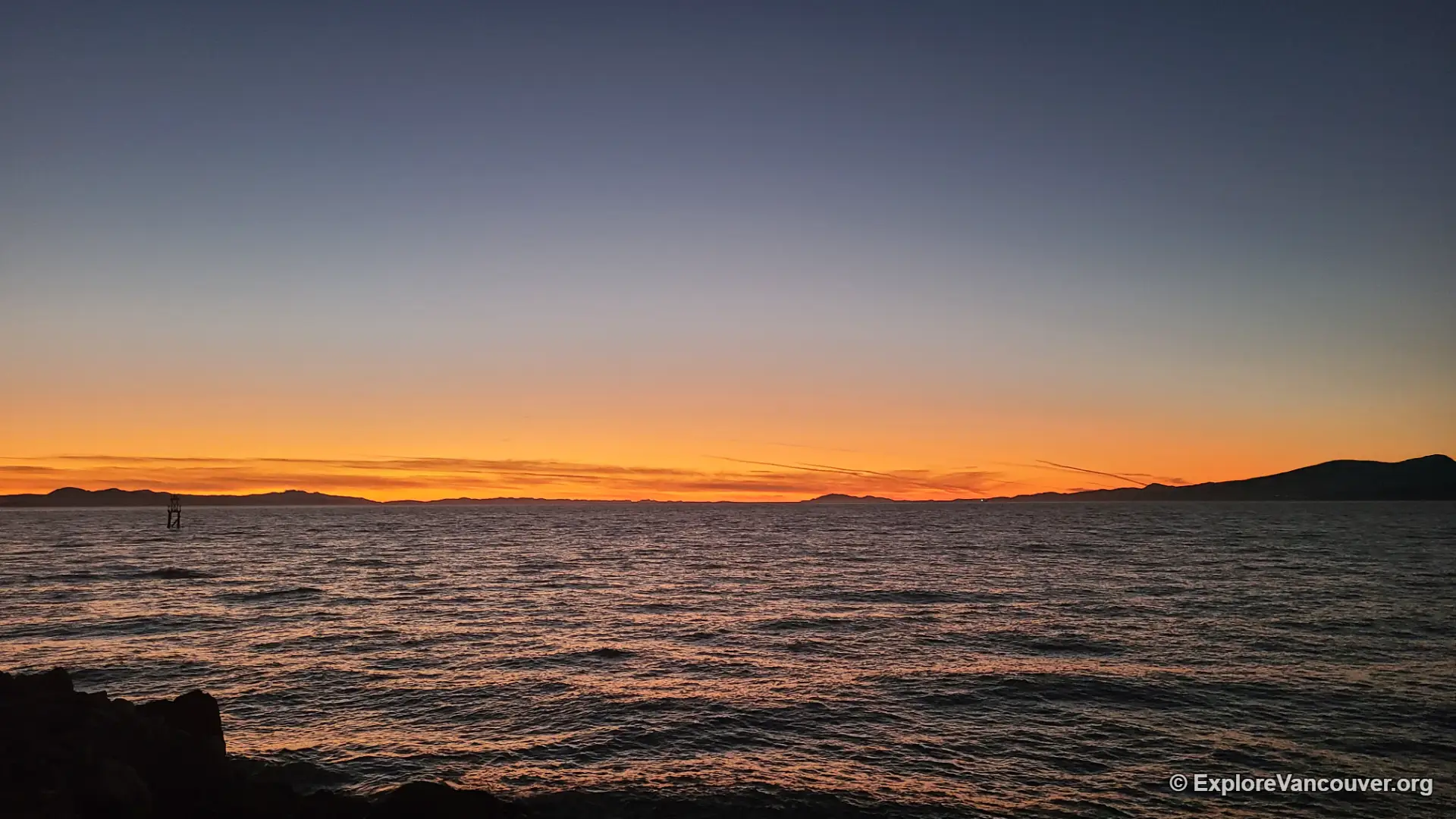
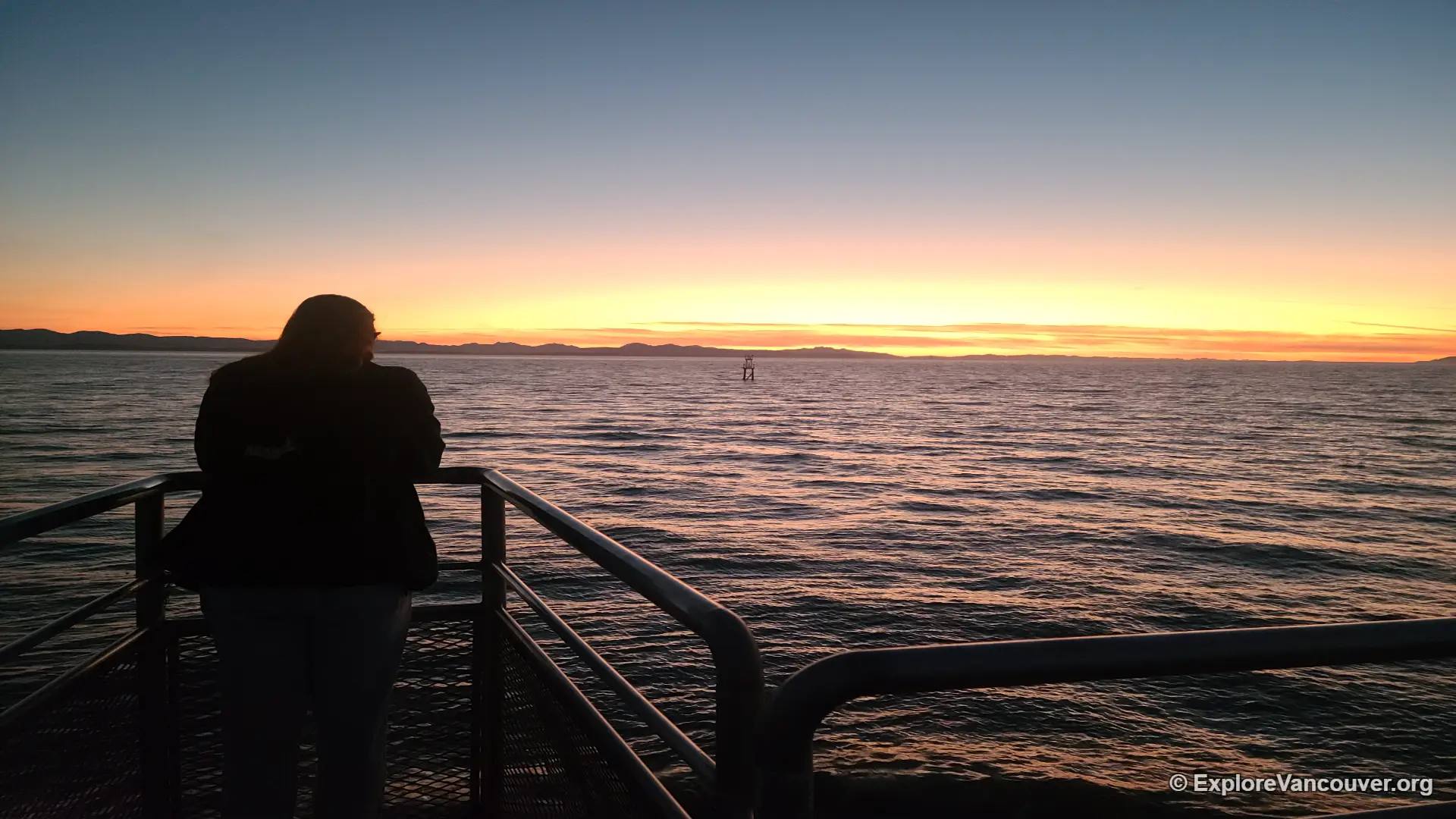
Because the jetty runs roughly east to west, it lines up well with the setting sun, and evening is when the park draws its biggest crowd of photographers and casual walkers, especially in summer. Low tide is the best window for exploring the mudflats and spotting shorebirds, while a calm, clear evening is hard to beat for the walk out to the end of the jetty. Weekday mornings, by contrast, are usually the quietest time to visit if solitude is the goal, and the packed gravel and concrete surface drains well, so the park stays walkable even after heavy rain.
Spring and fall bring the heaviest bird migration and the most variety for birders, while clear winter days often deliver the sharpest views across to the North Shore mountains and Vancouver Island, with far fewer people on the trail to share it with.
Facilities and practical info
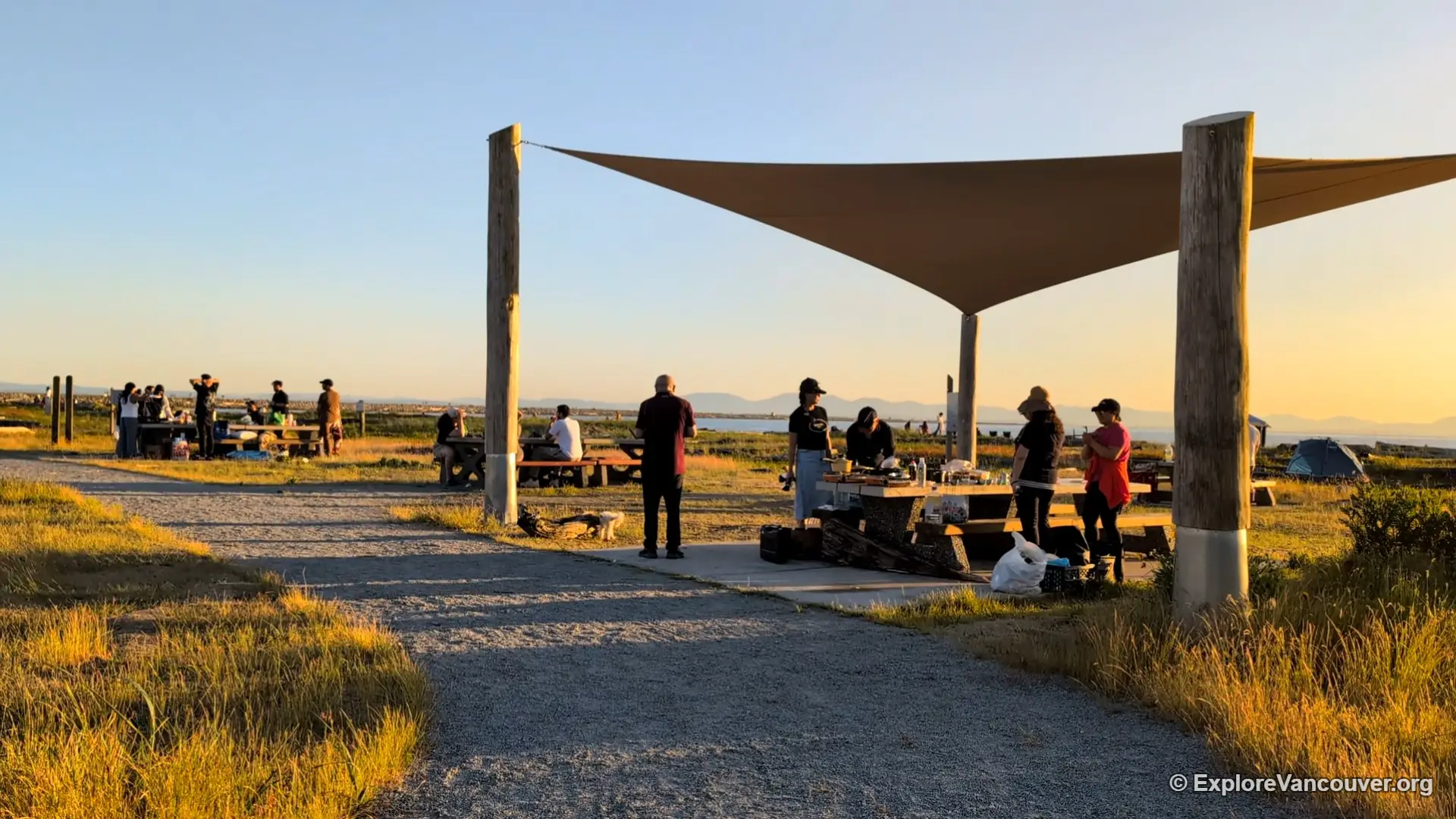
Parking is free and available in a large lot at the park entrance, though it can fill up quickly on sunny weekends. Washrooms and a handful of portable toilets are spread between the entrance and the jetty, along with a couple of small wind shelters for anyone caught out in a sudden squall. Picnic tables sit near the parking area for anyone who wants to eat before or after a walk, but there are no food vendors or concessions inside the park, so bring water and snacks with you.
Cell coverage is generally reliable throughout the park, and the flat, hard-packed surface of the main jetty makes it manageable for strollers and wheelchairs for at least the first stretch, though the full 8-kilometre round trip is a long haul for anyone with mobility limitations. There’s no admission fee and no reservation required; you simply park and walk in.
Nearby in Richmond
Iona Beach pairs well with a few other Richmond destinations if you’re making a day of it. Garry Point Park offers a second, more sheltered stretch of waterfront near Steveston, with easier walking and closer amenities. Steveston Village is a short drive away and makes a good stop for lunch or coffee after a windy walk on the jetty, and Richmond Nature Park offers a very different kind of wetland walk, through forested bog trails rather than open beach, for anyone who wants to compare the two ecosystems in a single day.
Frequently Asked Questions
It’s on a peninsula in Richmond, at the end of Iona Island Causeway, just north of Vancouver International Airport. It’s about a 20-minute drive from downtown Vancouver via the Arthur Laing Bridge.
By car, cross the Arthur Laing Bridge into Richmond, turn onto Grauer Road at the first light, and continue as it becomes Ferguson Road and then Iona Island Causeway, which ends at the park’s free parking lot. By transit, take the Canada Line to YVR-Airport Station and connect to a bus toward Grauer Road, or cycle in along the dedicated bike route.
The main Iona Jetty trail is about 8 kilometres round trip and takes roughly two and a half hours to walk at an easy pace. The North Arm Jetty beach walk is a bit shorter, about 4.8 kilometres round trip and around two hours, while the Bridle Path near the entrance is a quick 1-kilometre, 10-minute loop for a shorter visit.
The park is open daily, generally from 7:00 am to 9:00 pm, though closing times shift a little with the season. Gates and access points are enforced after hours, so it’s best to plan your visit to wrap up before closing.
There’s no year-round shuttle, but Metro Vancouver has run a free shuttle from Templeton SkyTrain Station during special events like the annual Wings Over Iona birding festival. Outside of event dates, the park is reached by regular transit, bike, or car.
The Iona Jetty is the park’s main walking route, a flat path built over the wastewater treatment plant’s outfall pipe that runs about 4 kilometres out into the Strait of Georgia. The North Arm Jetty is an older, separate structure nearby, built decades earlier to help control the Fraser River’s flow; it runs through an industrial area closed to the public, so visitors experience it by walking the open beach below the high tide line instead.
Swimming isn’t the main draw here. The water is shallow and muddy near shore, and currents near the river mouth can be strong, so it’s not a lifeguarded or particularly swim-friendly beach. Most visitors come for the walk, the birdlife, and the views instead.
Yes, cycling is permitted, but bikes stay on the lower service road that runs parallel to the main jetty rather than on the elevated walking path on top of it, so cyclists and walkers use separate surfaces along most of the route.
Yes, dogs are welcome throughout the park but must stay leashed, except on the lower service road of the Iona Jetty. Leashes are required in the marsh areas and everywhere else to protect nesting and feeding habitat.
Exploring more of Richmond? See our full guide to things to do in Richmond, BC.