
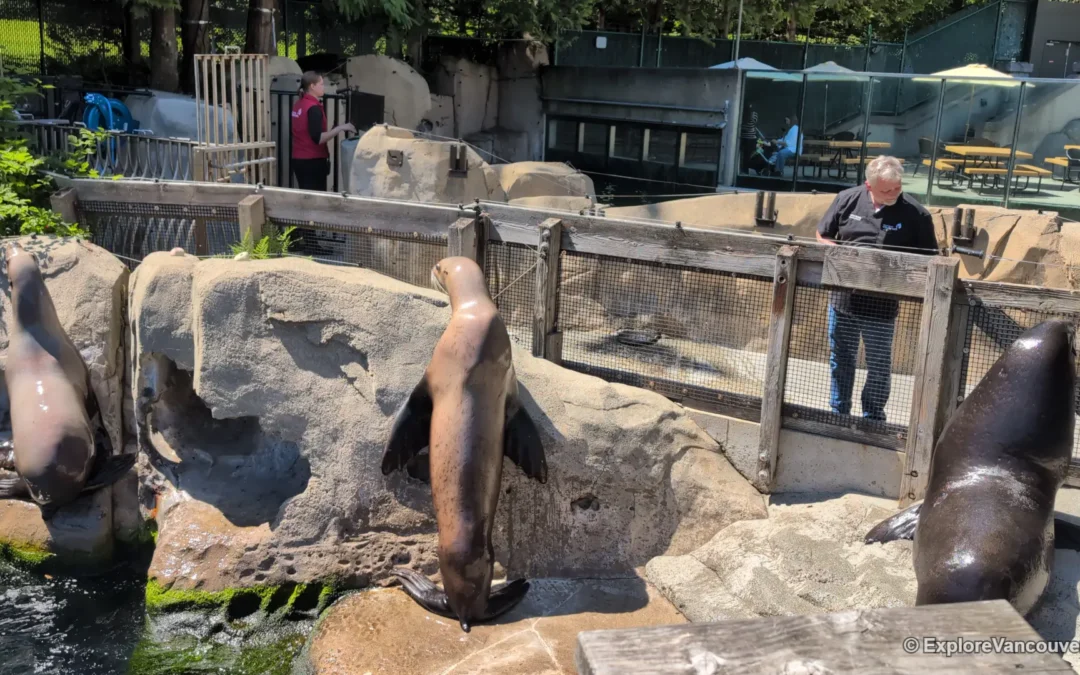
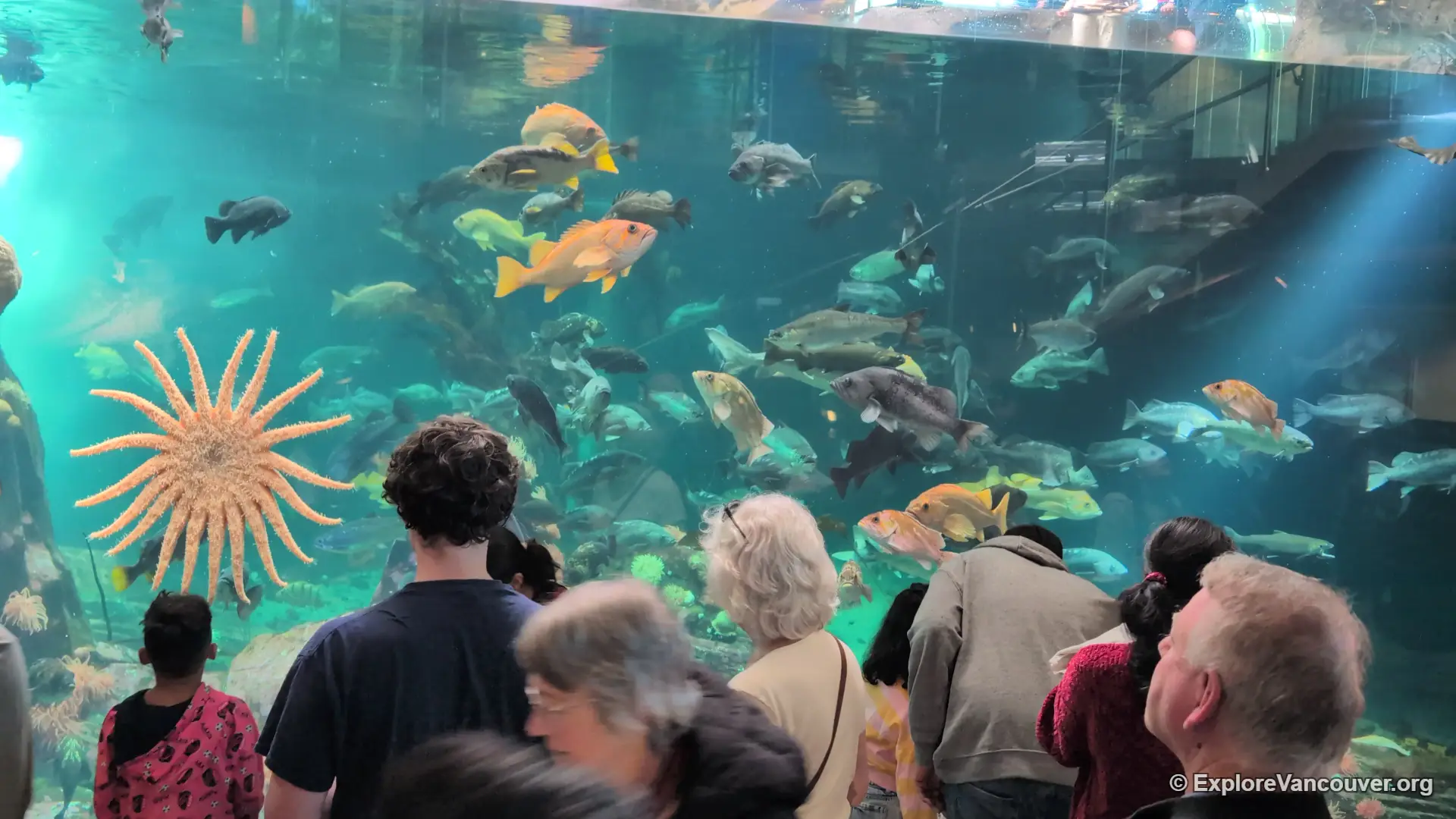
A viewing tank inside the Vancouver Aquarium, Stanley Park
About the Vancouver Aquarium
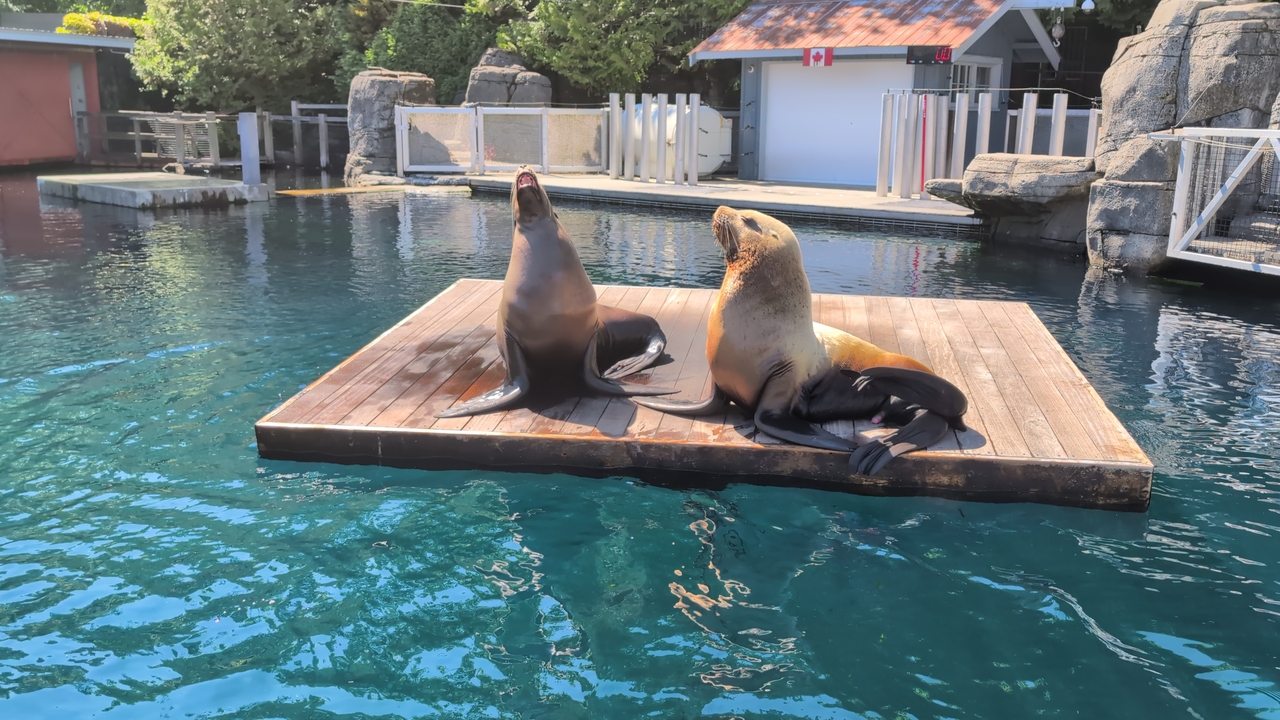
Tucked into the southeast corner of Stanley Park, the Vancouver Aquarium is Canada’s largest aquarium and one of the most visited attractions in the city. It’s home to tens of thousands of animals, from rescued sea otters and Steller sea lions to reef fish, jellies, sloths, and frogs, spread across indoor galleries and outdoor habitats.
The Aquarium is also a working marine mammal rescue centre, so many of the animals on site, including some of the sea lions and otters, were originally brought in as rescues and are now part of long-term care and education programs rather than being able to return to the wild.
Most visitors spend somewhere between ninety minutes and two hours moving through the galleries, though it’s easy to stretch a visit into half a day once you add the 4D theatre, feeding presentations, and a stroll through the rest of Stanley Park afterward.
Photo Gallery
What to See
The galleries are organized so you move through different regions of the world as you walk. A few sections tend to be visitor favourites:
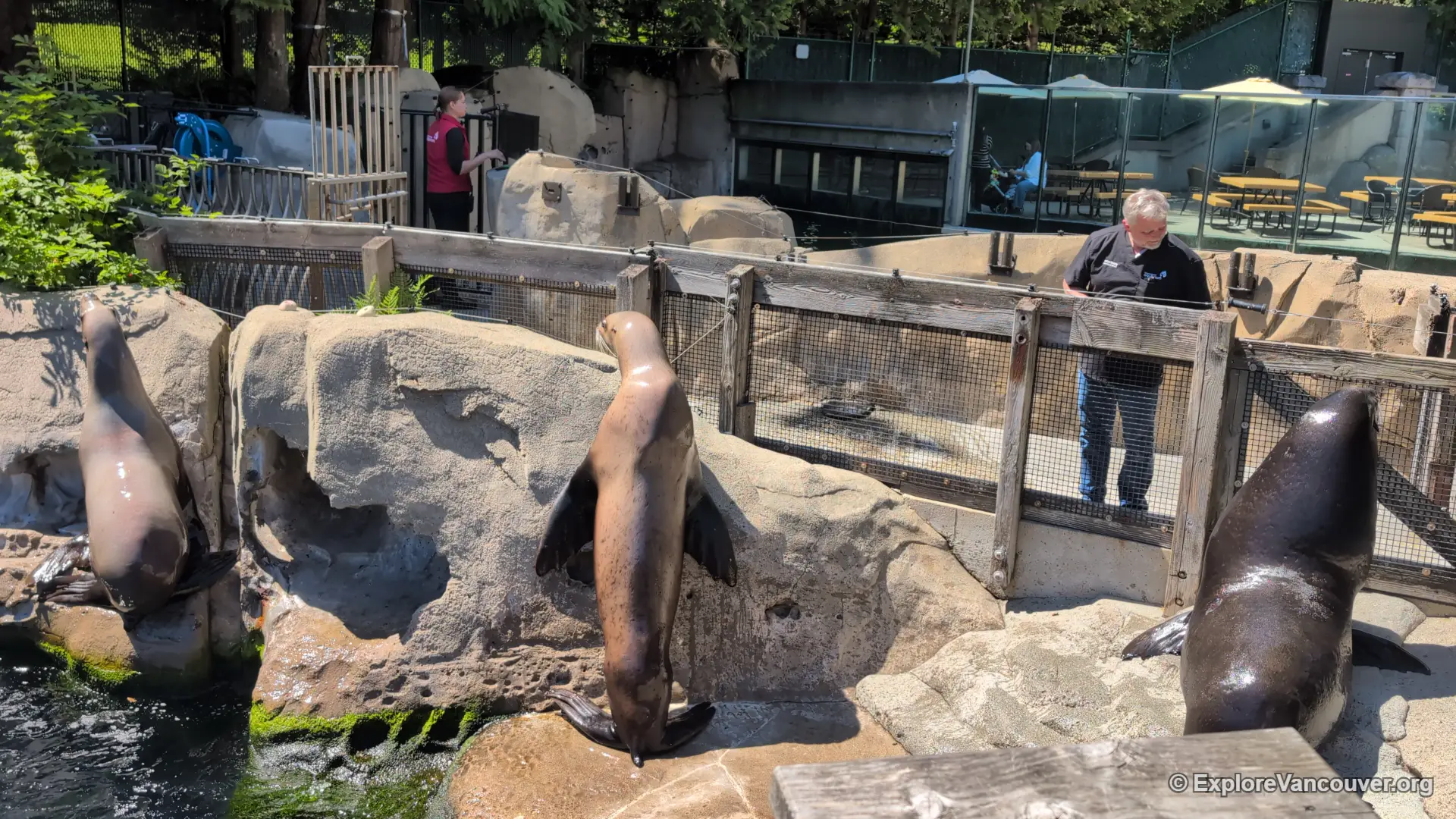
- Steller’s Bay, where Steller sea lions swim right up to the glass
- The sea otter habitat, home to some of the Aquarium’s rescued otters
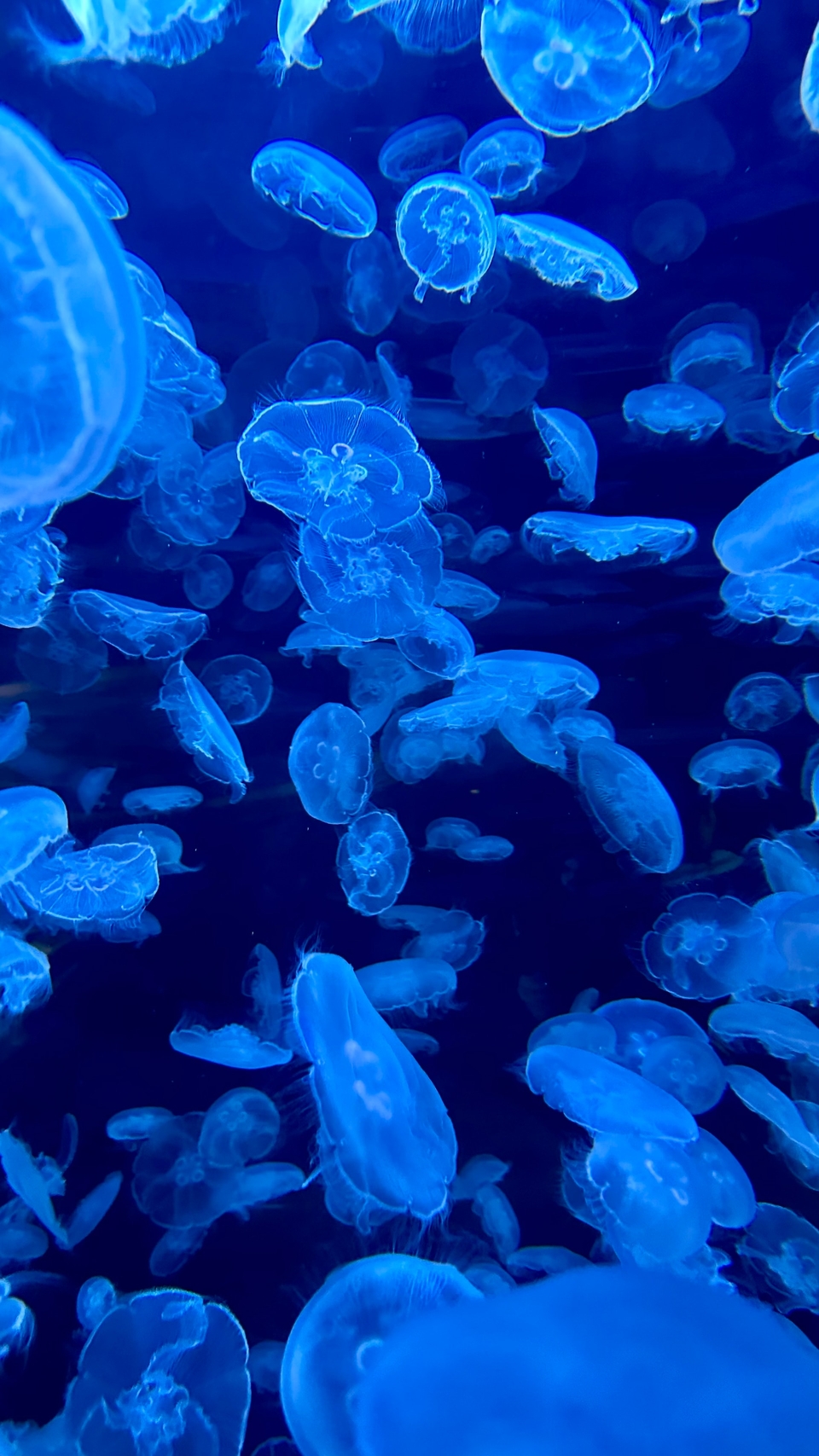
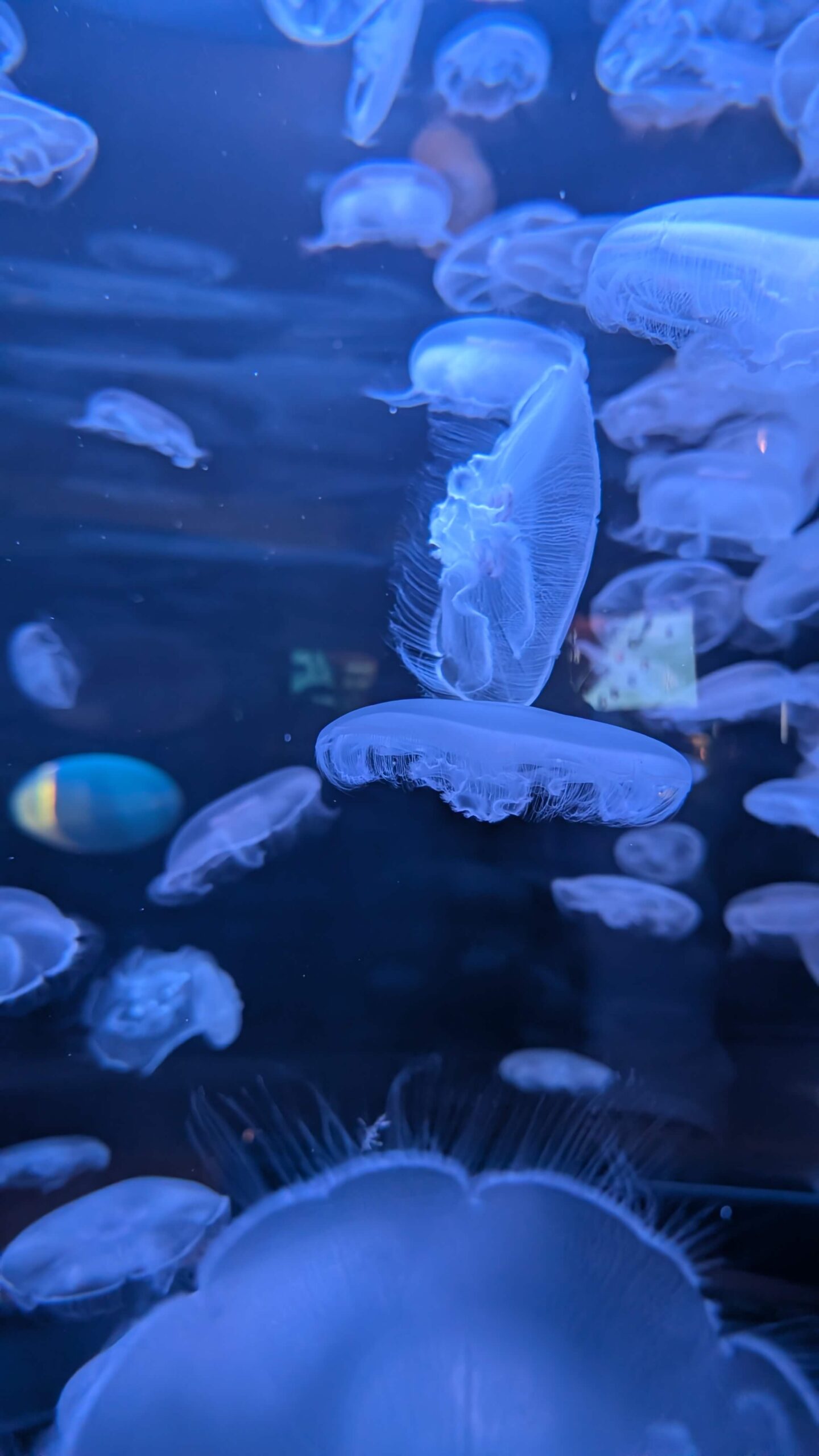
- The glowing jellyfish tanks, one of the most photographed spots in the building
- The Amazon gallery, with sloths, monkeys, and tropical fish under a rainforest canopy
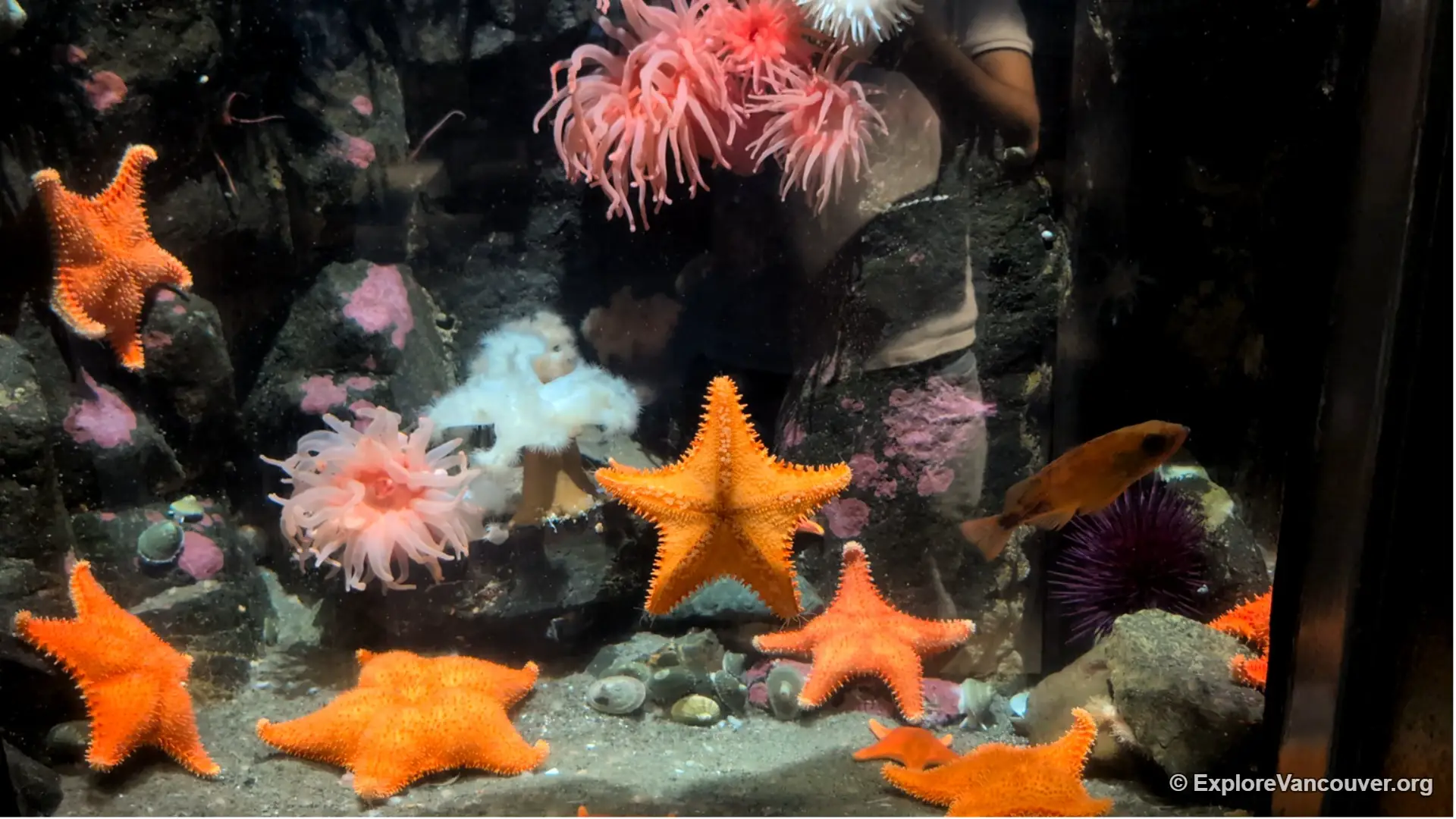
- The Wet Lab and touch pools, where kids can handle starfish, sea cucumbers, and anemones
- The 4D theatre, included with general admission and running short films throughout the day
The Axolotl and Amphibian Exhibit
The Aquarium’s axolotl display has become one of its most searched-for exhibits, and it’s easy to see why. Axolotls are small Mexican salamanders that never lose their gills or fully grow out of their larval stage, which gives them a permanently youthful, almost cartoonish look, complete with feathery external gills and a wide, smiling mouth.
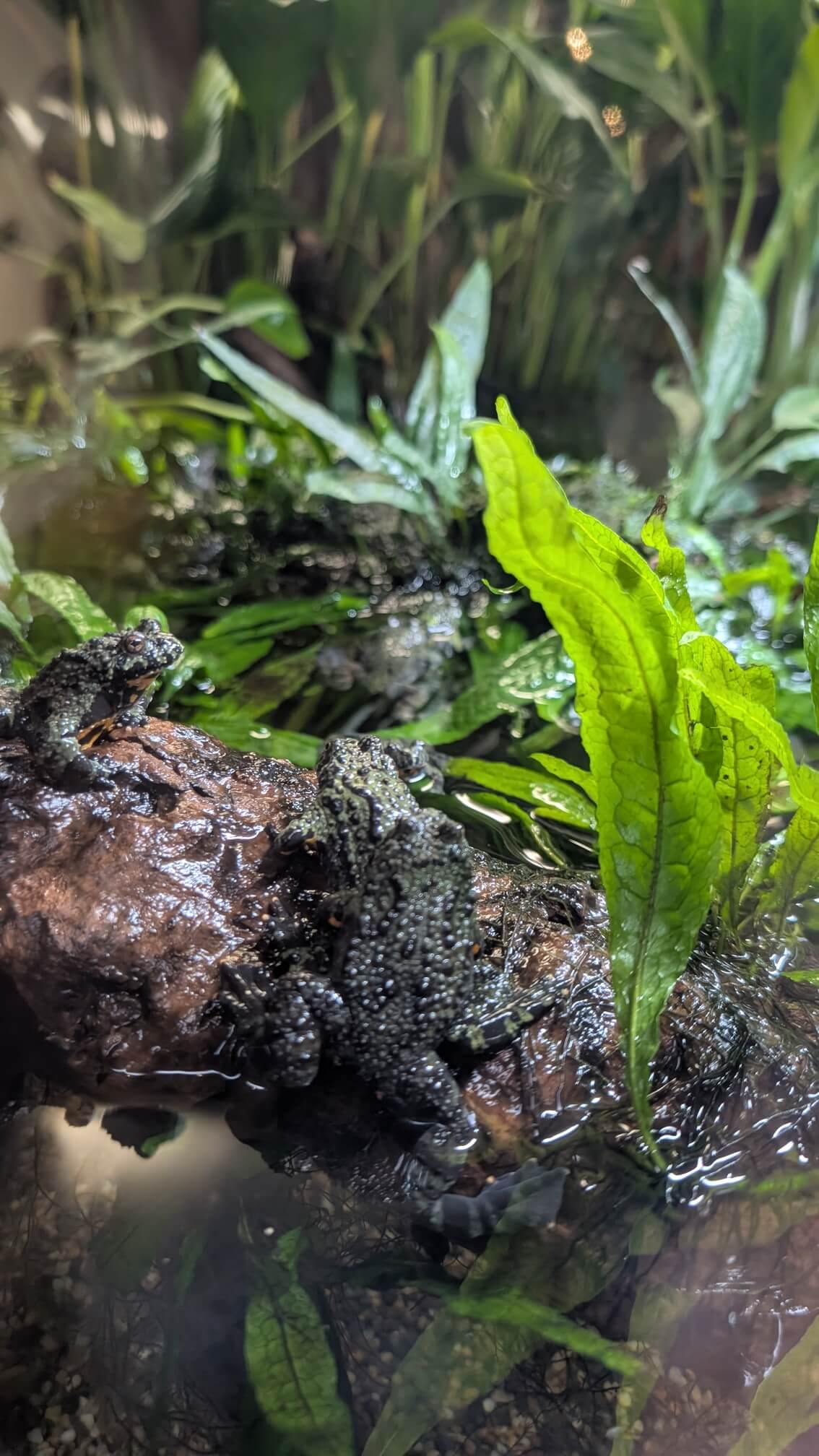
The exhibit sits alongside the Aquarium’s broader amphibian and reptile displays, where poison dart frogs and other small, colourful species are worth slowing down for. It’s a quieter corner of the building and a good spot to pause if the main galleries feel busy.
Best Time to Go
Weekday mornings, right when the doors open, are the quietest time to visit. The Aquarium fills up quickly on weekends, school holidays, and rainy summer days when families are looking for something indoors to do, so if you have flexibility, aim for a weekday.
Feeding times and animal presentations are scheduled throughout the day and posted on the daily events board near the entrance, so it’s worth checking that board as soon as you arrive and planning your route around the presentations you most want to catch, particularly the sea lion feeding.
Tip: Buy tickets online before you go. Prices change based on demand and time slot, and booking ahead usually locks in a lower rate and guarantees entry, since walk-up availability can be limited on busy days.
Membership Benefits
If you’re a Metro Vancouver local, or you know you’ll want to come back more than once or twice a year, a membership tends to pay for itself quickly since it’s priced close to the cost of two regular visits and then unlocks unlimited entry for a full year. Memberships come in three tiers:
Silver
- Unlimited visits for one year
- Discounted rates on animal encounters and behind-the-scenes tours
- Savings on events, photo packages, the gift shop, and food
Gold
- Everything in Silver
- Early entry on select mornings
- Reduced-price guest tickets
- Bring-a-friend-free days through the year
Platinum
- Everything in Gold
- Bonus guest passes
- The deepest discounts on purchases and photo packages
Events and Experiences
Beyond the daily galleries, the Aquarium runs a rotating calendar of seasonal and members events, including adults-only evening events with food and drink, holiday-themed activities like Scuba Claus dives around Christmas, and up-close animal encounter add-ons where small groups spend time behind the scenes with the sea otter trainers.
Animal encounters are a separate paid add-on, usually with a minimum age requirement and limited daily spots, so they need to be booked ahead of your visit rather than added at the door.
Where to Eat
There is a café inside the Aquarium, along with a seasonal weekends-only bar and grill and an ice cream window, so you won’t go hungry during your visit. That said, food on site is priced the way most attraction cafés are, on the higher end for fairly simple options like sandwiches and hot dogs.
A lot of regular visitors pick up something from one of the food trucks or nearby cafés around Stanley Park before heading in, or bring a packed lunch. General admission tickets typically allow re-entry with a hand stamp or receipt on the same day, so you can step out, eat somewhere cheaper, and come back in without buying a new ticket. There are also picnic tables and grassy spots just outside the Aquarium entrance if you’d rather sit down and eat there instead of inside.
Good to know: As of 2026 the Aquarium is fully cashless across admission, food, and retail. Bring a card or a phone with a payment app, or use one of the free cash-to-card kiosks on site if you’re only carrying cash.
Parking and Getting There
The Aquarium has its own parking lot just off Avison Way inside Stanley Park, along with several other nearby lots. Parking throughout Stanley Park runs on a pay-by-time system with unattended pay stations, and a single parking receipt is valid at any stall in the park for the time you’ve paid for, not just the lot you started in.
If you’d rather skip driving, public buses stop near the Georgia Street entrance to Stanley Park, leaving a five to ten minute walk to the Aquarium. Cycling and walking along the seawall are also popular ways to get there, and there are bike racks near the main entrance.
Heads up: Parking is not included with Aquarium admission and is not free. Lots near the entrance fill up fast on sunny weekends, so arrive early or budget extra time to circle for a spot.
There’s a particular kind of quiet that happens when you’re standing in front of a tank full of drifting jellies, phone forgotten in your pocket, just watching them glow.
Frequently Asked Questions
Planning a full day out? The Aquarium is just one stop inside Stanley Park’s seawall, gardens, and beaches.
Explore Stanley Park