
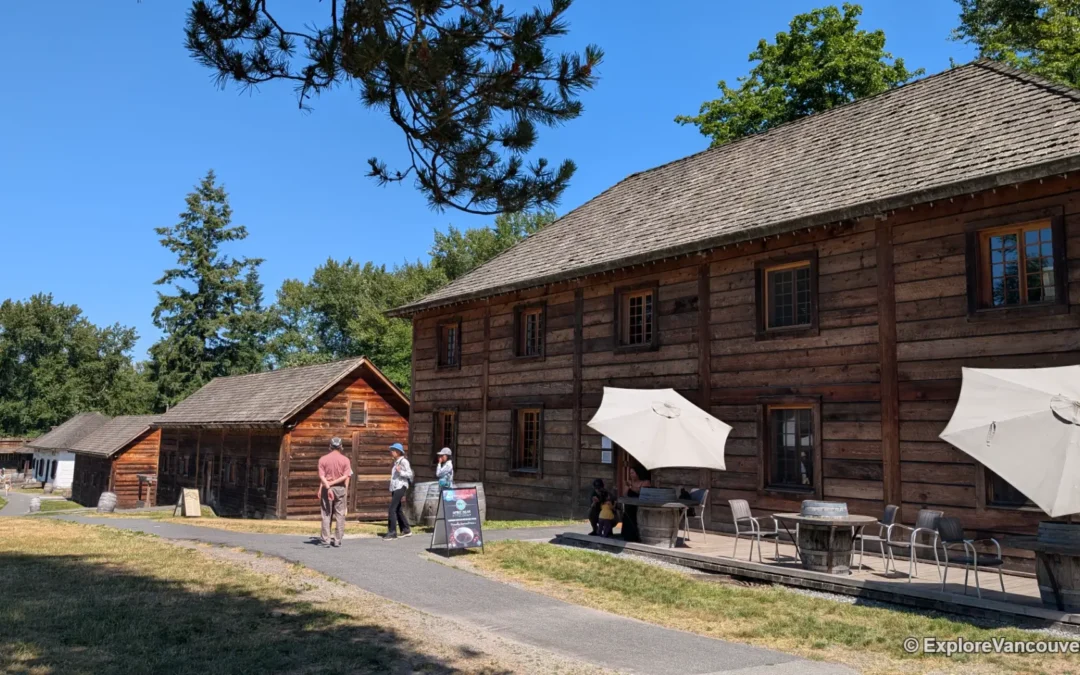
Fort Langley National Historic Site sits on the banks of the Fraser River in the village of Fort Langley, marking the spot where British Columbia was proclaimed a colony in 1858. Managed by Parks Canada, the reconstructed Hudson’s Bay Company trading post lets visitors walk through timber palisades, watch costumed interpreters demonstrate 19th century trades, and trace the province’s origins back to a single fur trading post built in 1827.
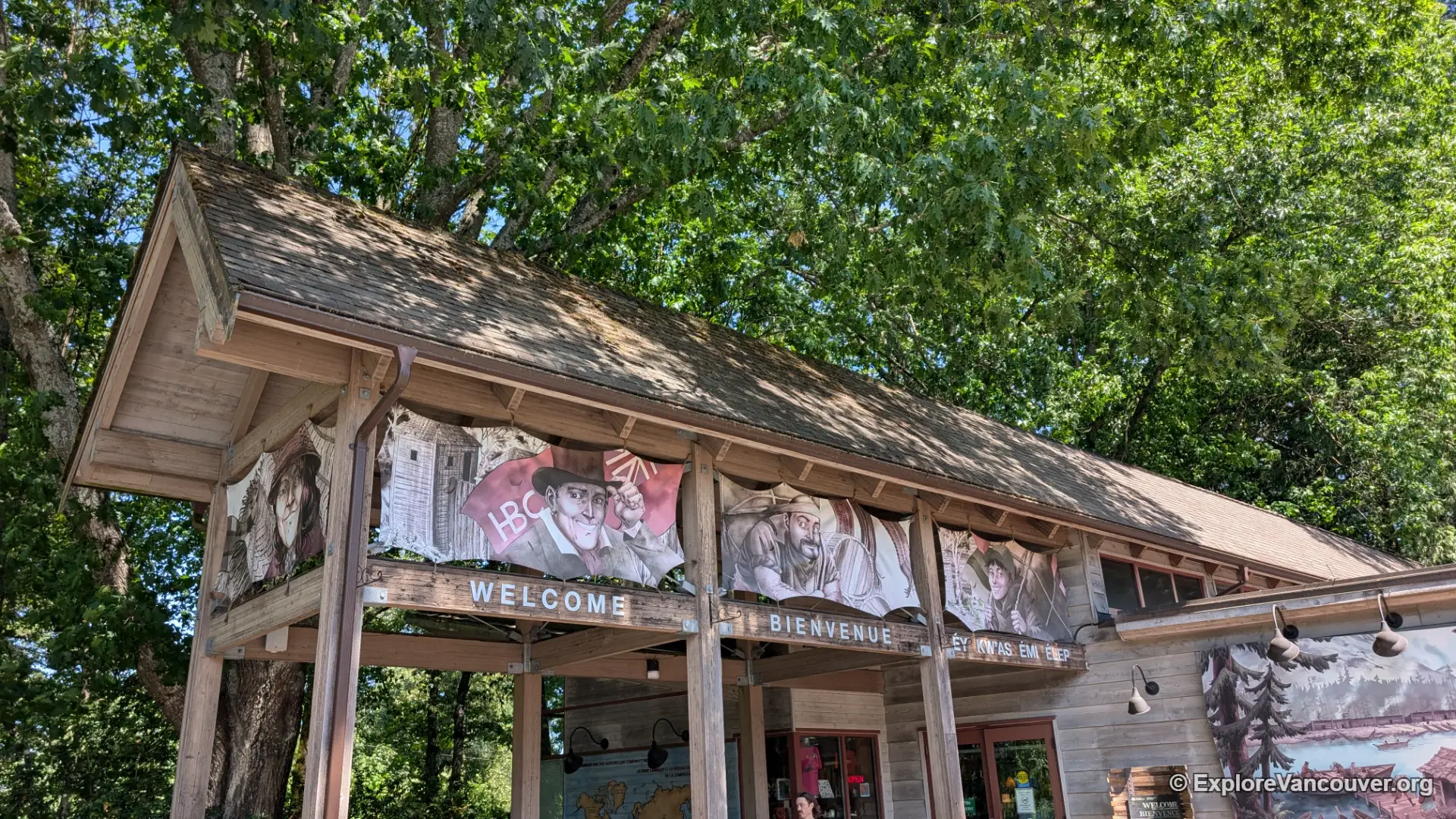
The entrance to Fort Langley National Historic Site, framed by its reconstructed timber palisade.
Where Fort Langley National Historic Site Is Located
Photo Gallery
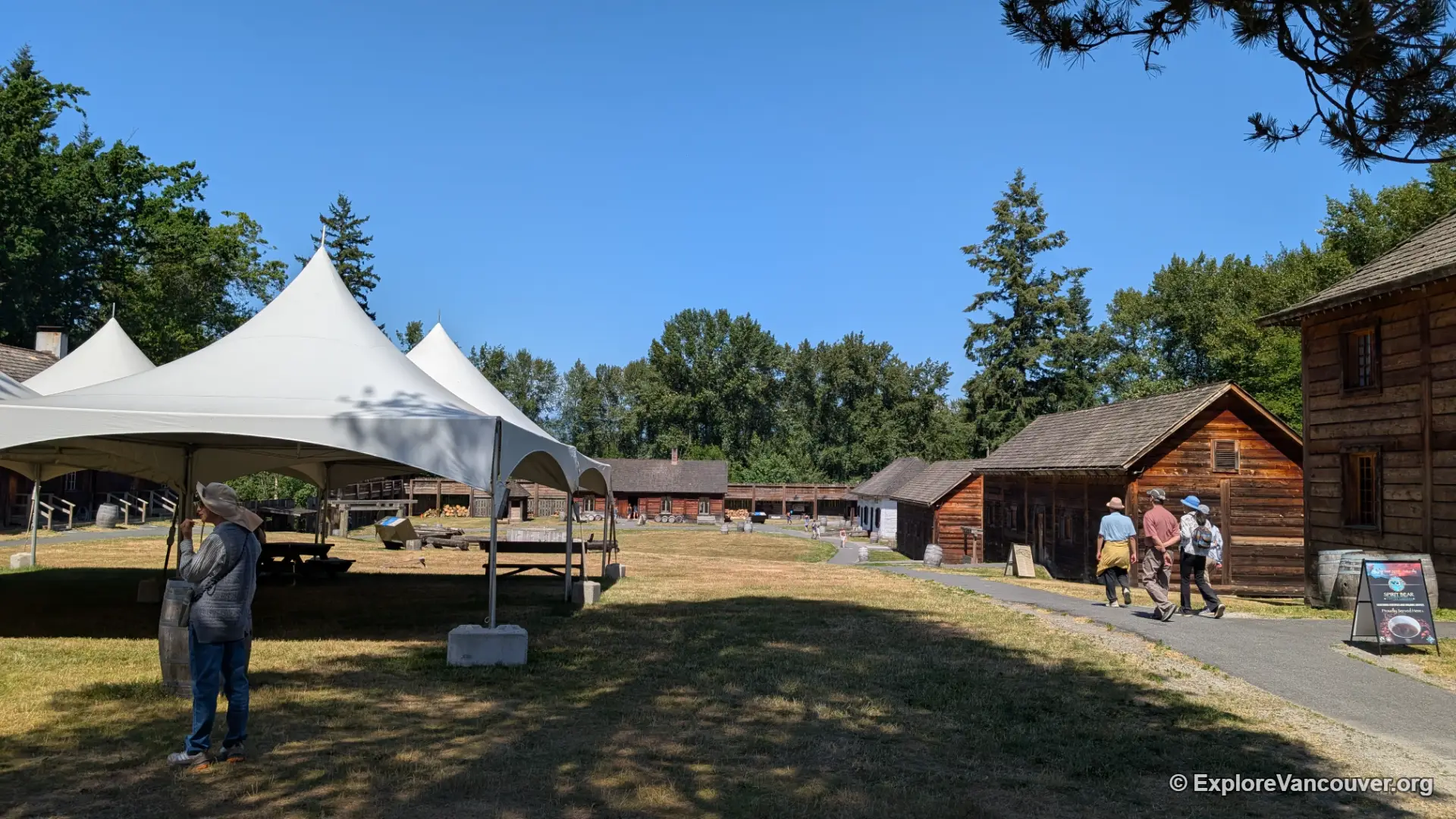
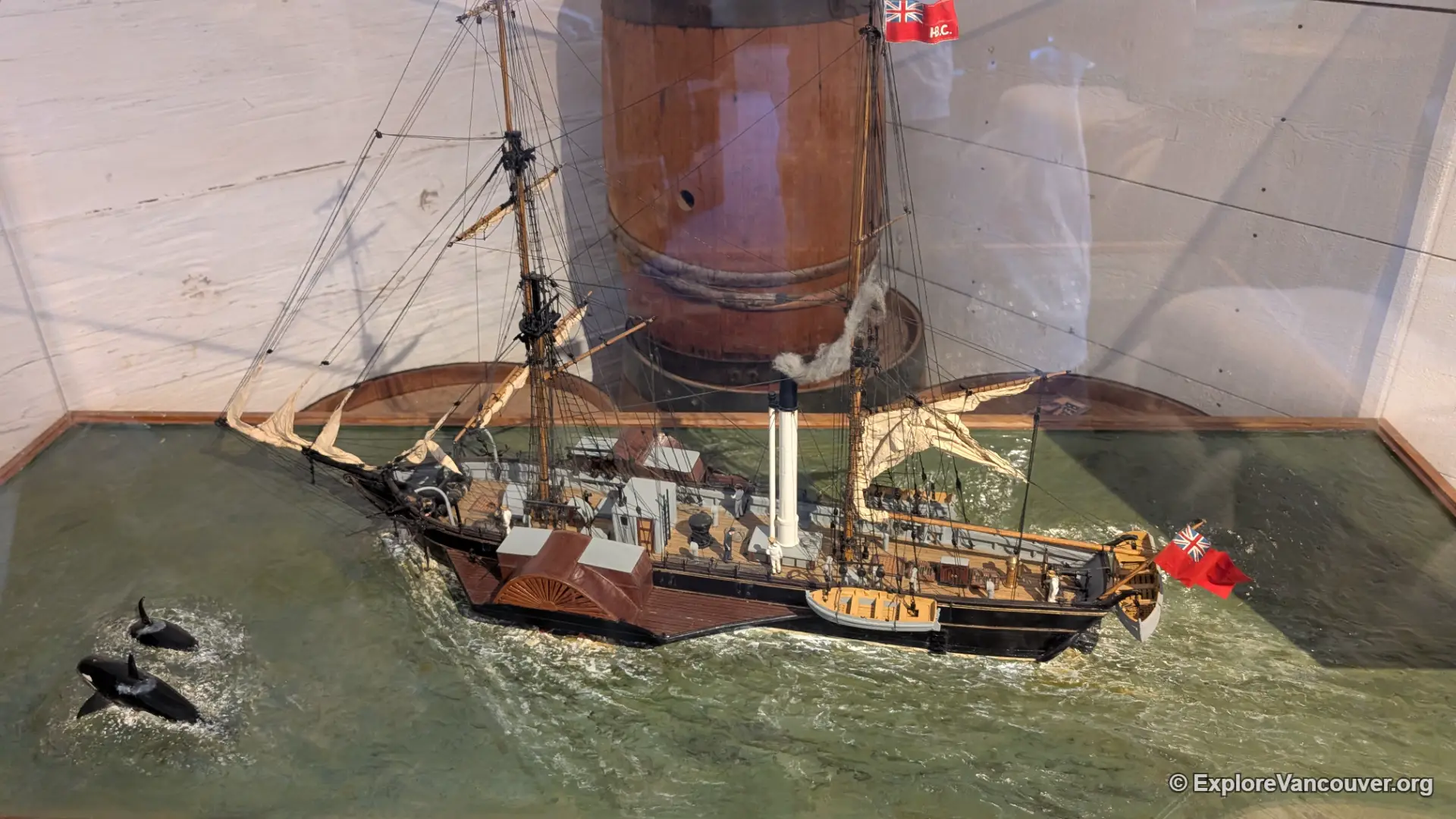
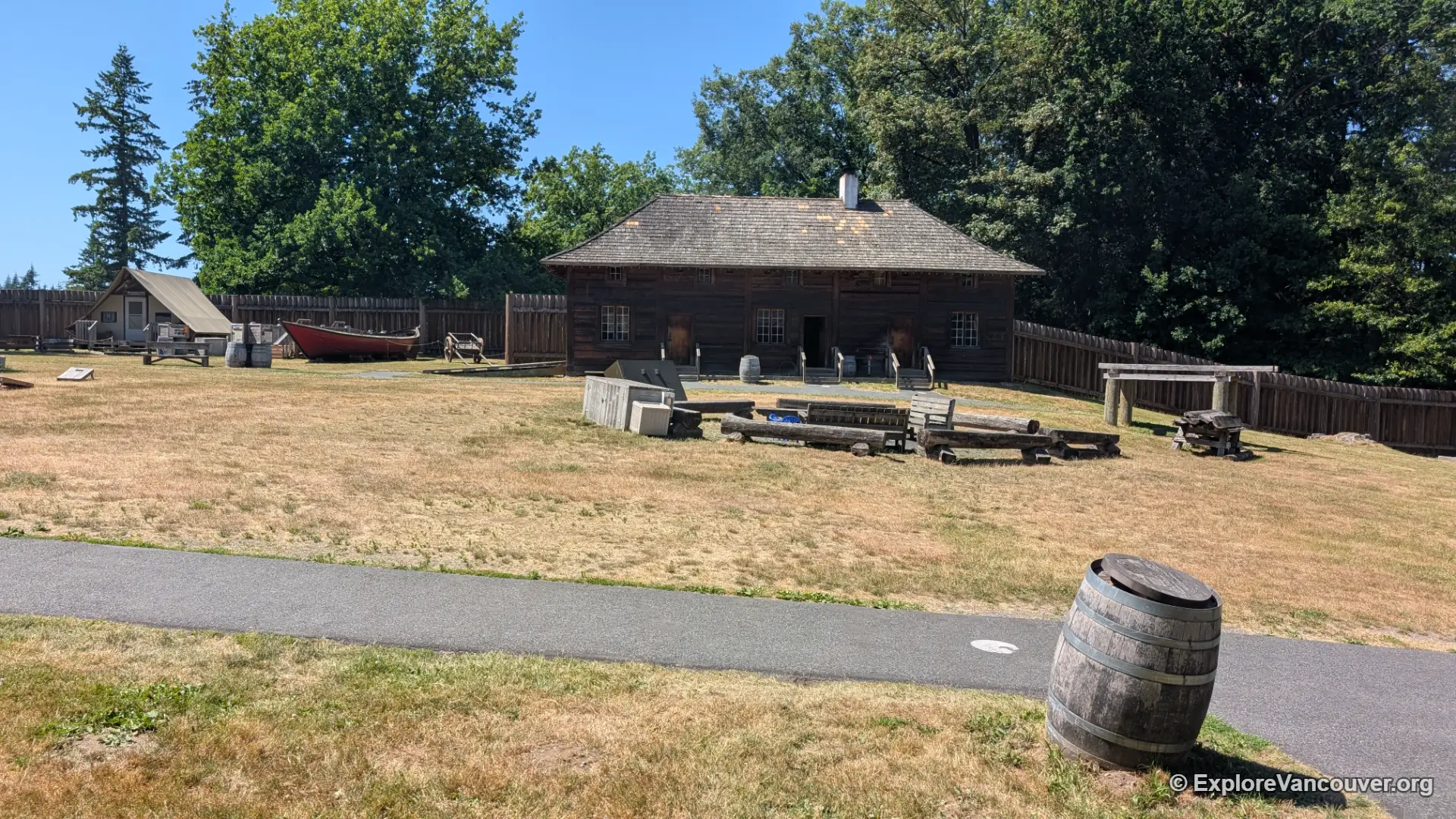
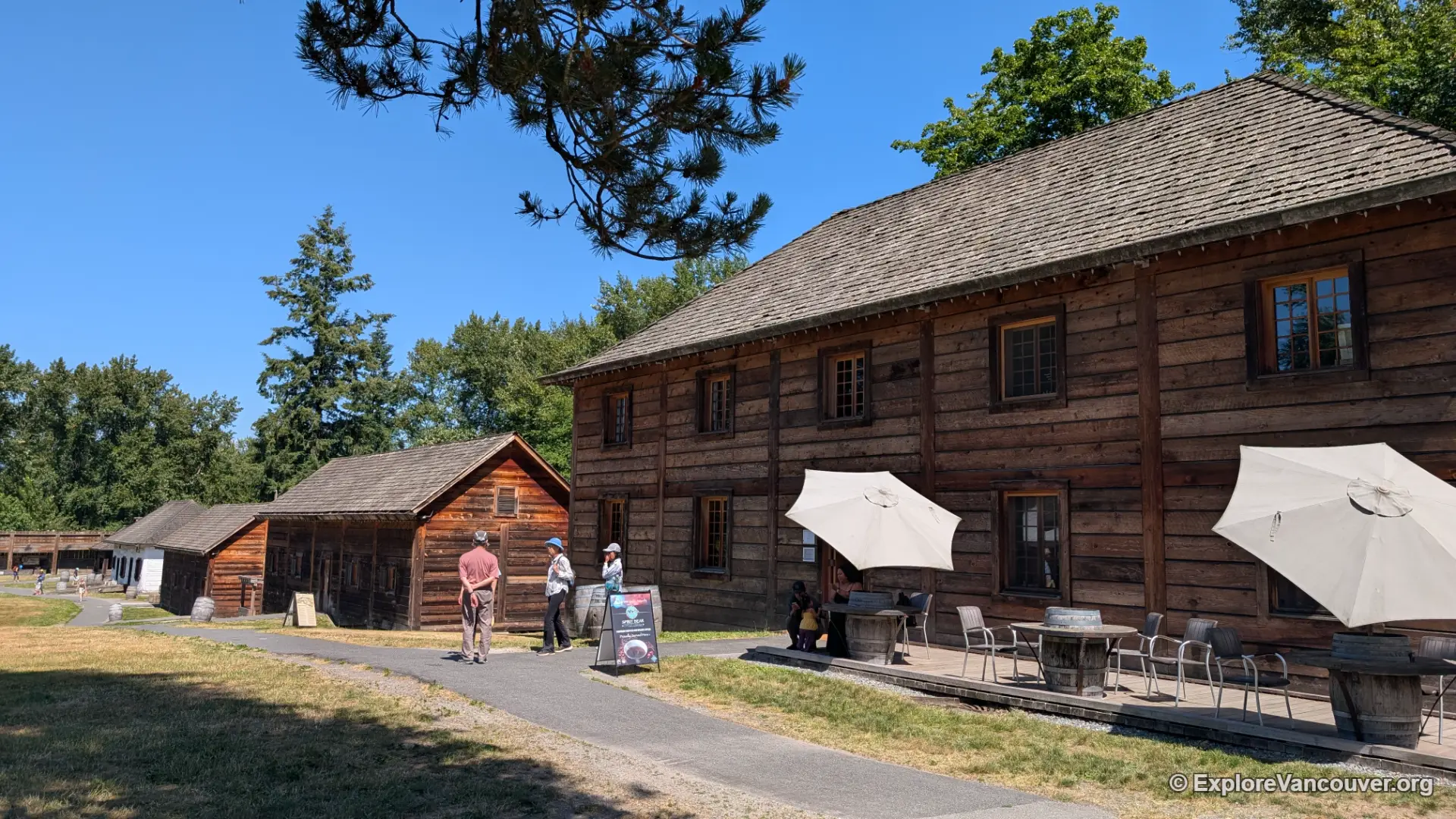
The Birthplace of British Columbia: A Short History
Fort Langley began in 1827 as a Hudson’s Bay Company trading post, built roughly four kilometres downstream of where it stands today. The original outpost brought together Hudson’s Bay Company traders and the Stó:lō people of the Fraser Valley, who exchanged furs, salmon, and cranberries for blankets, tools, and other goods. To strengthen these trading relationships, many HBC employees married into local Indigenous families, an arrangement that gave the company access to established trade networks along the river.
By 1839 the post had moved to its present location on Mavis Avenue, and a fire the following year forced much of it to be rebuilt. As the fur trade declined through the 1840s, Fort Langley shifted toward farming, salmon packing, and supplying other HBC outposts as far away as Russian Alaska. The most significant moment in the fort’s history came on November 19, 1858, when the colony of British Columbia was formally proclaimed here in response to the Fraser River gold rush, a rush that had brought roughly 30,000 miners through the region in a single year.
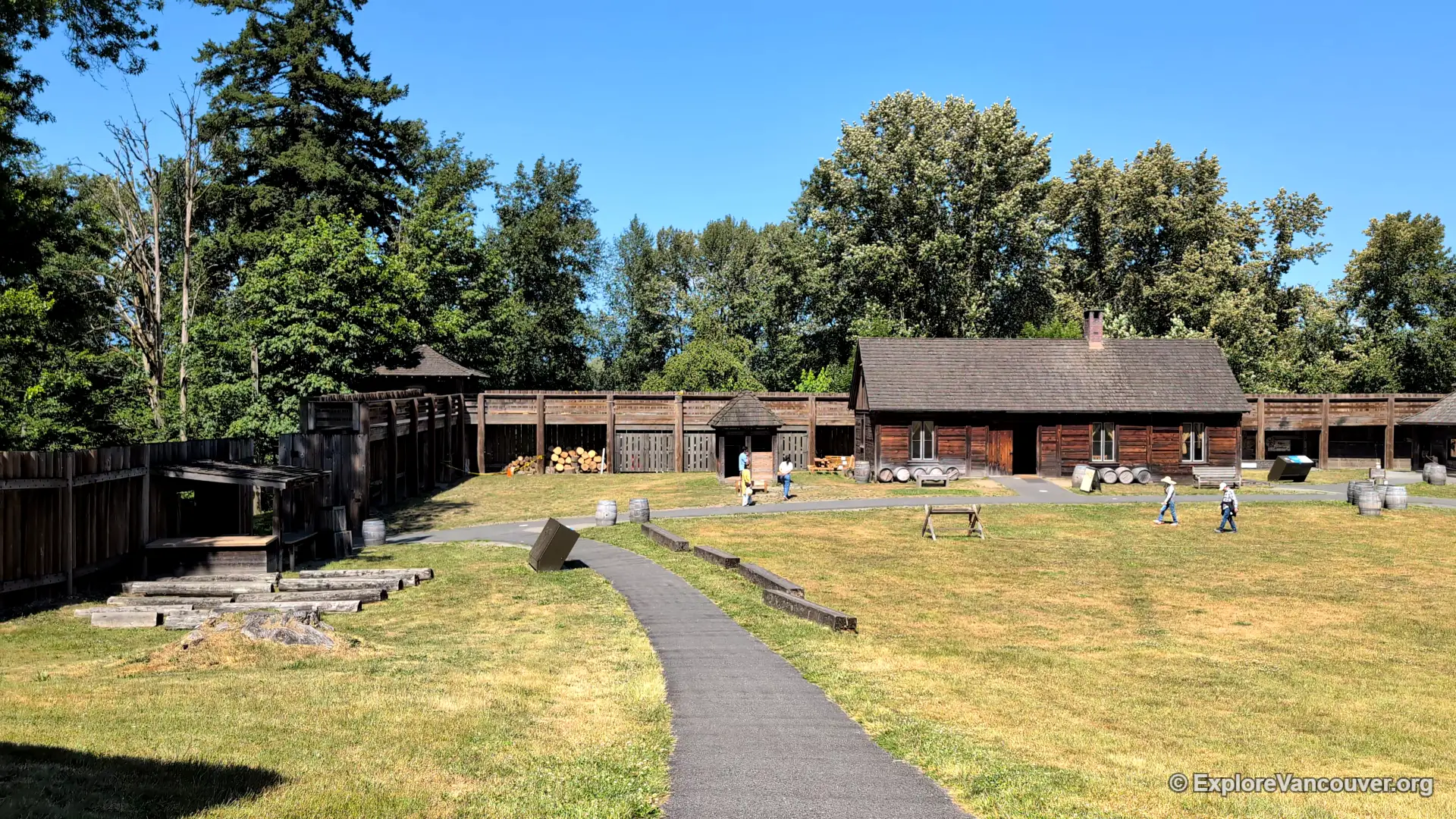
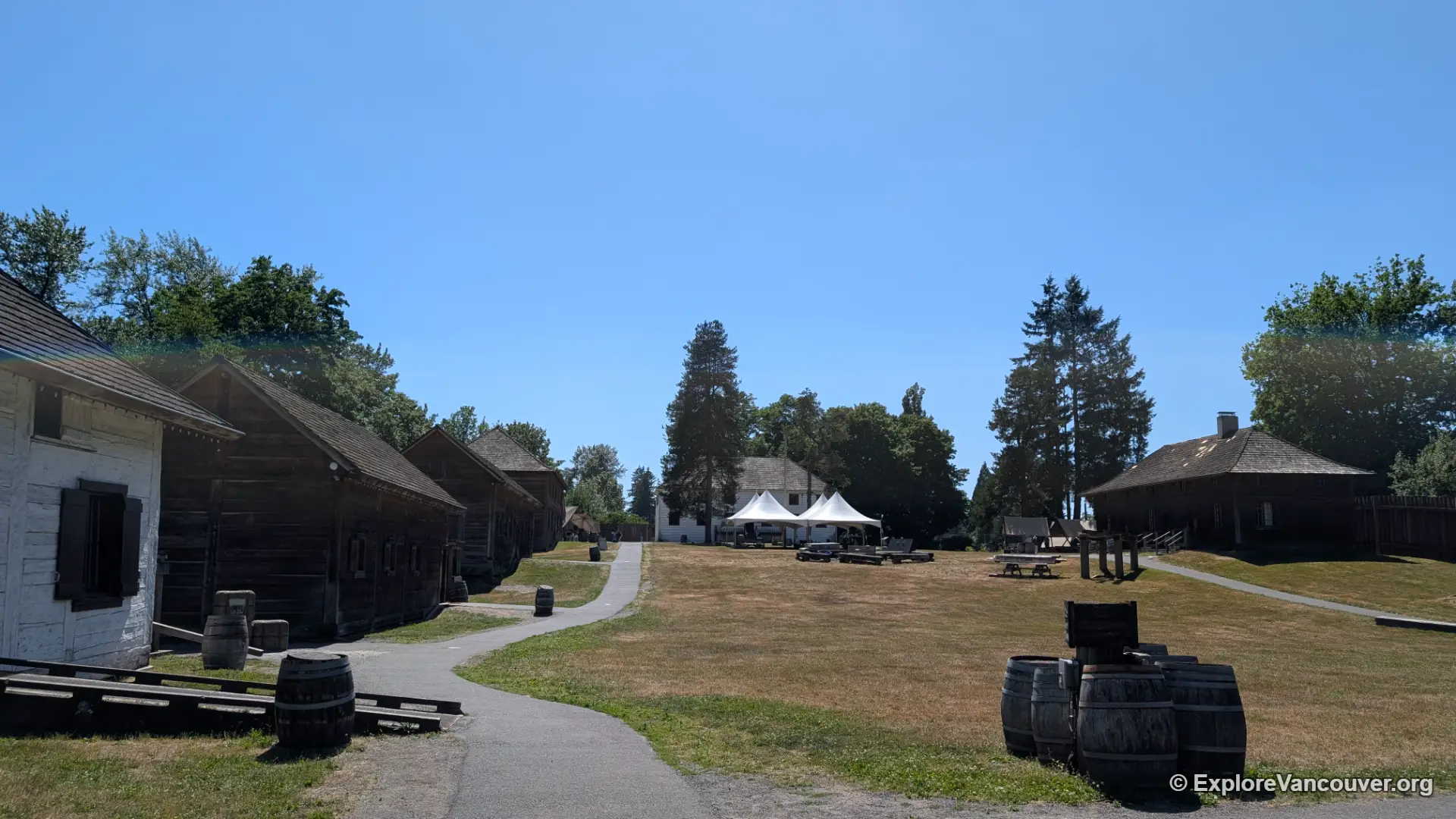
The Hudson’s Bay Company continued operating at the site until 1886. By the 1920s only one original building remained standing, and in 1923 the location was designated a National Historic Site. That surviving structure, the Storehouse, reopened to the public in 1931 and remains the only building on site built during the original fur trade era. Every other structure inside the palisade is a careful reconstruction, most completed between the 1950s and the early 2000s, based on archaeological findings and historical records.
The Storehouse: The Fort’s Oldest Building
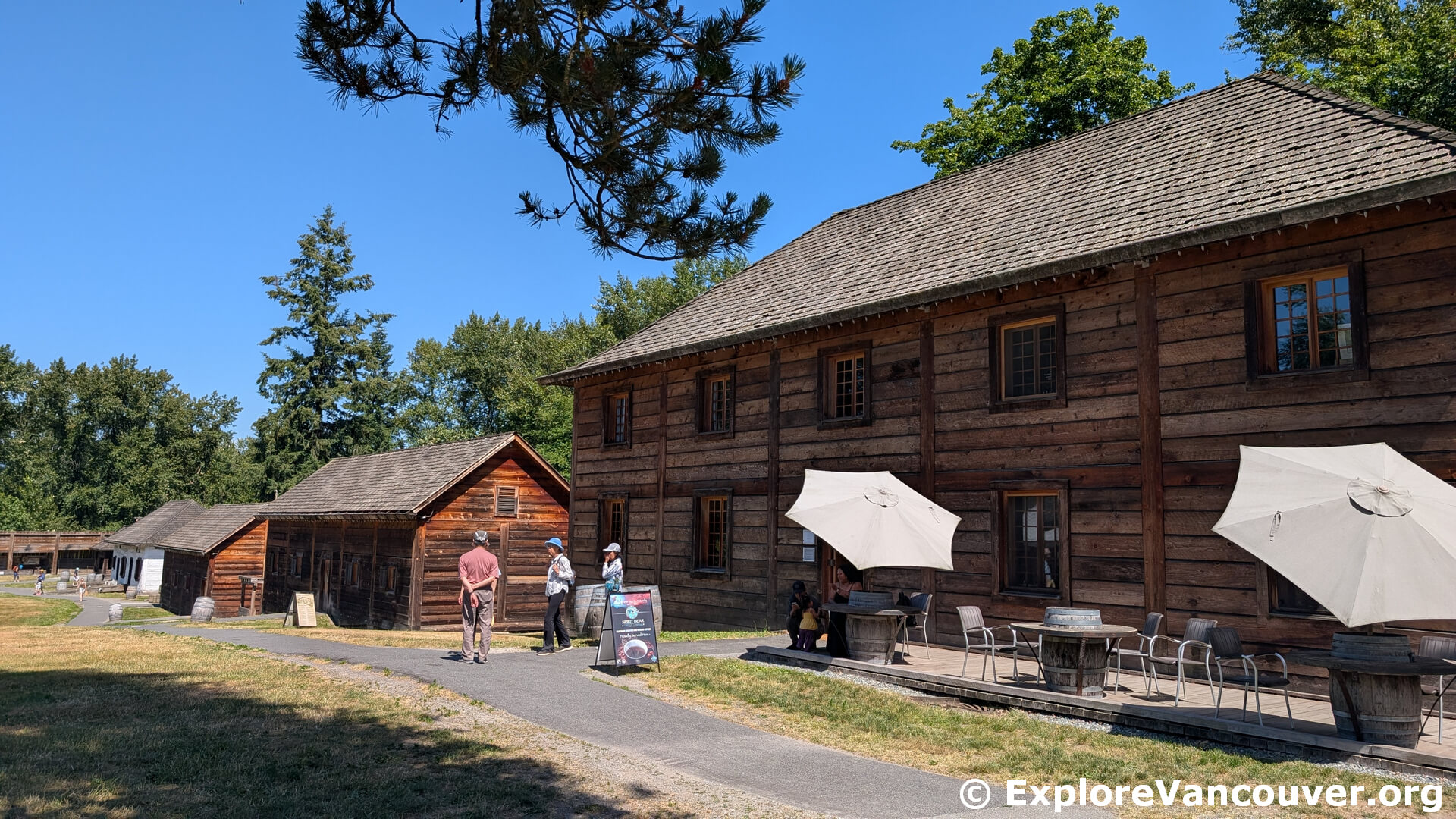
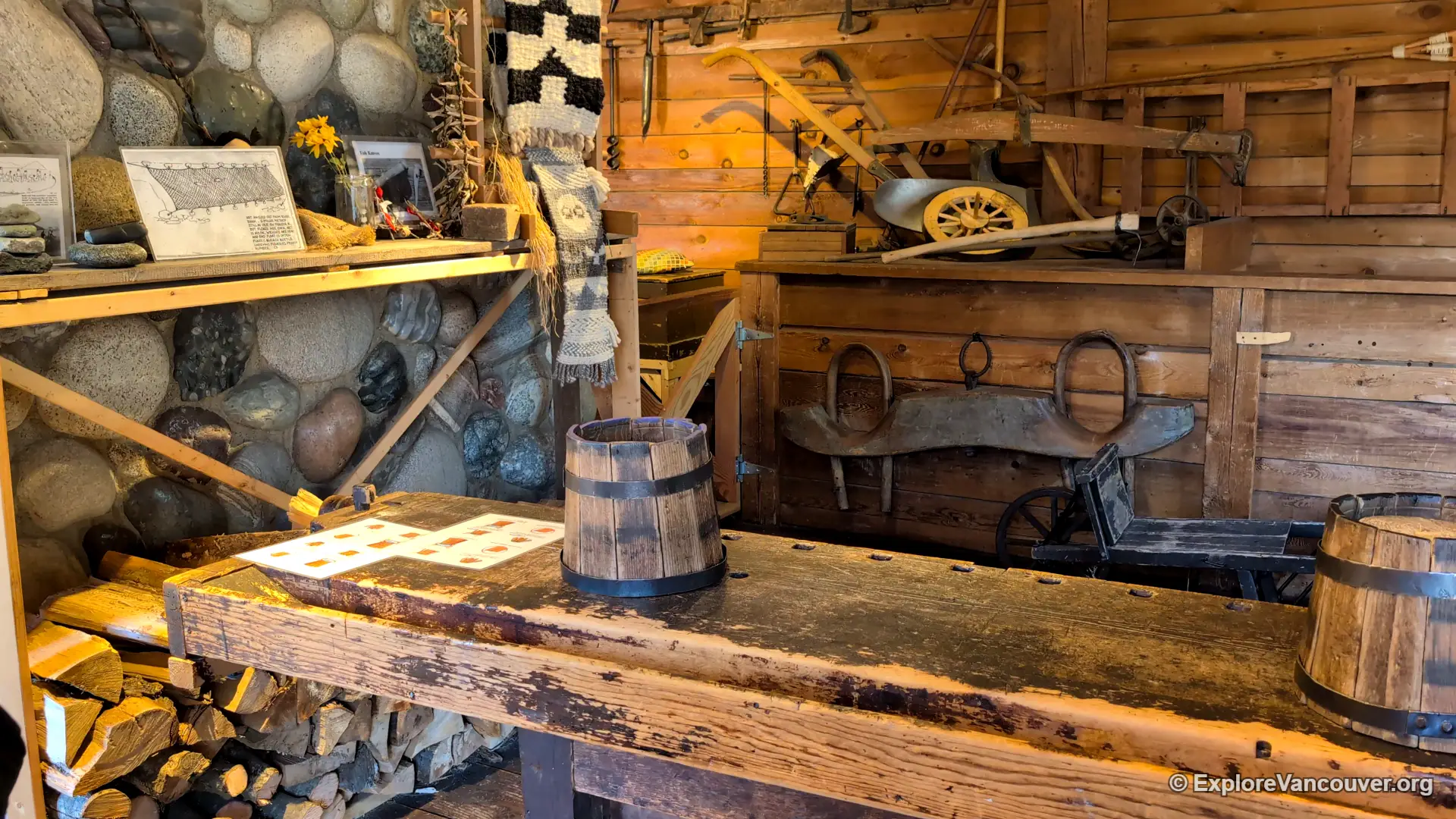
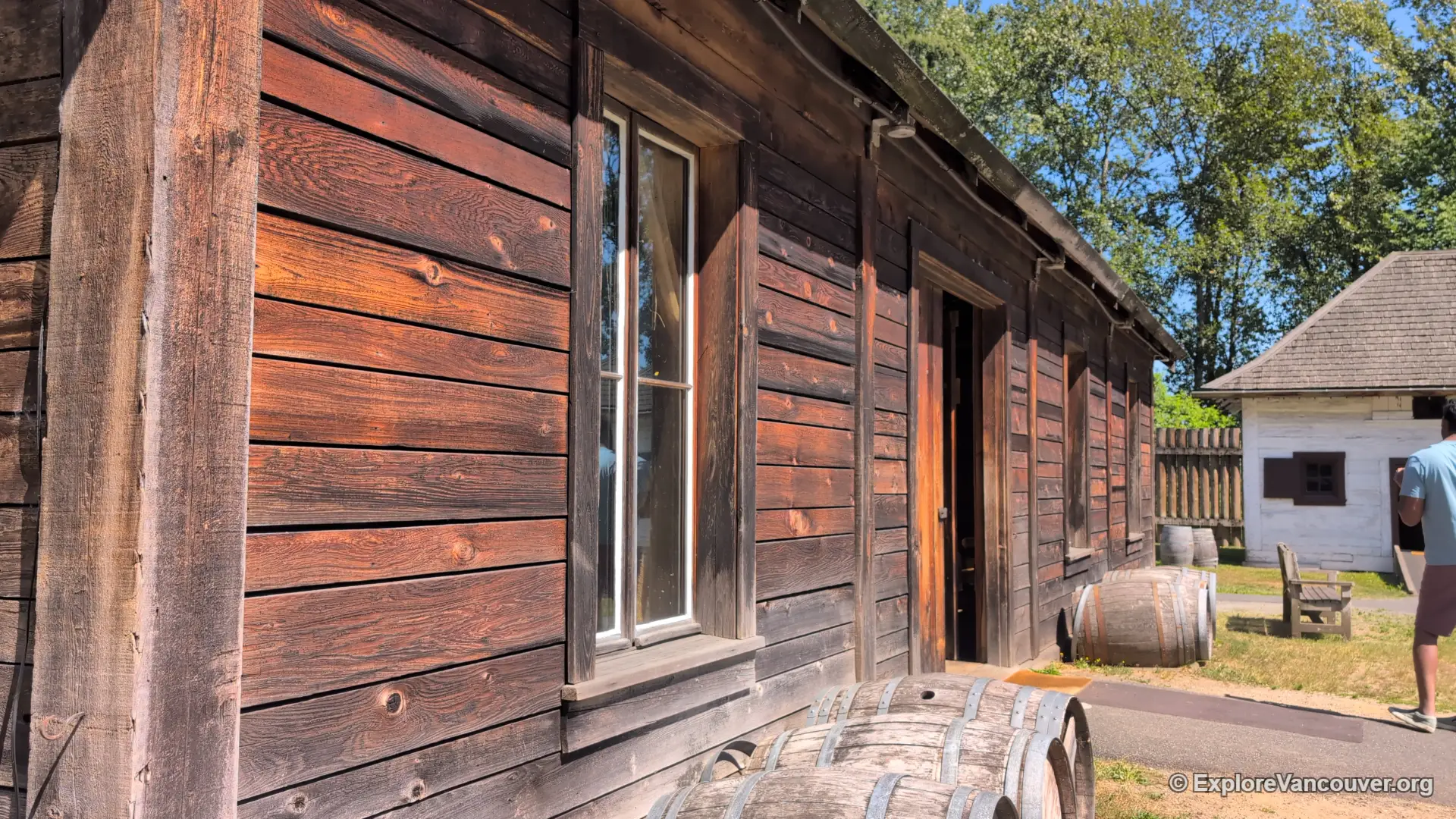
Tucked near the river-facing wall, the Storehouse dates to the 1840s and is the only structure at Fort Langley that survives from the original trading post. It once held trade goods, furs, and provisions moving between the coast and the interior, and today it displays artifacts from that period. Because the building held goods like furs and salted fish, some corners of the room still carry a faint historic scent, part of what makes it feel genuinely old rather than staged.
The Big House
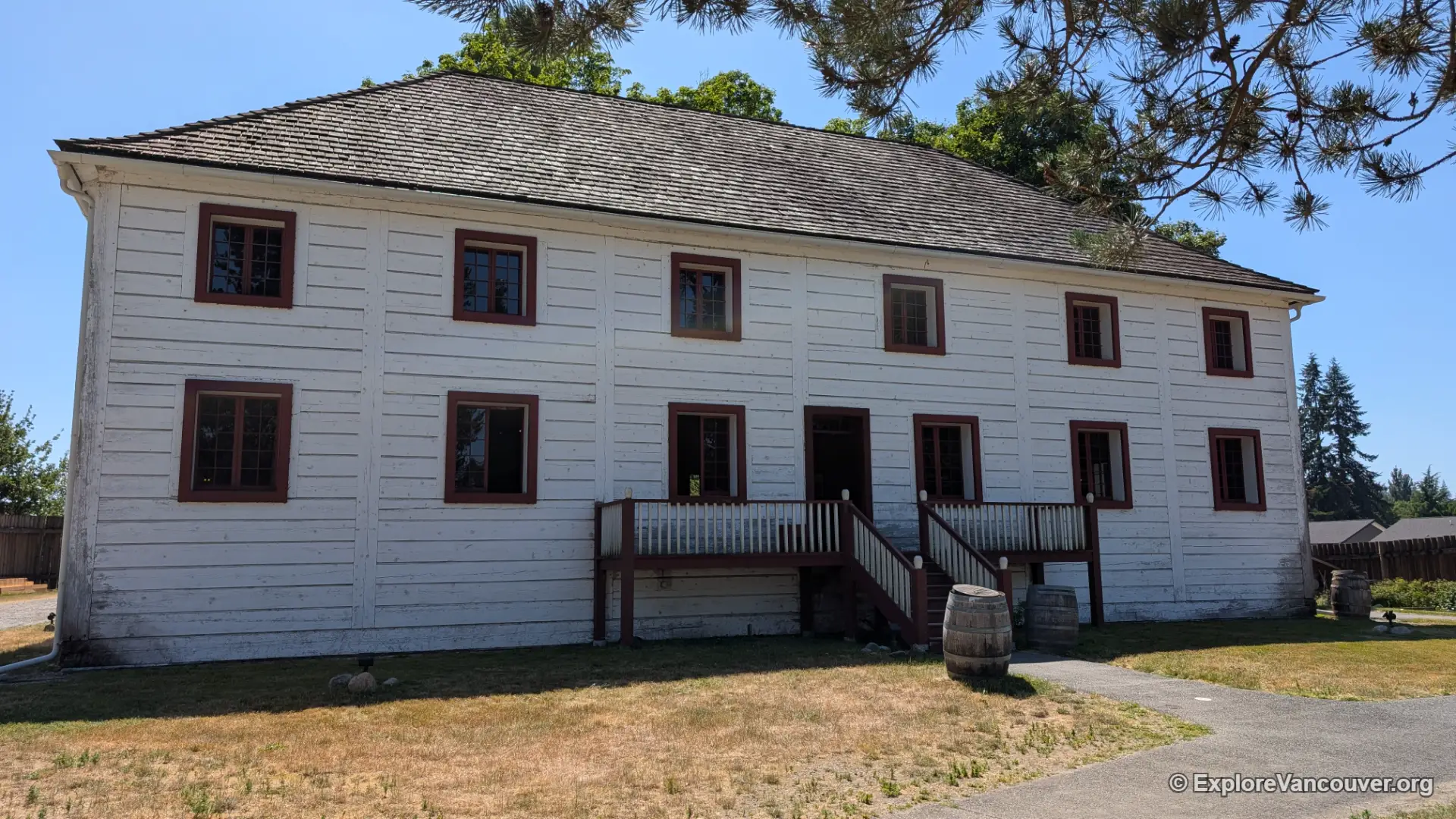
The Big House is the largest structure inside the palisade and the building most associated with the fort’s leadership. Rebuilt in 1958 as a white-painted, two-story log structure, it recreates the quarters where the chief trader and senior HBC officers lived and worked. Visitors can walk through the ground floor to see how the fort’s managers lived day to day, then head upstairs to a gallery covering the broader story of the fur trade and the proclamation of British Columbia in 1858.
Daily Life Inside the Palisade
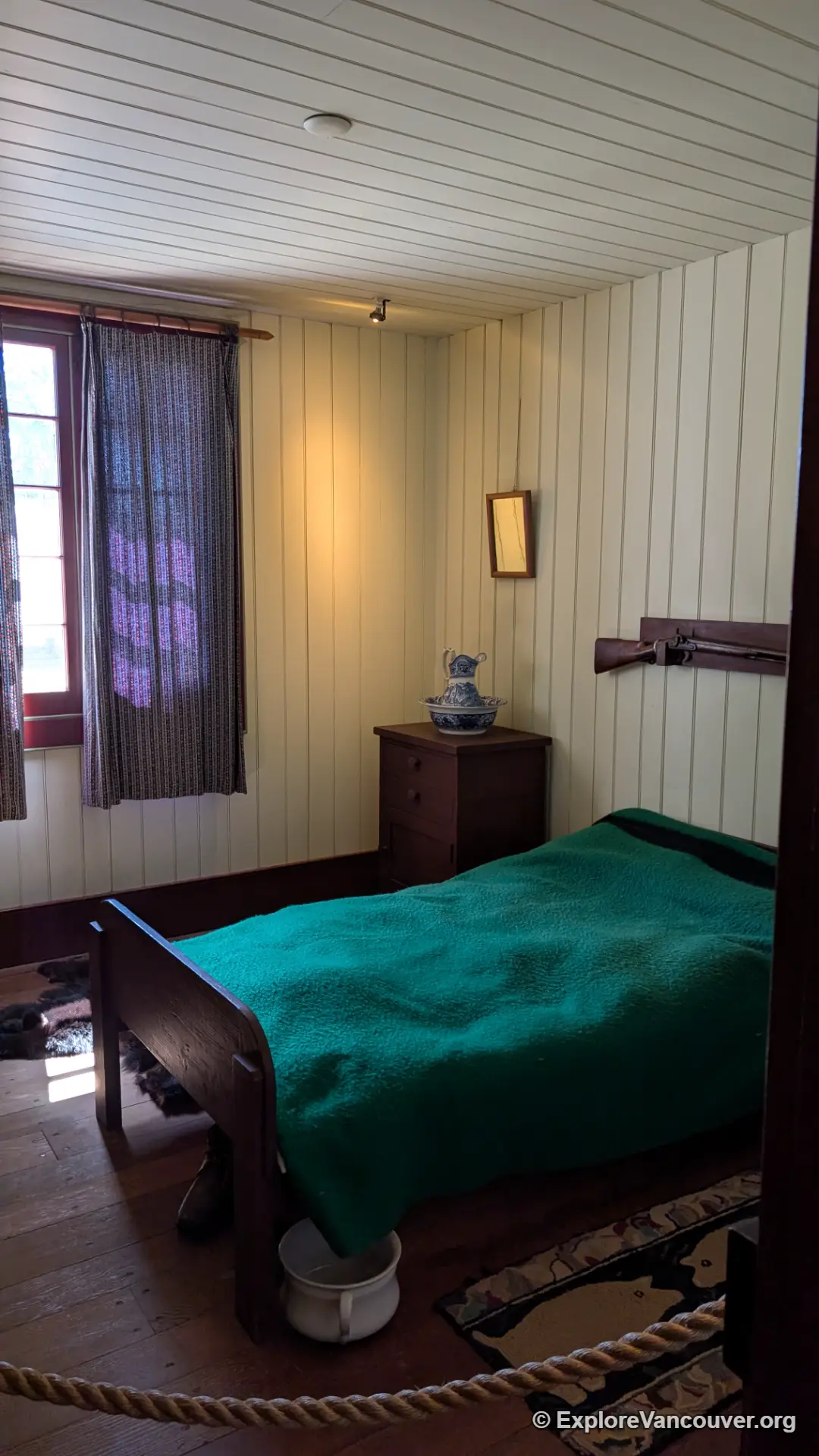
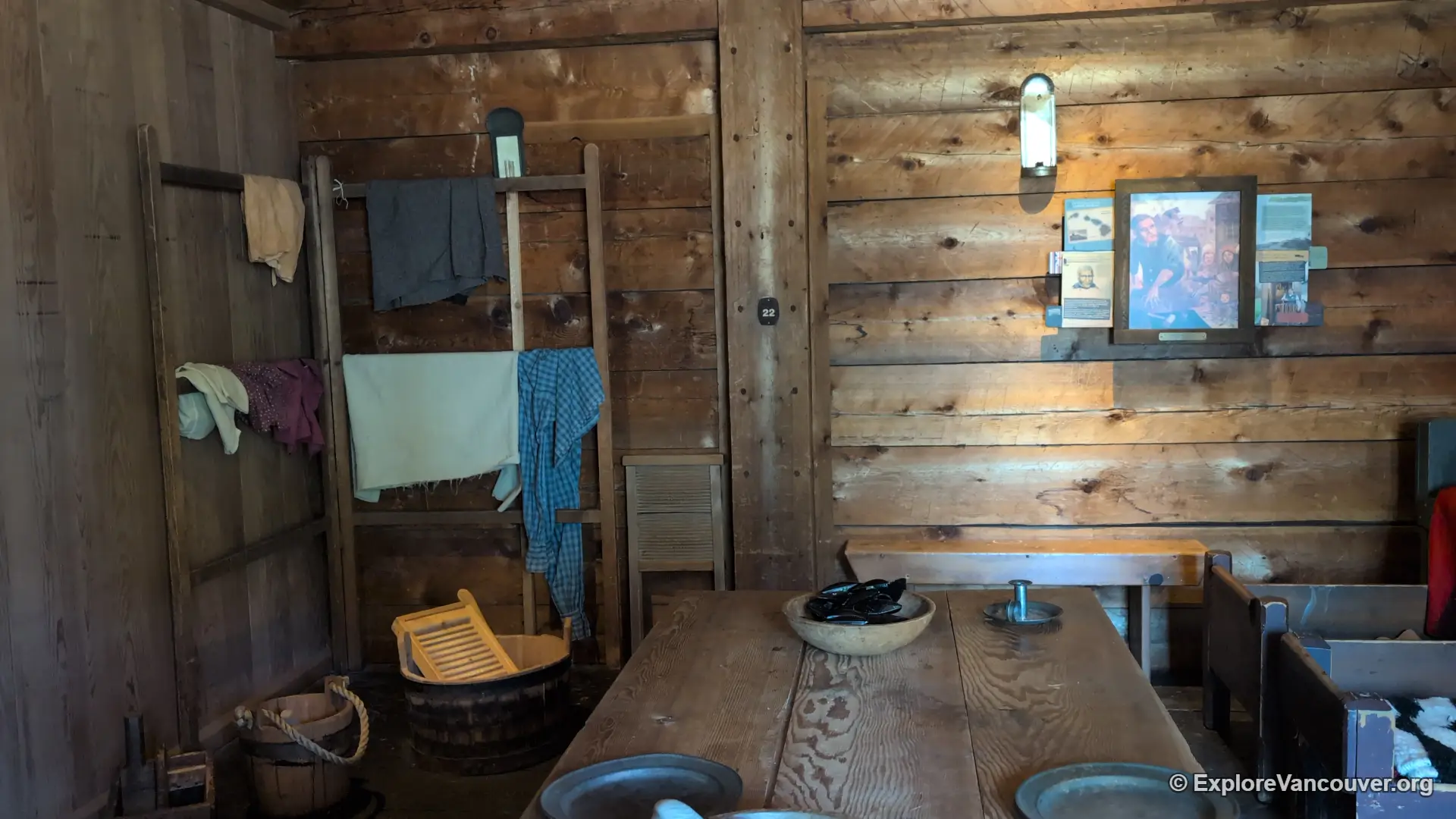
Beyond the Big House, several smaller buildings show what everyday life looked like for the people who lived and worked at Fort Langley. The servants’ quarters recreate the more modest living conditions of HBC employees, with period furnishings and displays that contrast sharply with the officers’ quarters next door. A dining setup elsewhere on site shows how meals were prepared and shared, giving a fuller picture of the fort as a working community rather than just a defensive outpost.
Trades and Demonstrations: Cooperage and Blacksmith Shop
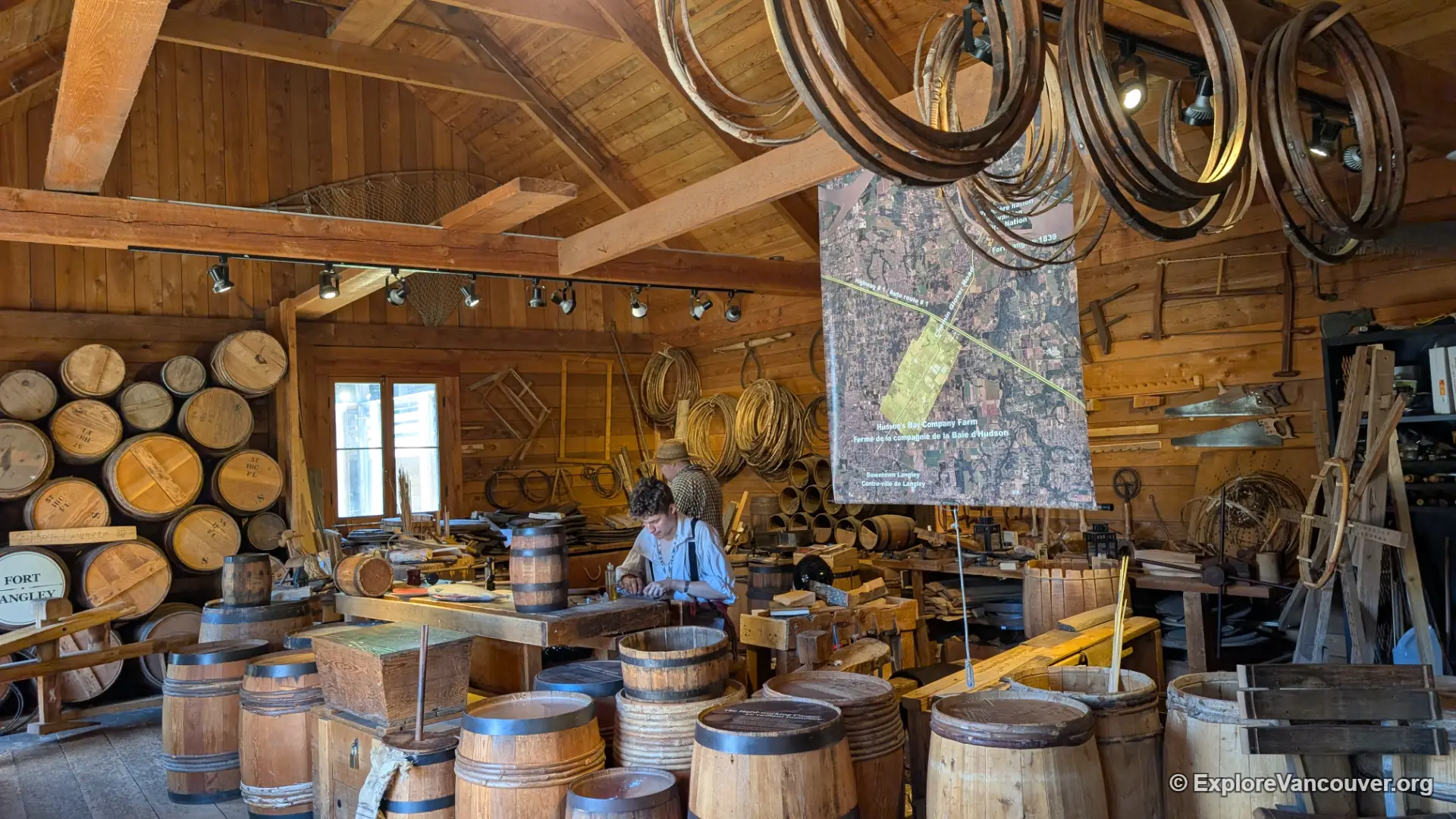
Fort Langley’s working trades are one of the most memorable parts of a visit. In the cooperage, costumed interpreters build barrels using the same techniques 19th century coopers used to ship salmon, cranberries, and farm produce down the river. Visitors can watch a full demonstration or try a hands-on barrel building activity of their own. Next door, a working forge in the blacksmith shop turns out tools and hardware the way the original fort would have needed them, with sparks and hammering that make the trade feel far more real than a museum placard ever could.
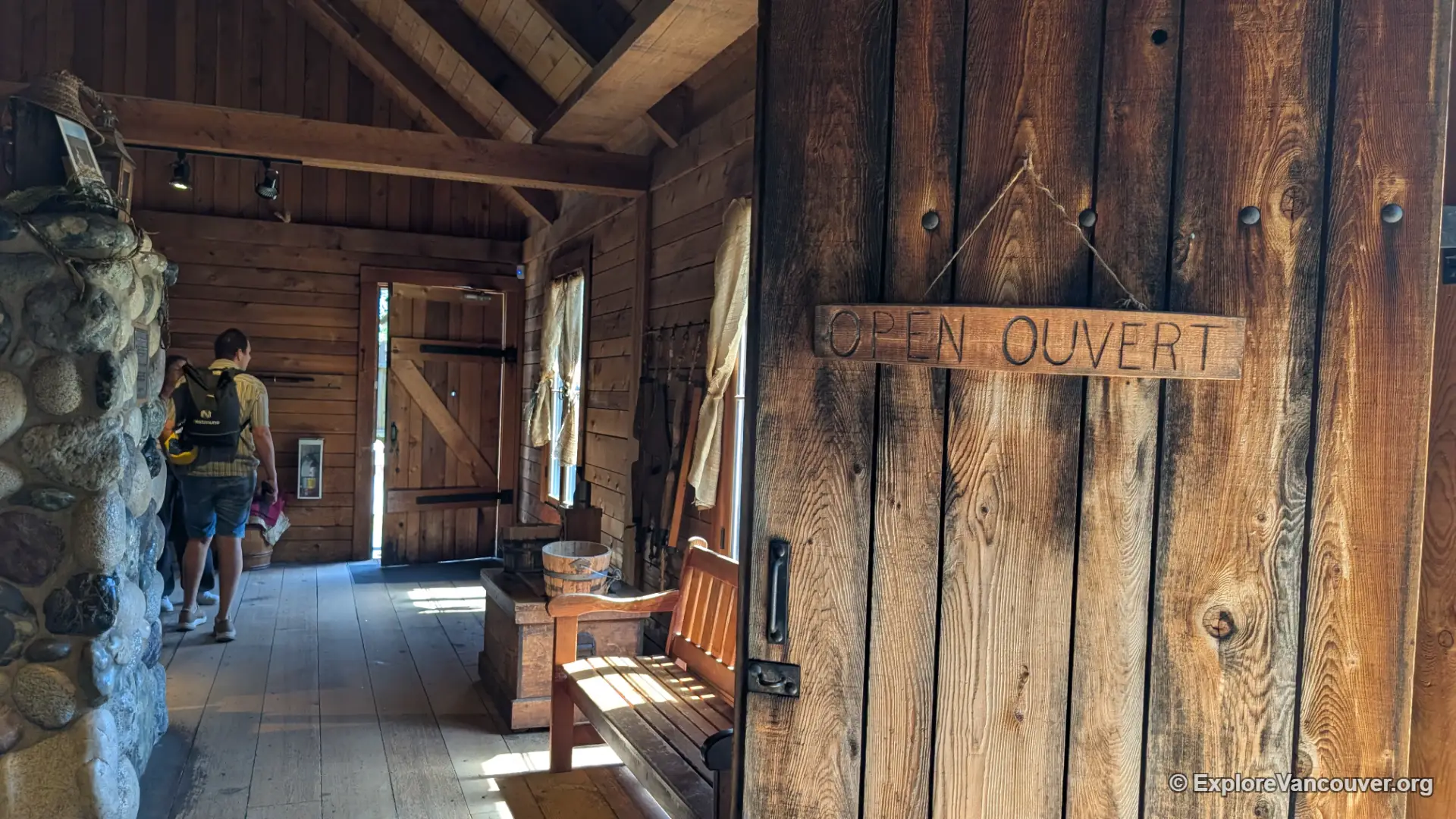
Visitor Centre and Gift Shop
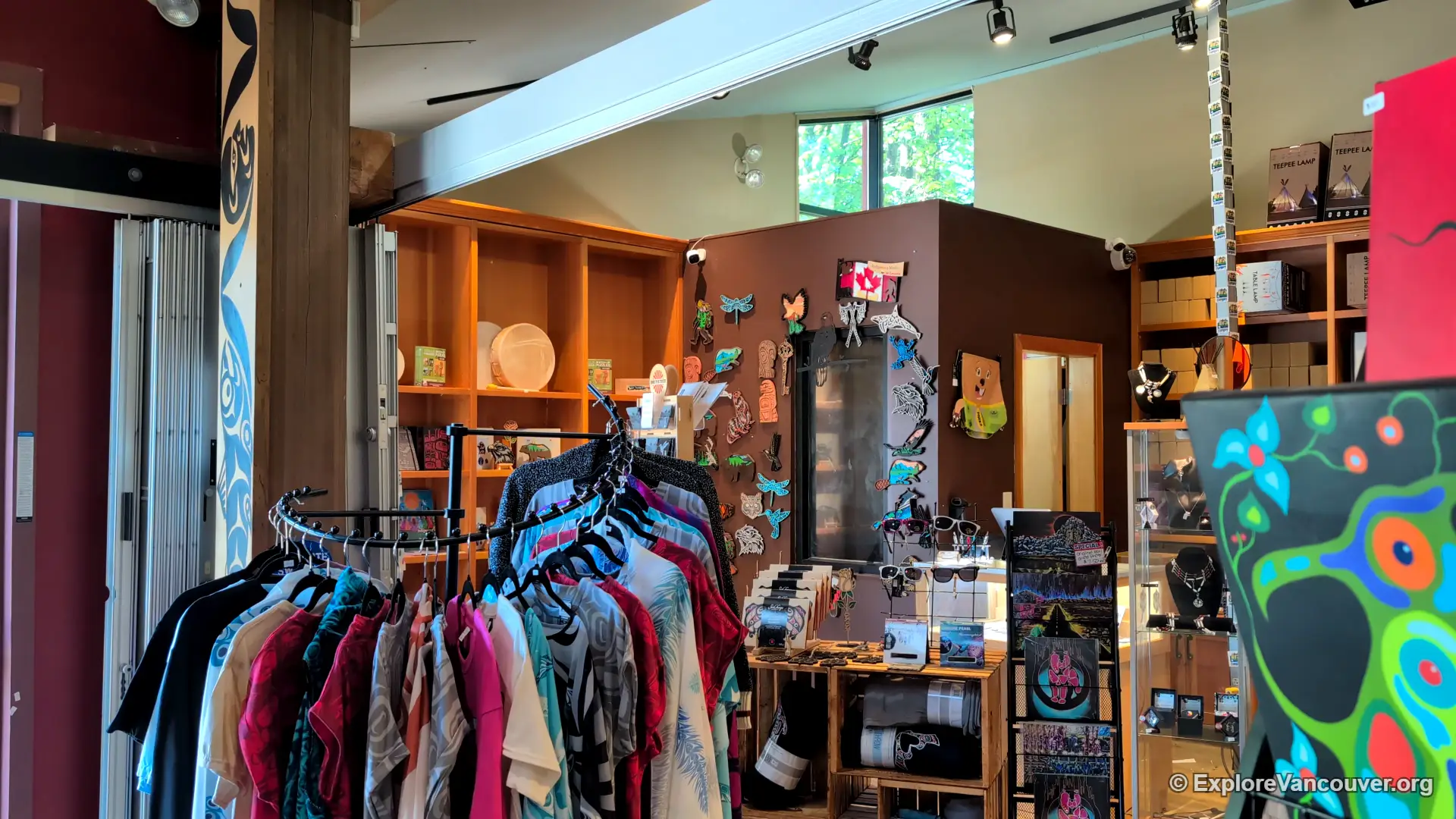
Most visits start at the Visitor Centre just outside the palisade, where staff can outline the day’s demonstrations, tours, and any special programming. It is also home to a gift shop stocked with locally made goods, books on Fraser Valley history, and souvenirs tied to the fort’s fur trade past, a good stop for anyone looking to bring home something more thoughtful than a standard trinket.
The Bastion and Palisade Walk
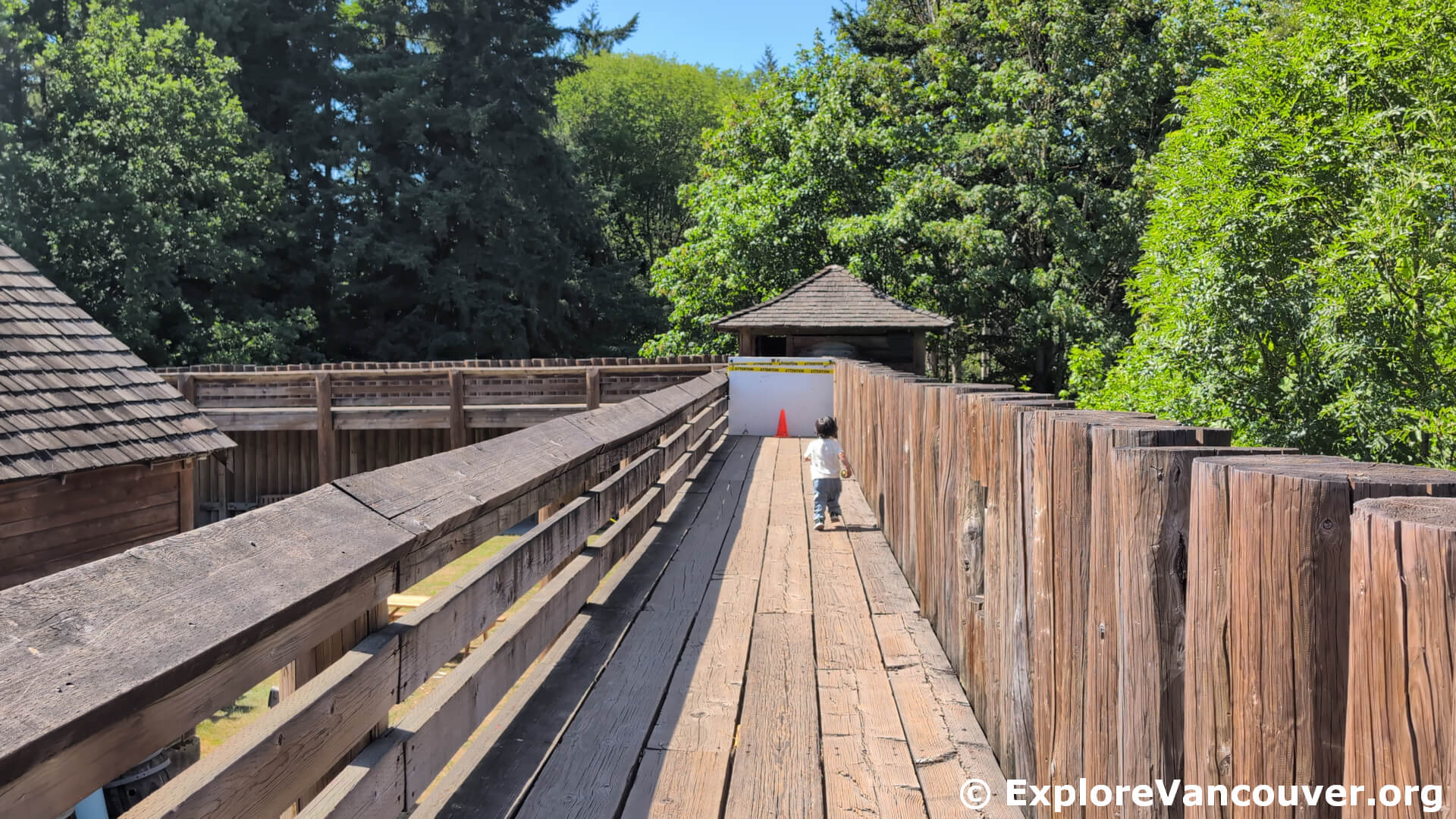
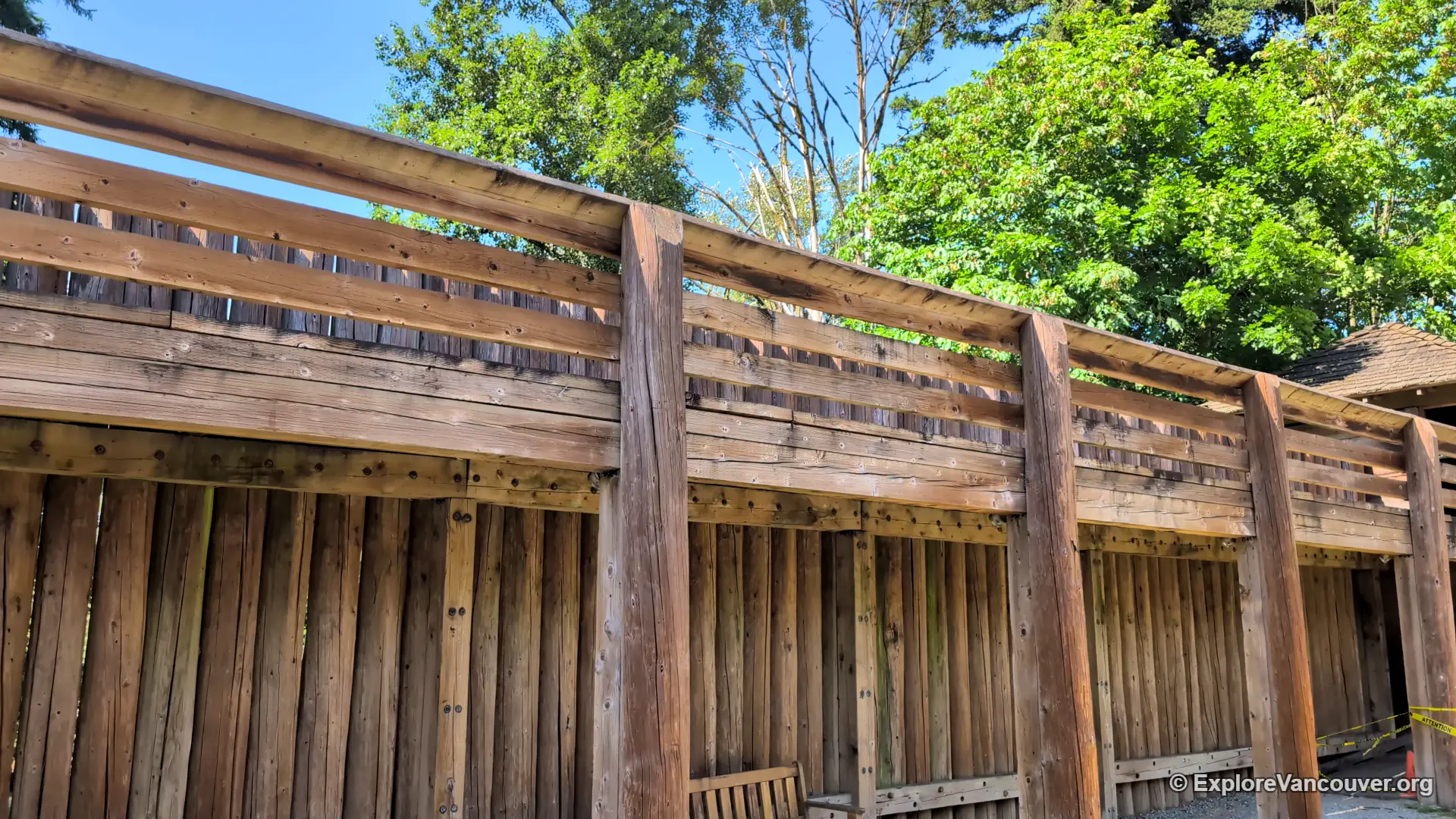
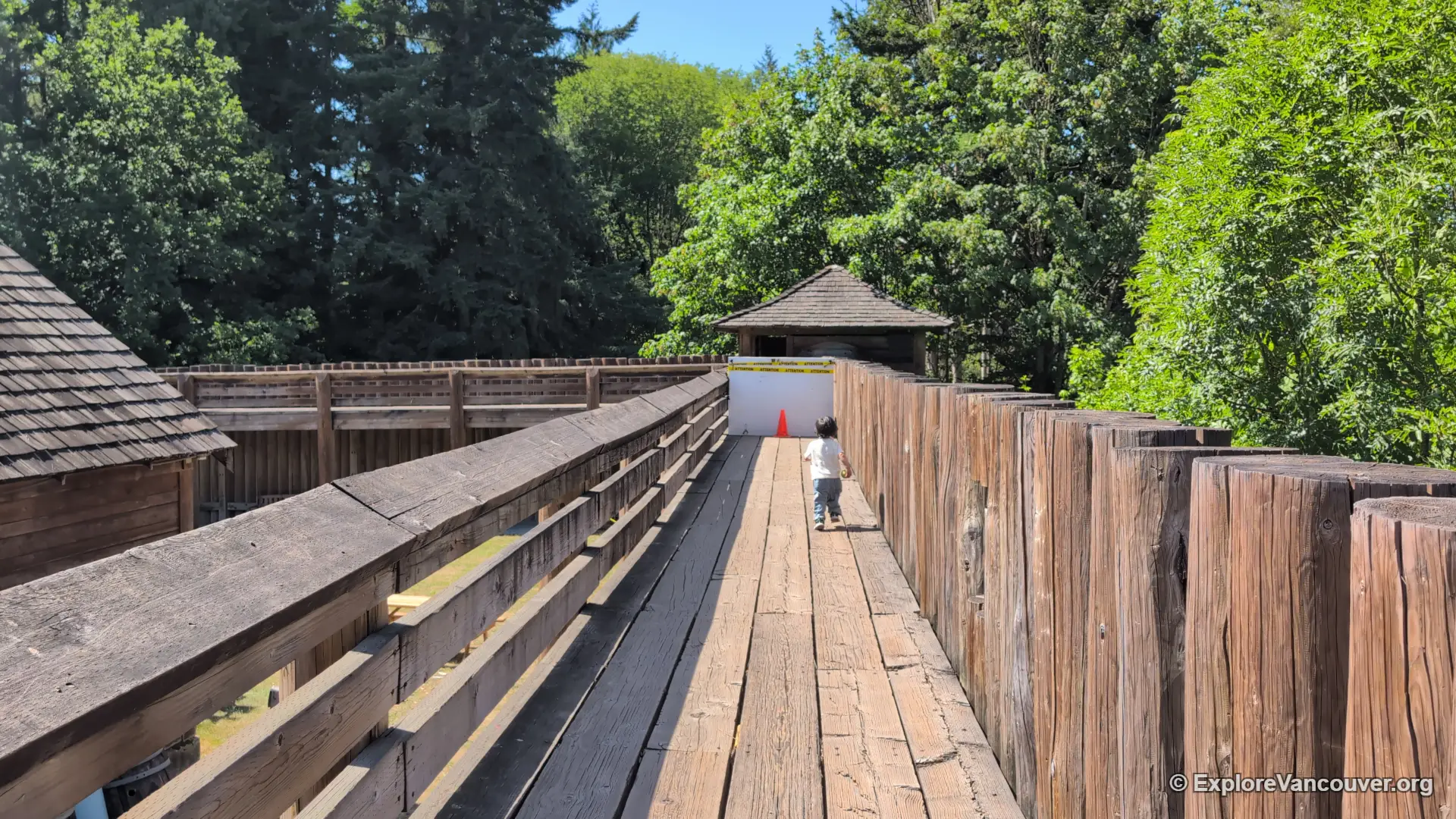
A two-story log bastion stands watch along the northeast corner of the palisade, rebuilt in 1957 on the footprint of the original lookout tower. Visitors can climb inside for a view over the grounds and the surrounding fields, then follow a walkway along a section of the timber ramparts that once protected the fort. The uneven square windows and steep pyramid roof of the bastion give a good sense of how the original 19th century structure would have looked and functioned.
River Views and Grounds
Fort Langley sits directly on the Fraser River, and the bastion offers one of the best vantage points on site for taking in the water and the Golden Ears Mountains beyond it. The wider grounds include open fields, a heritage garden, and a small farm area that echoes the fort’s agricultural history, along with a pair of red chairs set aside for anyone who wants to sit and take in the view for a while.
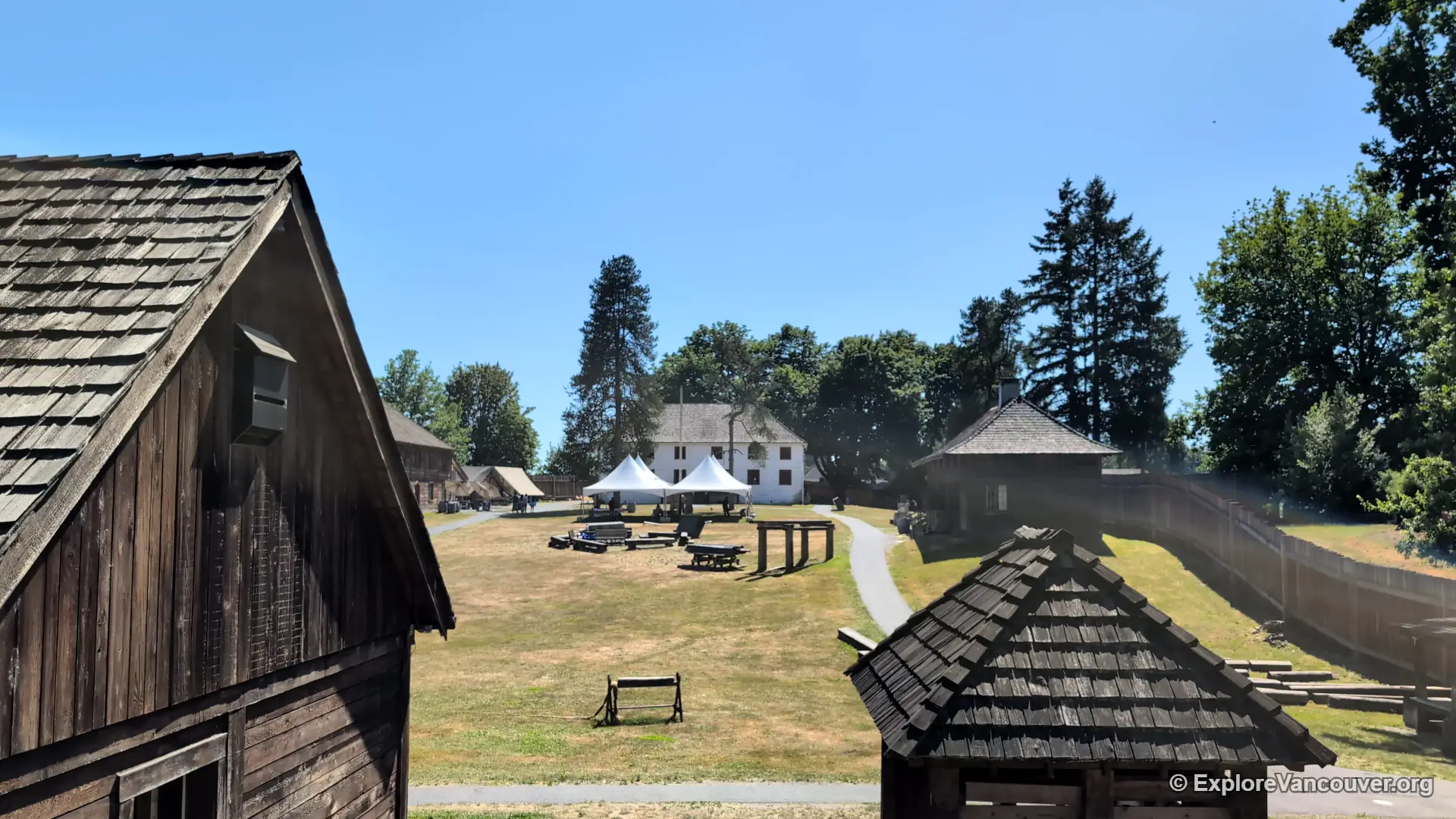
Family-Friendly Activities
Fort Langley is built with younger visitors in mind. A dedicated children’s play area lets smaller kids climb and explore in a space designed just for them, while the Xplorers program gives children activity booklets that turn a visit into a self-guided scavenger hunt through the fort’s history. Between the blacksmith sparks, the barrel demonstrations, and the chance to dress up in period clothing, most kids stay engaged well past the length of a typical museum stop.
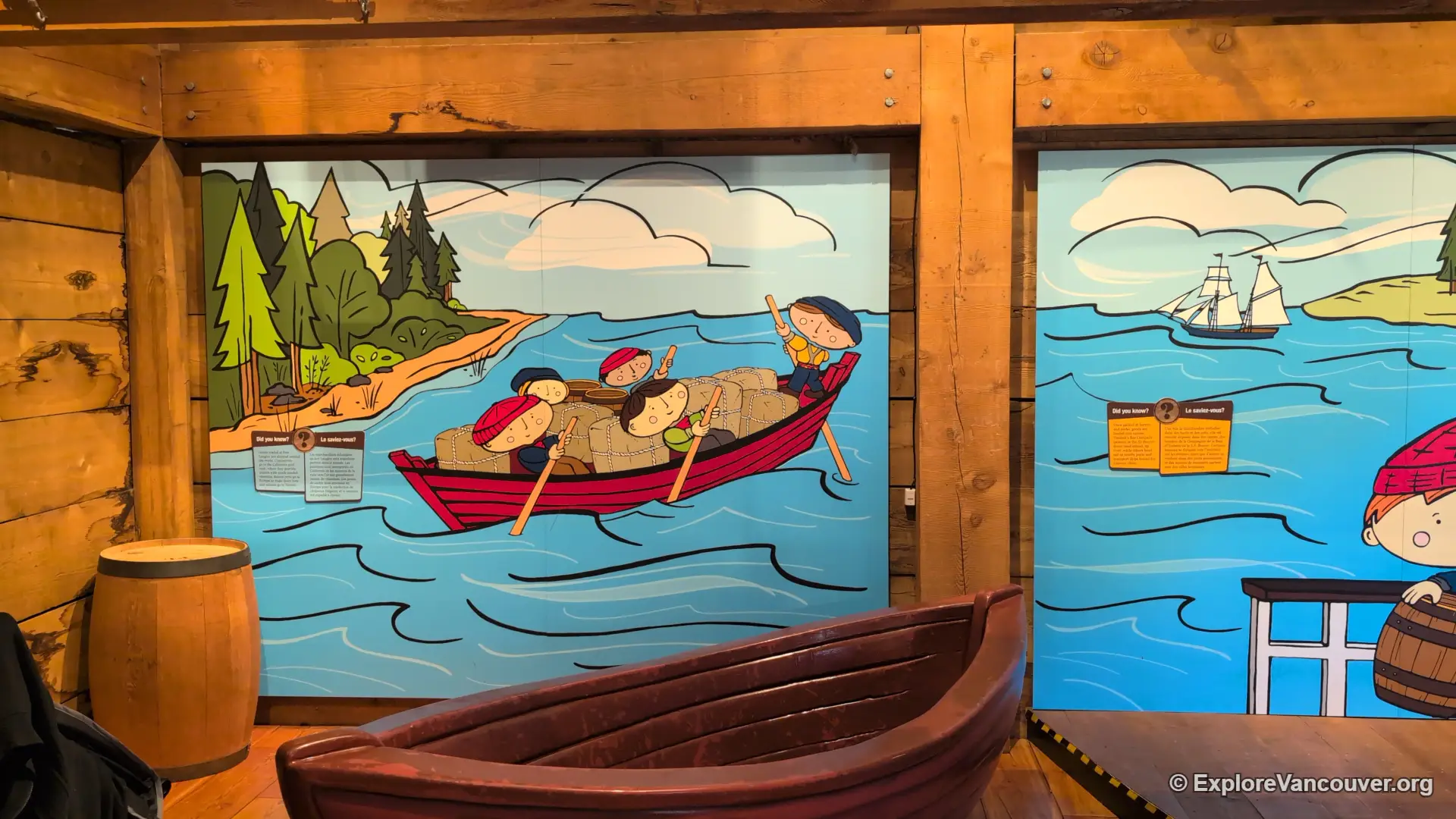
Overnight oTENTik Stays
For a longer visit, Fort Langley offers oTENTik accommodations set up within the palisade itself, a cross between a tent and a rustic cabin with beds, a covered porch, and basic furnishings. Staying overnight puts visitors close to riverfront trails, nearby farms, and the wineries scattered around the Fraser Valley, and it turns a single afternoon stop into a proper weekend trip built around the fort and the surrounding village.
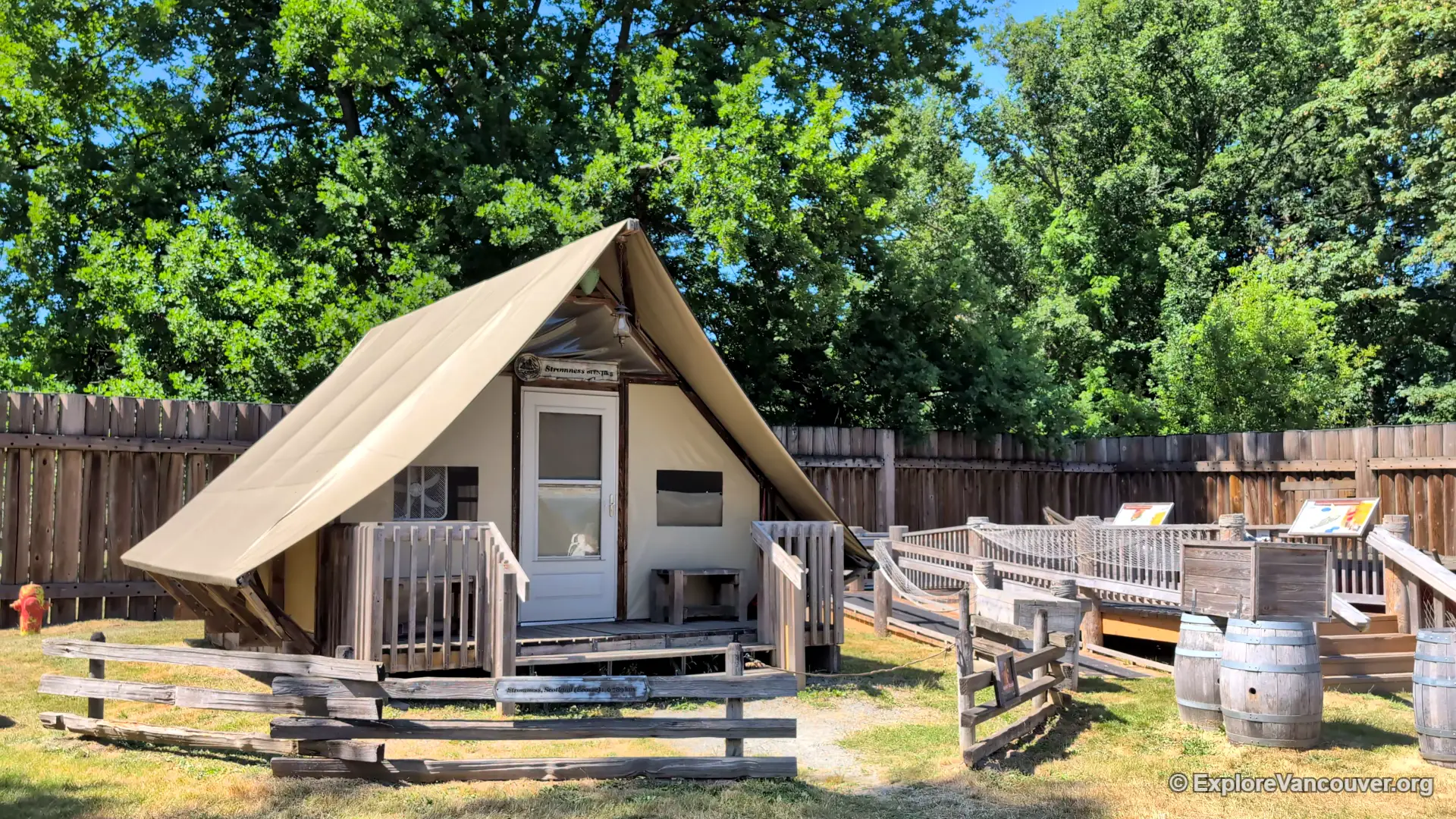
Food and Refreshments
Visitors do not need to leave the fort to grab a bite. An on-site cafe serves lunch and drinks, giving a convenient option for anyone spending a full day exploring the grounds. Fort Langley Village is also a short walk away, with a cluster of independent cafes and restaurants for anyone who wants to extend the visit into a full meal before heading home.
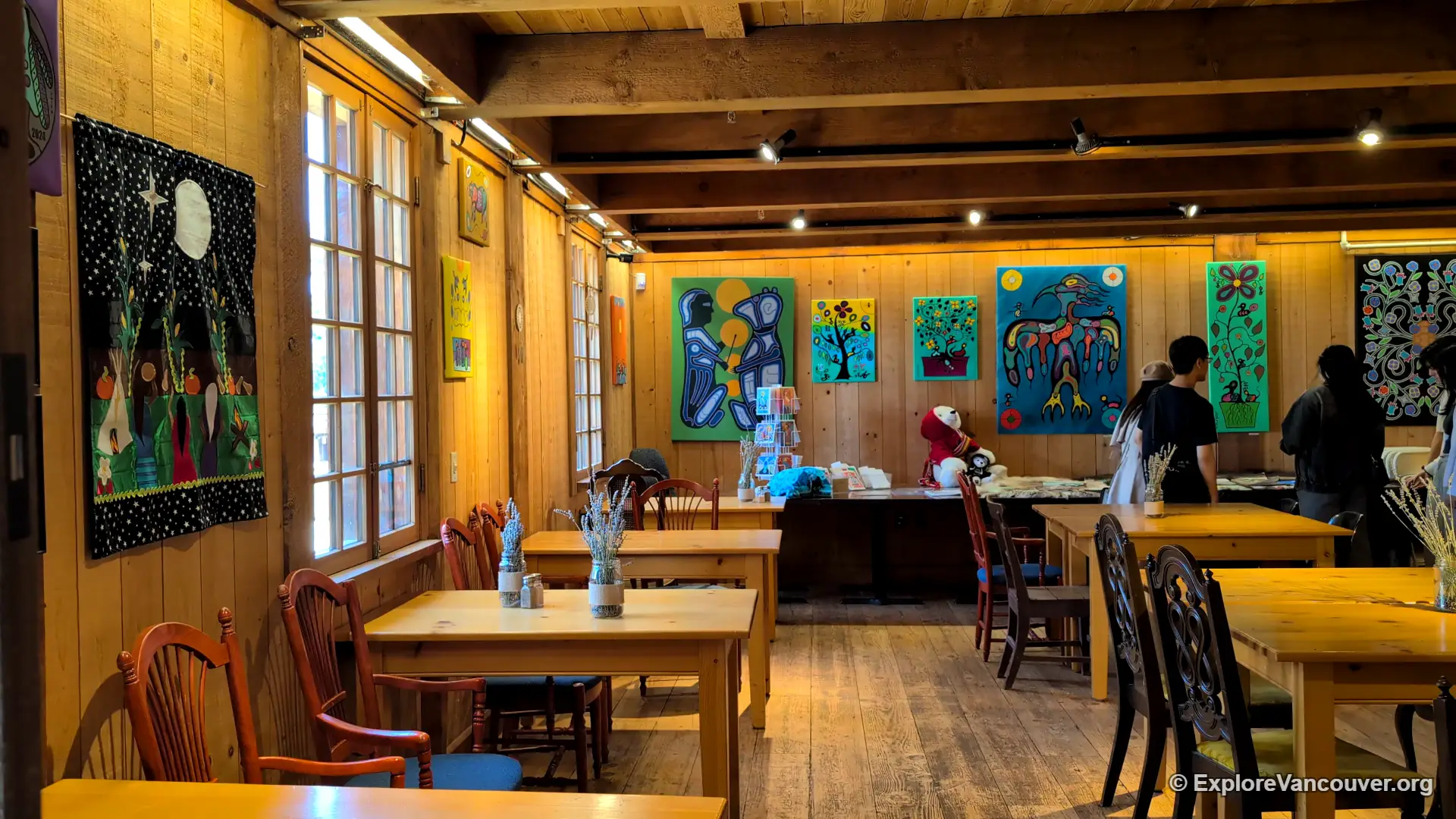
Special Events Throughout the Year
Fort Langley runs a full calendar of special events on top of its regular daily programming. Brigade Days recreates the arrival of fur trade brigades with costumed reenactors, while the Cranberry Festival ties into the fort’s agricultural history each fall. Canada Day brings extra programming tied to the fort’s role in BC’s founding, and winter brings both Christmas-themed events and the Vive les Voyageurs winter festival. Because dates and programming change from year to year, check the official Parks Canada events calendar before planning a trip around a specific event.
Getting to Fort Langley National Historic Site
By car, the fort is about a 45 to 60 minute drive from downtown Vancouver depending on traffic, reached via Highway 1 to exit 66 at 232nd Street, then north to Glover Road and through the village of Fort Langley before turning onto Mavis Avenue. On-site parking is available for visitors arriving by car. By public transit, TransLink’s 562 bus stops on 96th Avenue at Glover Road, a short walk from the fort entrance. The site is also an easy add-on for anyone already planning a day around Fort Langley Village or the nearby BC Farm Museum.
Accessibility, Pets, and Visiting with Kids
Pets are welcome on the grounds outside the palisade but must stay on a leash, and they are not permitted inside the historic fort walls, the Visitor Centre, or any of the historic buildings. Registered service animals are the exception and are welcome throughout the site. Children aged 12 and under must be accompanied by an adult 18 or older at all times, and groups bringing multiple children should plan for the site’s required adult-to-child supervision ratios. Some interior spaces, including the storehouse and blacksmith shop, involve strong smells or loud noise, so visitors sensitive to either should feel free to step outside for a break at any point.
Frequently Asked Questions
What is Fort Langley National Historic Site known for?
Fort Langley is known as the birthplace of British Columbia. It began as an 1827 Hudson’s Bay Company fur trading post and is the site where the colony of British Columbia was formally proclaimed on November 19, 1858.
How much time should visitors plan for a visit?
Most visitors spend between two and four hours exploring the buildings, watching demonstrations, and walking the grounds. Families with kids or visitors attending a special event often stay closer to a full day.
Are pets allowed at Fort Langley National Historic Site?
Leashed pets are allowed on the grounds outside the palisade but are not permitted inside the fort walls, the Visitor Centre, or any historic buildings. Registered service animals are welcome throughout the site.
Can visitors stay overnight at the fort?
Yes. Fort Langley offers oTENTik accommodations set up within the palisade, combining a tent-like structure with basic cabin furnishings for an overnight stay on site.
Is Fort Langley National Historic Site accessible for strollers and wheelchairs?
The grounds are largely flat and pathways connect most of the main buildings, though some of the historic structures have thresholds or uneven flooring typical of 19th century construction. Visitors with specific accessibility needs should check current details on the official Parks Canada accessibility page before visiting.
How far is Fort Langley National Historic Site from Vancouver?
It is roughly 48 kilometres from downtown Vancouver, about a 45 to 60 minute drive depending on traffic and route.
Where can visitors park?
On-site parking is available for visitors arriving by car, right at the fort’s Mavis Avenue entrance.
Is there food available on site?
Yes, an on-site cafe serves lunch and drinks within the historic site. Fort Langley Village, a short walk away, also has a range of independent cafes and restaurants.
Planning a full day around Fort Langley? Explore more of the area below.