
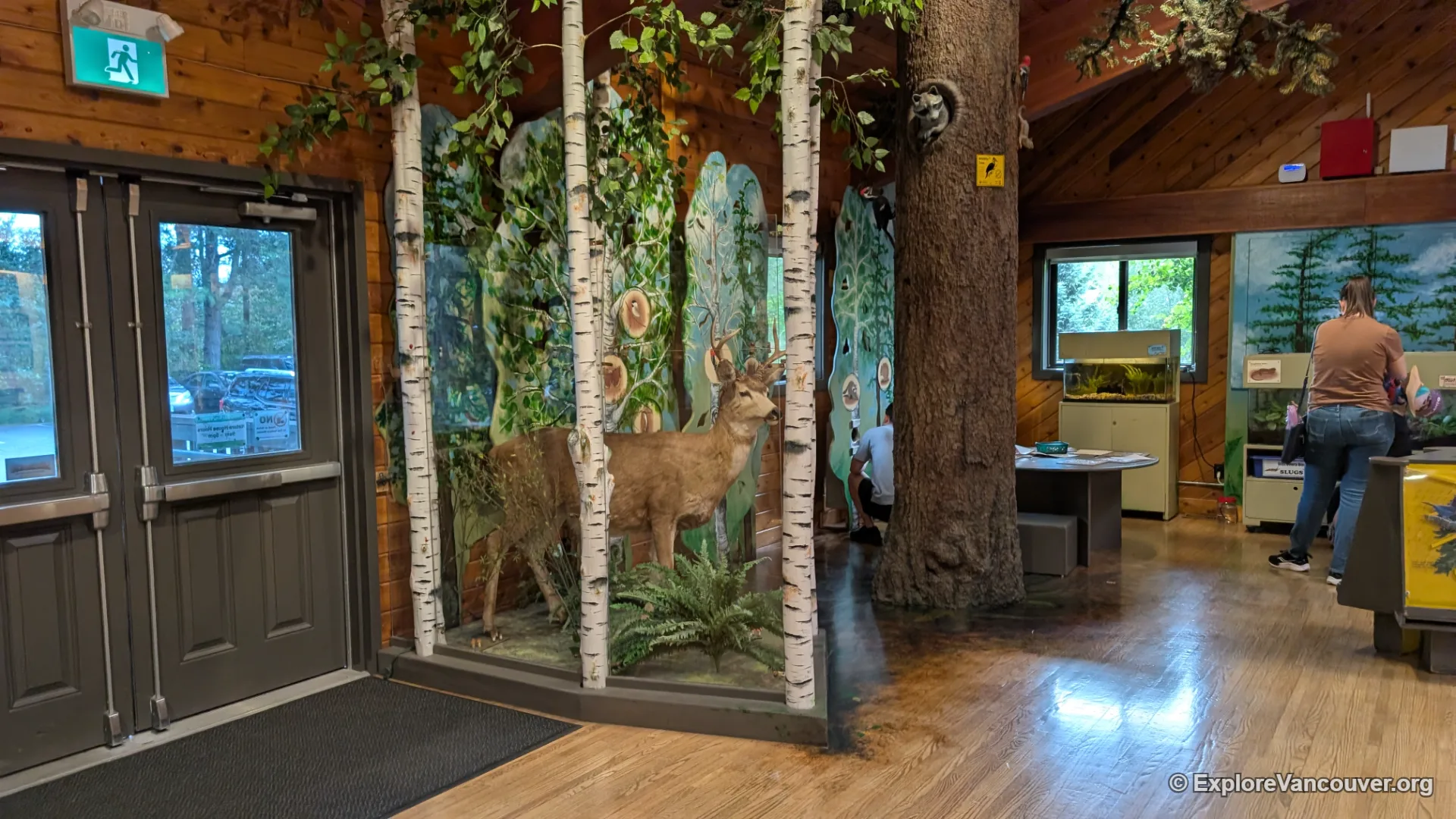
Inside Richmond Nature House, the interpretive centre at the entrance to Richmond Nature Park.
Tucked behind a curtain of birch and cedar at the entrance to Richmond Nature Park, Richmond Nature House is the kind of small-scale attraction that rewards a slow visit. It’s not a big-budget museum, and that’s precisely its charm: a single-room interpretive centre packed with taxidermy specimens, live tanks, hands-on displays, and a resident naturalist who genuinely wants to talk to you about bog ecology. Families come for the free exhibits and the playground next door. Birders come for the feeding stations tucked just behind the building. Everyone leaves having learned something about the strange, boggy landscape that used to cover most of Lulu Island.
A Small Building With a Lot Packed In
Richmond Nature House underwent a substantial renovation in recent years, and it shows. The interior is arranged around a series of interactive displays that explain how the surrounding peat bog formed, what kind of creatures live in it, and how it has changed since Richmond was first settled. There’s a hands-on activity corner for younger kids, an active beehive visible through glass, and a small gift shop near the entrance where you can pick up field guides or nature-themed souvenirs before heading out onto the trails.
Staff rotate a travelling exhibit through the space once or twice a year, so a repeat visit rarely feels like the same stop twice. Past themes have included bats and other nocturnal wildlife, giving regular visitors a reason to swing back in.
Face to Face With the Bog’s Wildlife
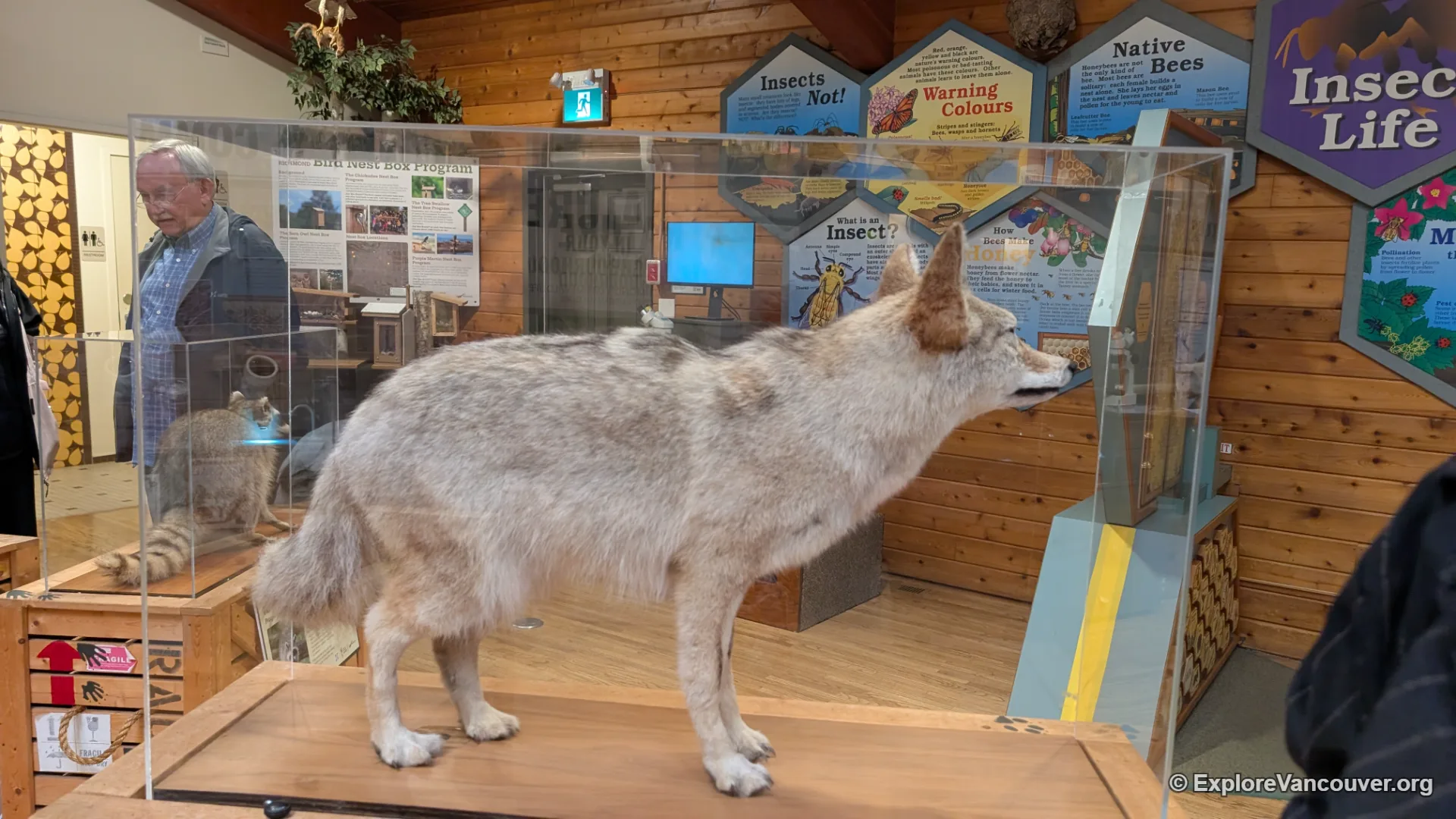
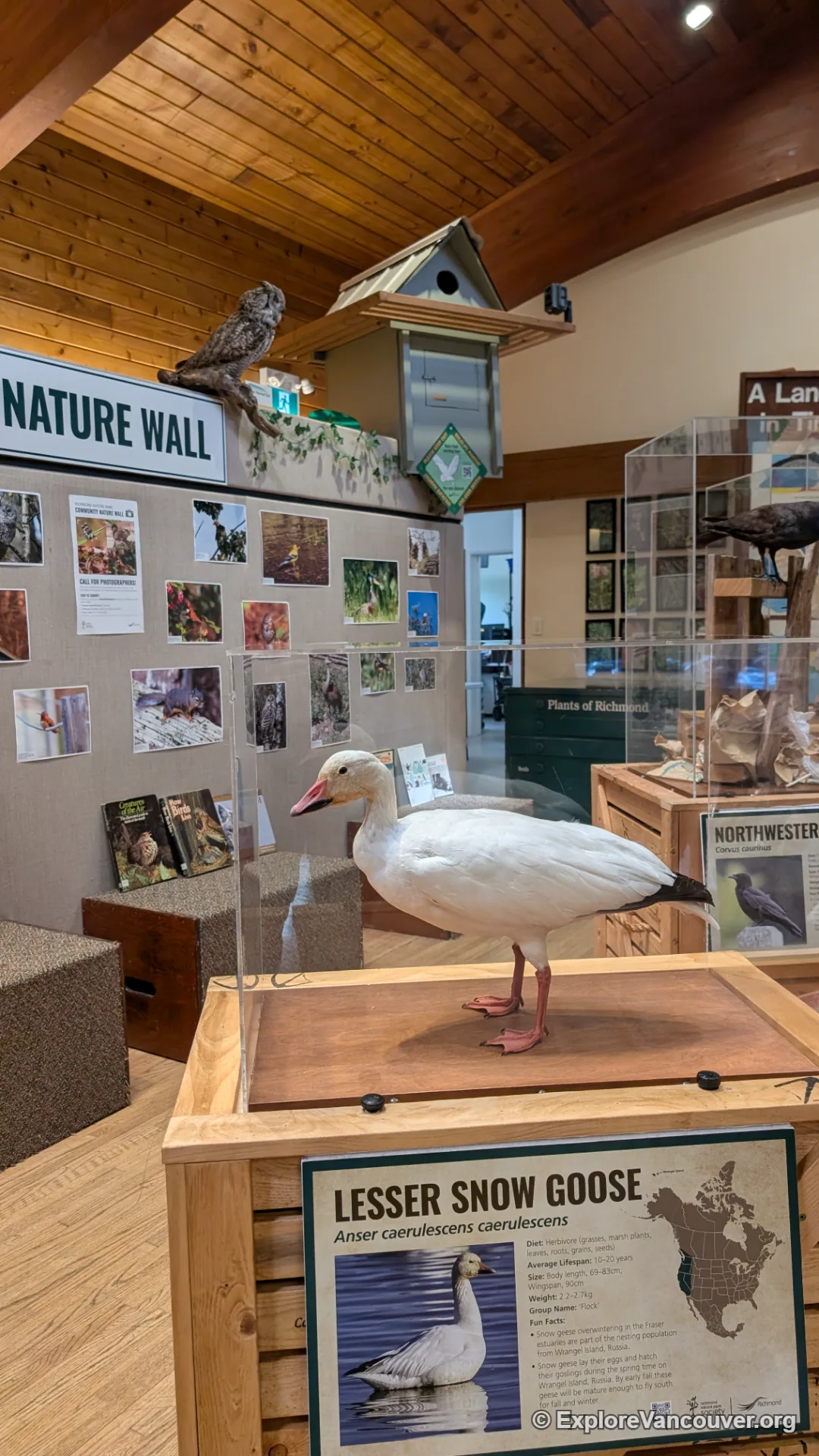
One of the first things you’ll notice inside is the small collection of taxidermy mounts positioned throughout the room, including a coyote posed mid-stride, a reminder that Richmond’s bog and forest habitat still supports mammals most visitors wouldn’t expect to find this close to an urban centre. These mounts sit alongside informational panels that explain the animal’s role in the local food web, giving the display an educational angle rather than just a curiosity factor.
It’s a useful primer before heading outside: knowing what might be moving through the underbrush on the trails makes the walk that follows feel a little more alive.
Live Animals and Pond Life
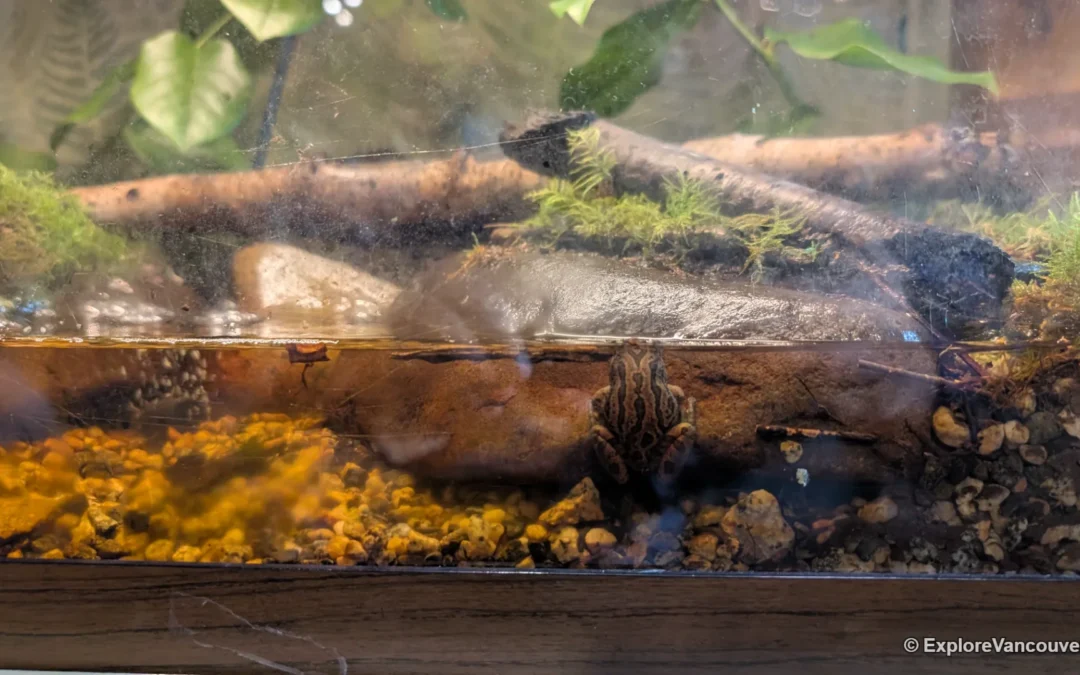
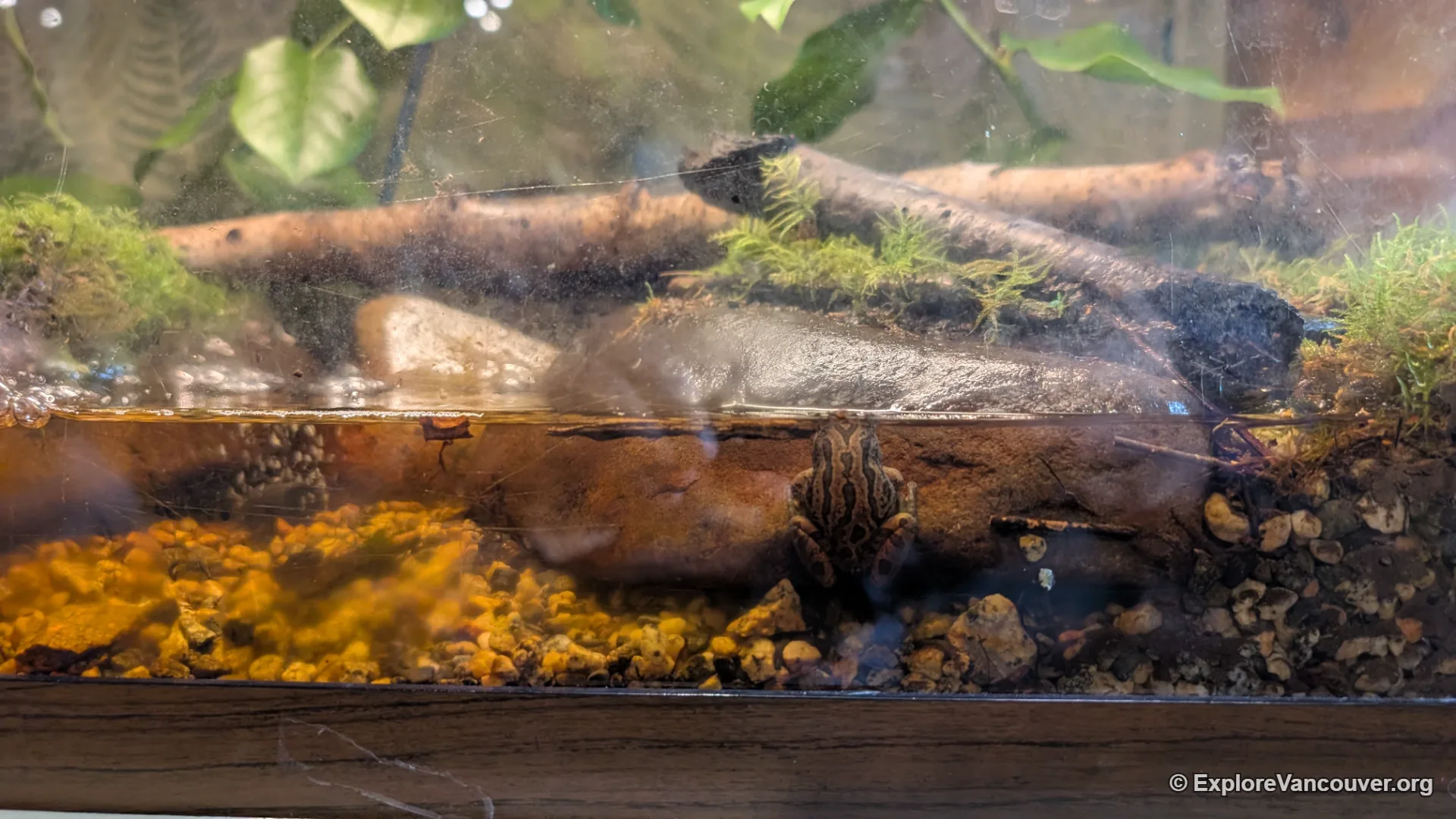
Beyond the static displays, Richmond Nature House keeps a small collection of live animals on hand, with amphibians among the most popular. A resident frog, viewable up close in one of the tanks, tends to be a highlight for younger visitors and offers a good jumping-off point for a naturalist to explain the pond and bog habitats found just outside the building’s back door.
These live exhibits rotate depending on the season and what staff have on hand, so what you see on any given visit can vary.
Nests, Eggs and the Small Details
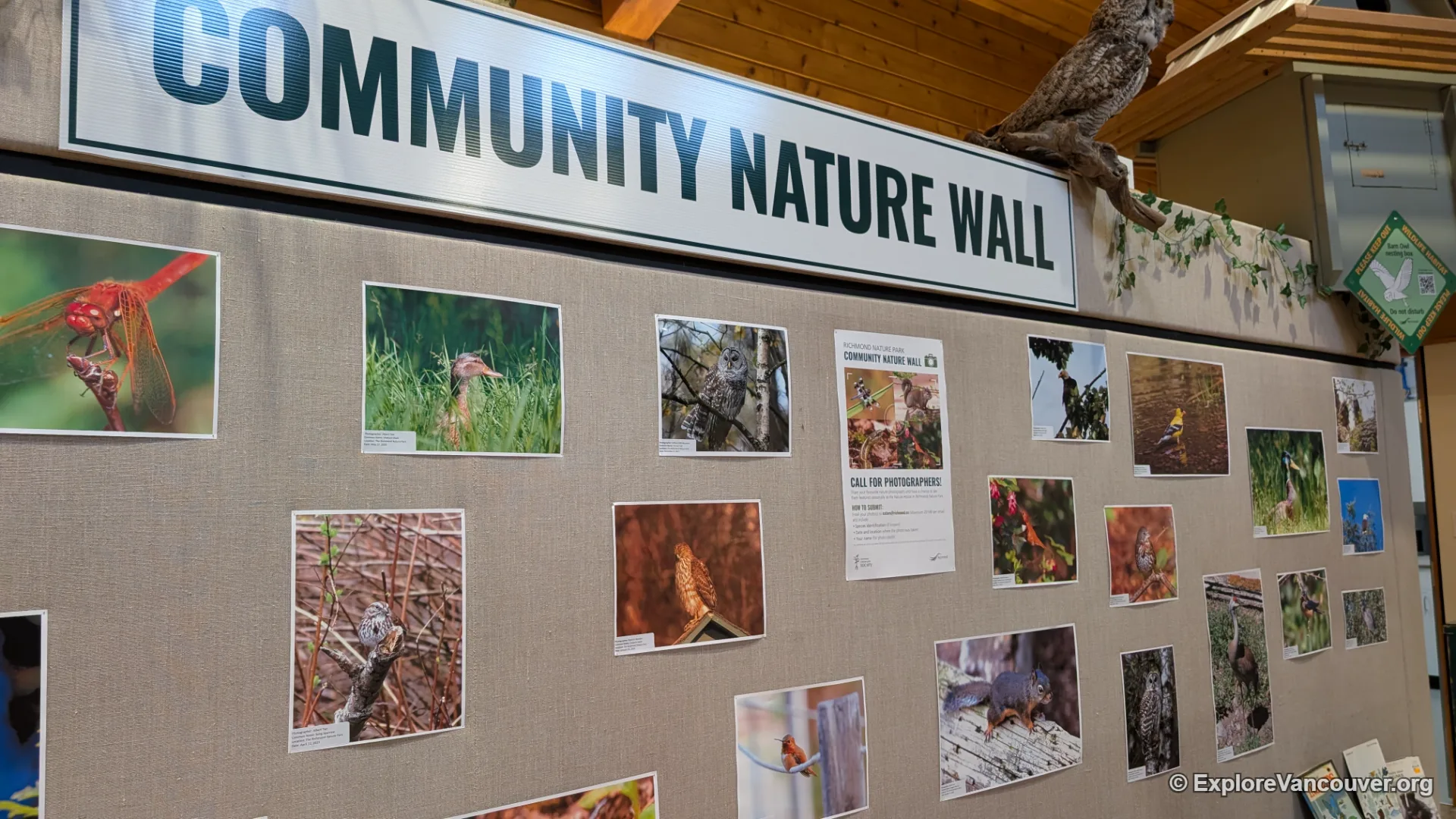
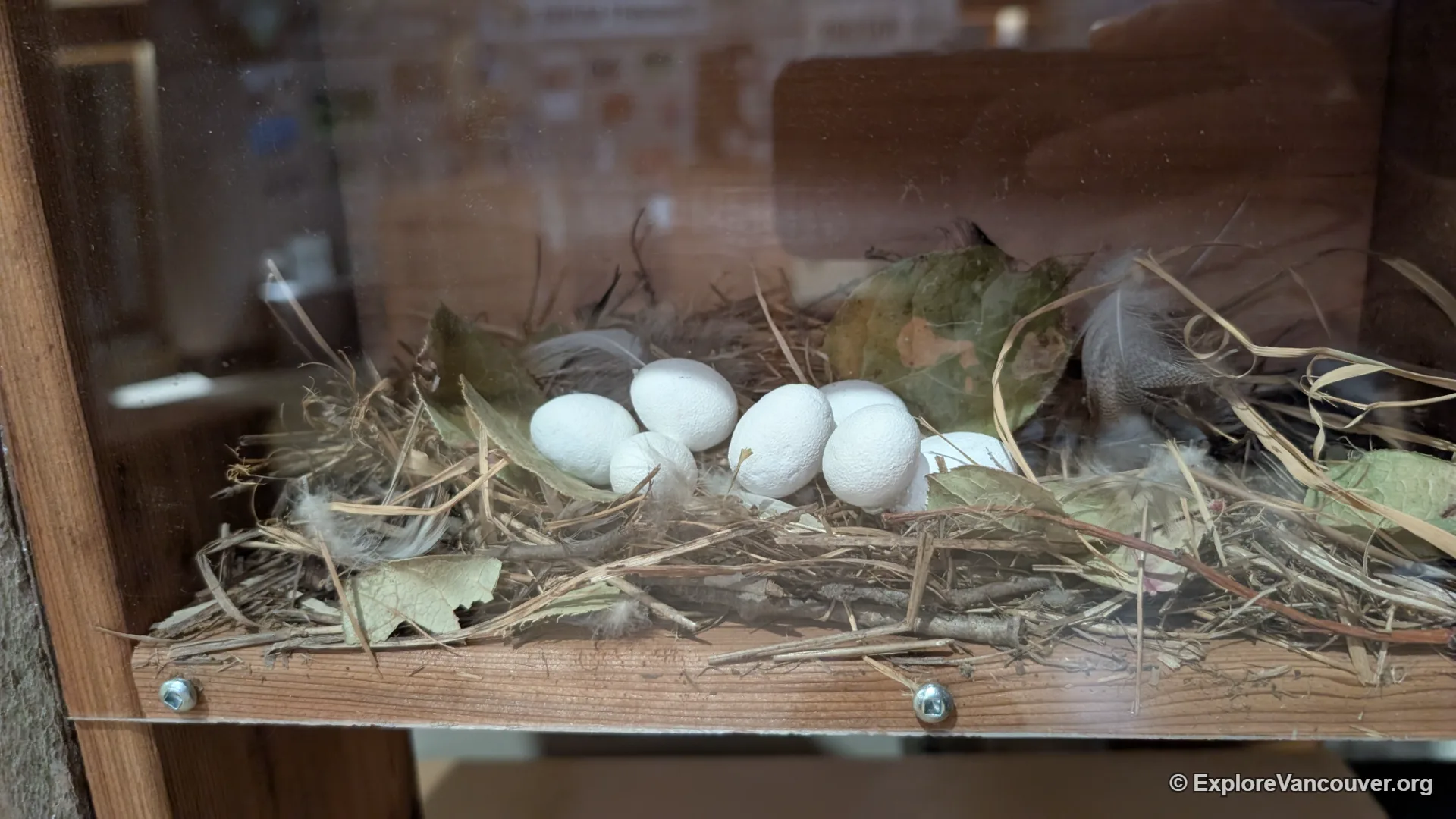
Some of the most interesting displays here are the quiet ones: a case of eggs from local nesting birds, arranged so visitors can compare size, colour, and shell pattern side by side. It’s a small detail, but it fits the overall approach of the Nature House, which favours close observation over flashy exhibits. Combined with the free bird checklists available at the front desk, it gives visitors a head start on identifying what they’ll spot on the feeders and trails outside.
Step Outside for the Feeders
The exhibits inside are really just the introduction. Step out the back of the building and you’ll find multiple feeding stations that draw a steady rotation of local birds throughout the day, including chickadees, juncos, finches, and Anna’s hummingbirds sparring over the nectar feeders. Geese and other waterfowl are also regularly seen around the park’s pond areas nearby, and sharp-eyed visitors have reported barred owls, pileated woodpeckers, and the occasional Cooper’s hawk passing through.
Bring a pair of binoculars if you have them. This stretch just behind the Nature House is consistently one of the easiest, lowest-effort birding spots in the Lower Mainland.
It’s the rare Richmond stop where the exhibits inside are just the warm-up act for what’s waiting on the trails outside.
Photo Gallery
Frequently Asked Questions
Richmond Nature House is just the starting point. Explore the 200-acre bog and forest trails right outside its door.
Explore Richmond Nature Park