Quick Info
- Location: Atop Queen Elizabeth Park, 4600 Cambie Street, Vancouver
- Best for: Rainy-day outings, plant lovers, birdwatchers, families
- Highlights: Geodesic dome, free-flying tropical birds, koi pond, hundreds of exotic plants
- Nearby: Queen Elizabeth Park quarry gardens, Seasons in the Park restaurant, Dancing Fountains plaza
- Hours & Admission: Vary by season; check the official City of Vancouver page before visiting

A Centennial Idea That Took Three Years to Build
The conservatory began as a 1967 Canadian Centennial project, dreamed up by Vancouver Park Board superintendent Stuart Lefeaux and his deputy Bill Livingstone as a way to give the city an educational, world-class plant collection. The catch was the site: the top of Little Mountain was already occupied by two open drinking-water reservoirs built in 1911, so any structure would need to be built over active civic infrastructure without interrupting the water supply.
Funding came from an unusually large gift. Lumber industrialist Prentice Bloedel and the Bloedel Foundation contributed roughly a million and a quarter dollars, at the time the largest single donation the city had ever received, covering the dome itself, the surrounding plaza, and the Dancing Fountains. The dome’s frame was fabricated in Ottawa and shipped nearly 3,000 miles by rail to Vancouver, where crews erected the skeletal structure in just ten days. The full build, dome and plaza together, took about eighteen months, and the conservatory opened to the public on December 6, 1969.
Engineering Inside a Geodesic Shell
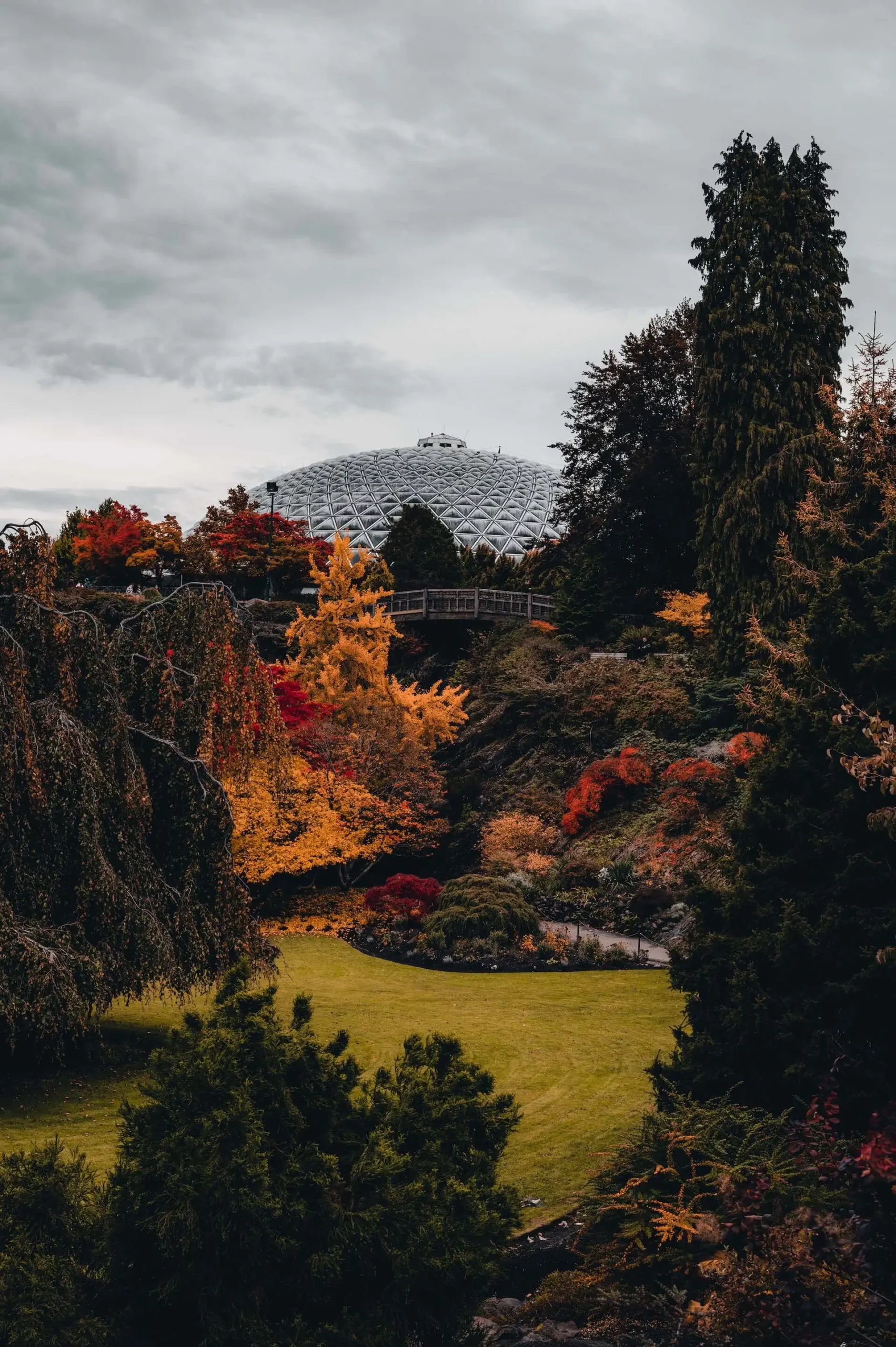
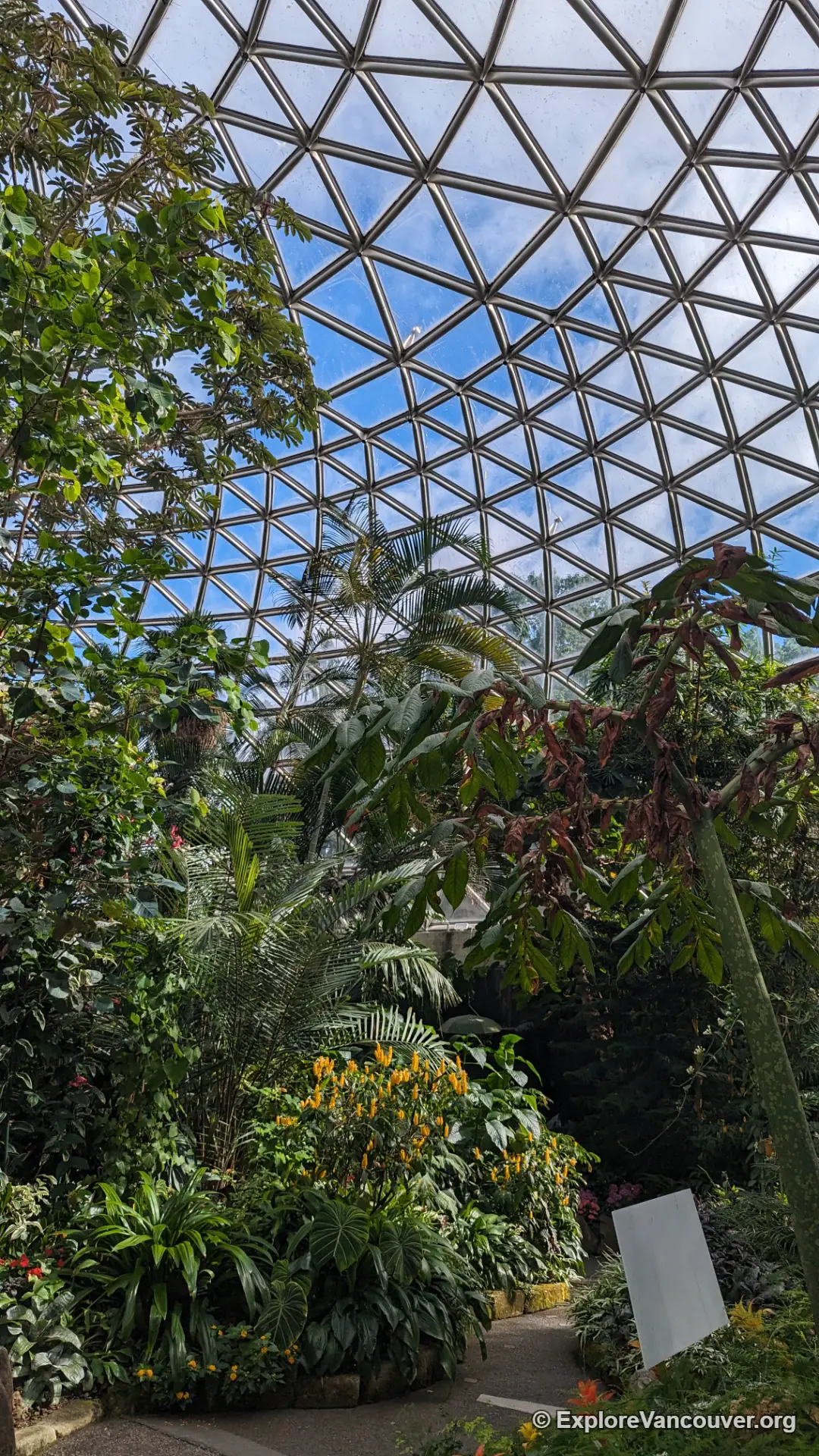
The dome itself is a triodetic structure, a lattice of triangular plexiglass panels set on a concrete foundation ring, roughly 140 feet across and about 70 feet tall at its peak. The design was directly inspired by Buckminster Fuller’s geodesic dome at Expo ’67 in Montreal, and it made Bloedel one of the earliest large-scale examples of the style built in Canada. Because the reservoirs beneath the site stayed in active use, engineers had to cap and support them while building a full climate-controlled garden overhead, a solution that still functions as intended today.
Inside, the dome is generally organized into distinct climate zones, historically tropical, subtropical, and arid, allowing the collection to house several hundred plant species that would otherwise need entirely separate growing conditions. The heritage-designated building is now jointly managed by the Vancouver Park Board and the Vancouver Botanical Garden Association, and it underwent a roof restoration project in more recent years to preserve the original plexiglass glazing system.
A Free-Flying Aviary Above the Garden Floor
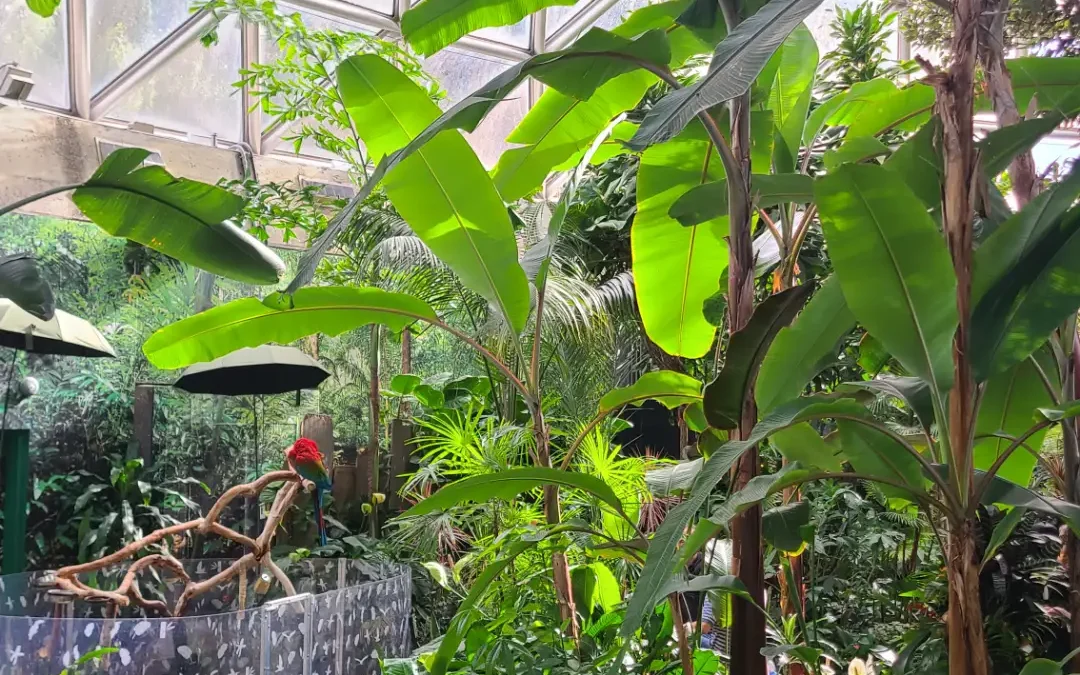
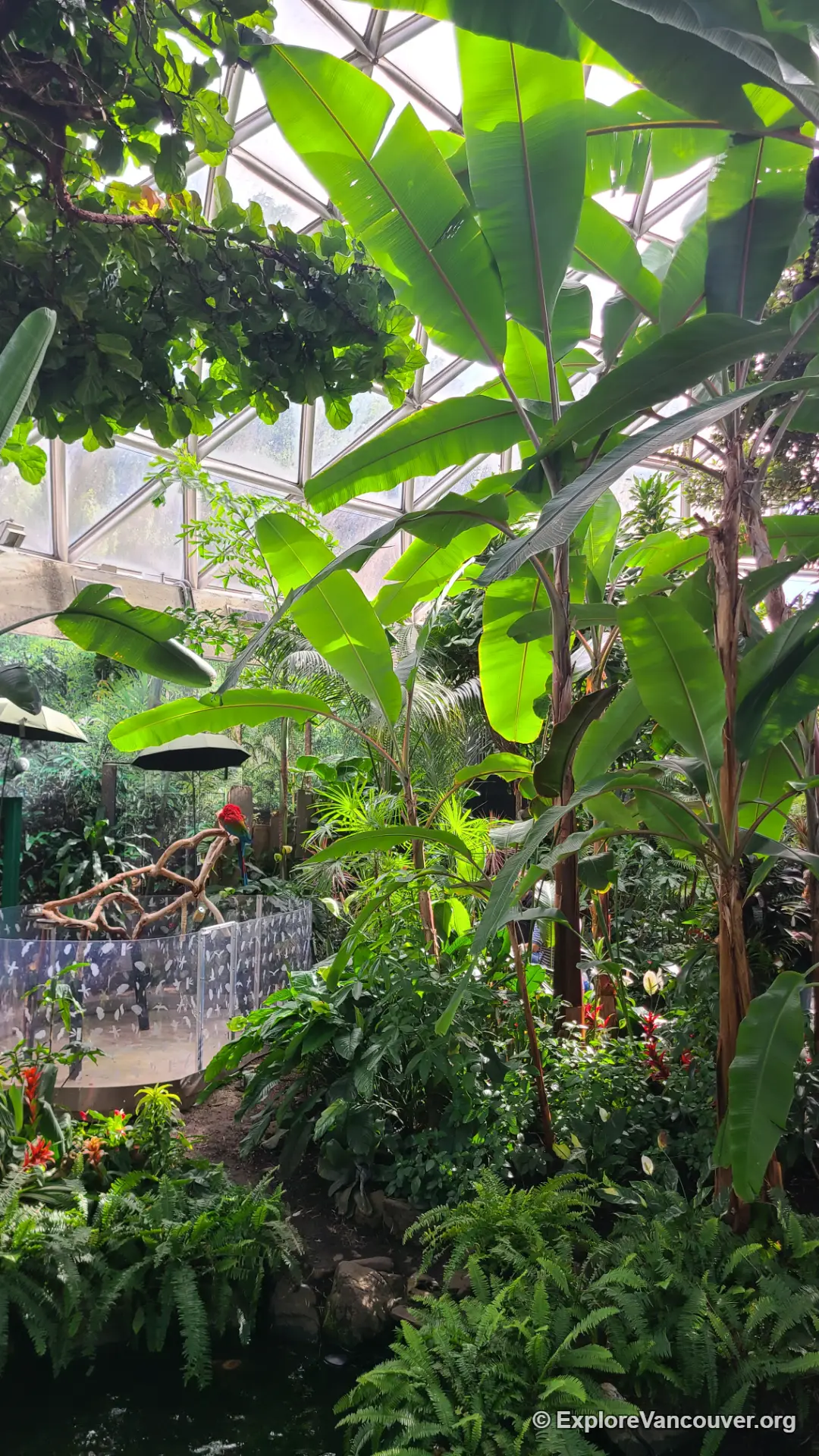
What sets Bloedel apart from a typical botanical greenhouse is that its birds are not caged. Dozens of species, including macaws, parrots, and other tropical birds, fly freely through the dome alongside the plant canopy, and a koi pond adds another layer of wildlife at ground level. The combination of uncaged birds and dense tropical foliage is part of why the conservatory has remained a popular stop for both casual visitors and dedicated birdwatchers since it opened.
The site also carries public art tied to its founding donors. Prentice and Virginia Bloedel, both art collectors, gave the bronze sculpture “Knife Edge – Two Piece” by British sculptor Henry Moore, which stands near the conservatory as part of the surrounding plaza.
Stand under the dome on a grey Vancouver afternoon and the contrast is immediate, a wall of tropical green and birdsong on one side of the glass, drizzle and cloud on the other.
Visiting as Part of Queen Elizabeth Park
Bloedel Conservatory sits inside Queen Elizabeth Park, so most visitors combine the two in a single trip. The park itself grew out of a former basalt quarry that supplied road-building material for South Vancouver in the early 1900s, later converted into the sunken quarry gardens that surround the conservatory today. Seasons in the Park restaurant sits a short walk from the dome, and a pay parking lot serves both the restaurant and the conservatory near the summit.
Because the building is fully enclosed and climate-controlled, it’s one of the more reliable indoor options in the city when the forecast turns wet, alongside stops like Science World. For visitors building out a broader garden-focused itinerary, the VanDusen Botanical Garden across town offers an outdoor complement to Bloedel’s indoor tropical collection.
Book Ahead
Planning a fuller day around Queen Elizabeth Park? Compare guided Vancouver city tours and activities through our affiliate partner Viator.
Browse Vancouver tours and activities on ViatorDisclosure: This page contains an affiliate link. If you book through it, ExploreVancouver.org may earn a small commission at no extra cost to you.
Frequently Asked Questions
Where is Bloedel Conservatory located?
It sits at the summit of Queen Elizabeth Park at 4600 Cambie Street, on Little Mountain, the highest natural point within Vancouver city limits.
When did Bloedel Conservatory open?
It opened to the public on December 6, 1969, after roughly eighteen months of construction on a dome frame that was fabricated in Ottawa and shipped across the country.
Are the birds inside the conservatory caged?
No. Dozens of tropical bird species fly freely throughout the dome alongside the plant collection, rather than being kept in enclosures.
Is Bloedel Conservatory a good rainy-day activity?
Yes. Because it’s a fully enclosed, climate-controlled dome, it’s a reliable indoor option in Vancouver’s wetter months, similar to other indoor attractions like Science World.
What are the conservatory’s hours and admission prices?
Hours and admission vary by season and are subject to change, so it’s best to confirm current details on the official City of Vancouver Bloedel Conservatory page before visiting.
Explore More of Queen Elizabeth Park
Bloedel Conservatory is just one stop atop Little Mountain. See what else the park and the rest of Vancouver have to offer.