
Last Updated on October 10, 2026 by Explore Vancouver
Quick info: lakes near Vancouver
Most lakes here have no lifeguard on duty, and parking, passes, and gate times change by park, so check the official park page before you go.
Metro Vancouver and the valley beyond it are dotted with lakes, from five minute urban strolls to full day trips with a swimming beach and a mountain view. Here are 25 worth knowing about, grouped by area, with what you can actually do at each one and whether swimming is allowed. If a beach day is the goal, jump to the swimming guide further down, and for coastal alternatives see our best beaches in Vancouver. Paddlers can also check the best places to kayak in Vancouver, and anyone after a gentler outing will like our easy walks in Metro Vancouver.
Vancouver, West Vancouver & the North Shore
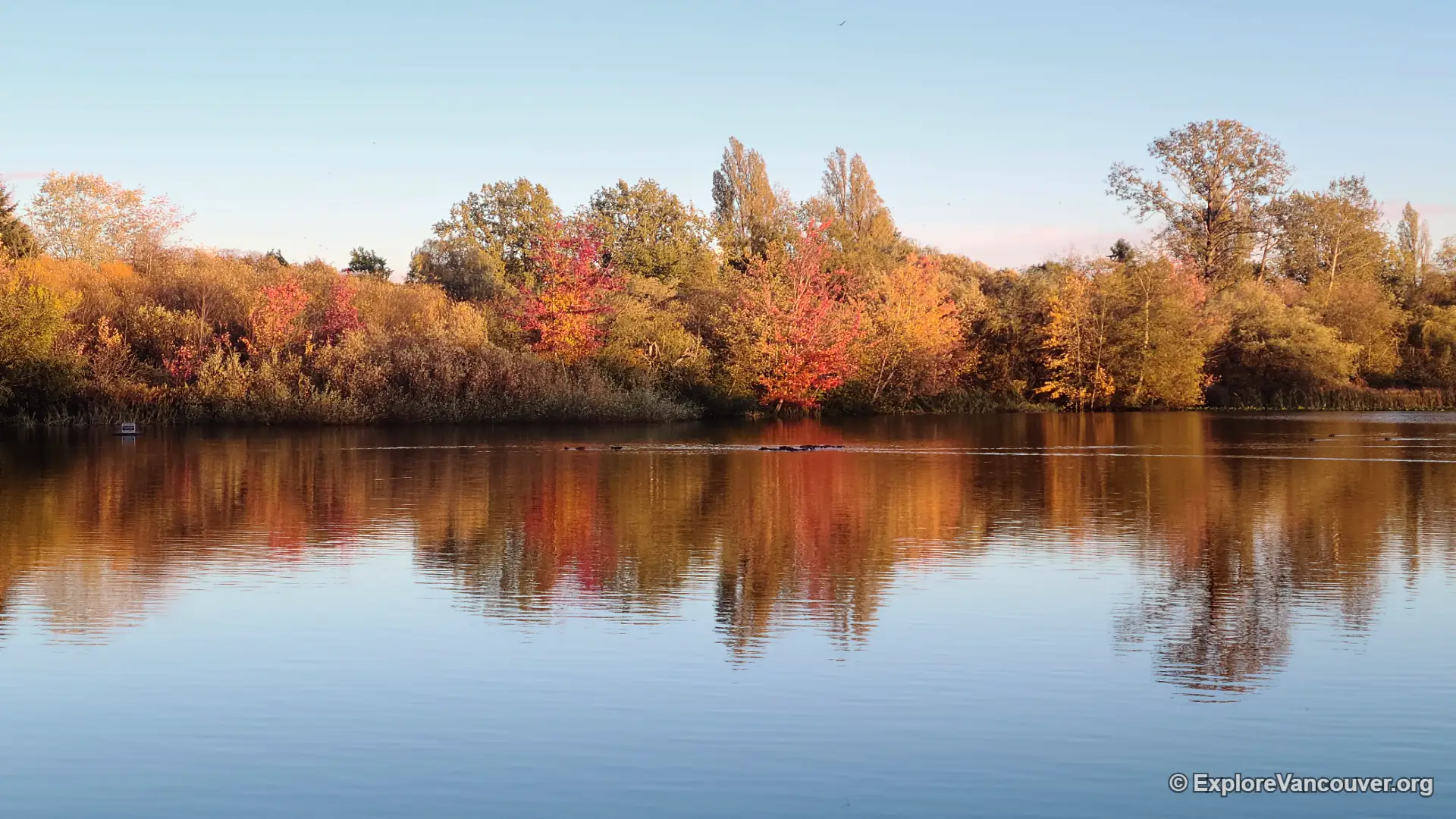
Trout Lake, Vancouver
Swimming: Yes, summer beach with lifeguards. Best for: Swimming, dog walks, fall colour.
Trout Lake sits inside John Hendry Park in East Vancouver and is one of the few lakes in the city with a swimming beach, staffed with lifeguards through the summer. Beyond the water, the park draws regulars to its packed dirt loop trail, a favourite for running and walking, and a large off leash area that is popular with local dog owners. The Trout Lake Farmers Market sets up on Saturdays during its season, a short walk from the shoreline (see our best farmers markets in Vancouver). Come October, the maples ringing the lake turn orange and gold, making it one of the better fall colour stops in the city.
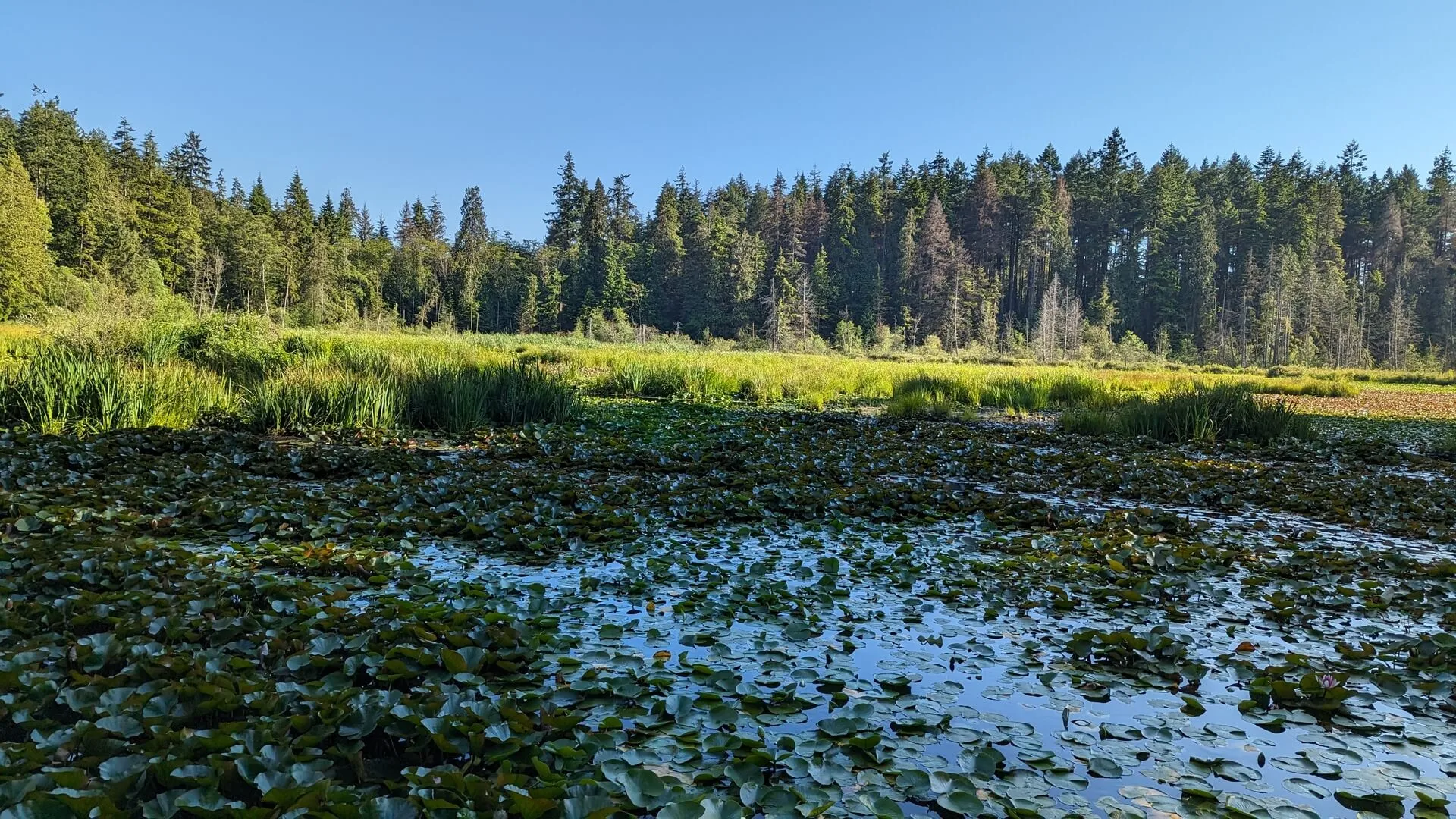
Beaver Lake, Stanley Park
Swimming: No. Best for: Easy forest loop, water lilies, birds.
Beaver Lake is the quiet centre of Stanley Park, a small lake covered in water lilies that bloom through the summer months. A short, easy trail loops the water through tall second growth forest, passing spots where ducks, herons, and turtles are easy to watch. Swimming is not permitted, but the setting feels far removed from the busy seawall even though it sits only a short walk away. It is one of the closest lakes to downtown Vancouver, so it works well as a half hour break during a longer day in Stanley Park.
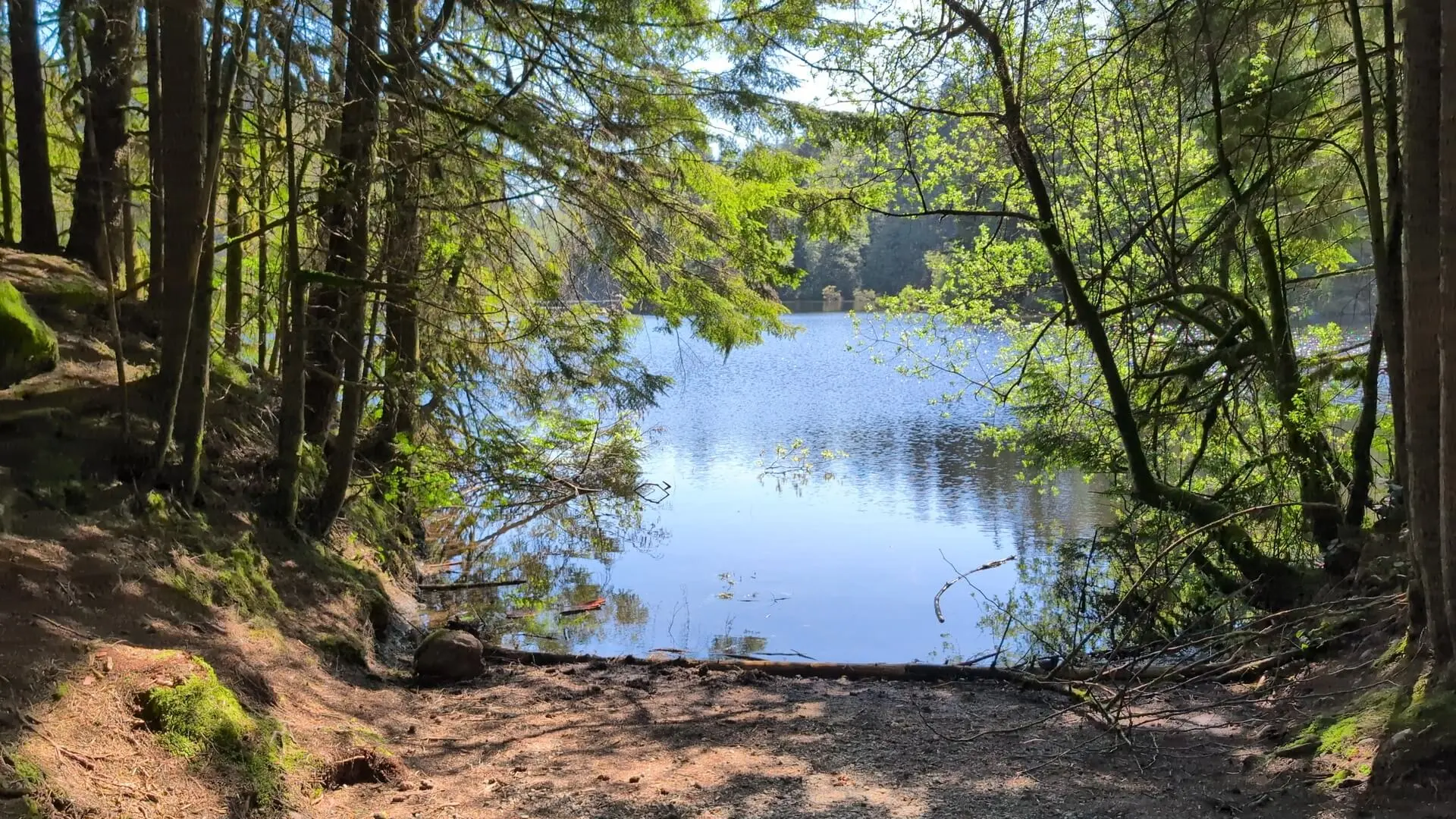
Rice Lake, North Vancouver
Swimming: No. Best for: Fishing, wheelchair accessible trail, shade.
Rice Lake is tucked inside the Lower Seymour Conservation Reserve, reached by a wide, wheelchair accessible trail that winds through Douglas fir and western red cedar before opening onto the water. Swimming is not permitted, but the lake is regularly stocked with rainbow trout, and a fishing dock with ramps and benches makes it one of the easier spots in the region to try casting a line, including for anglers using a wheelchair. Learn to fish programs for kids have run here in summer, so check the reserve for current dates. The forest keeps the loop cool even on hot afternoons.
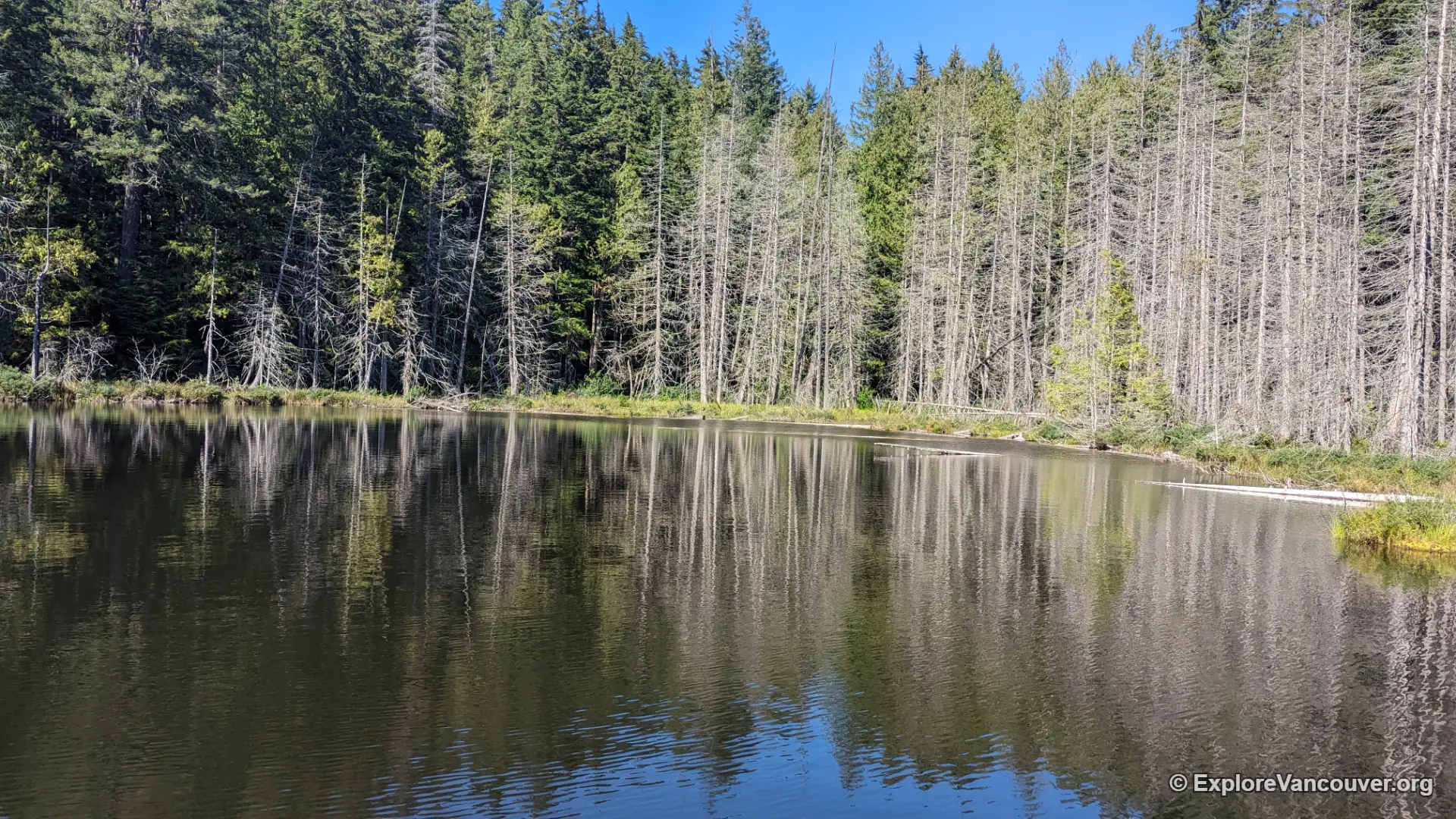
Whyte Lake, West Vancouver
Swimming: No designated beach. Best for: Short forest hike to a quiet lake.
Whyte Lake is a small, still lake in West Vancouver reached by a forest trail with boardwalk sections and some rocky stretches, so it feels more like a short hike than a lakeside stroll. There is no designated swimming beach, no lifeguard, and no facilities at the water, which keeps the shoreline peaceful and a good fit for anyone who wants trees, reflections, and birdsong rather than a busy park. Sturdy footwear helps on the rockier sections, and the trail can be slick after rain.
Burnaby & the Tri-Cities
Deer Lake, Burnaby
Swimming: No. Best for: Paddling, fishing dock, arts and culture.
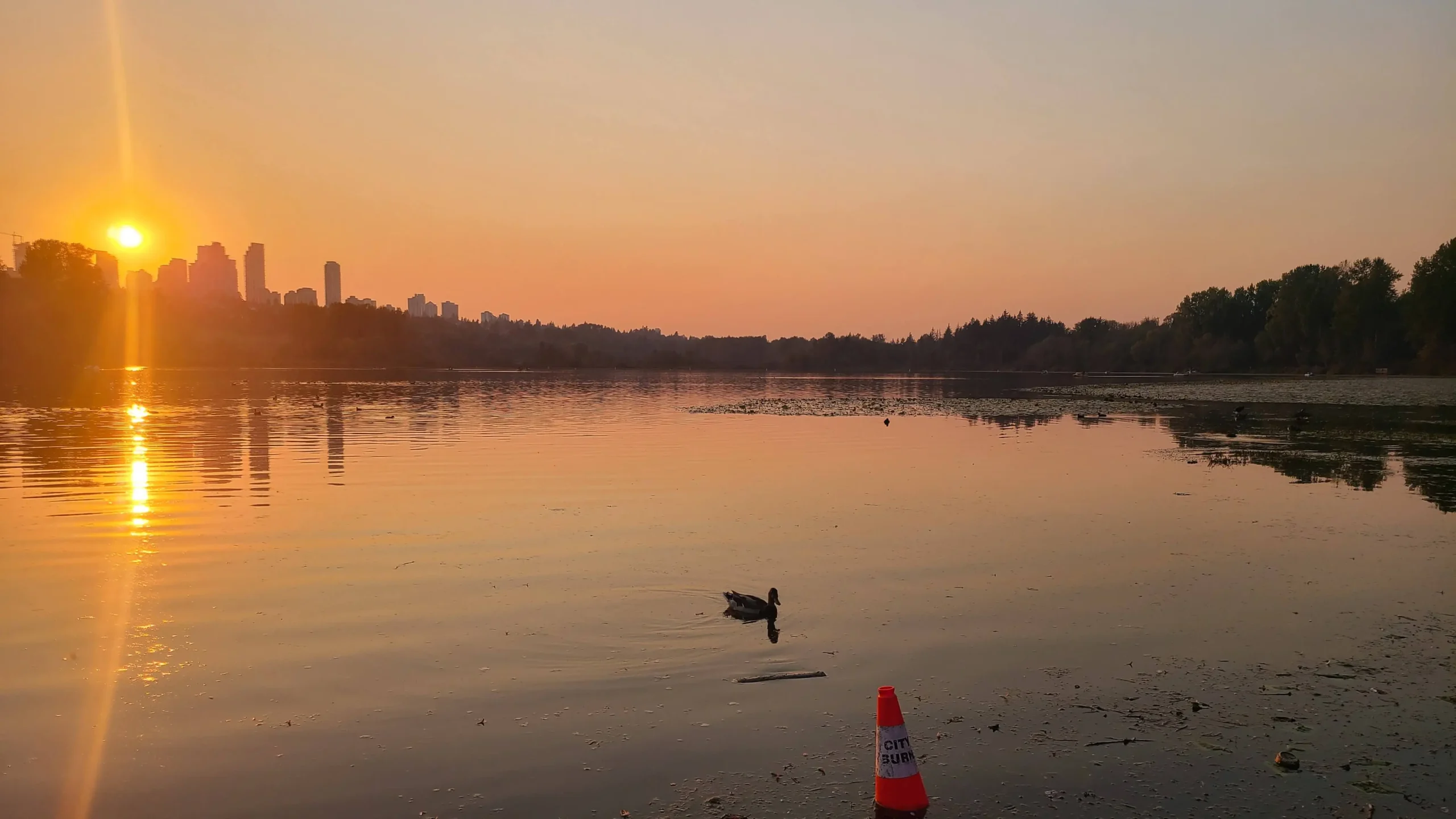
Deer Lake anchors Burnaby’s cultural district, with a shoreline trail linking the water to the Burnaby Art Gallery, the Shadbolt Centre for the Arts, and Burnaby Village Museum, a recreated 1920s village. Swimming is not allowed, but boat rentals operate through the summer with canoes, kayaks, rowboats, and pedal boats available by the hour, and anglers fish from the dock for stocked trout. The Festival Lawn hosts outdoor concerts on summer evenings. Watch for great blue herons in the shallows and turtles sunning on logs along the quieter stretches of trail.
Burnaby Lake, Burnaby
Swimming: No. Best for: Birdwatching, flat loop trail, paddling.
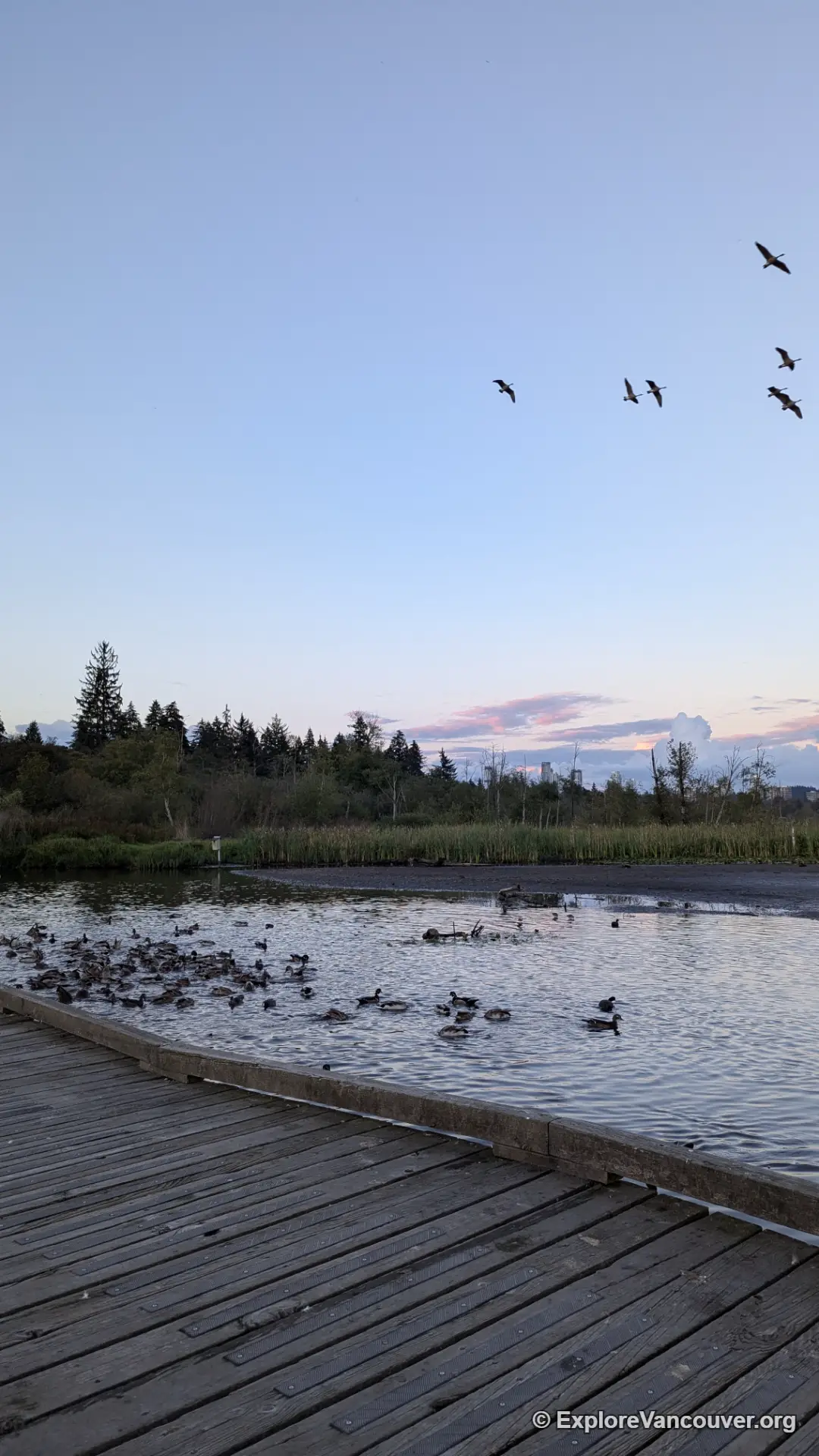
Burnaby Lake Regional Park wraps a flat perimeter trail of roughly ten kilometres around a shallow, marshy lake that ranks among the best birdwatching sites in the Lower Mainland. Great blue herons, bald eagles, and belted kingfishers show up regularly, and a viewing tower and boardwalk at Piper Spit put you right at the water’s edge. Swimming is not permitted, since sediment has filled in much of the lake, but the rowing pavilion offers a public canoe and kayak launch with change rooms for paddlers. The Nature House near the Piper Avenue entrance is a good starting point for families.
Como Lake, Coquitlam
Swimming: No. Best for: Easy loop, stocked trout, playground.
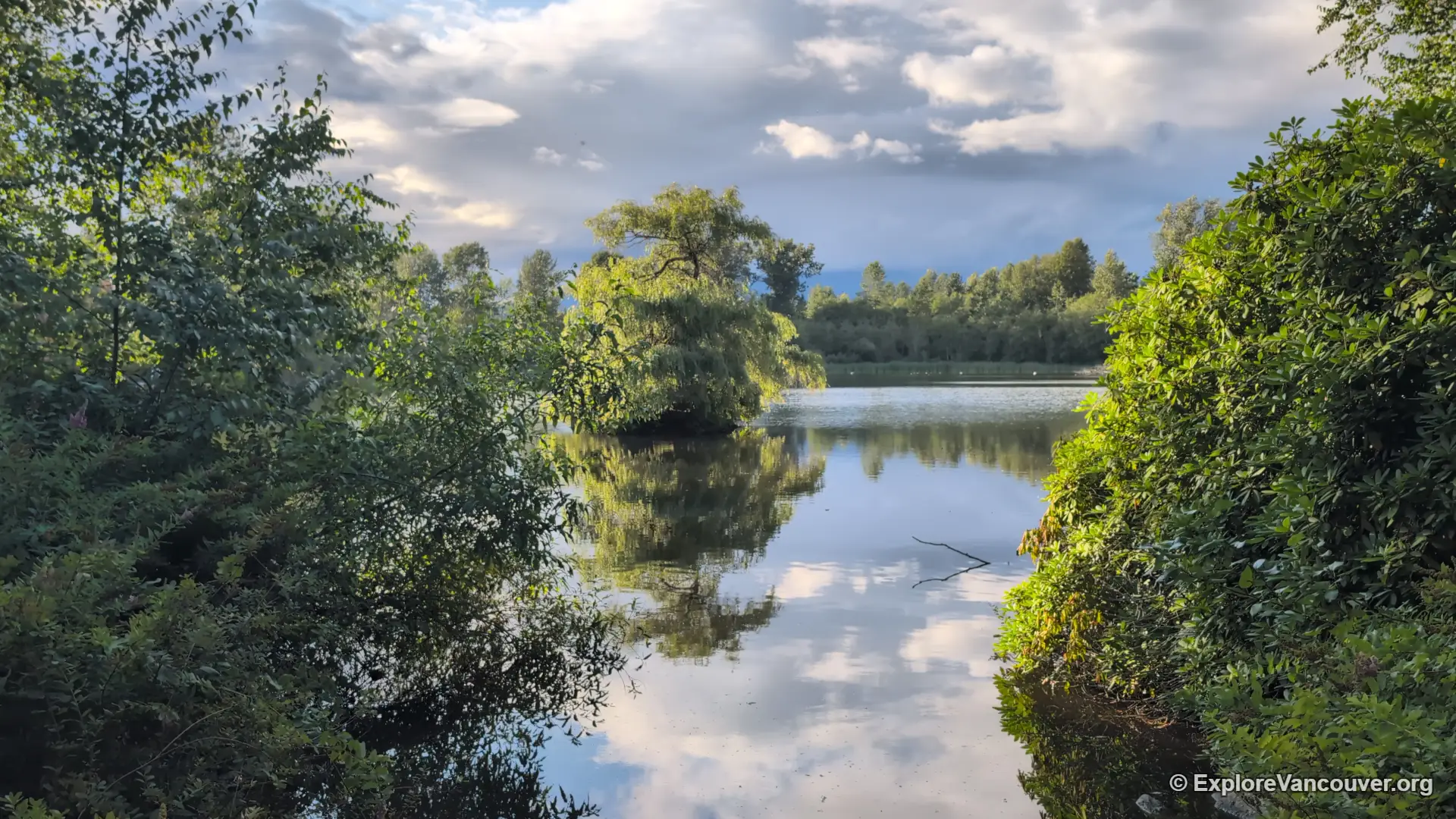
Como Lake Park circles a small lake in central Coquitlam on a flat, paved loop of about a kilometre that suits joggers, dog walkers, and families pushing strollers. Swimming is not permitted, but the lake is stocked with rainbow trout and draws anglers casting from the shore and from the docks. An annual fish derby gives kids a chance to try fishing with gear provided. A playground and picnic shelters sit near the north parking lot, and the trail is at its best in spring blossom season or in autumn, when the surrounding maples turn red and gold.
Lafarge Lake, Coquitlam
Swimming: No. Best for: Stroller friendly loop, winter lights.
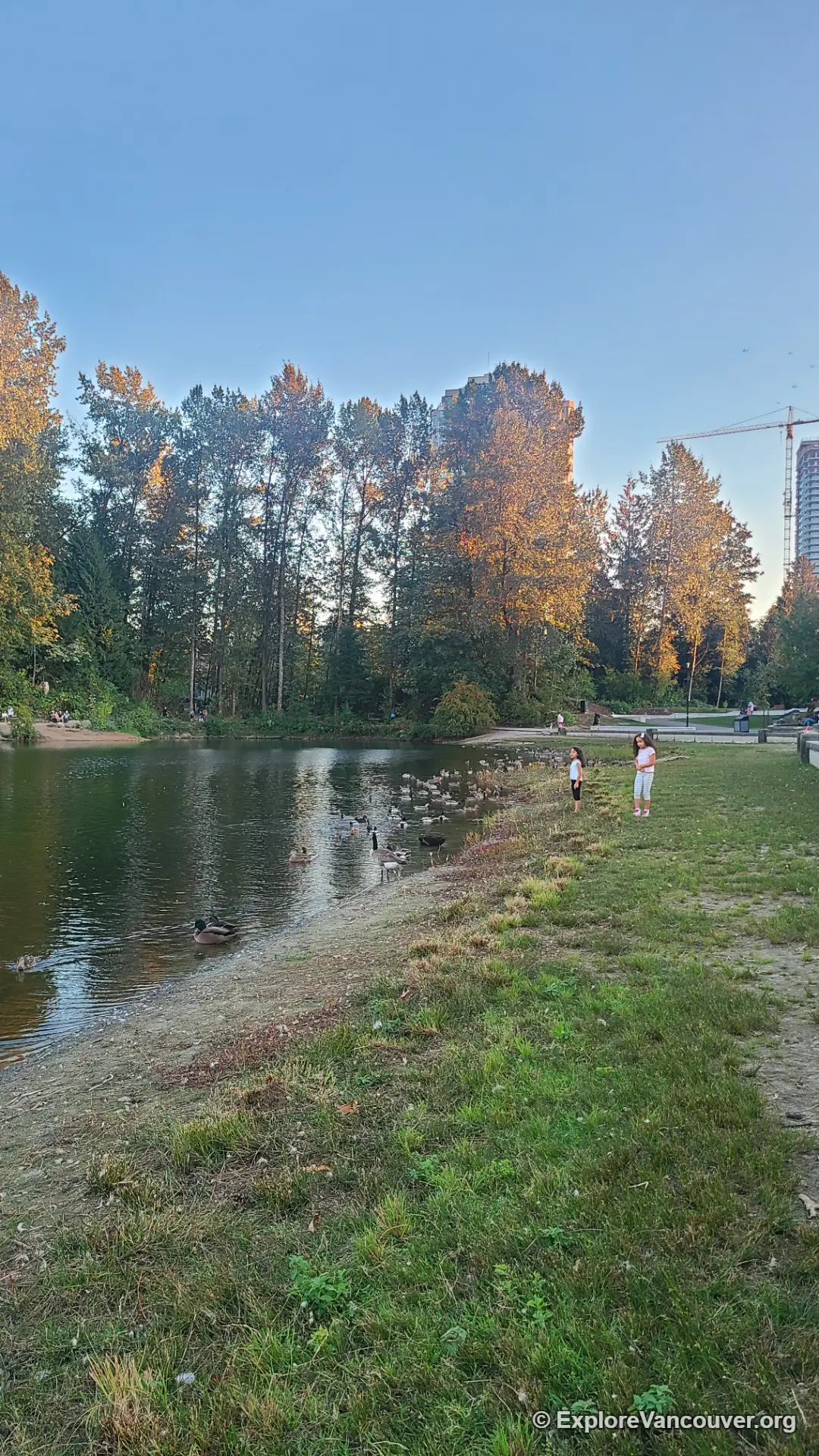
Lafarge Lake sits in the middle of Coquitlam’s Town Centre Park, a man made lake created from a former gravel pit and reclaimed as parkland. A paved path of roughly a kilometre circles the water and stays flat and stroller friendly the whole way, with the Evergreen Cultural Centre nearby. Swimming is not allowed, but the lake is stocked with rainbow trout and draws steady numbers of anglers. Each winter the loop fills with a free holiday lights display that is a local tradition, and it fits neatly into our guide to the best Christmas lights in Vancouver.
Mundy Lake & Lost Lake, Coquitlam
Swimming: No. Best for: Shaded forest walks, wildlife.
Mundy Park is Coquitlam’s largest park, a stretch of coastal forest that holds two smaller lakes, Mundy Lake and Lost Lake, along its network of shaded trails. Neither lake is set up for swimming, and both are better suited to a quiet walk or a wildlife spotting trip, with birds, small mammals, and butterflies all part of the scenery. The trails stay mostly flat and shaded, and the loop around Lost Lake makes a peaceful shorter option when the full park feels like too much.
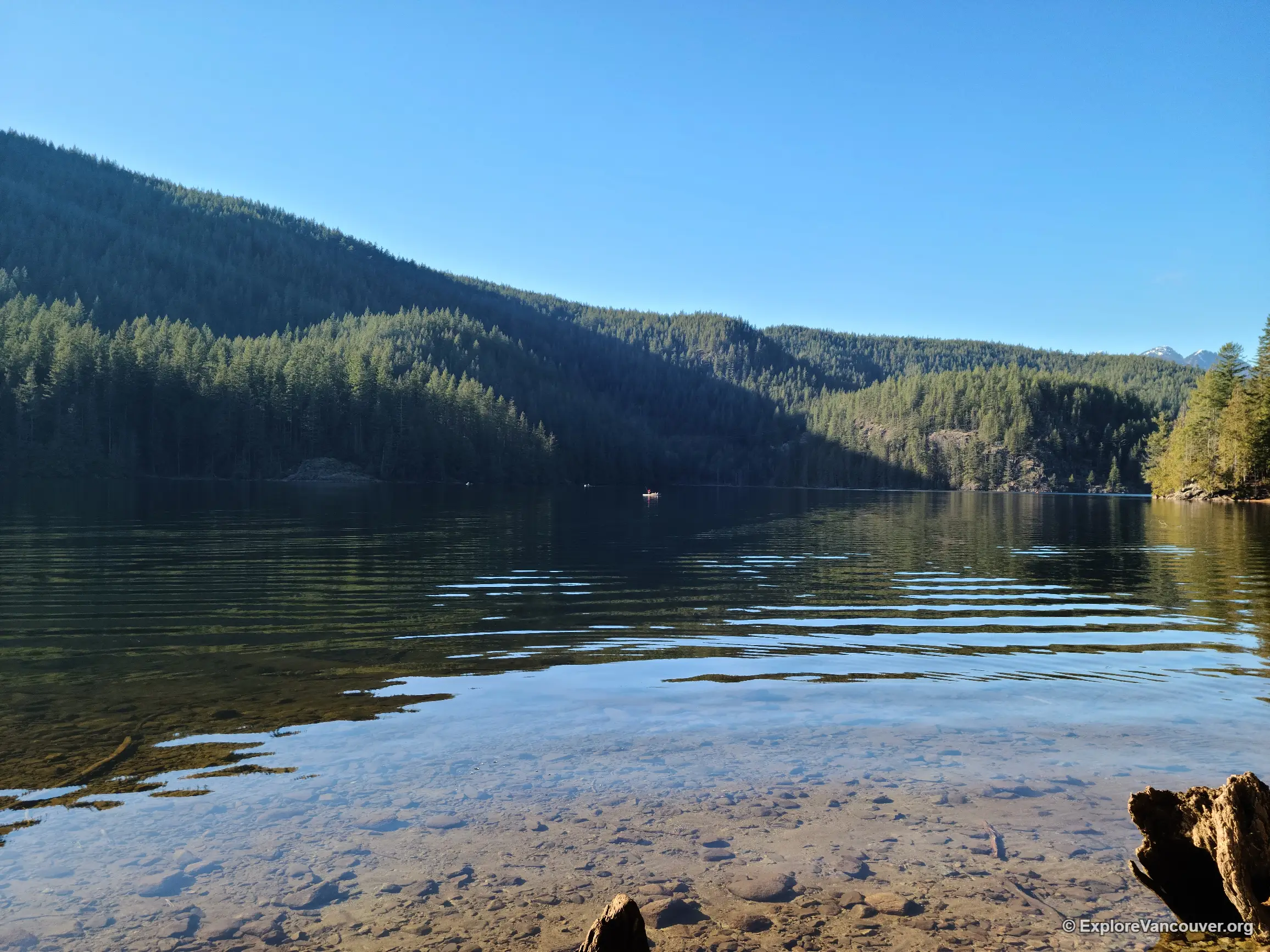
Buntzen Lake, Anmore
Swimming: Yes, North Beach and South Beach. Best for: Beaches, full day loop, suspension bridge.
Buntzen Lake is a BC Hydro reservoir set in forest just north of Port Moody, with a lakeshore loop of roughly ten kilometres that crosses a floating bridge and a suspension bridge. Swimming is allowed here, with two sandy beaches, South Beach near the parking lot and the quieter North Beach across the lake, plus a separate off leash dog beach. Hikers can tackle the full loop for a half day, or stay near the beaches for fishing, picnicking, and casual paddling. The parking lot regularly fills on summer weekends and gate hours change with the season, so an early start and a quick check of the BC Hydro page makes for a much easier visit.
Sasamat Lake, Belcarra
Swimming: Yes, White Pine Beach. Best for: Warm water, family beach day.
Sasamat Lake, inside Belcarra Regional Park, is known for some of the warmest water in the region, which makes White Pine Beach one of the most popular summer swimming spots near Vancouver. A floating bridge crosses the lake, and a loop trail circles the full shoreline in about an hour, suiting families with young kids as much as anyone looking for a short walk. A concession stand near the beach operates through the summer season. The lake fills quickly on hot weekends, with parking often gone by mid morning, so arriving early or visiting on a weekday makes for a calmer trip. A connecting trail also links Sasamat Lake to Buntzen Lake for longer hikes.
Surrey & the Fraser Lowlands
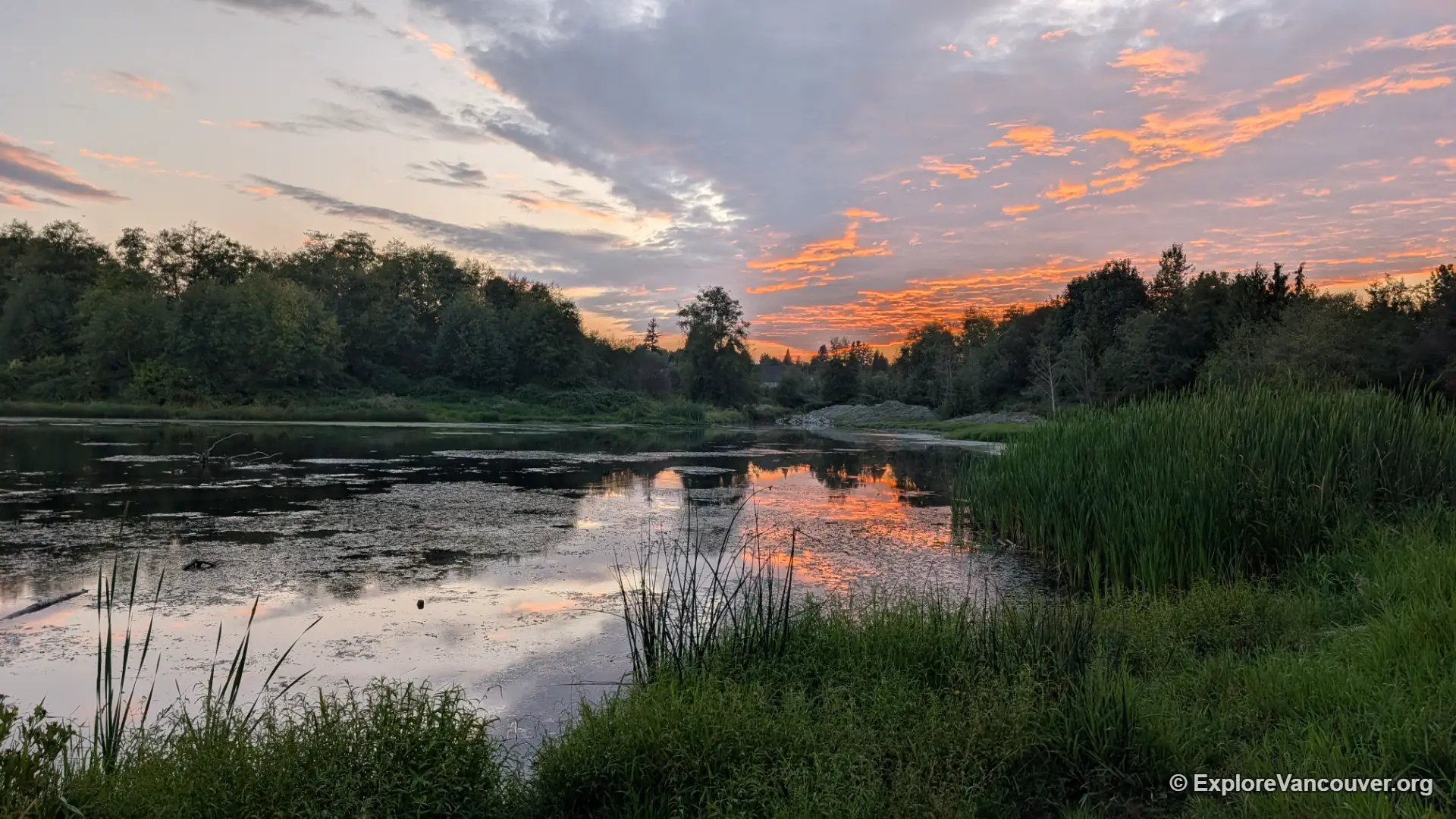
Surrey Lake Park, Surrey
Swimming: No. Best for: Quiet local walk, waterfowl.
Surrey Lake Park offers a quieter option in the Whalley area, with shoreline trails suited to an easy walk, a bike ride, or an afternoon of fishing away from the bigger crowds found at lakes closer to Vancouver. Swimming is not permitted, and the park stays low key, with fewer amenities than Green Timbers a few kilometres away, which keeps it appealingly calm even on weekends. The trail loop is short enough for a lunch break or an early morning walk, and benches around the shoreline give a few places to sit and watch for waterfowl. It is a solid pick for a local, no fuss outing rather than a destination worth a special trip.
Green Timbers Lake, Surrey
Swimming: No. Best for: Forest trails, fishing, picnics.
Green Timbers Lake sits inside Green Timbers Urban Forest, one of Surrey’s oldest protected green spaces, with second growth Douglas fir planted nearly a century ago. Trails around the lake suit an easy walk or a bike ride, and the water is regularly stocked for fishing, drawing a mix of casual anglers and families. Swimming is not permitted. The wider forest holds a network of longer trails beyond the lake loop, along with picnic areas and a former nursery that once grew trees for reforestation projects across the province, which makes the park worth a longer visit than the lake alone.
Maple Ridge, Pitt Meadows & Mission
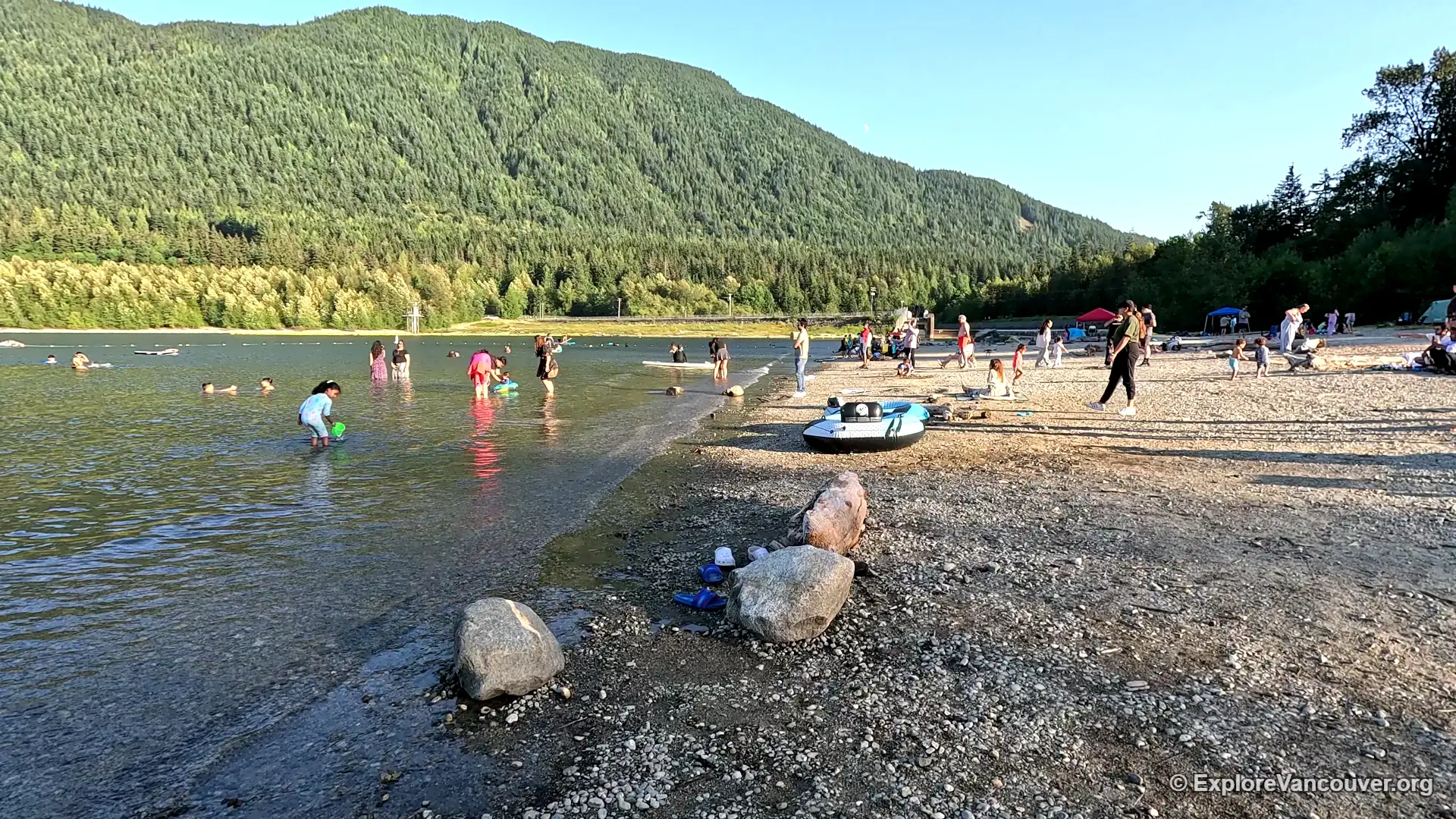
Alouette Lake, Maple Ridge
Swimming: Yes, North Beach and South Beach. Best for: Mountain views, swimming, paddling, camping.
Alouette Lake sits inside Golden Ears Provincial Park near Maple Ridge, framed by the peaks the park is named for, and ranks among the more scenic lakes within a reasonable drive of Vancouver. Swimming, windsurfing, and canoeing are all popular, with boat launches at both the North Beach and South Beach day use areas. Campgrounds in the park make it an easy overnight trip, and the beaches are sandy and gently sloped, which suits younger kids. The lake stays cool even in summer, so a longer swim can feel chilly. Passes or reservations may apply in peak season, so check BC Parks before you go.
Pitt Lake, Pitt Meadows
Swimming: Not recommended. Best for: Fishing, boating, birdwatching.
Pitt Lake, near Pitt Meadows, is one of the largest lakes in the region and one of the largest tidal freshwater lakes in North America, thanks to its connection to the Pitt River and the Fraser. Grant Narrows Regional Park at the south end gives access for paddling and boating, and the lake’s size makes it popular with anglers as well as casual paddlers. Swimming is a different experience here than at the smaller lakes, since the lake is big, tidal, and shared with boat traffic, so it is better known for fishing and boating. The surrounding marsh and farmland attract birdwatchers, and the drive out through Pitt Meadows is part of the appeal for a slower paced day trip.
Rolley Lake, Mission
Swimming: Yes, sandy beach (no lifeguards). Best for: Calm swimming, canoeing, camping.
Rolley Lake Provincial Park sits north of Mission and centres on a small, warm water lake with a sandy beach and a seasonal roped off swimming area. No lifeguards are on duty in BC Parks, so keep kids close. Motors of any kind are prohibited on the lake, which keeps it calm for canoes and kayaks, and the lake is stocked with trout. A trail circles the shoreline, with a short side trail to a waterfall near the campground, and the day use area has picnic tables and a playground. Dogs are not allowed on the day use beach.
Hayward Lake, Mission
Swimming: Yes, sandy beach. Best for: Calm beginner swimming, easy trail.
Hayward Lake is a reservoir near Mission with a sandy beach that offers calm, beginner friendly swimming, with mountain views ringing the water. Trails along the shoreline suit an easy walk before or after a swim. Because Hayward Lake is a working reservoir, water levels shift with the season, which can change how much beach is exposed, so checking conditions before a visit is worthwhile if the beach is the main draw. It makes a lower key alternative to the busier lakes closer to Vancouver.
Fraser Valley & Chilliwack
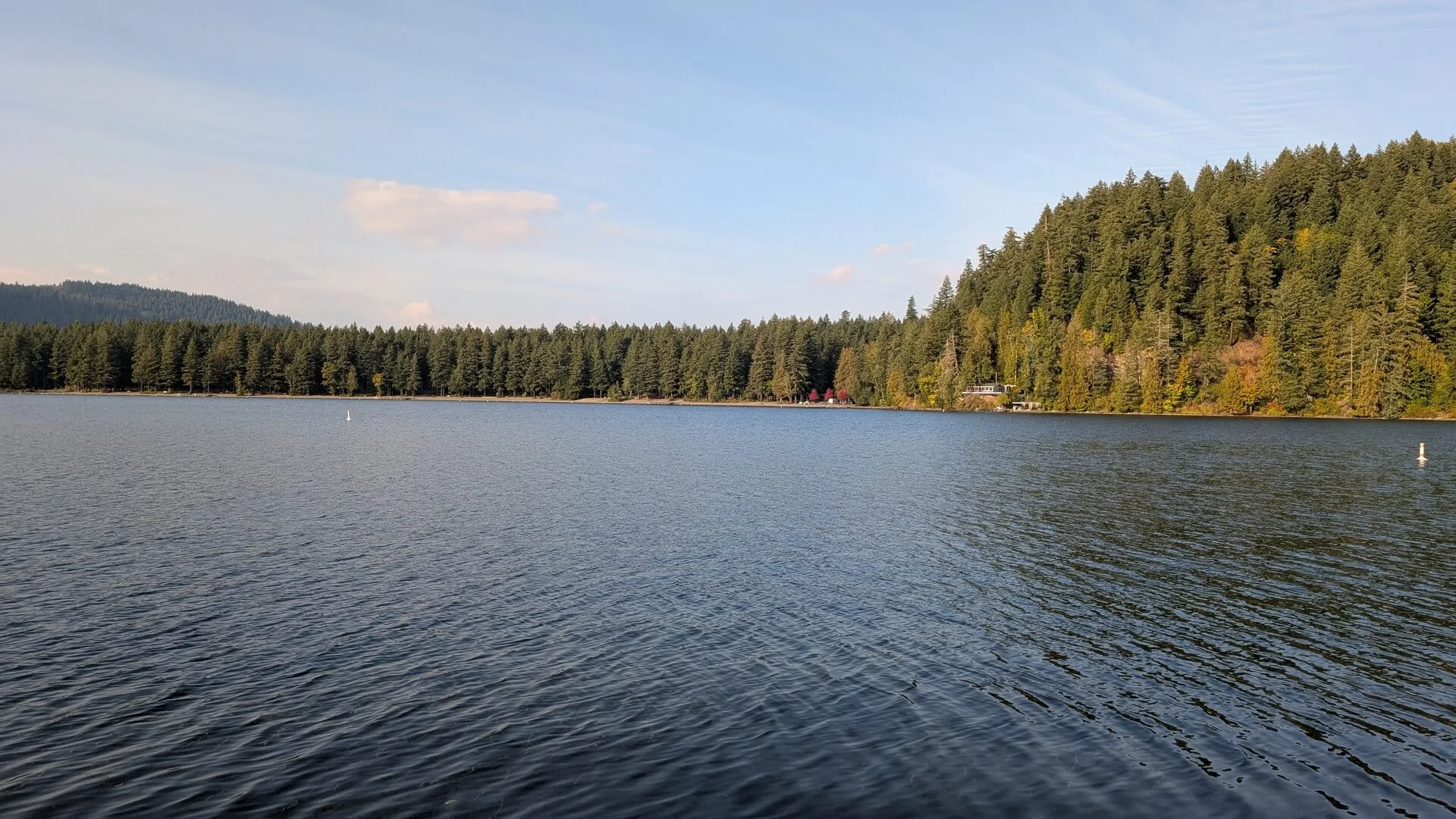
Cultus Lake, Chilliwack
Swimming: Yes, several beaches. Best for: Big beach days, boating, camping.
Cultus Lake, just outside Chilliwack, is one of the warmest and most popular swimming lakes in the Fraser Valley, ringed by forested mountains and several distinct beach areas. Main Beach, near the Cultus Lake Waterpark, draws the biggest summer crowds and the most amenities, while Entrance Bay and Maple Bay, both inside Cultus Lake Provincial Park, offer a quieter alternative on the same lake. Beyond swimming, the lake supports boating, waterskiing, and fishing, and hiking trails climb into the surrounding hills for views back over the water. Campgrounds fill up quickly through summer, so book early for an overnight stay.
Chilliwack Lake, Chilliwack
Swimming: Yes, sandy beach near the campground. Best for: Remote setting, cold clear water.
Chilliwack Lake sits further into the Fraser Valley than Cultus Lake, inside Chilliwack Lake Provincial Park, and offers a quieter, more remote alternative for swimming and camping. The lake’s cold, clear water is fed by snowmelt and mountain streams, and peaks rise directly from the shoreline on several sides, making it one of the more dramatic settings among the region’s lakes. A sandy beach near the main campground suits swimming and picnicking, while hiking trails head into the surrounding wilderness for longer day trips. Because the drive out is longer than to most lakes on this list, Chilliwack Lake tends to see fewer crowds even on peak summer weekends.
Harrison Lake, Harrison Hot Springs
Swimming: Yes, public beach. Best for: Full day or overnight trip, hot springs.
Harrison Lake, at the village of Harrison Hot Springs, is the largest lake in southwestern British Columbia and one of the more full featured lake destinations within driving distance of Vancouver. A public beach along the townsite offers swimming and lake access, and boat launches support fishing and general boating on the wider lake beyond. The natural hot mineral springs that give the village its name make a natural pairing with a lake day, warming up after a swim rather than driving straight home. The village has restaurants and shops within walking distance of the beach, which makes it more of a full day or overnight destination than a quick stop.
Sea to Sky (Squamish)
Alice Lake, Squamish
Swimming: Yes, sandy beaches. Best for: Families, camping, paddling.
Alice Lake sits inside Alice Lake Provincial Park near Squamish, with sandy swimming beaches connected by forested trails that loop around the water. Seasonal paddleboard and kayak rentals are often available in summer, and the lake’s relatively shallow, warm water makes it a reliable choice for families compared with some of the colder lakes along the highway. The park’s trail network extends into second growth forest, with short walks as well as longer options for turning a swim into a full day. Campgrounds in the park make it a popular overnight stop for people travelling the Sea to Sky corridor toward Whistler.
Browning Lake, Squamish
Swimming: Yes, small shoreline. Best for: Quick swim, warm water, climbers.
Browning Lake, inside Murrin Provincial Park just south of Squamish, is small enough that its water warms faster than most nearby lakes, making it a solid pick on a cooler day when other lakes still feel cold. Squeezed between a granite outcropping and the highway, it has a compact, easy to reach shoreline that suits a quick swim rather than a full day trip. Parking is limited, so arriving early matters more here than at the larger lakes on this list. The granite bluffs nearby draw rock climbers, so a visit can double as a chance to watch climbers in action.
Brohm Lake, Squamish
Swimming: Yes, deep and cool. Best for: Confident swimmers, rope swings, loop trail.
Brohm Lake, north of Squamish, is deeper and cooler than many of the region’s other swimming lakes, with rope swings and low cliff jumping spots that draw a more adventurous crowd than the family beaches further south. A forested loop trail circles the lake, offering a short hike before or after a swim, and the clear water makes it a popular spot on hot days despite the lack of a sandy beach. Cliff jumping carries real risk, so check water depth and conditions first and never jump alone. Because the lake sits close to the highway, access is straightforward, though parking can fill quickly on summer weekends.
Cat Lake, Squamish
Swimming: Yes, informal beaches. Best for: Quieter weekdays, picnics.
Cat Lake, north of Squamish, sees far less traffic than Alice Lake or Browning Lake, which makes it a good option for anyone hoping to avoid the busiest weekend crowds. A small wharf gives easy water access, and a few informal beach areas around the shoreline suit swimming and picnicking. On peak summer weekends the lake can draw a livelier crowd, so a weekday visit tends to deliver the quieter experience most people want here. There is no concession or rental service on site, so bring food, drinks, and any gear for the water.
Where you can actually swim
Swimming rules vary a lot from lake to lake. Use this quick guide to match the lake to the kind of day you want, and remember that most of these lakes have no lifeguard, so keep kids within arm’s reach.
Swimming lakes (13)
Beaches or commonly used swim spots
- Trout Lake
- Buntzen Lake
- Sasamat Lake
- Alouette Lake
- Rolley Lake
- Hayward Lake
- Cultus Lake
- Chilliwack Lake
- Harrison Lake
- Alice Lake
- Browning Lake
- Brohm Lake
- Cat Lake
Fishing, boating & paddling (8)
Water access without a swim beach
- Rice Lake
- Deer Lake
- Como Lake
- Lafarge Lake
- Burnaby Lake
- Pitt Lake
- Surrey Lake Park
- Green Timbers Lake
Quiet walks & wildlife (3)
Forest trails and calm shorelines
- Beaver Lake
- Whyte Lake
- Mundy Lake & Lost Lake
Tips for visiting lakes near Vancouver
- Arrive early on summer weekends. Buntzen Lake, Sasamat Lake, Cultus Lake, and the Squamish lakes often fill their parking lots by mid morning.
- Check conditions first. Reservoirs such as Hayward Lake and Buntzen Lake change level with the season, and trail or gate closures can happen.
- Respect the cold. Mountain fed lakes such as Alouette Lake, Chilliwack Lake, and Brohm Lake stay cool even in August.
- Bring what you need. Cat Lake, Brohm Lake, and most small urban lakes have no concession or rentals on site.
- Look up passes and hours. Provincial and regional parks set their own rules, so confirm current requirements on the official BC Parks, Metro Vancouver, or BC Hydro page.
Lakes near Vancouver: frequently asked questions
Which Metro Vancouver lakes allow swimming?
Closer to the city, Trout Lake has a lifeguarded summer beach, and Buntzen Lake and Sasamat Lake are the main swim lakes in the Tri-Cities area. Further out, swimming is the main draw at Alouette Lake, Rolley Lake, Hayward Lake, Cultus Lake, Chilliwack Lake, Harrison Lake, and the Sea to Sky lakes near Squamish: Alice Lake, Browning Lake, Brohm Lake, and Cat Lake. Most lakes in Burnaby, Coquitlam, Surrey, and North Vancouver, including Deer Lake, Como Lake, Rice Lake, and Surrey Lake Park, are set up for fishing, paddling, and walking instead.
Can you swim in Deer Lake in Burnaby?
No. Swimming is not permitted at Deer Lake. The lake is for paddling, fishing from the dock, and walking the shoreline trail, and boat rentals operate in summer. For a swim nearby, Trout Lake in Vancouver and Sasamat Lake in Belcarra are the closer options.
Can you swim in Capilano Lake or Coquitlam Lake?
No. Both are drinking water reservoirs for the region and are closed to swimming and public water access, unlike the recreational lakes covered here. You can still see Capilano Lake from the viewpoint at Cleveland Dam in North Vancouver.
Can you swim in Whyte Lake in West Vancouver?
Whyte Lake has no designated swimming beach, no lifeguard, and no facilities at the water. It is best treated as a short forest hike to a quiet lake, and the trail can be rocky and slick after rain, so wear sturdy footwear.
Which lake is best for a family day with kids?
Trout Lake pairs a swim beach with a nearby farmers market and plenty of park space. Alice Lake, Sasamat Lake, and Rolley Lake are good picks further out for a full beach day, while Rice Lake and Como Lake suit a calmer visit built around fishing and flat, stroller friendly trails.
Which lakes are best for fishing, kayaking, or canoeing?
Rice Lake has a fishing dock with ramps and stocked trout, and Deer Lake offers summer boat rentals and a fishing dock. Como Lake and Lafarge Lake are stocked with trout, and Burnaby Lake has a public canoe and kayak launch at the rowing pavilion. Rolley Lake and Alouette Lake suit paddlers who want mountain scenery, though motors are not permitted at Rolley Lake. For more routes, see our best places to kayak in Vancouver.
Which lakes are closest to downtown Vancouver?
Beaver Lake in Stanley Park and Trout Lake in East Vancouver are the closest, both inside city limits. Burnaby Lake and Deer Lake in Burnaby come next, a short drive or transit trip away.
Do I need a pass or reservation to visit these lakes?
It depends on the park. Provincial park lakes such as Alouette Lake in Golden Ears, Cultus Lake, Alice Lake, and Rolley Lake may require a day-use pass or camping reservation in peak season, and parking at Buntzen Lake and Sasamat Lake often fills early on summer weekends. Check the official BC Parks, Metro Vancouver, and BC Hydro pages before you go for current requirements, fees, and gate times.
Keep exploring water and trails
Pair a lake day with a beach, a paddle, or an easy walk.
Metro Vancouver and the valley beyond it are dotted with lakes, from five minute urban strolls to full day trips with a swimming beach and a mountain view. Here are 25 worth knowing about, grouped by area, with what you can actually do at each one and whether swimming is allowed. If a beach day is the goal, jump to the swimming guide further down, and for coastal alternatives see our best beaches in Vancouver. Paddlers can also check the best places to kayak in Vancouver, and anyone after a gentler outing will like our easy walks in Metro Vancouver.
Vancouver, West Vancouver & the North Shore
Trout Lake, Vancouver
Swimming: Yes, summer beach with lifeguards. Best for: Swimming, dog walks, fall colour.
Trout Lake sits inside John Hendry Park in East Vancouver and is one of the few lakes in the city with a swimming beach, staffed with lifeguards through the summer. Beyond the water, the park draws regulars to its packed dirt loop trail, a favourite for running and walking, and a large off leash area that is popular with local dog owners. The Trout Lake Farmers Market sets up on Saturdays during its season, a short walk from the shoreline (see our best farmers markets in Vancouver). Come October, the maples ringing the lake turn orange and gold, making it one of the better fall colour stops in the city.
Beaver Lake, Stanley Park
Swimming: No. Best for: Easy forest loop, water lilies, birds.
Beaver Lake is the quiet centre of Stanley Park, a small lake covered in water lilies that bloom through the summer months. A short, easy trail loops the water through tall second growth forest, passing spots where ducks, herons, and turtles are easy to watch. Swimming is not permitted, but the setting feels far removed from the busy seawall even though it sits only a short walk away. It is one of the closest lakes to downtown Vancouver, so it works well as a half hour break during a longer day in Stanley Park.
Rice Lake, North Vancouver
Swimming: No. Best for: Fishing, wheelchair accessible trail, shade.
Rice Lake is tucked inside the Lower Seymour Conservation Reserve, reached by a wide, wheelchair accessible trail that winds through Douglas fir and western red cedar before opening onto the water. Swimming is not permitted, but the lake is regularly stocked with rainbow trout, and a fishing dock with ramps and benches makes it one of the easier spots in the region to try casting a line, including for anglers using a wheelchair. Learn to fish programs for kids have run here in summer, so check the reserve for current dates. The forest keeps the loop cool even on hot afternoons.
Whyte Lake, West Vancouver
Swimming: No designated beach. Best for: Short forest hike to a quiet lake.
Whyte Lake is a small, still lake in West Vancouver reached by a forest trail with boardwalk sections and some rocky stretches, so it feels more like a short hike than a lakeside stroll. There is no designated swimming beach, no lifeguard, and no facilities at the water, which keeps the shoreline peaceful and a good fit for anyone who wants trees, reflections, and birdsong rather than a busy park. Sturdy footwear helps on the rockier sections, and the trail can be slick after rain.
Burnaby & the Tri-Cities
Deer Lake, Burnaby
Swimming: No. Best for: Paddling, fishing dock, arts and culture.
Deer Lake anchors Burnaby’s cultural district, with a shoreline trail linking the water to the Burnaby Art Gallery, the Shadbolt Centre for the Arts, and Burnaby Village Museum, a recreated 1920s village. Swimming is not allowed, but boat rentals operate through the summer with canoes, kayaks, rowboats, and pedal boats available by the hour, and anglers fish from the dock for stocked trout. The Festival Lawn hosts outdoor concerts on summer evenings. Watch for great blue herons in the shallows and turtles sunning on logs along the quieter stretches of trail.
Burnaby Lake, Burnaby
Swimming: No. Best for: Birdwatching, flat loop trail, paddling.
Burnaby Lake Regional Park wraps a flat perimeter trail of roughly ten kilometres around a shallow, marshy lake that ranks among the best birdwatching sites in the Lower Mainland. Great blue herons, bald eagles, and belted kingfishers show up regularly, and a viewing tower and boardwalk at Piper Spit put you right at the water’s edge. Swimming is not permitted, since sediment has filled in much of the lake, but the rowing pavilion offers a public canoe and kayak launch with change rooms for paddlers. The Nature House near the Piper Avenue entrance is a good starting point for families.
Como Lake, Coquitlam
Swimming: No. Best for: Easy loop, stocked trout, playground.
Como Lake Park circles a small lake in central Coquitlam on a flat, paved loop of about a kilometre that suits joggers, dog walkers, and families pushing strollers. Swimming is not permitted, but the lake is stocked with rainbow trout and draws anglers casting from the shore and from the docks. An annual fish derby gives kids a chance to try fishing with gear provided. A playground and picnic shelters sit near the north parking lot, and the trail is at its best in spring blossom season or in autumn, when the surrounding maples turn red and gold.
Lafarge Lake, Coquitlam
Swimming: No. Best for: Stroller friendly loop, winter lights.
Lafarge Lake sits in the middle of Coquitlam’s Town Centre Park, a man made lake created from a former gravel pit and reclaimed as parkland. A paved path of roughly a kilometre circles the water and stays flat and stroller friendly the whole way, with the Evergreen Cultural Centre nearby. Swimming is not allowed, but the lake is stocked with rainbow trout and draws steady numbers of anglers. Each winter the loop fills with a free holiday lights display that is a local tradition, and it fits neatly into our guide to the best Christmas lights in Vancouver.
Mundy Lake & Lost Lake, Coquitlam
Swimming: No. Best for: Shaded forest walks, wildlife.
Mundy Park is Coquitlam’s largest park, a stretch of coastal forest that holds two smaller lakes, Mundy Lake and Lost Lake, along its network of shaded trails. Neither lake is set up for swimming, and both are better suited to a quiet walk or a wildlife spotting trip, with birds, small mammals, and butterflies all part of the scenery. The trails stay mostly flat and shaded, and the loop around Lost Lake makes a peaceful shorter option when the full park feels like too much.
Buntzen Lake, Anmore
Swimming: Yes, North Beach and South Beach. Best for: Beaches, full day loop, suspension bridge.
Buntzen Lake is a BC Hydro reservoir set in forest just north of Port Moody, with a lakeshore loop of roughly ten kilometres that crosses a floating bridge and a suspension bridge. Swimming is allowed here, with two sandy beaches, South Beach near the parking lot and the quieter North Beach across the lake, plus a separate off leash dog beach. Hikers can tackle the full loop for a half day, or stay near the beaches for fishing, picnicking, and casual paddling. The parking lot regularly fills on summer weekends and gate hours change with the season, so an early start and a quick check of the BC Hydro page makes for a much easier visit.
Sasamat Lake, Belcarra
Swimming: Yes, White Pine Beach. Best for: Warm water, family beach day.
Sasamat Lake, inside Belcarra Regional Park, is known for some of the warmest water in the region, which makes White Pine Beach one of the most popular summer swimming spots near Vancouver. A floating bridge crosses the lake, and a loop trail circles the full shoreline in about an hour, suiting families with young kids as much as anyone looking for a short walk. A concession stand near the beach operates through the summer season. The lake fills quickly on hot weekends, with parking often gone by mid morning, so arriving early or visiting on a weekday makes for a calmer trip. A connecting trail also links Sasamat Lake to Buntzen Lake for longer hikes.
Surrey & the Fraser Lowlands
Surrey Lake Park, Surrey
Swimming: No. Best for: Quiet local walk, waterfowl.
Surrey Lake Park offers a quieter option in the Whalley area, with shoreline trails suited to an easy walk, a bike ride, or an afternoon of fishing away from the bigger crowds found at lakes closer to Vancouver. Swimming is not permitted, and the park stays low key, with fewer amenities than Green Timbers a few kilometres away, which keeps it appealingly calm even on weekends. The trail loop is short enough for a lunch break or an early morning walk, and benches around the shoreline give a few places to sit and watch for waterfowl. It is a solid pick for a local, no fuss outing rather than a destination worth a special trip.
Green Timbers Lake, Surrey
Swimming: No. Best for: Forest trails, fishing, picnics.
Green Timbers Lake sits inside Green Timbers Urban Forest, one of Surrey’s oldest protected green spaces, with second growth Douglas fir planted nearly a century ago. Trails around the lake suit an easy walk or a bike ride, and the water is regularly stocked for fishing, drawing a mix of casual anglers and families. Swimming is not permitted. The wider forest holds a network of longer trails beyond the lake loop, along with picnic areas and a former nursery that once grew trees for reforestation projects across the province, which makes the park worth a longer visit than the lake alone.
Maple Ridge, Pitt Meadows & Mission
Alouette Lake, Maple Ridge
Swimming: Yes, North Beach and South Beach. Best for: Mountain views, swimming, paddling, camping.
Alouette Lake sits inside Golden Ears Provincial Park near Maple Ridge, framed by the peaks the park is named for, and ranks among the more scenic lakes within a reasonable drive of Vancouver. Swimming, windsurfing, and canoeing are all popular, with boat launches at both the North Beach and South Beach day use areas. Campgrounds in the park make it an easy overnight trip, and the beaches are sandy and gently sloped, which suits younger kids. The lake stays cool even in summer, so a longer swim can feel chilly. Passes or reservations may apply in peak season, so check BC Parks before you go.
Pitt Lake, Pitt Meadows
Swimming: Not recommended. Best for: Fishing, boating, birdwatching.
Pitt Lake, near Pitt Meadows, is one of the largest lakes in the region and one of the largest tidal freshwater lakes in North America, thanks to its connection to the Pitt River and the Fraser. Grant Narrows Regional Park at the south end gives access for paddling and boating, and the lake’s size makes it popular with anglers as well as casual paddlers. Swimming is a different experience here than at the smaller lakes, since the lake is big, tidal, and shared with boat traffic, so it is better known for fishing and boating. The surrounding marsh and farmland attract birdwatchers, and the drive out through Pitt Meadows is part of the appeal for a slower paced day trip.
Rolley Lake, Mission
Swimming: Yes, sandy beach (no lifeguards). Best for: Calm swimming, canoeing, camping.
Rolley Lake Provincial Park sits north of Mission and centres on a small, warm water lake with a sandy beach and a seasonal roped off swimming area. No lifeguards are on duty in BC Parks, so keep kids close. Motors of any kind are prohibited on the lake, which keeps it calm for canoes and kayaks, and the lake is stocked with trout. A trail circles the shoreline, with a short side trail to a waterfall near the campground, and the day use area has picnic tables and a playground. Dogs are not allowed on the day use beach.
Hayward Lake, Mission
Swimming: Yes, sandy beach. Best for: Calm beginner swimming, easy trail.
Hayward Lake is a reservoir near Mission with a sandy beach that offers calm, beginner friendly swimming, with mountain views ringing the water. Trails along the shoreline suit an easy walk before or after a swim. Because Hayward Lake is a working reservoir, water levels shift with the season, which can change how much beach is exposed, so checking conditions before a visit is worthwhile if the beach is the main draw. It makes a lower key alternative to the busier lakes closer to Vancouver.
Fraser Valley & Chilliwack
Cultus Lake, Chilliwack
Swimming: Yes, several beaches. Best for: Big beach days, boating, camping.
Cultus Lake, just outside Chilliwack, is one of the warmest and most popular swimming lakes in the Fraser Valley, ringed by forested mountains and several distinct beach areas. Main Beach, near the Cultus Lake Waterpark, draws the biggest summer crowds and the most amenities, while Entrance Bay and Maple Bay, both inside Cultus Lake Provincial Park, offer a quieter alternative on the same lake. Beyond swimming, the lake supports boating, waterskiing, and fishing, and hiking trails climb into the surrounding hills for views back over the water. Campgrounds fill up quickly through summer, so book early for an overnight stay.
Chilliwack Lake, Chilliwack
Swimming: Yes, sandy beach near the campground. Best for: Remote setting, cold clear water.
Chilliwack Lake sits further into the Fraser Valley than Cultus Lake, inside Chilliwack Lake Provincial Park, and offers a quieter, more remote alternative for swimming and camping. The lake’s cold, clear water is fed by snowmelt and mountain streams, and peaks rise directly from the shoreline on several sides, making it one of the more dramatic settings among the region’s lakes. A sandy beach near the main campground suits swimming and picnicking, while hiking trails head into the surrounding wilderness for longer day trips. Because the drive out is longer than to most lakes on this list, Chilliwack Lake tends to see fewer crowds even on peak summer weekends.
Harrison Lake, Harrison Hot Springs
Swimming: Yes, public beach. Best for: Full day or overnight trip, hot springs.
Harrison Lake, at the village of Harrison Hot Springs, is the largest lake in southwestern British Columbia and one of the more full featured lake destinations within driving distance of Vancouver. A public beach along the townsite offers swimming and lake access, and boat launches support fishing and general boating on the wider lake beyond. The natural hot mineral springs that give the village its name make a natural pairing with a lake day, warming up after a swim rather than driving straight home. The village has restaurants and shops within walking distance of the beach, which makes it more of a full day or overnight destination than a quick stop.
Sea to Sky (Squamish)
Alice Lake, Squamish
Swimming: Yes, sandy beaches. Best for: Families, camping, paddling.
Alice Lake sits inside Alice Lake Provincial Park near Squamish, with sandy swimming beaches connected by forested trails that loop around the water. Seasonal paddleboard and kayak rentals are often available in summer, and the lake’s relatively shallow, warm water makes it a reliable choice for families compared with some of the colder lakes along the highway. The park’s trail network extends into second growth forest, with short walks as well as longer options for turning a swim into a full day. Campgrounds in the park make it a popular overnight stop for people travelling the Sea to Sky corridor toward Whistler.
Browning Lake, Squamish
Swimming: Yes, small shoreline. Best for: Quick swim, warm water, climbers.
Browning Lake, inside Murrin Provincial Park just south of Squamish, is small enough that its water warms faster than most nearby lakes, making it a solid pick on a cooler day when other lakes still feel cold. Squeezed between a granite outcropping and the highway, it has a compact, easy to reach shoreline that suits a quick swim rather than a full day trip. Parking is limited, so arriving early matters more here than at the larger lakes on this list. The granite bluffs nearby draw rock climbers, so a visit can double as a chance to watch climbers in action.
Brohm Lake, Squamish
Swimming: Yes, deep and cool. Best for: Confident swimmers, rope swings, loop trail.
Brohm Lake, north of Squamish, is deeper and cooler than many of the region’s other swimming lakes, with rope swings and low cliff jumping spots that draw a more adventurous crowd than the family beaches further south. A forested loop trail circles the lake, offering a short hike before or after a swim, and the clear water makes it a popular spot on hot days despite the lack of a sandy beach. Cliff jumping carries real risk, so check water depth and conditions first and never jump alone. Because the lake sits close to the highway, access is straightforward, though parking can fill quickly on summer weekends.
Cat Lake, Squamish
Swimming: Yes, informal beaches. Best for: Quieter weekdays, picnics.
Cat Lake, north of Squamish, sees far less traffic than Alice Lake or Browning Lake, which makes it a good option for anyone hoping to avoid the busiest weekend crowds. A small wharf gives easy water access, and a few informal beach areas around the shoreline suit swimming and picnicking. On peak summer weekends the lake can draw a livelier crowd, so a weekday visit tends to deliver the quieter experience most people want here. There is no concession or rental service on site, so bring food, drinks, and any gear for the water.
Where you can actually swim
Swimming rules vary a lot from lake to lake. Use this quick guide to match the lake to the kind of day you want, and remember that most of these lakes have no lifeguard, so keep kids within arm’s reach.
Swimming lakes (13)
Beaches or commonly used swim spots
- Trout Lake
- Buntzen Lake
- Sasamat Lake
- Alouette Lake
- Rolley Lake
- Hayward Lake
- Cultus Lake
- Chilliwack Lake
- Harrison Lake
- Alice Lake
- Browning Lake
- Brohm Lake
- Cat Lake
Fishing, boating & paddling (8)
Water access without a swim beach
- Rice Lake
- Deer Lake
- Como Lake
- Lafarge Lake
- Burnaby Lake
- Pitt Lake
- Surrey Lake Park
- Green Timbers Lake
Quiet walks & wildlife (3)
Forest trails and calm shorelines
- Beaver Lake
- Whyte Lake
- Mundy Lake & Lost Lake
Tips for visiting lakes near Vancouver
- Arrive early on summer weekends. Buntzen Lake, Sasamat Lake, Cultus Lake, and the Squamish lakes often fill their parking lots by mid morning.
- Check conditions first. Reservoirs such as Hayward Lake and Buntzen Lake change level with the season, and trail or gate closures can happen.
- Respect the cold. Mountain fed lakes such as Alouette Lake, Chilliwack Lake, and Brohm Lake stay cool even in August.
- Bring what you need. Cat Lake, Brohm Lake, and most small urban lakes have no concession or rentals on site.
- Look up passes and hours. Provincial and regional parks set their own rules, so confirm current requirements on the official BC Parks, Metro Vancouver, or BC Hydro page.
Lakes near Vancouver: frequently asked questions
Which Metro Vancouver lakes allow swimming?
Closer to the city, Trout Lake has a lifeguarded summer beach, and Buntzen Lake and Sasamat Lake are the main swim lakes in the Tri-Cities area. Further out, swimming is the main draw at Alouette Lake, Rolley Lake, Hayward Lake, Cultus Lake, Chilliwack Lake, Harrison Lake, and the Sea to Sky lakes near Squamish: Alice Lake, Browning Lake, Brohm Lake, and Cat Lake. Most lakes in Burnaby, Coquitlam, Surrey, and North Vancouver, including Deer Lake, Como Lake, Rice Lake, and Surrey Lake Park, are set up for fishing, paddling, and walking instead.
Can you swim in Deer Lake in Burnaby?
No. Swimming is not permitted at Deer Lake. The lake is for paddling, fishing from the dock, and walking the shoreline trail, and boat rentals operate in summer. For a swim nearby, Trout Lake in Vancouver and Sasamat Lake in Belcarra are the closer options.
Can you swim in Capilano Lake or Coquitlam Lake?
No. Both are drinking water reservoirs for the region and are closed to swimming and public water access, unlike the recreational lakes covered here. You can still see Capilano Lake from the viewpoint at Cleveland Dam in North Vancouver.
Can you swim in Whyte Lake in West Vancouver?
Whyte Lake has no designated swimming beach, no lifeguard, and no facilities at the water. It is best treated as a short forest hike to a quiet lake, and the trail can be rocky and slick after rain, so wear sturdy footwear.
Which lake is best for a family day with kids?
Trout Lake pairs a swim beach with a nearby farmers market and plenty of park space. Alice Lake, Sasamat Lake, and Rolley Lake are good picks further out for a full beach day, while Rice Lake and Como Lake suit a calmer visit built around fishing and flat, stroller friendly trails.
Which lakes are best for fishing, kayaking, or canoeing?
Rice Lake has a fishing dock with ramps and stocked trout, and Deer Lake offers summer boat rentals and a fishing dock. Como Lake and Lafarge Lake are stocked with trout, and Burnaby Lake has a public canoe and kayak launch at the rowing pavilion. Rolley Lake and Alouette Lake suit paddlers who want mountain scenery, though motors are not permitted at Rolley Lake. For more routes, see our best places to kayak in Vancouver.
Which lakes are closest to downtown Vancouver?
Beaver Lake in Stanley Park and Trout Lake in East Vancouver are the closest, both inside city limits. Burnaby Lake and Deer Lake in Burnaby come next, a short drive or transit trip away.
Do I need a pass or reservation to visit these lakes?
It depends on the park. Provincial park lakes such as Alouette Lake in Golden Ears, Cultus Lake, Alice Lake, and Rolley Lake may require a day-use pass or camping reservation in peak season, and parking at Buntzen Lake and Sasamat Lake often fills early on summer weekends. Check the official BC Parks, Metro Vancouver, and BC Hydro pages before you go for current requirements, fees, and gate times.
Keep exploring water and trails
Pair a lake day with a beach, a paddle, or an easy walk.