
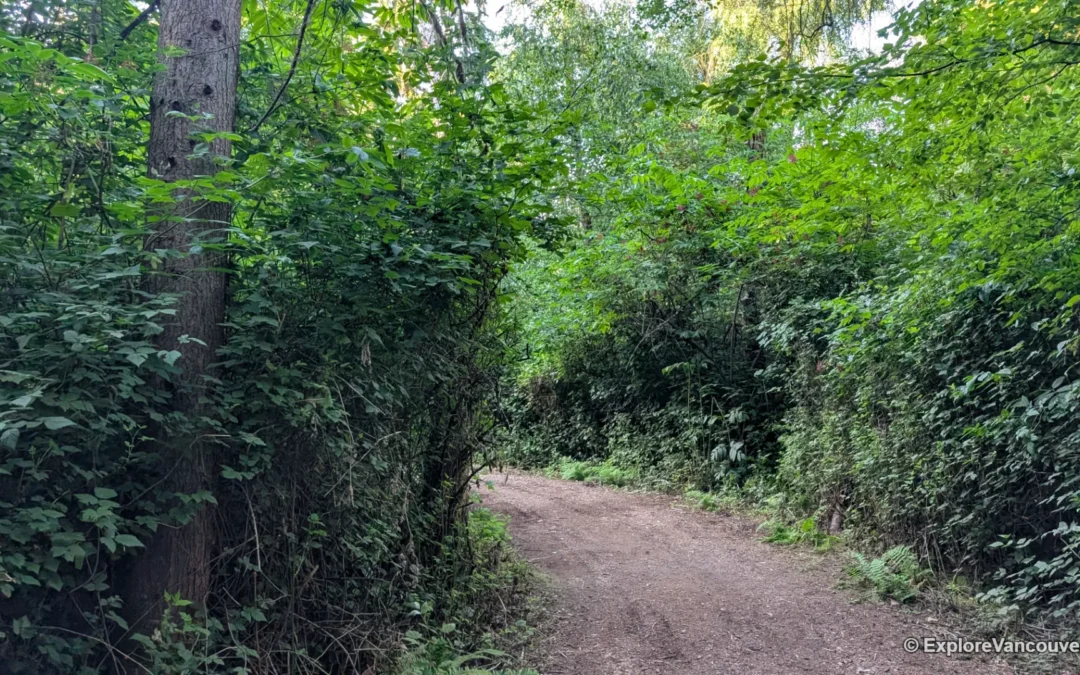
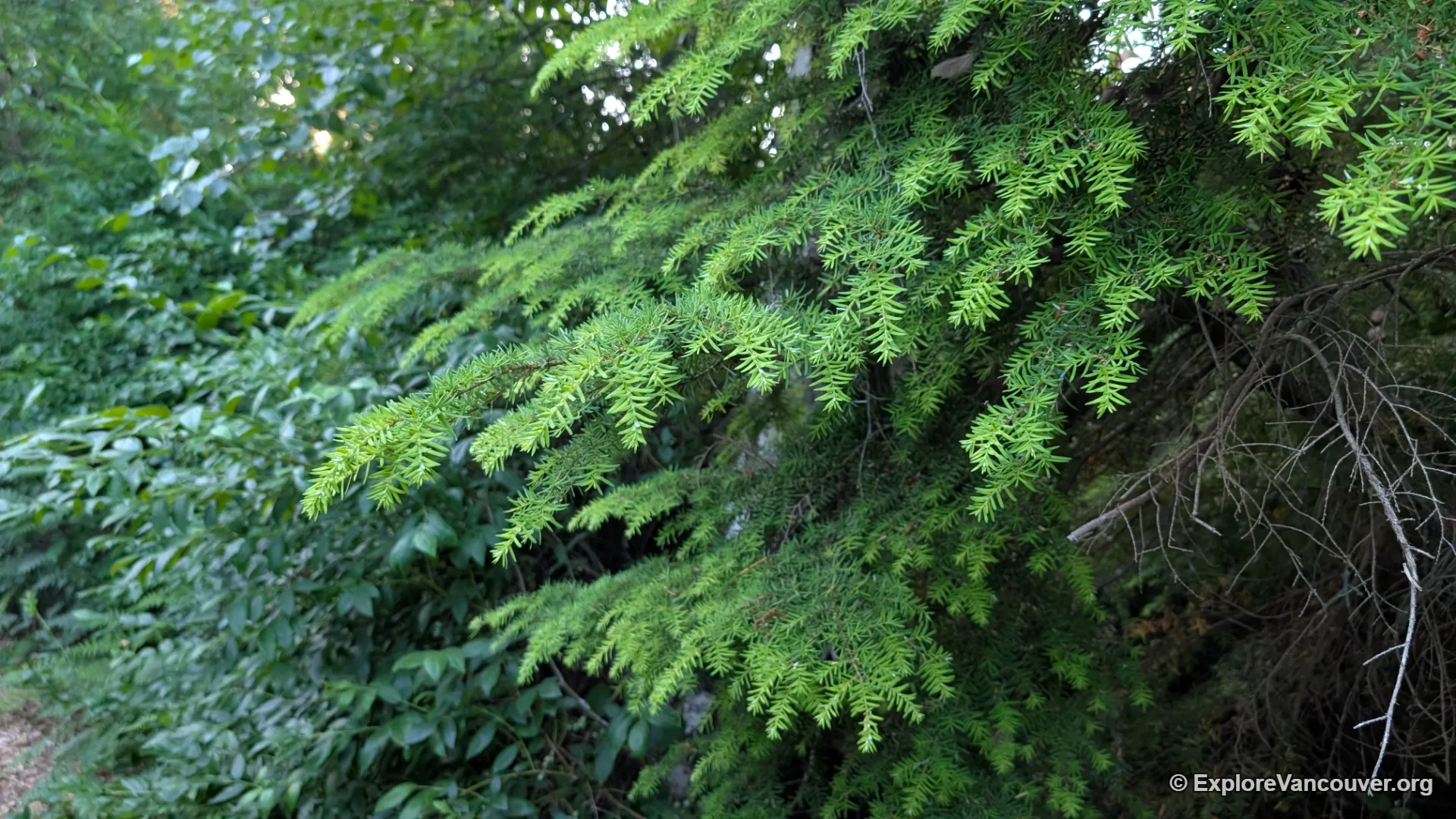
Most people picture Richmond as flat farmland, shopping malls, and the airport. Then they find 200 acres of raised peat bog sitting a few minutes off Westminster Highway, and the picture changes. Richmond Nature Park is one of the last undeveloped pieces of the Lulu Island Bog, and it is free to walk through, any day of the year.
What this park actually is
The bog started forming roughly 6,000 years ago as the Fraser River kept dropping sediment at its mouth, eventually raising a dome of peat, sphagnum moss, and stunted shrub-like trees above the surrounding delta. That process makes it some of the youngest ground in British Columbia, and it once covered a large stretch of Lulu Island. Farming and development took most of it. Richmond Nature Park protects one of the largest pieces that is left.
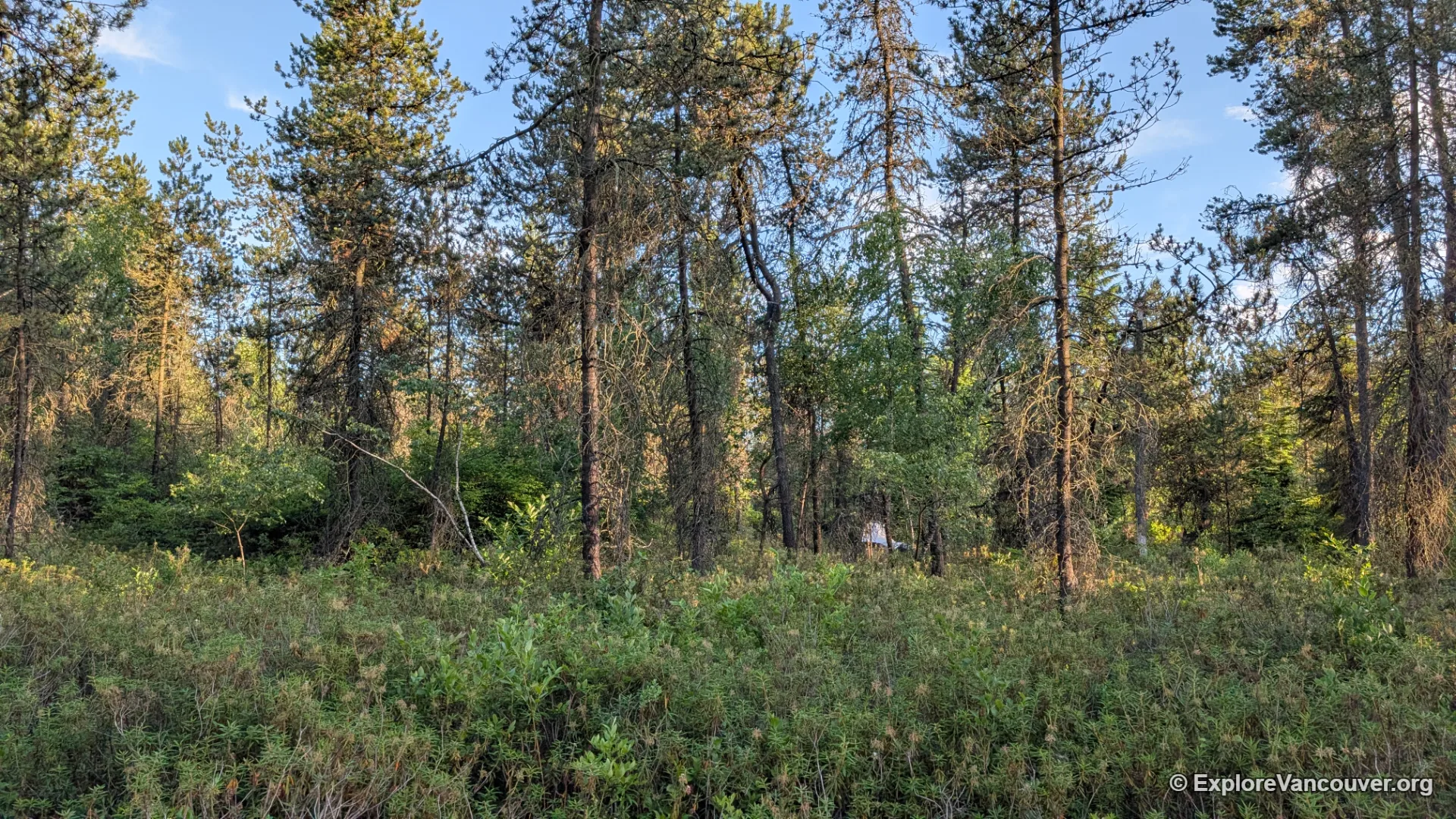
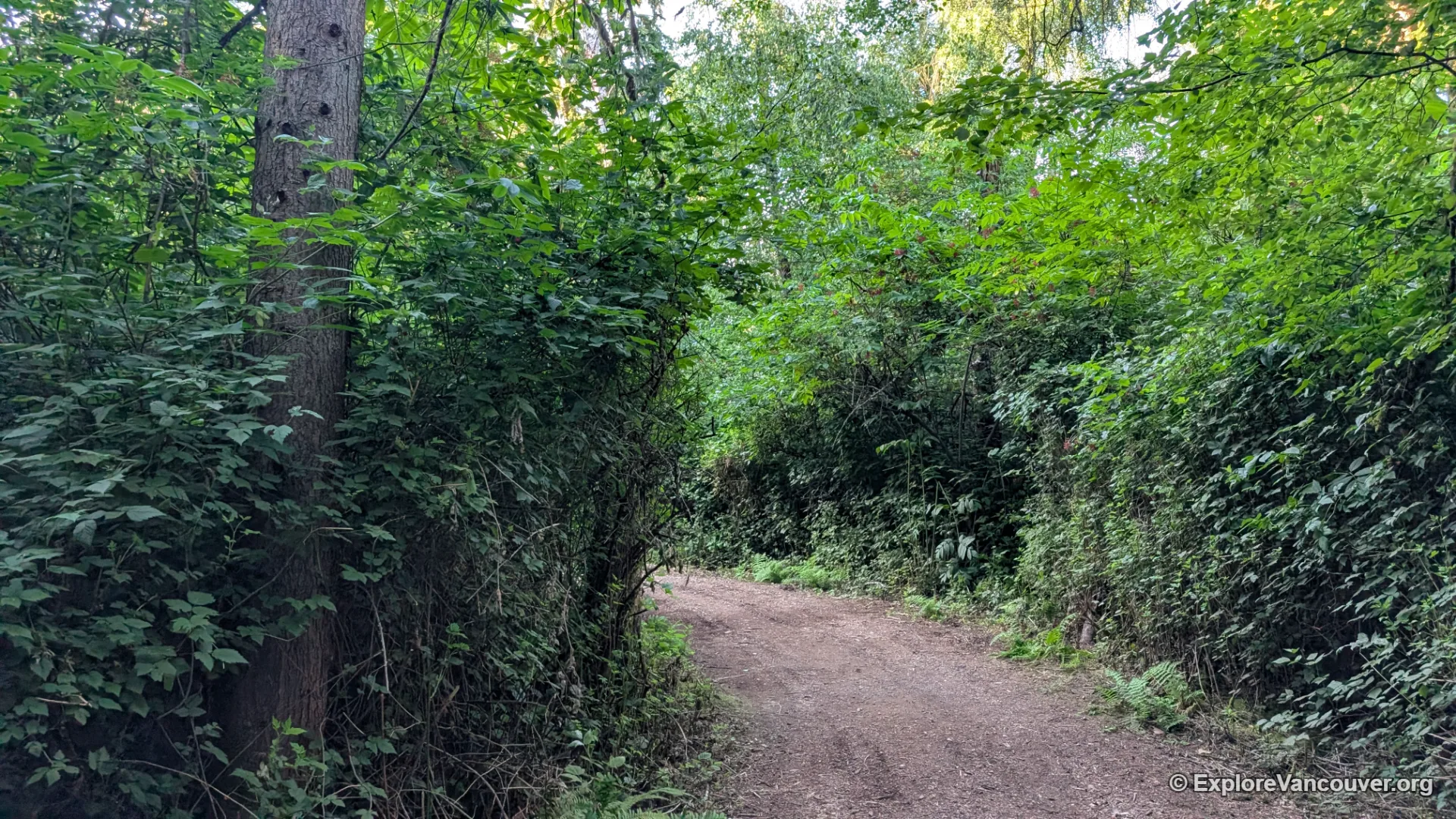
Because it is a genuine peat bog and not a groomed garden, the ground stays soft and a little spongy in spots, and the plant life looks different from a typical West Coast forest walk. Labrador tea, bog laurel, and sundews grow alongside stands of birch and pine, and the mix changes noticeably from trail to trail.
The four trails
Four connected trails wind through bog, forest, and pond habitat, adding up to close to 5 km if walked in full. None of them climb or drop much, and wood chip surfacing covers most of the route.
- Bog Forest Trail – the longest loop, at around 1.8 km, running through the forested edge of the bog
- Quaking Trail – about 1.6 km, named for the way the ground shifts slightly underfoot in the wettest sections
- Time Trail – roughly 0.83 km, a shorter option for a quicker visit
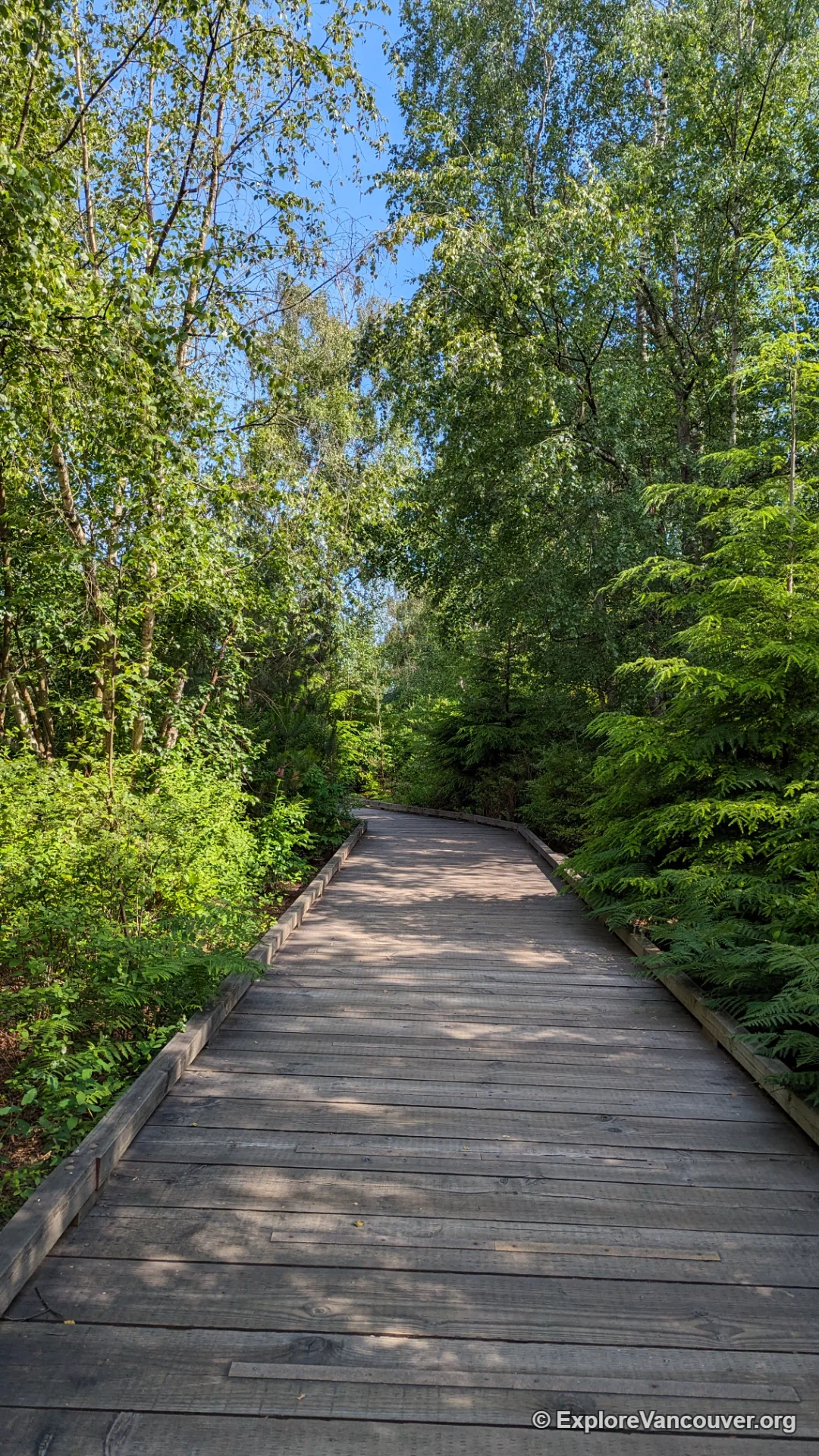
- Pond Trail – the shortest at 0.35 km, an elevated boardwalk circling the park pond and the only fully wheelchair and stroller accessible route
Outside of the Pond Trail boardwalk, expect a soft, sometimes muddy surface, particularly after rain, which in Richmond can mean most of the fall and winter.
Skip the sandals. The bog trails hold water long after it stops raining, and gravel or waterproof shoes make the walk far more comfortable. Strollers and wheelchairs should stick to the Pond Trail boardwalk.
The bog is a fragile, living system, not a backdrop. Staying on the marked trails and leaving plants, animals, and even fallen wood in place keeps it that way for the next visitor.
Nature House and the animals inside
Right at the park entrance sits the Nature House, a small interpretive centre run with the Richmond Nature Park Society. Inside there are hands-on exhibits, an active beehive, a rotating collection of live animals, a gift shop, and free trail guides at the front desk. A naturalist is usually on hand to answer questions, and admission runs by donation rather than a set fee.
What is on display shifts with the seasons. Spring visits tend to line up with hummingbird activity and bog flowers coming into bloom, summer evenings are quiet and good for a slower walk, autumn brings migratory birds and the park’s best foliage, and winter is prime time for spotting varied thrushes at the outdoor feeders or tracking animal prints in the snow.
Playground and picnic area
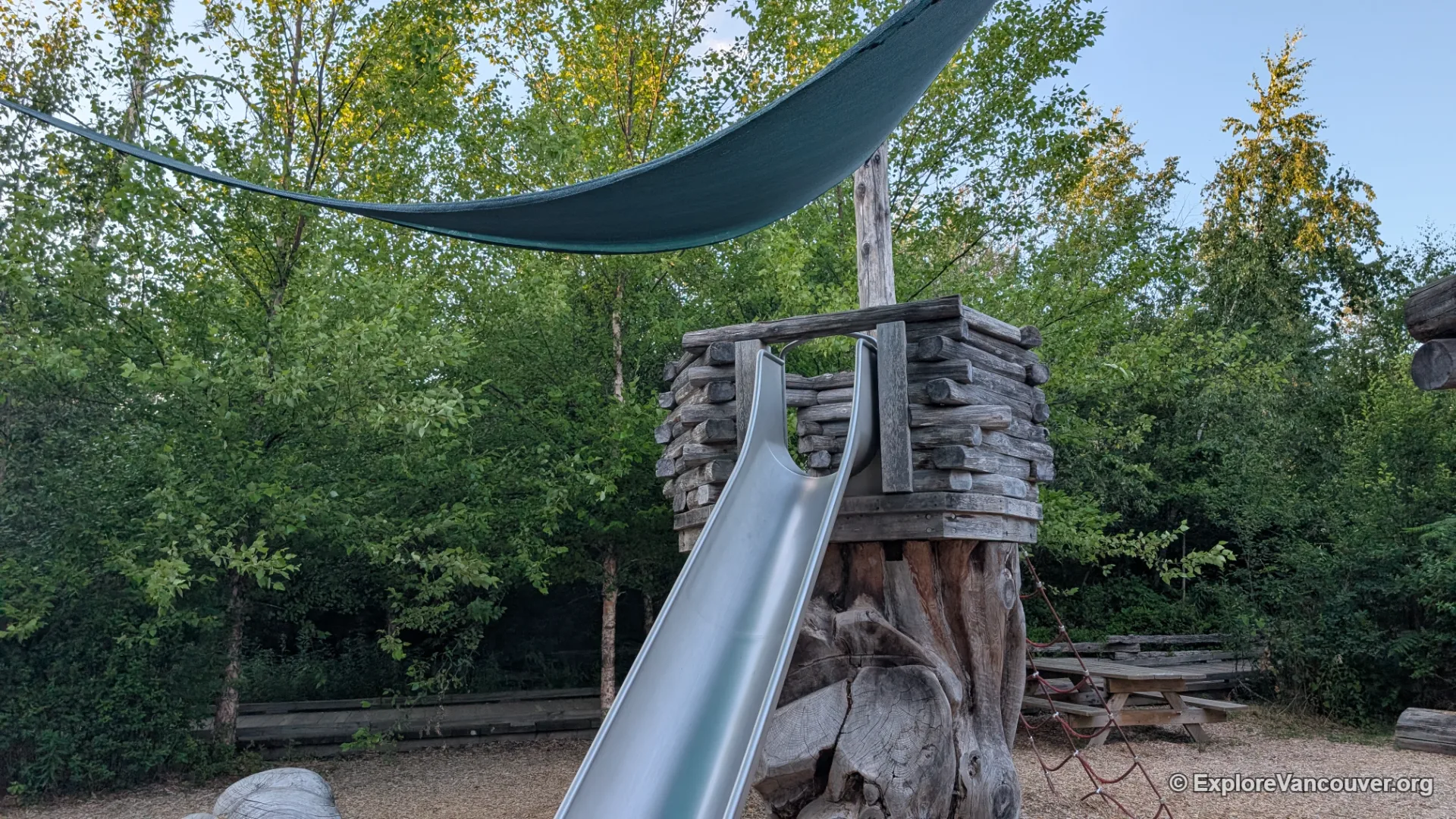
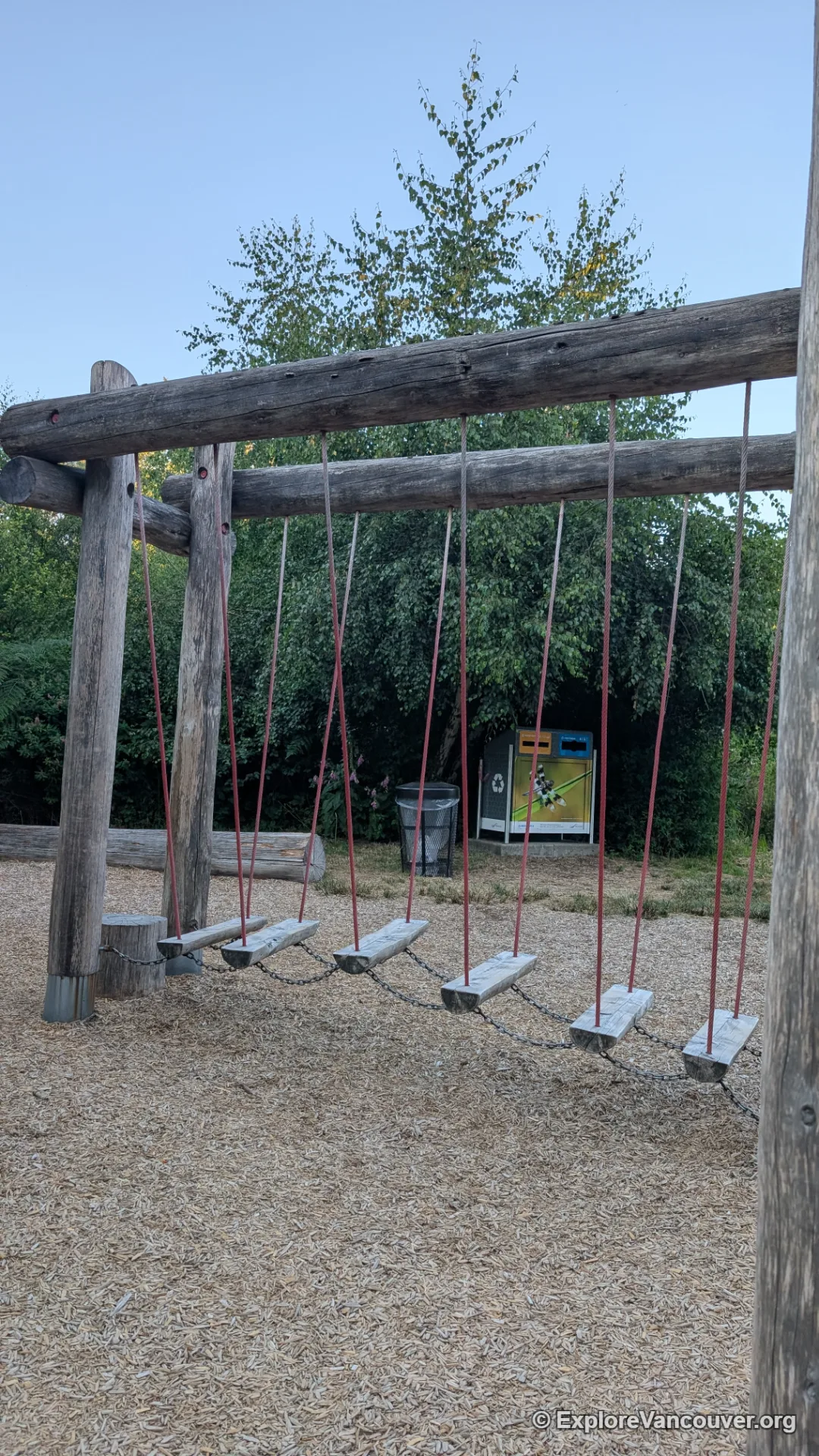
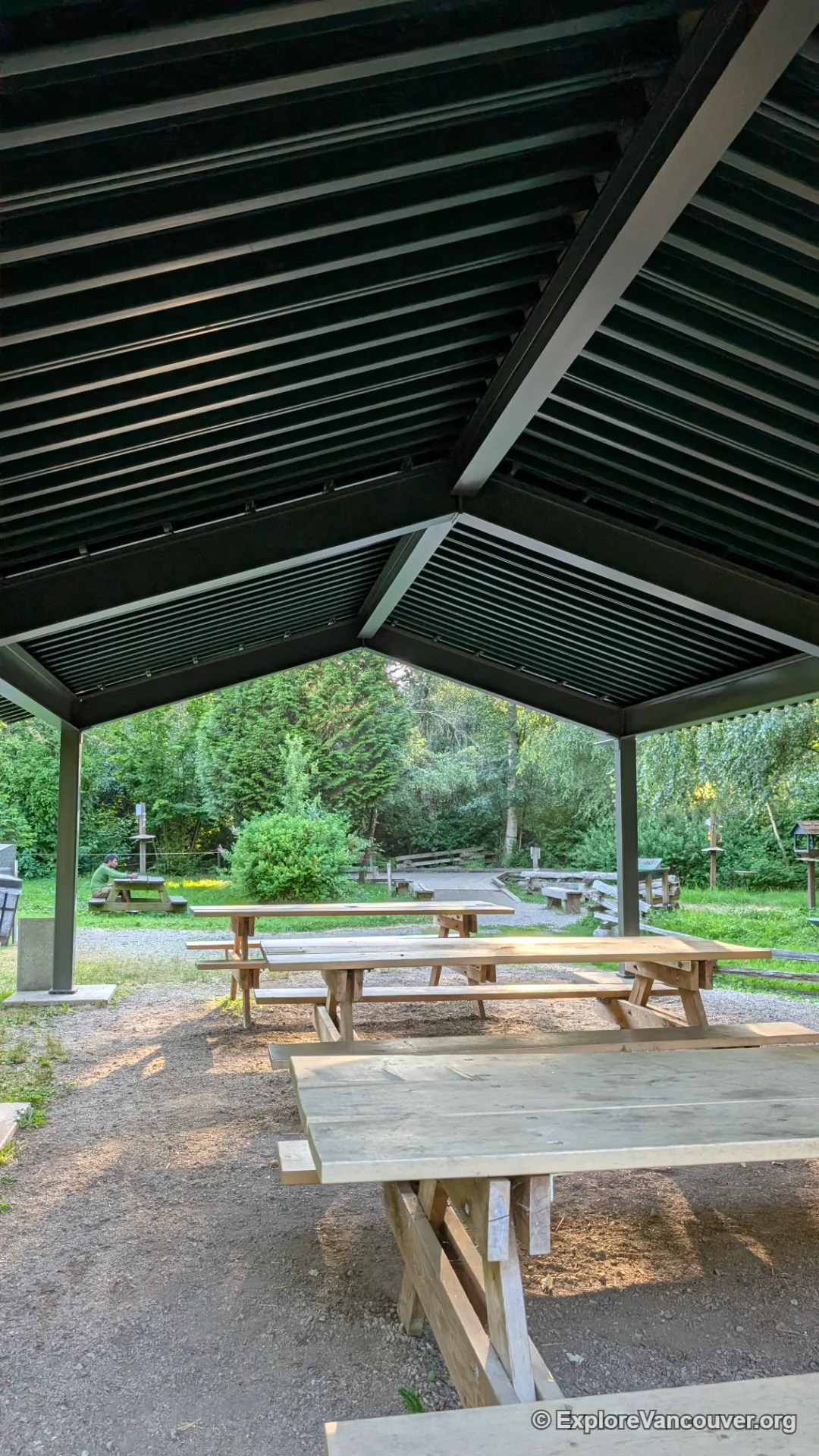
Families tend to end up here even if the bog was the original plan. The natural playground near the Nature House includes a climbing tower, a slide, and wood duck sculptures worked into the play structure, and it draws a steady stream of strollers on weekend mornings. A picnic area sits nearby for anyone packing a lunch before or after the trails.
Halloween Hoot and the pumpkin patch
Every October the Richmond Nature Park Society turns the Pond Trail into Halloween Hoot, a free, drop-in daytime event built for younger kids rather than a scare-focused haunted walk. Expect gentle Halloween decorations along the boardwalk, a small gravel pumpkin patch where pumpkins are sold individually to support the Society’s programs, and a rotating seasonal exhibit inside the Nature House. Dates shift slightly each year but it typically runs for about two weeks in mid to late October, during regular daytime hours.
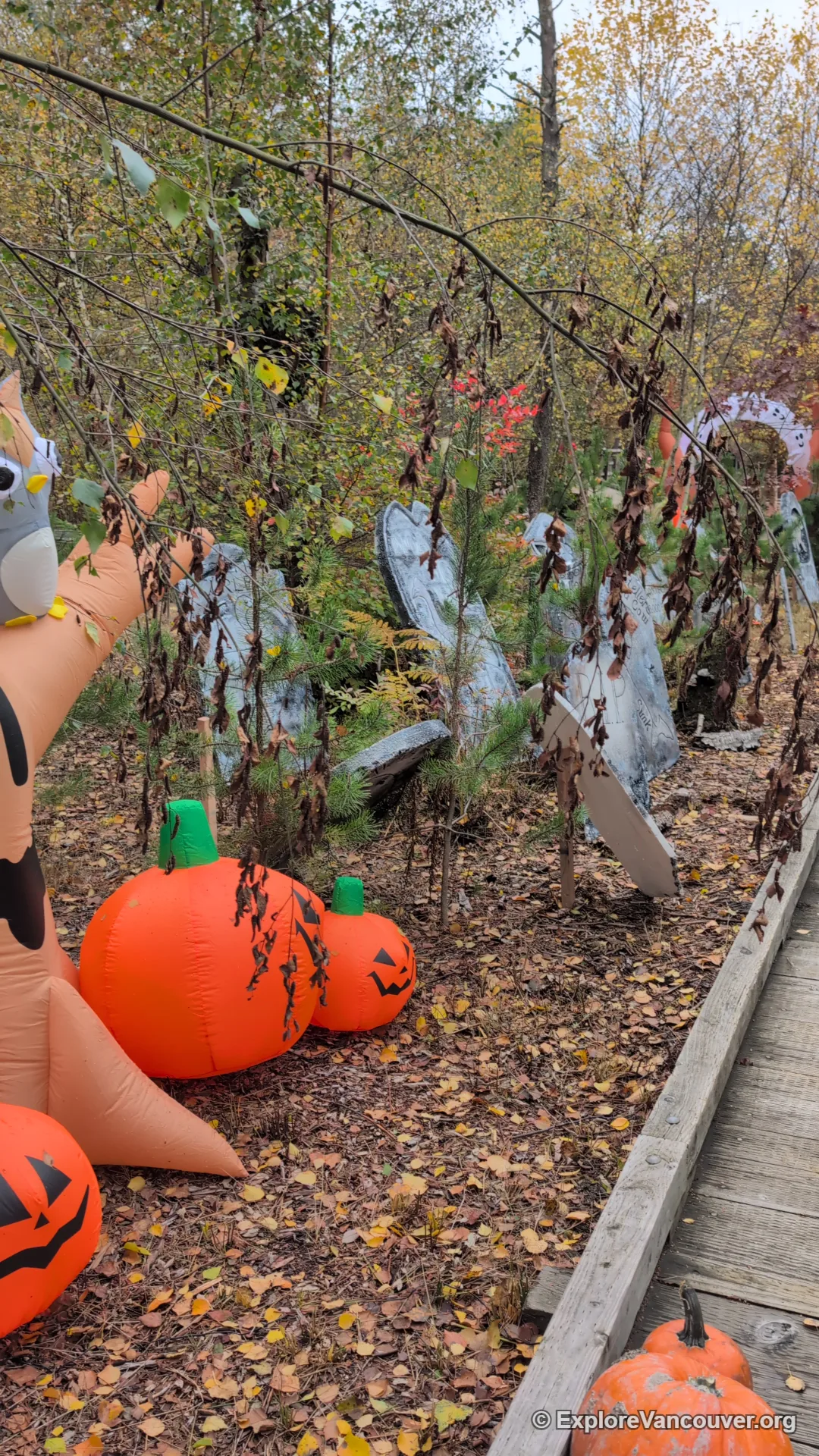
Halloween Hoot runs during the day and is built for families with young children. It is not the jump-scare style haunted attraction some visitors expect, so plan accordingly if that is what you are after.
Getting there
The park sits west of No. 5 Road on Westminster Highway, in East Richmond. There is a free parking lot on site, so driving is the simplest option for most visitors. TransLink buses 405 and 410 run along nearby routes if arriving by transit, connecting toward Bridgeport and Richmond-Brighouse Canada Line stations, though it is worth checking current TransLink schedules before heading out since routes and stops do get adjusted.
Dogs and other pets are not allowed inside the park, and visitors are asked to stay on marked trails at all times. Nothing, including plants, plant parts, or animals, should be removed from the park grounds.
Planning a longer day around East Richmond? See more of the city’s parks, beaches, and neighbourhoods in the Richmond guide.