Last Updated on October 13, 2026 by Explore Vancouver
The best places for salmon watching in Vancouver are Capilano River Hatchery in North Vancouver, Tynehead Regional Park in Surrey, Hoy Creek in Coquitlam, and Stoney Creek and Cariboo Dam in Burnaby. Peak viewing runs from October to November, when chum and coho return to the creeks where they were born.
This guide covers 25 places across Metro Vancouver, listed roughly by area: the North Shore first, then Surrey, the Tri-Cities, Burnaby, Maple Ridge and finally a few Fraser River stops. Hatcheries give you the most reliable viewing, while small urban creeks reward you after heavy rain, when fish move upstream.
Chum are the most common salmon in city creeks, coho usually follow in November, Chinook can be seen at Capilano River Hatchery in October and November, and pink salmon return in odd-numbered years. Run sizes change every year, and access, events and hatchery hours change too, so always check the linked official pages before you go.
Capilano River Hatchery, North Vancouver
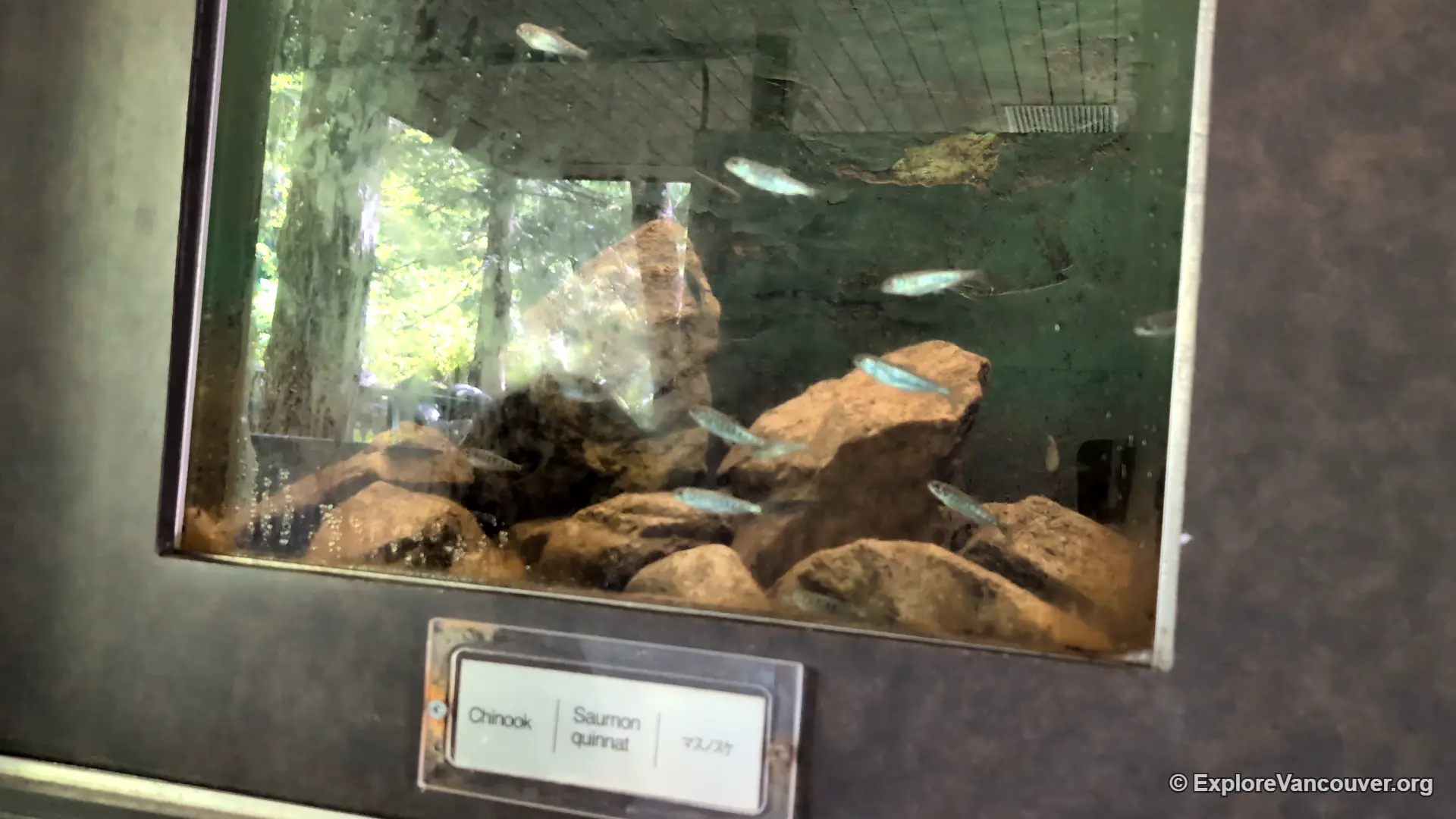
Capilano River Hatchery is the easiest place in Metro Vancouver to see salmon up close, because underwater viewing windows let you watch fish without relying on a lucky glimpse in a creek. The hatchery sits inside Capilano River Regional Park, and the information centre explains the spawning cycle before you walk out to the viewing areas.
- Species: Chinook, coho and steelhead
- Best time: Adult coho from June to November; Chinook from October to November
- Where: 4500 Capilano Park Rd, North Vancouver
Adult coho are around from early summer into November, and Chinook arrive in October and November. You can also follow the park trails to lookout platforms along the river, which gives you a second way to spot fish if the water is clear. Cleveland Dam and the forest trails make it an easy half day, and the hatchery is close to the Capilano Suspension Bridge turnoff.
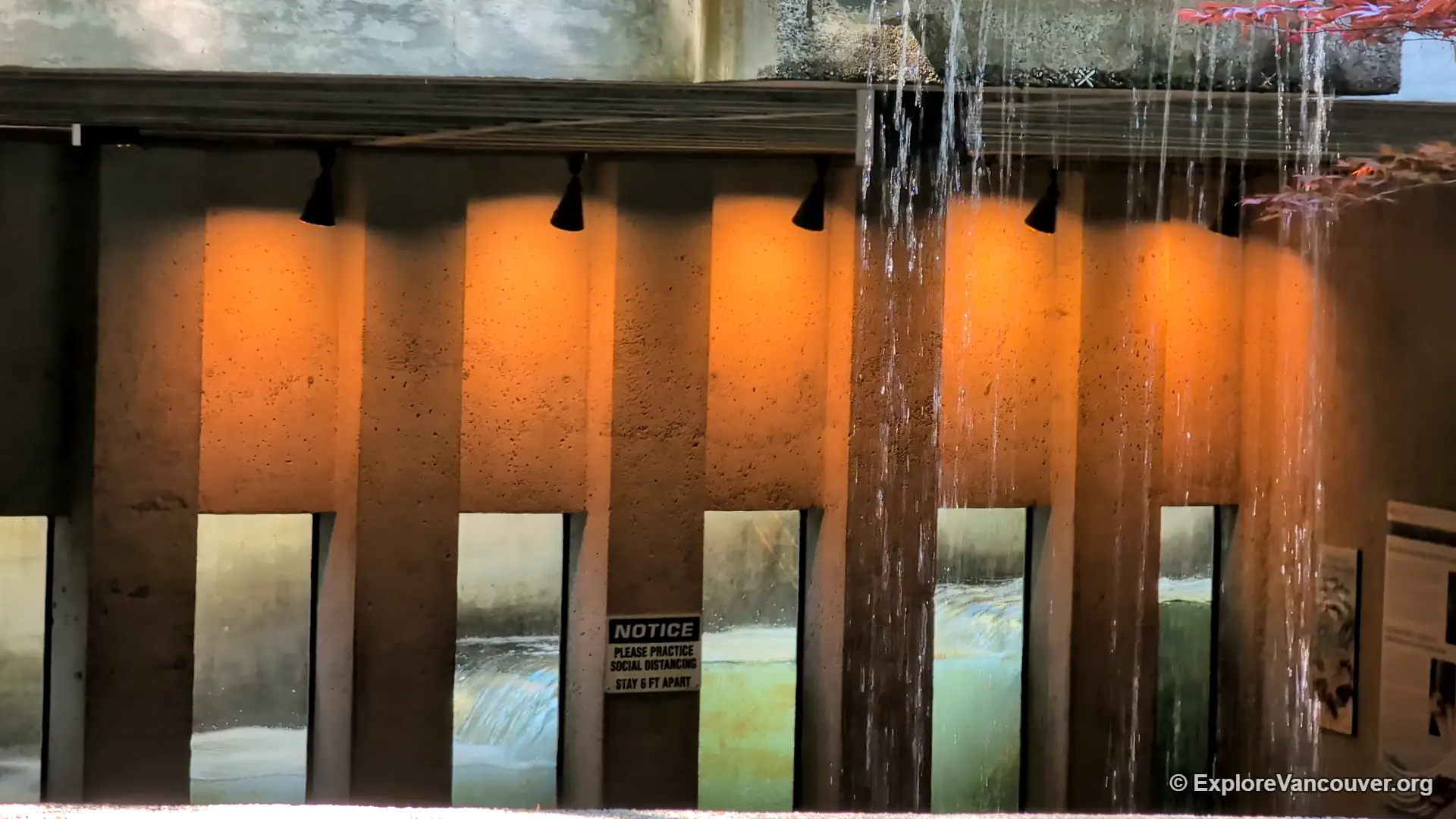
Also explore Capilano River Regional Park and Cleveland Dam. Check the Metro Vancouver park page for current access details.
Seymour River Hatchery, North Vancouver
The Seymour River Hatchery and Education Centre is run by the Seymour Salmonid Society just below the Seymour Falls Dam in the Lower Seymour Conservation Reserve. The society raises coho, chum, Chinook and pink salmon along with steelhead, and it has been rebuilding Seymour River fish stocks since 1987.
- Species: Coho, chum, Chinook, pink and steelhead (raised at the hatchery)
- Best time: Fall, with an annual open house usually held in early autumn
- Where: Lower Seymour Conservation Reserve, North Vancouver
The hatchery sits well inside the reserve, so most visitors see it during the society’s annual open house, when shuttles run from the parking lot at the top of Lillooet Road and volunteers lead tours. If you want to plan around that event, check the society’s website for the current date and access rules.
Official information: Seymour Salmonid Society.
Lynn Creek at Lynn Canyon Park, North Vancouver
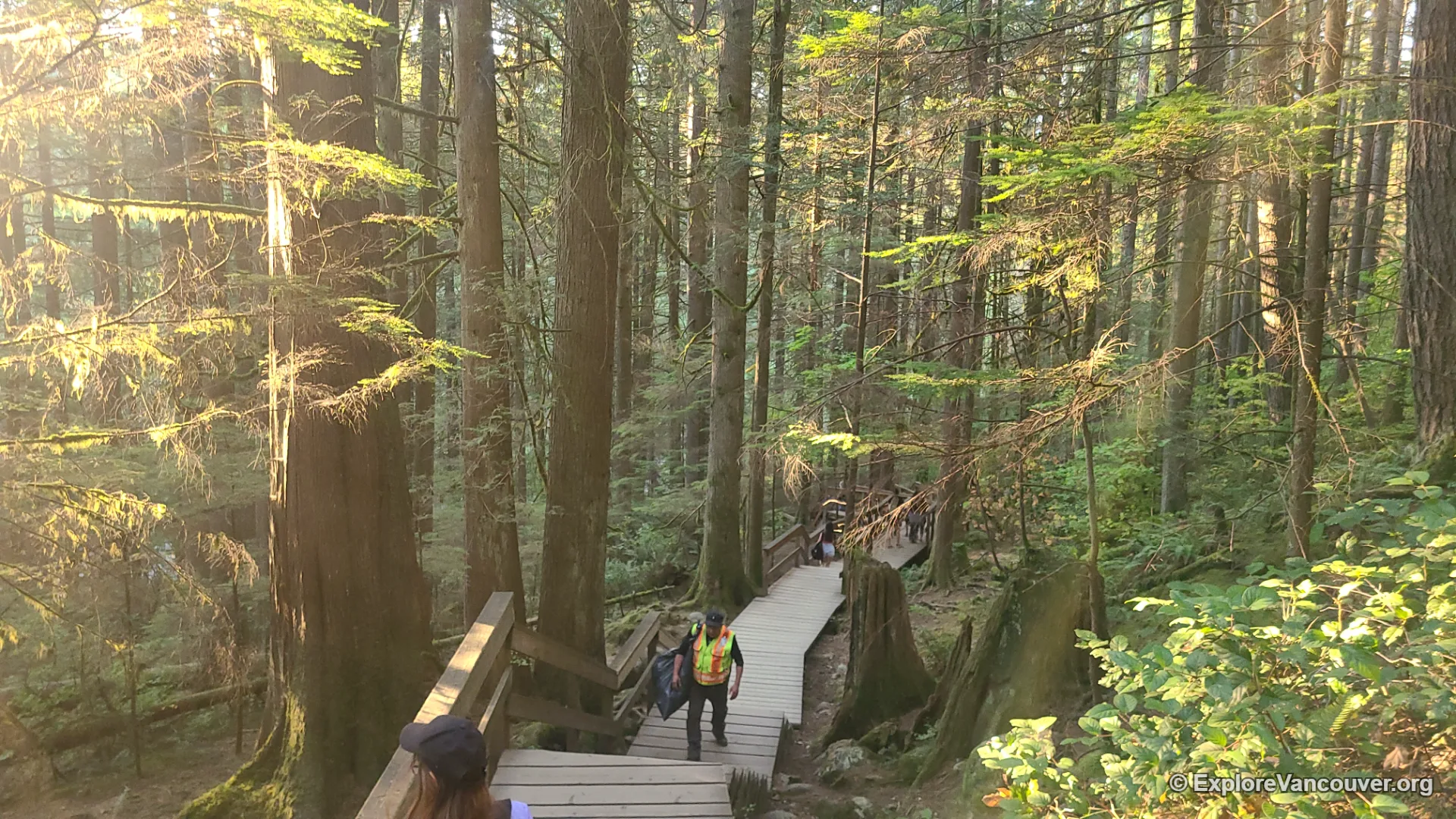
Lynn Creek is an urban salmon stream on the North Shore, and local streamkeepers have been restoring side-channel habitat there so spawning fish and young salmon have places to rest and grow. Lynn Canyon Park gives you forest trails, a suspension bridge area and several spots where you can look down into the creek.
- Best time: Fall, especially after rain
- Where: Lynn Canyon Park, North Vancouver
Salmon numbers here are smaller than at the hatcheries, so treat it as a bonus on a fall walk rather than a guaranteed sighting. Go after steady rain, scan the pools and gravel bars from the bridges and viewpoints, and keep back from the water’s edge.
Tynehead Hatchery and Salmon Habitat Loop, Surrey
Tynehead Regional Park is one of the best natural salmon viewing spots in Metro Vancouver. The Serpentine River runs through the park, and the Salmon Habitat Loop trail crosses a series of bridges where you can look down on spawning fish. The volunteer-run Tynehead Hatchery, operated by the Serpentine Enhancement Society, is in the park as well.
- Species: Coho, chum, Chinook and steelhead
- Best time: Adults from October to December; early fish possible from late August
- Where: Tynehead Regional Park, Surrey (access from 96th Ave)
Fish can show up as early as late August, and adults are most common from October to December. The trails are mostly gentle, so this is a good pick for families who want to combine a forest walk with salmon spotting. To reach the loop, take 96th Avenue and follow the signs into the park.
Official information: Tynehead Hatchery. More Surrey ideas are on our Surrey page.
Bear Creek Park, Surrey
Bear Creek runs through Bear Creek Park, and the City of Surrey has recorded more than 900 spawning chum in this creek in a single season. That makes it one of the stronger city-park runs in the region, with fish moving up the creek in the fall.
- Species: Chum, with coho and Chinook in other Surrey streams
- Best time: October to November
- Where: Bear Creek Park, Surrey
Surrey maintains a salmon viewing map showing where you have a good chance of seeing coho, chum or Chinook in October and November, and it is worth checking before you go because the best viewpoints depend on water levels.
Official information: City of Surrey fish and salmon page.
Hyland Creek, Surrey
Hyland Creek is another Surrey stream where chum return in the fall. The City of Surrey has documented large numbers of chum moving up the creek in November, which shows how much salmon habitat survives in the city’s urban watercourses.
- Species: Chum
- Best time: November
- Where: Hyland Creek, Surrey
Surrey has around 1,400 kilometres of urban watercourses that support five species of salmon and trout, so the best approach is to check the city’s salmon viewing map for current public access points, then visit after steady rain and watch from the bank.
Official information: City of Surrey fish and salmon page.
McLellan Creek, Surrey
McLellan Creek is a small Surrey creek where chum salmon have been photographed returning in November. Like many urban streams in Surrey, it is a quieter, neighbourhood-scale place to watch salmon compared with the hatchery sites.
- Species: Chum
- Best time: November
- Where: McLellan Creek, Surrey
Run sizes vary from year to year, so treat it as a bonus stop and plan your visit for a day or two after heavy rain. Stay on public paths and keep well back from the water’s edge.
Official information: City of Surrey salmon viewing map.
Little Campbell River Hatchery, South Surrey
The Little Campbell River Hatchery is a volunteer-run facility at the Semiahmoo Fish and Game Club. A fish fence across the river funnels fish into a live trap where volunteers count and identify them before releasing them upstream to spawn.
- Species: Coho, chum, Chinook and steelhead
- Best time: Adults from October to January; juveniles in spring
- Where: 1284 184th St, Surrey, at the Semiahmoo Fish and Game Club
The river carries coho, chum, Chinook and steelhead at different points in the year, and adults are most common from October to January. You can follow the river down to the estuary on the Surrey and White Rock border, or head upriver to the bridge near 160th Street and 8th Avenue for more viewing.
Official information: City of Surrey salmon viewing map.
Hoy Creek Hatchery, Coquitlam
Hoy Creek Hatchery is run by volunteers from the Hoy-Scott Watershed Society, and it supports runs of chum and coho in Hoy Creek and nearby Scott Creek. The trails of Hoy Creek Linear Park follow the creek near the hatchery, so you can watch fish in the gravel beds from the path.
- Species: Chum and coho
- Best time: Adult chum from October to November; coho in November
- Where: Hoy Creek Linear Park, Coquitlam
Chum arrive first, usually from October into November, and coho follow in November. Each rainstorm tends to push more fish upstream, so a walk the day after heavy rain is often the best time to go. The hatchery has also hosted a Salmon Come Home celebration in October to welcome the returning fish.
Official map and event details: City of Coquitlam Salmon Come Home page. More on our Coquitlam page.
Hyde Creek Hatchery, Port Coquitlam
Chum and coho return to Hyde Creek each fall, and the Hyde Creek Education Centre and Hatchery makes it easy to learn about the run. There are several lookout spots and a footbridge for viewing returning fish.
- Species: Chum and coho
- Best time: Chum from mid October to November; coho in November
- Where: Hyde Creek Recreation Centre, 1379 Laurier Ave, and the hatchery at 3636 Coast Meridian Rd, Port Coquitlam
The simplest approach is to park at the Hyde Creek Recreation Centre and take the trail behind the building along the creek toward the hatchery. It is a short, easy walk, which makes it a good stop with kids.
Official guide: Pacific Salmon Foundation Tri-Cities salmon guide.
Oxbow Side Channel, Port Coquitlam
The Oxbow Side Channel in Port Coquitlam is a smaller habitat site where coho and chum return in the fall, plus pink salmon in odd-numbered years. It suits people who like quieter, less developed viewing spots over hatchery visits.
- Species: Coho and chum, with pink in odd-numbered years
- Best time: Chum from October to November; coho in November
- Where: Port Coquitlam
Because side channels depend on water levels, it is worth checking the Pacific Salmon Foundation’s Tri-Cities guide for current viewing tips before you go.
Official guide: Pacific Salmon Foundation Tri-Cities salmon guide.
Noons Creek Hatchery, Port Moody
Noons Creek Hatchery sits to the right of the Port Moody Recreation Centre in Inlet Park. Family-friendly trails run along the creek and continue to the boardwalk at the head of the Port Moody inlet, so you can combine salmon watching with an easy waterfront walk.
- Species: Coho, chum and pink in odd-numbered years
- Best time: Chum from October to November; coho in November
- Where: Inlet Park beside the Port Moody Recreation Centre, 300 Ioco Rd
Coho and chum return in the fall, and pink salmon show up in odd-numbered years. The creek is looked after by the Port Moody Ecological Society, and run sizes vary from year to year, so the fish you see depend on the season and the rain.
Official information: Port Moody Ecological Society. More on our Port Moody page.
Mossom Creek Hatchery, Port Moody
Mossom Creek begins in a wetland near Cypress Lake on Eagle Mountain and runs down to the Port Moody inlet. Volunteers at the Mossom Creek Hatchery and Education Centre have rebuilt the run over decades, and the creek now has a strong chum return and a growing coho run.
- Species: Chum and coho
- Best time: Fall, with chum first and coho later
- Where: Mossom Creek, Port Moody
The hatchery releases chum fry and coho smolts each year, and it is one of the few that releases coho straight into the ocean. Because it is a working volunteer hatchery, check with the society for current tour or open house dates before planning a visit.
Stoney Creek, Burnaby
Stoney Creek is one of the best places in Burnaby to watch chum salmon, and counts of more than 1,000 chum have been recorded in good years. The creek runs through the Beaverbrook area, and trails along the stream give good views once the fish have moved in.
- Species: Chum and coho
- Best time: Chum from late October into November; coho later in the fall
- Where: Stoney Creek trails, Burnaby
Chum come up from the Fraser River and the Brunette River, usually from late October into November, and coho follow later. The Stoney Creek Environment Committee has led viewing tours in the past, so check local listings if you would like a guide.
More Burnaby ideas are on our Burnaby page.
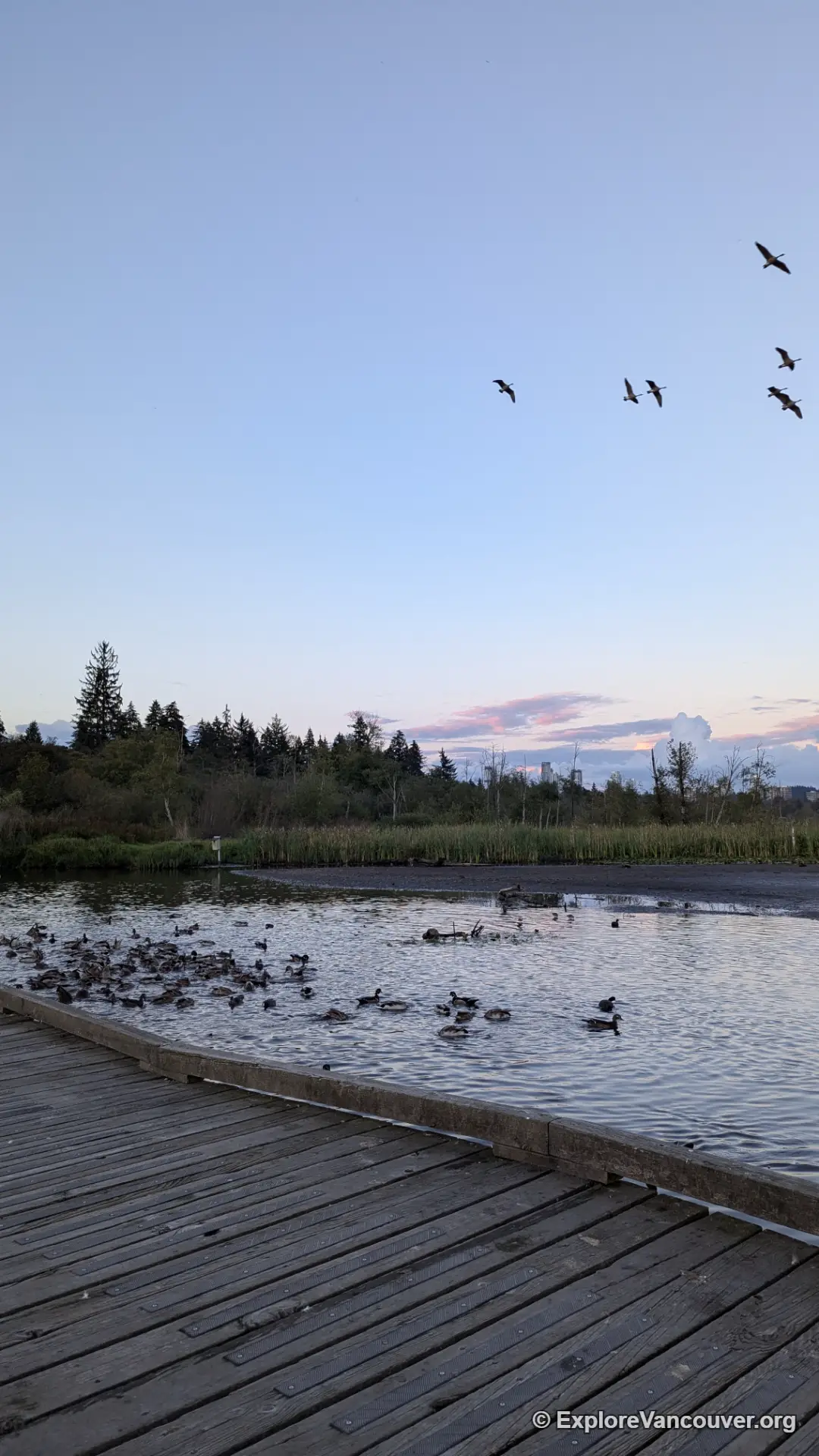
Cariboo Dam and Brunette River, Burnaby Lake
Cariboo Dam at the east end of Burnaby Lake is a reliable place to see salmon gathering. A fishway at the dam lets chum and some coho climb out of the Brunette River and across Burnaby Lake toward streams such as Still Creek, Guichon Creek and Eagle Creek.
- Species: Chum, with some coho
- Best time: Late October into November
- Where: Cariboo Dam, east end of Burnaby Lake Regional Park, near Cariboo Rd
Local streamkeepers say the fish are easy to see from the top of the dam, especially when water levels are a little lower. Heavy rain raises the water and makes viewing harder, though fish are usually still visible. The dam is just west of Cariboo Road near Government Street, and a passage built in 2011 helped open up the upper watershed to salmon.
Guichon Creek, Burnaby
Guichon Creek was in rough shape decades ago, and restoration work has brought back a steady chum run every fall. It is a good example of how an urban stream can recover, and you can watch fish in the middle of the city.
- Species: Chum
- Best time: Late October into November
- Where: Guichon Creek, Burnaby
Local streamkeepers have pointed to the area behind the BCAA building on Willingdon Glen, looking downstream, as a good viewing spot. Viewpoints can change over time, so look for public access points along the creek rather than entering the stream.
Still Creek, Burnaby
Still Creek runs about 17 kilometres from Vancouver through Burnaby, and salmon that pass through Cariboo Dam spread into it in the weeks after the dam gathers fish. It has been the focus of long-running restoration efforts by streamkeepers.
- Species: Chum
- Best time: Late October into November
- Where: Still Creek, Burnaby
A spot on Gilmour Street, looking upstream, has been named as a good viewpoint by local advocates. Expect fewer fish than at the dam, and plan to visit a week or two after you hear fish are moving through.
Eagle Creek, Burnaby
Eagle Creek is another stream that receives fish from the Brunette River system. Charles Rummel Park is a good viewing location, with trails that let you look into the creek without disturbing the spawning gravel.
- Species: Chum and some coho
- Best time: Late October into November
- Where: Charles Rummel Park, Burnaby
Like most small urban creeks, the best days are after rain, when fish move upstream. Walk slowly, look for dark shapes in the shallows, and keep dogs out of the water.
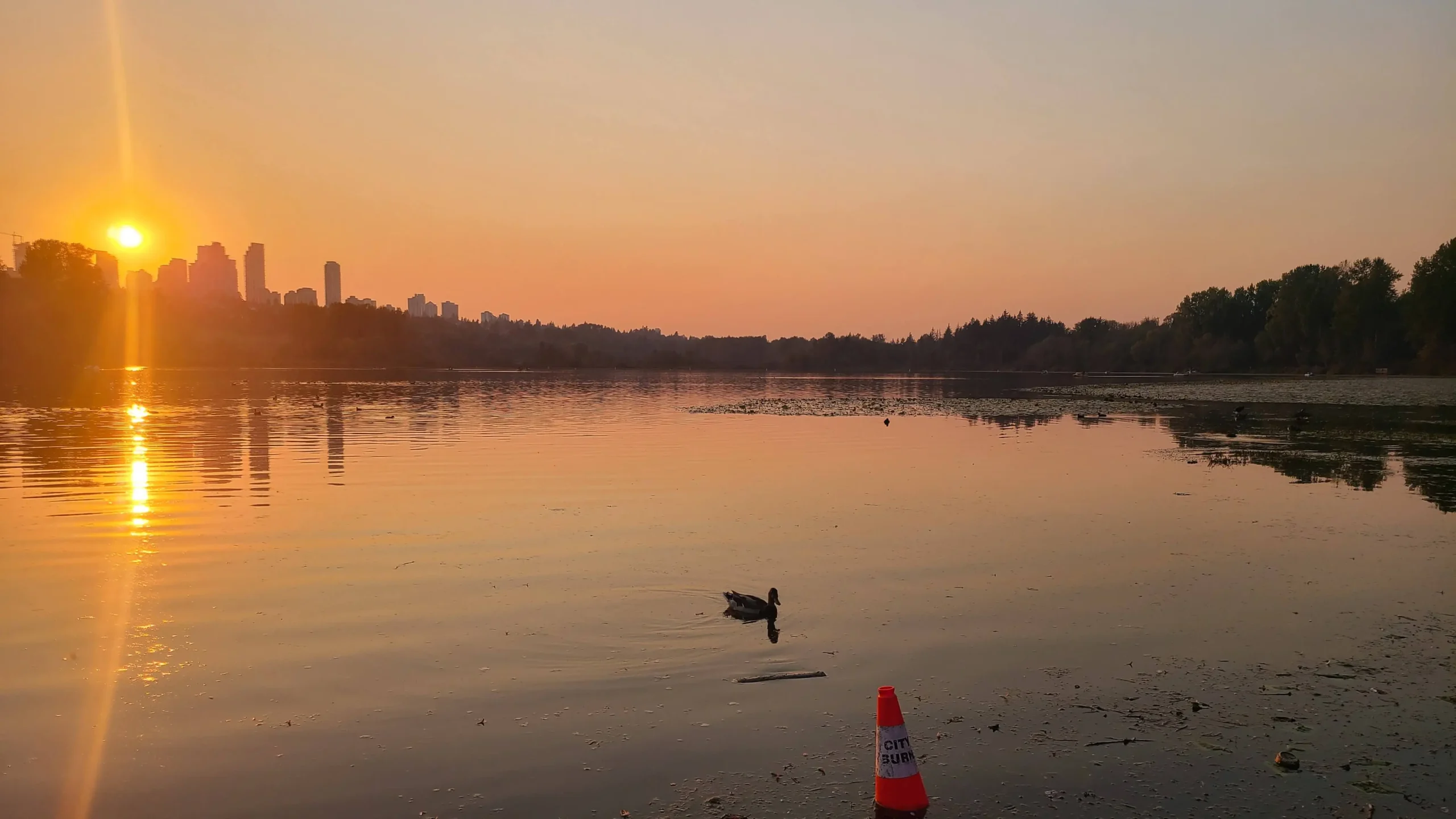
Deer Lake Park and Buckingham Creek, Burnaby
Buckingham Creek runs beside the Deer Lake Beach parking lot, and chum often return there in early November. It is a handy stop because you can pair it with a walk around Deer Lake Park, which has a beach, a boardwalk and waterfront trails.
- Species: Chum
- Best time: Early November
- Where: North side of the Deer Lake Beach parking lot, Burnaby
The creek is small, so numbers are modest, but the setting is easy for families. Go in the first half of November and check the water from the bank.
Byrne Creek, Burnaby
Byrne Creek is a small urban creek in southeast Burnaby, and volunteers patrol it each fall to count spawning fish. Chum and a few coho return, though coho have suffered from pre-spawn mortality in some years, so numbers can be low.
- Species: Chum and coho
- Best time: Fall
- Where: Byrne Creek, southeast Burnaby
This is a quieter spot for people who like following local stewardship projects. Stay on the paths and give any fish plenty of space.
Kanaka Creek Regional Park and Bell-Irving Hatchery, Maple Ridge
Kanaka Creek Regional Park combines trails, a sandstone canyon and a hatchery that keeps salmon on site through the year. The Bell-Irving Hatchery and the fish fence support runs of chum, coho and pink salmon in Kanaka Creek.
- Species: Chum, coho and pink
- Best time: Mid October to mid November at the fish fence
- Where: Kanaka Creek Regional Park, Maple Ridge
Chum and coho can be seen at the fish fence from mid October to mid November. The Canyon Trail connects the hatchery area with Cliff Falls, so you can pair salmon watching with a gentle forest hike. Access to the hatchery is from 256th Street, south of Dewdney Trunk Road, and public hours can be limited, so check before you go.
Official information: Metro Vancouver park page. More on our Maple Ridge page.
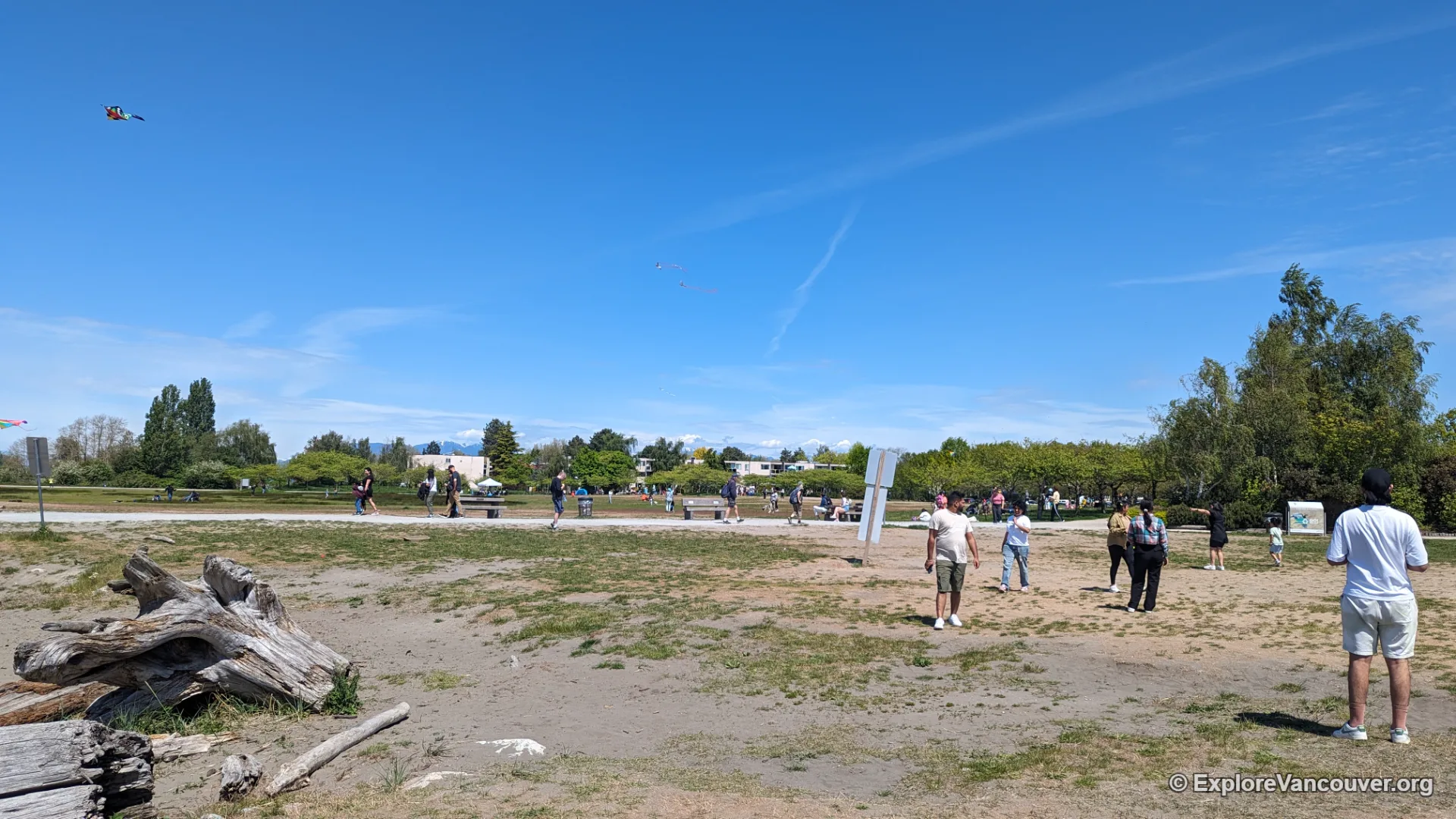
Garry Point Park, Richmond
Garry Point Park sits where the Fraser River meets the Strait of Georgia, and it is a good place to see the river that all of these salmon use on their way home. This is a migration route rather than a spawning stream, so sightings are less predictable than at the hatcheries.
- Best time: Summer and fall
- Where: Garry Point Park, Richmond
Salmon runs reach the Fraser River through summer and fall, and the park is still worth a visit for river views, the shoreline and the nearby fishing community in Steveston. Pair it with a walk to the wharf.
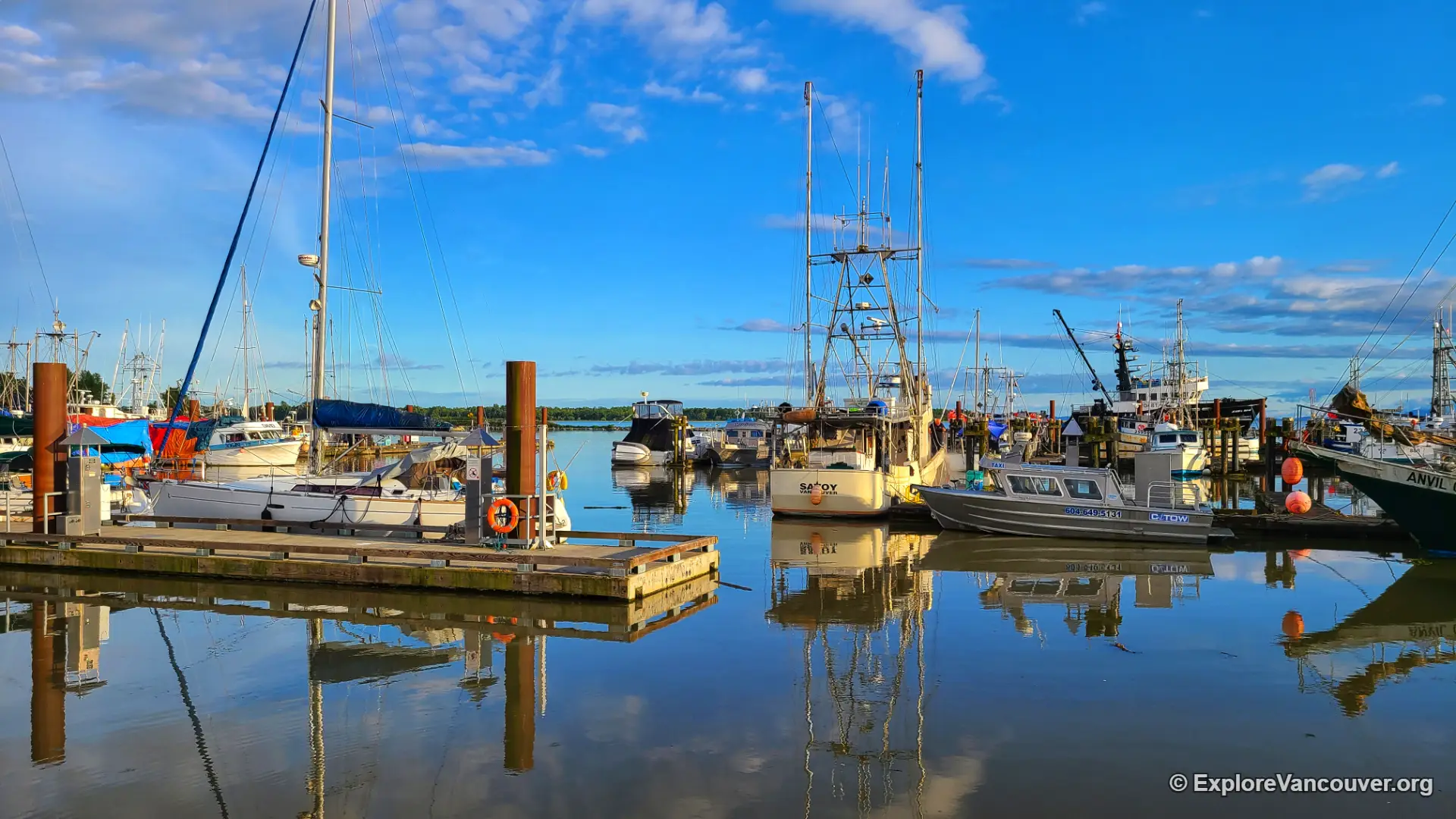
Steveston Fisherman’s Wharf, Richmond
Steveston is Metro Vancouver’s working fishing harbour, and the wharf is where the commercial fleet ties up. You will not see spawning here, but it is the best place to see how salmon fishing connects to the region.
- Best time: Summer and fall
- Where: Steveston Fisherman’s Wharf, Richmond
Walk the boardwalk, look at the boats and then follow the river to Garry Point Park for a full Fraser River afternoon.
Nearby: Steveston Village.
Westminster Quay, New Westminster
Westminster Quay is a riverfront spot on the Fraser River, and it has been listed as a place to look for salmon when the river runs are active. Like the other Fraser River stops, it is about the migration route rather than a spawning stream.
- Best time: Summer and fall
- Where: 900 Quayside Dr, New Westminster
Bring binoculars, watch for seals and birds as well as fish, and treat the visit as a riverfront stroll that might include a salmon sighting.
Ladner Harbour Park, Delta
Ladner Harbour Park lies along the Fraser River in Delta and is another spot where you can see the river the salmon travel through. It is a gentle waterside park, so it suits a relaxed outing more than a dedicated fish hunt.
- Best time: Summer and fall
- Where: Ladner Harbour Park, Delta
If you are making a day of it in Delta, pair it with other parks in the area.
More on our Delta page.
Salmon Watching Tips for Vancouver
- Go after steady rain, when fish move upstream and creeks run clear enough to see into.
- Stay out of the stream and keep dogs on a leash and out of the water, because the gravel may hold salmon nests.
- Use bridges, lookouts and the bank, and look for dark shapes in the shallows rather than splashes.
- Bring polarized sunglasses to cut glare on the water, and binoculars for eagles, herons and other wildlife drawn to the run.
- Dead salmon after spawning are a natural part of the cycle and feed the forest and wildlife, so leave them where they are.
- Check hatchery and park websites for events, tours and access changes before you travel.
Salmon Watching in Vancouver FAQ
When is the best time to see salmon in Metro Vancouver?
October and November are the peak months for salmon watching in Metro Vancouver. Chum usually arrive first in October and November, coho follow in November, and Chinook can be seen at Capilano River Hatchery in October and November. Some adult coho are around from early summer, and pink salmon return in odd-numbered years.
What types of salmon can I see near Vancouver?
The main species are chum, coho, Chinook and pink, along with steelhead trout. Chum are the most common in urban creeks, coho are less common, Chinook are best seen at Capilano, and pink salmon run in odd-numbered years.
Where is the best place for salmon watching in Vancouver?
Capilano River Hatchery in North Vancouver is the easiest choice because of its underwater viewing windows. For natural spawning in a creek, Tynehead Regional Park in Surrey, Hoy Creek in Coquitlam, and Stoney Creek and Cariboo Dam in Burnaby are strong options.
Can I see salmon inside the City of Vancouver?
The City of Vancouver has only a few salmon-bearing streams, so most easy viewing happens in North Vancouver, Burnaby, Surrey and the Tri-Cities. The best-known spots are listed above.
What is the best weather for seeing salmon?
Fish tend to move upstream after steady rain, so the day after a good rainfall is often best. Very high water can make creeks hard to see into, and low water can slow the fish down, so watch local streamkeeper updates if you can.
Is salmon watching free?
Watching fish along public creeks and trails is free. Hatcheries and parks have their own access rules, hours and events, so check each official page before you go.
Can I touch the salmon or walk in the stream?
No. Stay out of the water and keep dogs out of the stream as well, because the gravel may hold salmon nests, called redds. Watch from bridges, lookouts and the bank.
Where can I see sockeye salmon?
Large sockeye runs happen outside Metro Vancouver, with the Adams River and Weaver Creek Spawning Channel being the best-known examples in the Fraser Valley and Shuswap. The Adams River has the biggest runs in dominant years, which occur every four years.
Plan more fall outings in Metro Vancouver
Pair a salmon watching trip with the best fall hikes in Vancouver, top things to do in fall in Vancouver, the best places to take fall pictures in Vancouver, or bird watching in Metro Vancouver.